OpenAI Claims AI Has Solved the Navier-Stokes Millennium Prize Problem
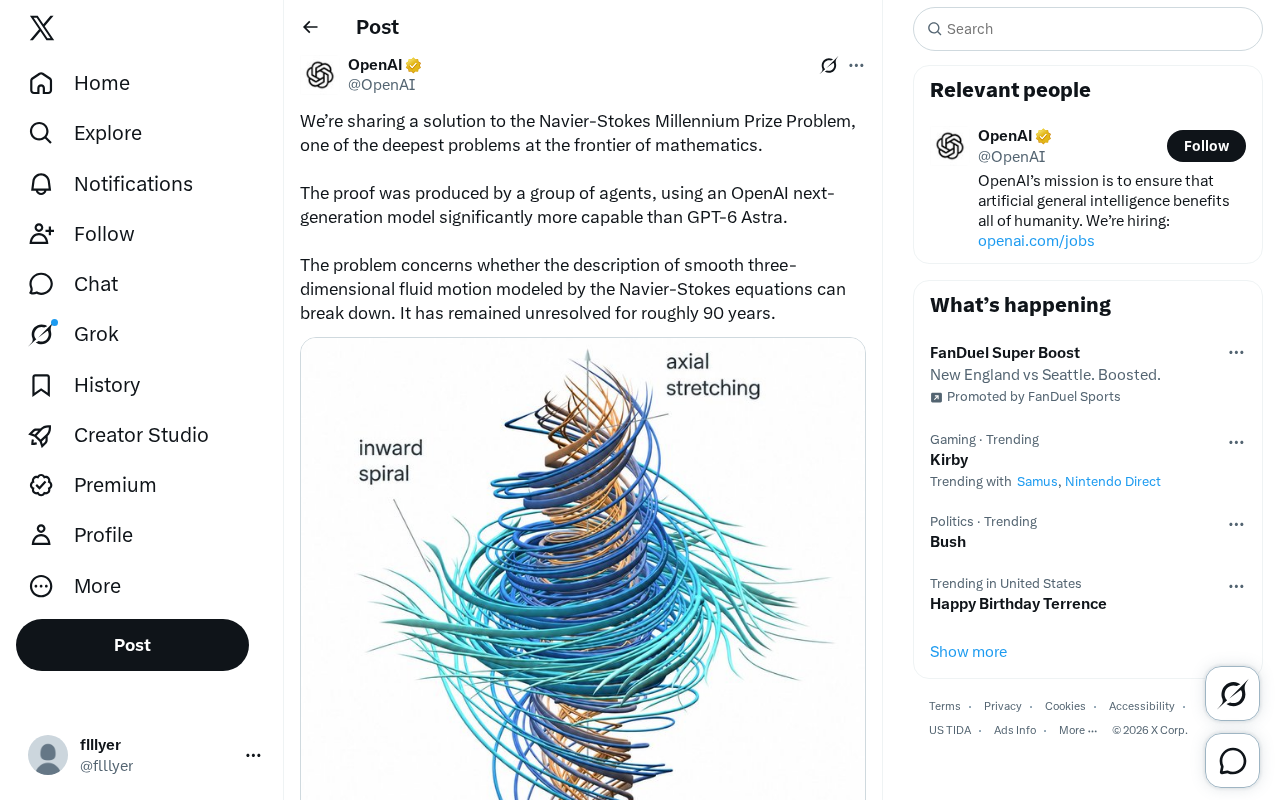
OpenAI claims AI agents solved the Navier-Stokes Millennium Prize Problem, pending peer review.
OpenAI announced that a group of AI agents, powered by a next-generation model surpassing GPT-6 Astra, has produced a solution to the Navier-Stokes existence and smoothness problem — one of the seven $1 million Millennium Prize Problems. While the multi-agent collaborative proof paradigm marks a significant AI milestone, the claim remains unverified and must undergo rigorous peer review and formal verification before acceptance.
OpenAI Issues Major Announcement
Recently, OpenAI published a statement on social media that sent shockwaves through the mathematics community: they claim that a group of AI agents has produced a solution to the Navier-Stokes Millennium Prize Problem. According to the announcement, the proof was driven by a next-generation model described as "far more powerful than GPT-6 Astra."
If true, this would represent a milestone breakthrough for artificial intelligence in the domain of pure mathematics. The existence and smoothness problem for the Navier-Stokes equations is one of the seven Millennium Prize Problems established by the Clay Mathematics Institute in 2000, each carrying a $1 million reward, and collectively regarded as the most profound challenges in contemporary mathematics.
The Clay Mathematics Institute officially announced the seven Millennium Prize Problems on May 24, 2000, at the Collège de France in Paris. They span computational complexity (P vs NP), algebraic geometry (Hodge Conjecture), topology (Poincaré Conjecture), analytic number theory (Riemann Hypothesis), quantum field theory (Yang-Mills Existence and Mass Gap), fluid mechanics (Navier-Stokes Equations), and arithmetic geometry (BSD Conjecture). To date, only the Poincaré Conjecture has been solved — by Russian mathematician Grigori Perelman in 2003 — who famously declined both the $1 million prize and the Fields Medal. These problems were selected because each represents the deepest unsolved mystery in a core branch of mathematics, and their resolution typically requires entirely new mathematical tools and paradigm-shifting ideas.
It should be noted that this announcement currently comes from a single source and has not yet been validated through independent peer review by the mathematical community. We should take its potential significance seriously while maintaining a prudent scientific attitude.
The Navier-Stokes Problem Explained
The Core Equations of Fluid Mechanics
The Navier-Stokes equations are a system of partial differential equations describing the motion of viscous fluids, forming the foundation of modern fluid mechanics. From airflow around aircraft wings and ocean currents to blood flowing through vessels, these equations underlie it all. Engineers solve them numerically every day, but from a pure mathematics perspective, a fundamental question has remained unresolved.
The equations were independently derived by French engineer Claude-Louis Navier (1822) and Irish mathematician George Gabriel Stokes (1845). They are essentially Newton's second law expressed for continuous media, incorporating terms for fluid inertial forces, pressure gradients, viscous diffusion, and external forces. In the incompressible case, the system consists of the momentum equation and the continuity equation (the divergence-free condition, i.e., conservation of mass). In engineering practice, computational fluid dynamics (CFD) uses discretization methods such as finite element and finite volume approaches to numerically approximate solutions, with widespread applications in aerospace design, weather forecasting, and engine combustion simulation. However, numerical solutions are only approximations and do not constitute rigorous mathematical understanding of the equations' properties.
The Existence of Smooth Solutions
As OpenAI framed it, the problem asks: whether the mathematical description of three-dimensional smooth fluid motion modeled by the Navier-Stokes equations can break down. In more technical terms, given smooth initial conditions in three-dimensional space, will the solution always remain smooth and finite (existence and smoothness), or could it develop a "singularity" in finite time — a mathematical blowup where physical quantities like velocity or pressure become infinite?
In PDE theory, a "singularity" or "blowup" refers to the phenomenon where some norm of the solution tends to infinity in finite time. If solutions to the three-dimensional Navier-Stokes equations blow up, it would mean the velocity field becomes infinite at certain points or regions — something physically impossible, implying the equations are no longer a valid description of fluid motion near those points. Notably, French mathematician Jean Leray proved the global existence of "weak solutions" (generalized solutions allowing some degree of non-smoothness) as early as 1934, but whether weak solutions are unique or equivalent to classical smooth solutions remains unknown. In 1982, the landmark work of Caffarelli, Kohn, and Nirenberg further showed that even if singularities exist, their "size" in spacetime is extremely limited (their one-dimensional Hausdorff measure is zero) — yet even this profound result could not completely rule out the possibility of singularities.
This problem has stumped mathematicians for approximately 90 years. The difficulty lies in the extreme challenge of controlling the nonlinear terms in three dimensions — existing mathematical tools cannot fully characterize the solution's behavior over long-time evolution. In the two-dimensional case, global existence and smoothness of solutions were proven in the 1960s by Soviet mathematician Ladyzhenskaya and others. But in three dimensions, the nonlinear convective term (v·∇v) can cause violent stretching and concentration of vorticity, making the energy cascade from large scales to small scales — the mathematical essence of turbulence — extraordinarily complex, and existing energy estimate methods cannot achieve closed-form control over the solution's growth.
AI Multi-Agent Collaborative Proof Paradigm
From Single Models to Agent Swarm Collaboration
OpenAI emphasized that the proof was produced through a group of agents collaborating, rather than a single model's one-shot output. This reflects an important trend in current AI research: using multiple agents with division of labor, mutual verification, and iteration to tackle complex problems requiring long chains of reasoning.
Multi-Agent Collaboration is an important paradigm in recent AI system design, with core ideas rooted in distributed artificial intelligence and game theory. In complex reasoning tasks, single large language models face inherent issues such as context window limitations, reasoning chain breaks, and hallucination accumulation. Multi-agent architectures mitigate these difficulties through role differentiation: for example, a "proposer" agent generates hypotheses and proof drafts, a "critic" agent specifically looks for logical flaws, and a "verifier" agent translates key steps into formal language for machine verification. This architecture is similar to microservice design in software engineering, where each agent focuses on the subtask it excels at and exchanges information through structured communication protocols. Google DeepMind's AlphaProof and AlphaGeometry 2's success at the 2024 International Mathematical Olympiad — solving 4 out of 6 problems and approaching gold medal level — has already demonstrated the tremendous potential of multi-component collaboration in AI mathematical reasoning.
In the context of mathematical proofs, this paradigm could mean: different agents are respectively responsible for proposing lemmas, constructing counterexamples, checking logical steps, and performing formal verification — thereby simulating the collaborative process of a human mathematician team. Compared to single-pass reasoning, this architecture is better suited for proof tasks requiring hundreds or thousands of steps of rigorous logic.
Technical Capabilities Beyond Existing Models
The announcement mentioned the use of a next-generation model "far more powerful than GPT-6 Astra." This wording reveals OpenAI's positioning of its internal R&D progress — implying that their model capabilities have far surpassed publicly released versions and are reaching the frontier of scientific discovery. This also echoes the industry's long-standing aspiration for AI to evolve "from problem-solving tool to research partner."
The Necessity of Proof Verification
Peer Review Is Key
Despite the excitement generated by the announcement, the true value of a mathematical proof lies in whether it can withstand rigorous peer review. Historically, solutions to Millennium Prize Problems (such as Perelman's proof of the Poincaré Conjecture) underwent years of scrutiny by the mathematical community before being officially confirmed.
Perelman's proof of the Poincaré Conjecture serves as a classic case study in how the mathematical community verifies major claims. Between 2002 and 2003, Perelman posted three papers on the preprint platform arXiv, outlining his approach using Ricci flow and surgery techniques to prove the Thurston Geometrization Conjecture (of which the Poincaré Conjecture is a special case). Since the papers omitted many technical details, the mathematical community organized multiple independent teams for verification: Cao and Zhu, Kleiner and Lott, and Morgan and Tian each wrote detailed verification papers filling in all the gaps in the original proof. The entire verification process took approximately three years, and the Clay Mathematics Institute did not officially recognize the conjecture as solved until 2010. This precedent shows that even proofs from top human mathematicians can take years to verify, and the scrutiny standards for AI-generated proofs will only be more stringent.
AI-generated proofs especially require machine verification by formal verification tools (such as proof assistants like Lean and Coq), as well as human expert judgment of the overall approach. Formal verification refers to using rigorous mathematical logic and computer programs to check the correctness of every step in a proof. Lean, developed by Leonardo de Moura at Microsoft Research, has gained significant attention due to its active mathematical community Mathlib (which has formalized over 150,000 mathematical theorems and lemmas). In 2023, Fields Medalist Peter Scholze invited the Lean community to formalize the proof of a key theorem in his condensed mathematics, demonstrating the capability of formal tools to handle frontier mathematics. For AI-generated proofs, formal verification is especially critical — large language models may introduce subtle but fatal logical errors in their reasoning, errors that can hide within seemingly reasonable natural language arguments and be difficult even for human reviewers to detect, but that formal systems can precisely catch at every logical leap. Until these verifications are complete, the word "solution" must remain accompanied by a question mark.
The Importance of Independent Verification
Currently, this news comes solely from OpenAI's own publication channels, lacking independent third-party corroboration. In an era where marketing claims and genuine breakthroughs in AI are often intertwined, readers should distinguish between "published technical claims" and "results confirmed by the scientific community." Until authoritative institutions (such as the Clay Mathematics Institute) or mathematical journals provide their assessment, this remains a significant but unverified claim.
Future Implications of AI Mathematical Proofs
Regardless of the final verification outcome, this event marks a substantive stage in AI's involvement in top-tier mathematical research. If the proof holds, it will not only solve a problem that has challenged humanity for nearly a century but will also reshape our understanding of whether machines can make original mathematical discoveries.
For AI practitioners, the paradigm of multi-agent collaboration tackling frontier scientific problems deserves close attention. For the mathematical community, establishing verification and trust mechanisms for AI-generated proofs will become an important challenge going forward. We look forward to more details and independent verification.
Key Takeaways
Related articles
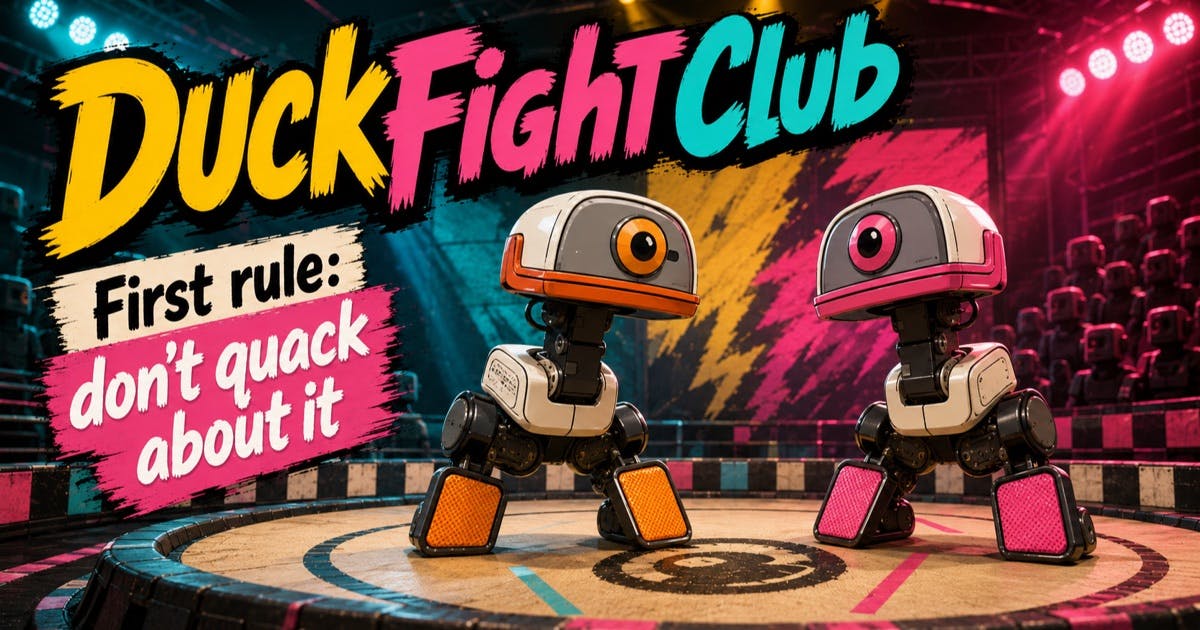
DuckFightClub: An AI Robot Duck Fighting Arena
DuckFightClub combines reinforcement learning with open-source robots. Teams train MicroDuck AI strategies, competing from simulator battles to real-world combat in a multi-agent adversarial arena.

Ass Auction: The Marketing Logic Behind an Absurd Ad Bidding Experiment
Ass Auction earned 90 votes on Product Hunt: brands bid to print logos on underwear. A deep dive into the bidding mechanics, viral design, and attention economy behind this marketing experiment.
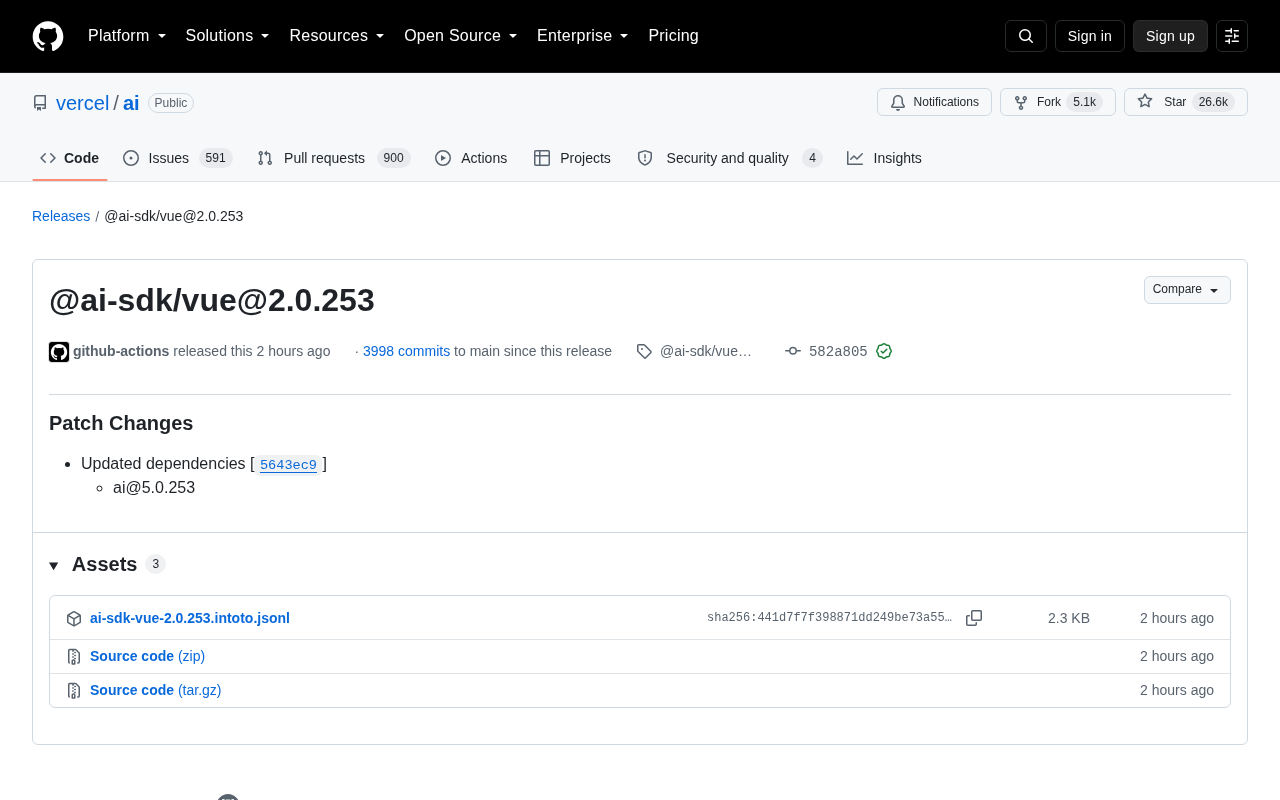
Vercel AI SDK Vue 2.0.253 Update Analysis: Multi-Framework Adaptation Strategy and Development Practices
In-depth analysis of Vercel AI SDK Vue 2.0.253 patch update, covering its multi-framework architecture, dependency sync mechanism, and practical value for Vue developers integrating AI capabilities.