OpenAI Control Room: A Central Monitoring and Circuit-Breaker System for Model Workloads

OpenAI introduces Control Room to track and quickly abort model workloads across research infrastructure.
OpenAI's research infrastructure consists of distributed compute resources and model workloads, traditionally monitored by individual teams, leading to fragmented visibility and slow response. Control Room brings these workloads into a unified view and quickly stops relevant tasks when safety or security anomalies occur. Its core capabilities are tracking for global visibility and circuit-breaking for rapid intervention, forming a closed loop of runtime governance.
Title
OpenAI Control Room: A Central Monitoring and Circuit-Breaker System for Model Workloads
Meta Description
OpenAI introduces Control Room, a central system for tracking model workloads across research infrastructure and quickly halting relevant tasks when safety or security concerns arise, offering a runtime governance approach for large-scale AI infrastructure.
Article Content
When model training and research tasks are spread across complex compute clusters, how can engineers ensure they can immediately "call a stop" if a safety or security anomaly occurs? OpenAI's answer is Control Room—a central system that tracks and terminates model workloads across research infrastructure.
Why a Central Control Room Is Needed
OpenAI's research infrastructure is not a single cluster but a distributed environment woven together from vast amounts of compute resources and model workloads. As models grow larger and task chains grow longer, safety and security teams face a shared challenge: anomalies can occur at any node, and the traditional approach of relying on each team to monitor its own systems carries the risk of fragmented visibility and slow response.
Control Room is positioned precisely to fill this gap. It brings scattered model workloads into a unified view and retains the ability to quickly abort them, so that safety or security concerns can be turned into action at the earliest moment rather than remaining on an alert dashboard.
A model workload refers to a concrete task instance that consumes compute resources, such as training, fine-tuning, inference, or evaluation, and may exist as a job, container, or distributed process. In large research clusters, a single model often corresponds to multiple parallel tasks, and tasks start and stop dynamically as experiments progress, so "workload" is a more suitable object for tracking and control than "model." Understanding this granularity difference helps clarify why Control Room needs to build a global view oriented around workloads rather than models themselves.
What Control Room Solves
Based on public descriptions, Control Room's core capabilities can be divided into two layers.
Tracking: Making Workloads "Visible"
The first layer is visibility. The system needs to identify and track model workloads across research infrastructure, meaning it is not limited to a single training task but covers the overall operating state of the research environment. For safety teams, this global view is a prerequisite for judging the scope of risk—only by knowing what is running and where it is running can they assess the impact.
Circuit-Breaking: "Stopping" Risk
The second layer is intervention capability. Control Room is designed to quickly stop relevant workloads when safety or security concerns arise. The combination of tracking and termination upgrades it from a mere monitoring dashboard to an actionable control point. This closed loop of "observability + intervenability" is an often-underestimated part of research infrastructure governance.
The term "circuit-breaking" is borrowed from the circuit breaker pattern in distributed systems: when an anomaly or risk is detected, calls to or execution of a resource are proactively cut off to prevent the failure from spreading. In model training scenarios, circuit-breaking means precisely terminating specific workloads without taking down the entire cluster. Compared with simply shutting down, circuit-breaking emphasizes speed, controllability, and recoverability, and usually requires coordination with scheduling systems and resource managers to complete the abort without affecting other tasks.
Implications for AI Infrastructure Governance
Control Room reflects a way of thinking: model safety is not only a matter of alignment algorithms or content filtering, but also includes runtime infrastructure control. When an organization's research compute reaches a certain scale, safety teams must have a unified cross-system operating interface; otherwise, response speed will be slowed by organizational boundaries.
Another signal worth noting is that such systems treat "stopping" as a first-class capability. As model capabilities continue to grow, being able to reliably and quickly abort workloads is itself a piece of safety infrastructure. For teams building large-scale training platforms or research clusters, Control Room offers a reference paradigm: put tracking and circuit-breaking in the same central system rather than dispersing them across business lines.
Runtime governance refers to safety constraints enforced during system operation rather than at the design or deployment stage, including real-time monitoring, access control, and emergency intervention. It complements "model-layer" safety measures such as model alignment and content filtering: the latter constrain model outputs, while the former constrain how, by whom, and where models are run. For large-scale training platforms, runtime governance capability determines whether safety teams can respond to anomalies in minutes rather than hours, which is also why Control Room is regarded as safety infrastructure rather than a mere operations tool.
Key Takeaways
- Control Room is OpenAI's central system for tracking model workloads across research infrastructure.
- The system can quickly stop relevant model workloads when safety or security concerns arise.
- Its value lies in combining global visibility with rapid intervention to form a closed loop of runtime governance.
- For large-scale AI research infrastructure, "abortability" should itself be regarded as part of safety capability.
One-line Summary
OpenAI introduces Control Room to track and quickly abort model workloads across research infrastructure.
Paragraph Summary
OpenAI's research infrastructure consists of vast amounts of distributed compute resources and model workloads, traditionally monitored by individual teams, which leads to fragmented visibility and slow response. Control Room, as a central system, brings scattered model workloads into a unified view and quickly stops relevant tasks when safety or security anomalies occur. Its core capabilities fall into two layers: tracking provides global visibility, and circuit-breaking provides rapid intervention; together they form a closed loop of observable and intervenable runtime governance. The article notes that this reflects how model safety is not only a matter of algorithm alignment but also includes infrastructure-level runtime governance, and that "abortability" should itself be regarded as a safety capability.
Related articles

How Do Cursor, Devin, TRAE, and Copilot Compare on Price? Calculate Your Credits Before You Compare Monthly Fees
Side-by-side comparison of individual and team pricing for Cursor, Devin Desktop, TRAE, and Copilot, breaking down credit rules, third-party model inclusion, overage billing, and practical methods for measuring usage before paying, setting spending caps, and choosing the right tool.
Copilot Retires Three Models: Pro Users Left With Only One Alternative
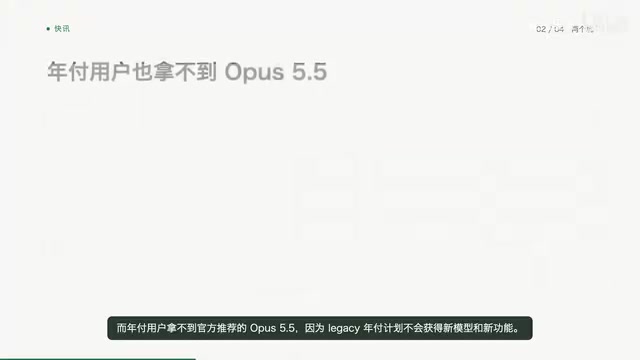
GitHub Copilot retires Claude Opus 4.8, Claude Opus 5, and GPT-5.6 Tera on Nov 16 across Chat, code completion, and Agent mode. Pro users have only GPT-6 Luna left; Legacy annual plans miss Opus 5.5; admins must enable replacements manually.

Gemini 4 Carbon Arrives: The LLM Race Enters the Era of Million-Token Context and Trillion-Parameter Open Source
Google launches Gemini 4 Carbon and multi-agent tool Swarm; Anthropic debuts million-context Fable 5.2 and Mythos 5.2; OpenAI releases security-focused GPT-6 Cyber; Mistral and Kimi open-source trillion-parameter models — the LLM race accelerates across the board.