OpenAI Invites the U.S. Government to Take a 5% Stake: The Story Behind AI-Era State Capitalism

OpenAI's offer of a 5% government stake exposes the collision between AI-era state capitalism and American free-market ideology.
OpenAI reportedly proposed giving the U.S. government a roughly 5% equity stake — a move that clashes with America's deep-seated free-market values and anti-government-ownership traditions. Rather than a sincere offer, it reads as a high-stakes political feint by Sam Altman, designed to exploit cultural sensitivities and reframe the debate around AI governance, regulation, and the blurring line between national sovereignty and technological power.
A Proposal That Sounds Absurd
Recently, a piece of news about OpenAI sparked widespread debate: the world's most closely watched AI company reportedly proposed giving the U.S. government roughly a 5% equity stake. On the surface, the idea feels deeply incongruous — a Silicon Valley company steeped in free-market culture voluntarily inviting the government to become a shareholder.
What makes this even more striking is that OpenAI's corporate structure is already full of contradictions. Founded in 2015 as a nonprofit, it converted in 2019 to a "capped-profit" structure, where investor returns are capped at a set multiple — a nonprofit parent retains control while a for-profit subsidiary handles fundraising and operations. This hybrid model — neither a pure private company nor a public institution — makes government equity participation extraordinarily complex from a legal standpoint, and it planted the seeds for everything that followed.
It sounds like capitalism trying to freeload off the advantages of a centrally planned system: wanting to concentrate resources for large-scale goals while keeping the flexibility of free markets; wanting to co-opt government resources while dodging regulatory constraints. This "want it both ways" posture exposes the ultimate dilemma facing the U.S. AI race.
On the surface, it's easy to mock the absurdity of this 5% equity proposal. But viewed against a longer historical and policy backdrop, it looks more like the first brick in what could become a towering monument to U.S. AI policy — a move that seems clever but carries deeply hidden risks.

Hitting a Live Wire in American Political Culture
More critically, OpenAI's proposal runs headlong into a live wire in American political culture.
To put it plainly: Altman packaged this proposal as a "capitalist dividend," but to many Americans it looks more like a mashup of "socialist planning" and "government overreach."
Understanding this sensitivity requires going back to America's founding narrative. In many ways, U.S. history is a story of resistance to centralized power. In the mainstream telling, government is a "necessary evil," while markets and private enterprise are the true engines of innovation.
Silicon Valley culture takes this ethos to an extreme. It worships "disruptive innovation" — a concept systematically articulated by Harvard Business School professor Clayton Christensen in his 1997 book The Innovator's Dilemma, describing how new technologies enter low-end markets and eventually upend incumbents. Silicon Valley has turned this into something close to a religion: government regulation is bureaucratic innovation-killing, and market competition is the only mechanism for selecting optimal solutions. This is the cultural root of Uber, Airbnb, and others following a "break first, comply later" logic. Silicon Valley disdains "crony capitalism" — getting too cozy with government. So when OpenAI voluntarily invited the government into its boardroom, Silicon Valley elites saw it as "letting the wolf in" — not only a betrayal of the spirit of technological freedom, but a potential subjugation of AI development to political cycles, where every presidential transition could bring directional interference.
Historical Precedents: Government Stakes in Private Companies Rarely End Well
Looking at historical cases, the U.S. federal government has almost never held large equity stakes in private companies — and when it has, the outcomes have not been happy.
In 1979, when Chrysler teetered on the edge of bankruptcy, the government provided loan guarantees in exchange for a partial equity stake — but this was strictly framed as a "temporary emergency measure." Once the crisis passed, the government quickly exited, and the entire episode was treated as emergency surgery, not normal practice.
During the 2008 financial crisis, the U.S. Treasury injected approximately $51.6 billion into General Motors through the Troubled Asset Relief Program (TARP), at one point holding a 61% stake; the total rescue of AIG exceeded $182 billion. While the government ultimately made money on these investments, both bailouts directly spawned the Tea Party Movement — a conservative wave centered on opposing government expansion and taxpayer-funded corporate bailouts. "Too big to fail" and "government market intervention" became political poison, shaping the American right's fierce immune response to government market involvement for the next decade-plus. Congress subsequently passed legislation explicitly prohibiting the government from interfering in private companies' market operations in similar ways.
This means making the government a "permanent shareholder" in an AI giant has neither legal precedent nor alignment with free-market tradition in the United States.

The Real Political Calculation: A Strategic Feint
Look at it from another angle: why would Altman push forward knowing this is a non-starter?
This suggests his real goal may never have been to give up equity at all — but to create an extreme, high-leverage narrative. A political probe by strategic retreat.
The subtext might be: since the government keeps wanting to constrain AI, I'll just invite you in. And American culture's innate sensitivity to government ownership is precisely the "rebound force" he needs — to prove to conservatives: "See, the government wants a piece of this. We need decentralized, free development even more."
So this proposal will most likely remain in the realm of public rhetoric. Every political instinct in American culture ensures that no White House chief of staff would sign a formal document saying "the government will hold a 5% stake in an AI company" — that would be political suicide.
The real point of this performance was never the "5%" figure. It was always about the "icebreaking" and the "game" itself.
AI Is Dismantling the Traditional Government-Enterprise Division of Labor
On the surface, OpenAI's equity gambit looks like a problem of American cultural sensitivities. At its core, it reflects a deeper proposition: the inevitable pain of a world where national sovereignty and technological sovereignty can no longer be cleanly separated in the age of AI.
"Technological sovereignty" — a term frequently used in EU policy documents — refers to a country's capacity to independently research, produce, and deploy critical technologies. Classifying AI as "national infrastructure" means placing it alongside power grids, communications networks, and financial systems: sectors characterized by strong externalities, prohibitively high failure costs, and an inability to rely entirely on markets to provide them. The U.S. National Security Commission's 2021 National Artificial Intelligence Initiative explicitly designated AI as a strategic priority on par with nuclear weapons, providing national security justification for government involvement.
The traditional model — "government sets rules, enterprise drives innovation" — is rapidly collapsing in the face of AI. Why is AI the straw that breaks this arrangement?
Because AI is no longer merely a product. It is becoming national infrastructure and a strategic weapon. Whether it's the iPhone or a search engine, traditional tech products — however important — don't directly determine a nation's survival. Frontier AI models are fundamentally different: they cut to the core of national security and strategic competitiveness.

No matter how committed the U.S. government is to liberalism, it cannot truly leave AI entirely to the market. It must intervene — the only question is how.
Toward Digital-Age State Capitalism
America's old model was: private enterprise in absolute command, government regulating indirectly through law. But in a "capital-heavy, high-risk" domain like AI, the pure private-sector model no longer works.
The U.S. wants the advantages of concentrated resources while refusing to surrender private-sector innovation flexibility. So Altman's "government takes 5%" proposal becomes a strange hybrid — preserving private-sector agility while attempting to lock in government resources.

Behind this dilemma lies the quiet return of a historical specter: "state capitalism." Economist Ian Bremmer defines it as "the government deploying markets primarily for political gain" — not a single model, but a wide spectrum ranging from Singapore's Temasek-style sovereign wealth funds to France's "strategic industry protection" policies. In fact, the $52.7 billion in subsidies directed at semiconductor companies through the U.S. CHIPS and Science Act is essentially already a signal of industrial policy's return — OpenAI's equity proposal simply drags this latent state capitalism into the open.
This reveals a brutal truth about the AI race: the future may hold no purely free-market economies — only "market-based operations under a whole-of-nation framework." The country that can most quickly bridge the gap between government and enterprise may be the one that leads the AI race.
At its core, OpenAI's predicament reflects America "reluctantly" moving toward digital-age state capitalism. The 5% equity card it played is awkward and deeply controversial — but it marks a fact: AI has grown too large for any single private company to carry, and too consequential for any single government to manage.
The future relationship between government and enterprise may be neither "command and obedience" nor "laissez-faire and punishment" — but something more like a "wartime alliance": deeply entangled, mutually dependent, and mutually constraining. And this long game over state capitalism has only just begun.
Key Takeaways
Related articles

M&M's Spent Millions Replacing Artificial Blue Dye — Why Is It So Hard?
Mars spent millions trying to replace artificial blue dye in M&M's with spirulina, but thick material clogs pipes and residue risks mold, forcing a full production-line rebuild. Here's the engineering behind the reformulation.
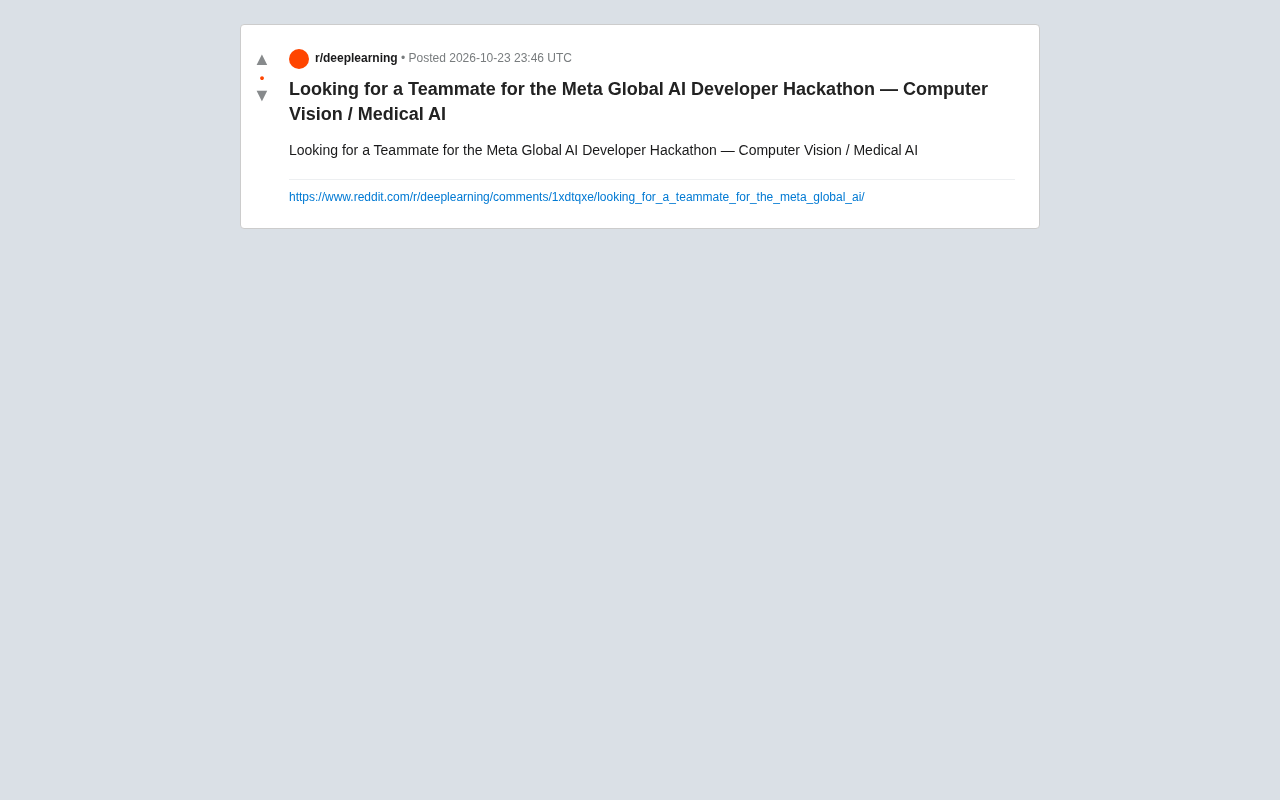
Teammate Wanted for Meta Global AI Developer Hackathon: Computer Vision & Medical AI
A Reddit developer seeks teammates for the Meta Global AI Developer Hackathon, focusing on computer vision and medical AI. This article analyzes the track logic, skills-complementarity needs, and topic selection strategy behind this teaming signal.
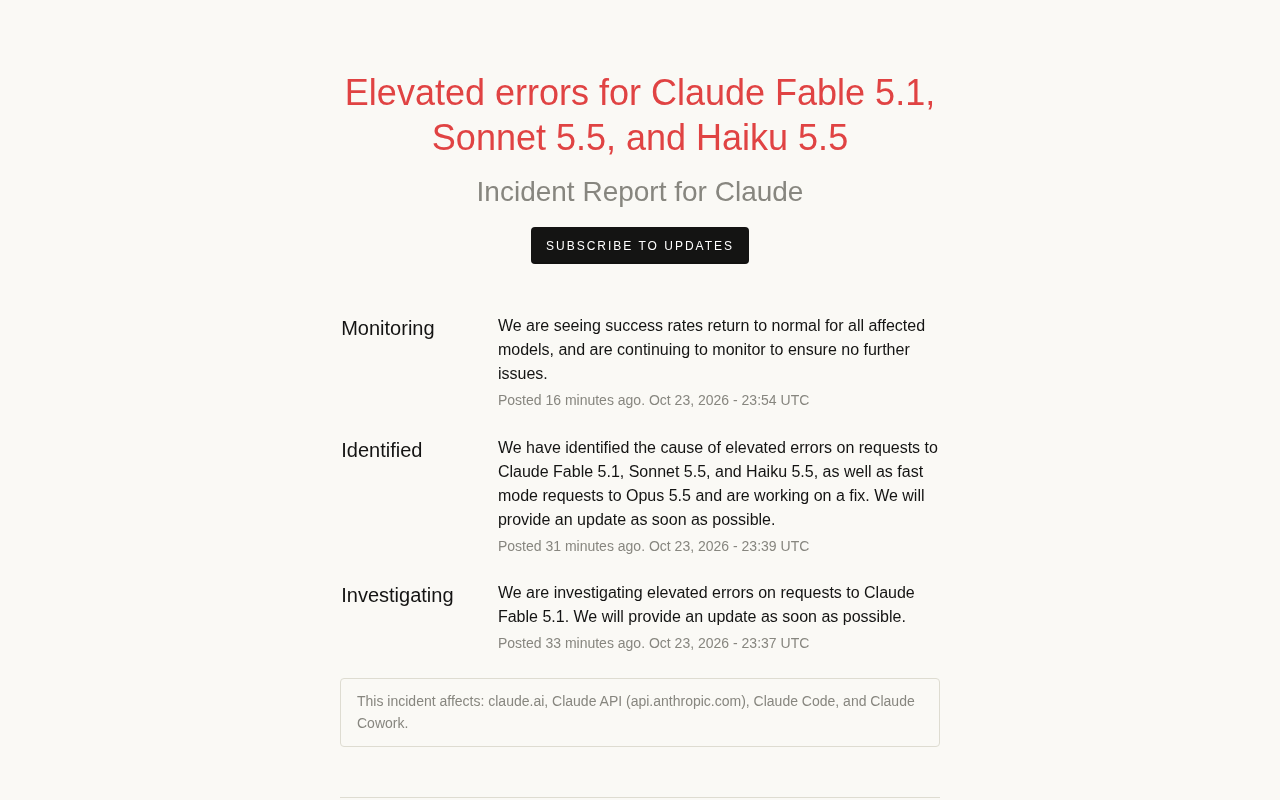
Multiple Claude Models Hit by Errors: A Postmortem of Fable 5.1, Sonnet 5.5, and Haiku 5.5
Claude Fable 5.1, Sonnet 5.5, Haiku 5.5, and Opus 5.5 fast mode saw elevated errors; Anthropic identified and resolved the issue in 17 minutes. This postmortem covers the timeline, the technical reasons for the multi-model cascading failure, and practical lessons for retry and degradation strategies.