OpenAI Releases GPT-6.1 Sol: One-Fifth the Price of Astra, Plus Codex and ChatGPT Updates

OpenAI cuts model costs with Sol, upgrades Codex into a dev platform, and launches team collaboration tools.
OpenAI's latest wave of updates centers on lower costs and expanded capabilities: GPT-6.1 Sol delivers near-flagship Astra-level intelligence at roughly one-fifth the price, with cached input at just $0.10/M tokens — dramatically reducing costs for RAG and Agent applications. Codex evolves into a full development platform with three-environment support and built-in security scanning. ChatGPT Space and the always-on Dots Agent extend collaboration and automation to team workflows, connecting to 4,000+ apps. On the domestic front, iQuest Q1 open-sources a 320B MoE model, DeepSeek releases full Ascend platform infrastructure, and Grok 4.7x High tops cybersecurity benchmarks.
OpenAI recently rolled out a wave of updates all at once, covering the new GPT-6.1 Sol model, developer tool Codex, and enhanced collaboration features in ChatGPT. The standout highlight is a new model that delivers near-flagship performance at roughly one-fifth the price of the previous Astra tier — a significant reduction in inference costs for developers and enterprise users alike.
This article is based on content from the Bilibili AI Daily (September 30) and summarizes the key information from this round of updates. Note that some product names and parameters are as described in the source material; always refer to official OpenAI announcements for the most accurate details.
GPT-6.1 Sol: Near-Flagship Intelligence at a Fraction of the Price
GPT-6.1 Sol is positioned as a model approaching Astra-level intelligence. On pricing, standard input costs $2 per million tokens, output costs $10 per million tokens, and cached input drops as low as $0.10 per million tokens.
The significance of this pricing structure lies in the extremely low cost for cached input, which is especially advantageous for scenarios that involve repeated calls with long contexts — such as building RAG or Agent applications. Compared to the often-doubled costs of flagship models, Sol makes "affordable large model access" a far more realistic option. The model is already live in ChatGPT and available for use in Codex.
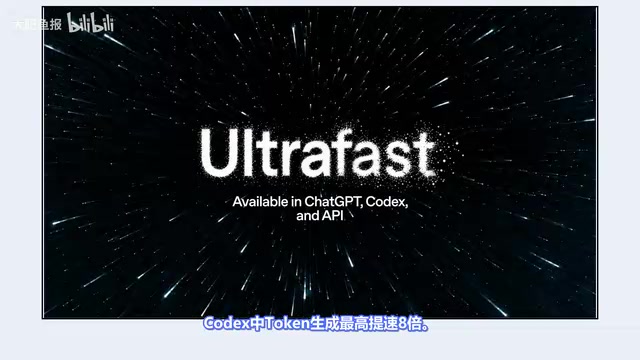
At the same time, OpenAI introduced a premium speed tier called Ultrafast, designed for high-demand workloads. According to the source material, token generation in Codex can be up to 8x faster, with API speeds up to 6x faster, and Astra Ultra-High Speed is also now live. This tier is exclusive to the $5/month Pro plan and is specifically optimized for latency-sensitive applications.
Token Caching (Prompt Caching) is a cost optimization mechanism in large model APIs: when the same prefix (such as a system prompt or a long document background) appears repeatedly across multiple requests, the provider can cache and reuse the computed result, charging a lower fee for that portion of the input. GPT-6.1 Sol's cached input pricing is just 5% of the standard input rate ($0.10 vs. $2), meaning that in RAG knowledge base Q&A or multi-turn Agent conversations, the repeated long-context portions are nearly negligible in cost. Overall call costs will drop significantly as the cache hit rate increases.
RAG (Retrieval-Augmented Generation) is an architecture that combines external knowledge bases with language models: the system retrieves relevant document snippets before generating a response, then feeds them into the prompt for the model to process. Since every call must carry the retrieved long text, RAG scenarios are extremely sensitive to token usage, making the dramatic reduction in caching prices especially critical for such applications.
Codex Gets a Major Upgrade: Multi-Platform Execution and Security Scanning
The direction of this Codex update is clear — evolving from a pure code generation tool into a full-featured development collaboration platform.
Codex Cloud now supports running across three environments: local machine, mobile, and cloud, with reusable development environments and shared configurations across teams. This means the development workflow is no longer tied to a single device, and mobile can now handle some development tasks as well.
Additionally, the Agents API has entered preview, with support for "computer use" capabilities. Codex also added an Agent view for voice conversations and math-related tasks, further diversifying interaction modes.
Security is a major focus in this update. Codex's security cloud (referencing the Daybreak Blue model in the source material) can scan entire code repositories and new commits, automatically deduplicating on GitHub and preparing fix suggestions. For teams, this effectively embeds code auditing and vulnerability detection into the everyday development workflow. Additionally, Codex now offers shareable profile pages as a plugin for both desktop and web, aggregating sites and plugins for others to discover and reuse — though permissions are limited to within the workspace.
MoE (Mixture of Experts) is a sparse computation approach widely used in large-parameter models: the model consists of multiple "expert" sub-networks, and only a small subset is activated per inference pass rather than all parameters. Of iQuest Q1's 320B total parameters, only 15B are activated per token — meaning actual inference compute consumption is far lower than a dense model of comparable scale, significantly reducing deployment costs while maintaining high performance. Leading open-source models like Llama, Mixtral, and DeepSeekAd all use similar designs.
Ascend (昇腾) is Huawei's AI accelerator chip series, with the Ascend 950 being its latest high-end model, positioned to compete with NVIDIA's H100/H200. DeepSeek open-sourcing the TileLang compiler, compute libraries, and communication libraries for the Ascend platform aims to replicate the CUDA-based software stack on domestic chips, enabling model training and inference frameworks to run efficiently on non-NVIDIA hardware — a critical step in building a coordinated domestic AI hardware-software ecosystem.
ChatGPT Space and Dots: Built for Team Collaboration
ChatGPT Space is the new feature introduced in this round aimed at team collaboration and co-creation. It supports dynamic pages that can contain charts, dashboards, and images, and users can have ChatGPT convert conversation content directly into pages or slides. This feature is now available to Pro, Business, and Enterprise plan users.
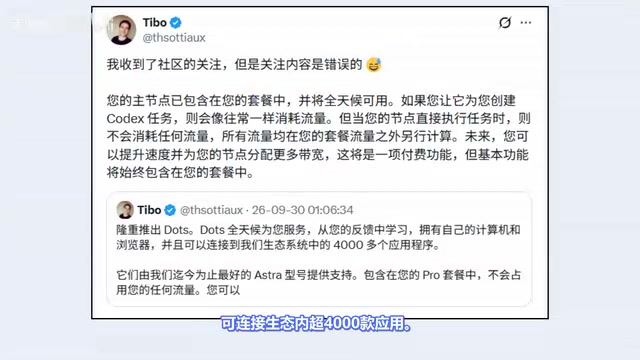
Complementing the collaboration capabilities, OpenAI also launched Dots — an Agent that works around the clock. It comes with a computer and browser and can connect to over 4,000 apps in the ecosystem. The primary Dot is included in the plan, available all day without consuming additional usage credits, lowering the psychological barrier to long-term use.
Additionally, "Sign in with ChatGPT" launched at the same time. When users authorize, partner apps receive only the user's name, email, and profile picture — striking a fairly restrained balance between convenience and privacy.
"Sign in with ChatGPT" is an OAuth identity authentication service launched by OpenAI, similar in function to Sign in with Google or Apple. Once partners integrate it, users can authorize third-party apps with a single click using their ChatGPT account. OpenAI only shares three basic pieces of information with the partner — name, email, and profile picture — without passing along conversation history or usage data. This design reduces friction for users registering with new services, and is also an important step for OpenAI in expanding ChatGPT from a standalone product into a platform ecosystem entry point. Through this unified identity layer, the 4,000+ apps connected by Dots can achieve account interoperability as well.
Domestic and Competitor Updates: Open Source and the Speed Race
Beyond OpenAI, the source material also highlights several noteworthy industry developments.
A model codenamed iQuest Q1 has been officially open-sourced, using a MoE architecture with 320B total parameters, 15B activated per token, and a context length of 512K. In benchmark testing, it scores 84.5 on CyberGem and 83.2 on Terminal Bench 2.1, with specs targeting high-end inference requirements.
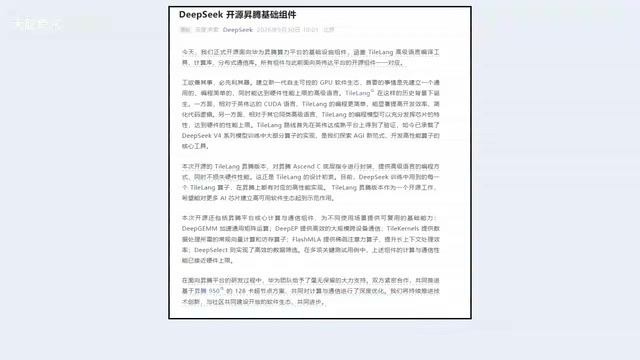
DeepSeek has open-sourced infrastructure components for the Ascend platform, covering TileLang, compute libraries, and communication libraries — directly mirroring the open-source components for the NVIDIA platform. Both parties are jointly advancing 128-card super nodes based on the Ascend 950. DeepSeek's elastic compute team is actively hiring senior engineers, focusing on large-scale Agent training sandboxes and other infrastructure, with related technical writeups published on Zhihu. This reflects the continued investment in hardware-software co-development within the domestic AI compute ecosystem.
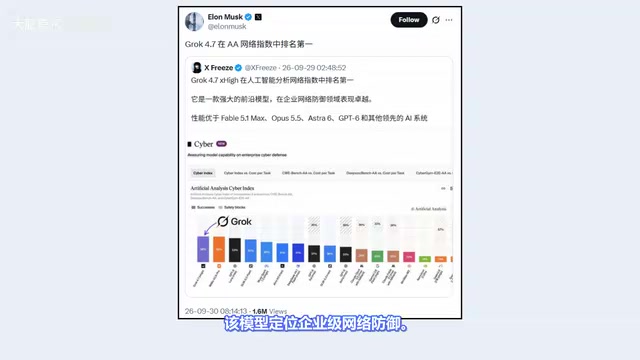
On the competitor front, Grok 4.7x High topped the AA cybersecurity index. Musk claimed its performance surpasses comparable models, and it has been opened up to subscribers. The multi-dimensional speed race among top-tier vendors in security and performance continues to intensify.
Summary
The throughline of this round of updates is clear: OpenAI dramatically reduces the cost of model usage through Sol, while upgrading both Codex and ChatGPT from tools into collaborative platforms. Meanwhile, the domestic AI camp is accelerating its catch-up through open source and compute infrastructure. For developers, the combination of low-cost, high-performance models and multi-platform Agent tools is materially lowering the barrier to deploying real-world AI applications.
Related articles

GitHub Daily · October 23: Agent Runtimes and Skill Libraries Surge on the Same Day
NVIDIA open-sources OpenShell, a Rust security runtime for autonomous agents; Claude-Red turns security methodology into SKILL.md skills; VoxCPM2 drops the tokenizer.

Build an AI Super Employee System at Zero Cost: A Full Breakdown of Automated Agent Workflows
A deep breakdown of the AI super employee system demoed on Bilibili: agent orchestration, digital human voiceovers, map and enterprise lead generation, 24/7 customer service, and legal modules. We analyze the business logic and compliance risks behind zero-cost signup to help entrepreneurs judge the real ROI of this AI digital employee system.

The Essential Difference Between Chatbots and AI Agents: Crossing from Conversation to Execution
What's the difference between a chatbot and an AI agent? Based on the MCP series on the Learn Tech channel, this article uses examples like booking flights and summarizing notes to explain: a chatbot only gives answers, while an agent actually completes tasks through a think-act-observe loop. It breaks down the four core components—model, tools, memory, and goal—as well as MCP's role as a bridge, and discusses agents' applicable boundaries and permission risks.