OpenAI's Single Month Revenue Exceeding an Entire Quarter? The Growth Logic Behind GPT-5.6

Analyzing the unverified claim that OpenAI's single-month revenue exceeded an entire quarter driven by GPT-5.6.
A low-engagement Hacker News post claims OpenAI's July revenue surpassed all of Q2, attributed to GPT-5.6's release. While unverified, this rumor illustrates the powerful 'model as product, iteration as growth' flywheel in AI commercialization. The article examines OpenAI's accelerating iteration cadence, the business logic of intermediate version releases, and provides critical analysis of why such claims require cross-verification before acceptance.
A Revenue Rumor Worth Scrutinizing
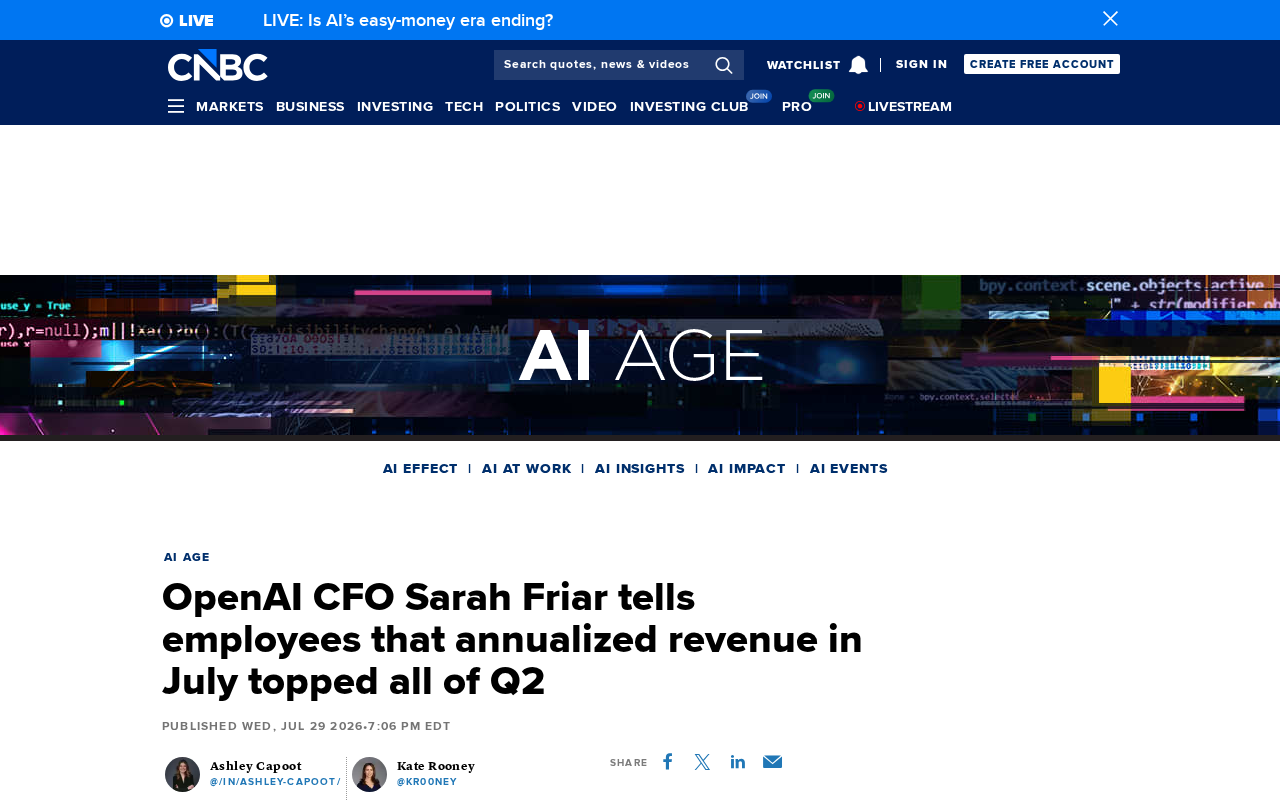
Recently, a piece of news from Hacker News caught attention: it claims that OpenAI's revenue in a single month (July) surpassed the entire second quarter (Q2) combined, with this explosive growth attributed to the release of GPT-5.6.
It's important to note upfront that this information has only appeared on Hacker News with very low engagement (5 points, 0 comments), lacking cross-verification from OpenAI's official financial reports or authoritative media outlets. Hacker News is a tech news aggregation platform operated by Y Combinator, with programmers and entrepreneurs as its core user base. Its open nature means unverified information can be posted just as easily as verified news. A post receiving only 5 upvotes and zero comments typically means the community has not yet effectively validated or discussed it. The specific version number GPT-5.6 has also not been officially confirmed. Therefore, this article treats this information as an "industry hypothesis" — even if the numbers themselves are questionable, the revenue growth patterns and business logic it reveals are still worth analyzing in depth.
What Does Single-Month Revenue Exceeding a Quarter Mean?
If the claim that "July's single-month revenue exceeded all of Q2" holds true, it represents an extremely steep growth curve.
The Mathematical Implications of Such Growth
A quarter contains three months. If a single month's revenue can exceed the entire previous quarter, it means revenue achieved a multi-fold leap in an extremely short period, rather than a slow linear climb. This type of growth typically only occurs in two scenarios:
- Major new product launch: A new model that significantly improves capabilities or reduces costs goes live, triggering massive user upgrades and new paid subscriptions.
- Concentrated release of enterprise orders: Large customer annual contracts or API usage confirmations cluster at a specific point in time, causing step-function revenue changes.
Attributing the growth to the "GPT-5.6 release" corresponds precisely to the first scenario — a new model version serving as the revenue engine.
Why Model Iterations Can Drive OpenAI Revenue Growth
For companies like OpenAI whose core business model revolves around API calls and subscriptions, every substantive improvement in model capabilities can directly translate into revenue. Specifically, OpenAI's business model rests on two main pillars: first, a usage-based billing model for developers via APIs (Application Programming Interfaces), where developers pay per token for each model invocation processing text, images, or code — similar to on-demand cloud computing; second, subscription services for end users including ChatGPT Plus/Pro/Team/Enterprise, charging fixed monthly fees. The API model's characteristic is that revenue correlates strongly with usage volume — when model capabilities improve, developers shift more tasks to AI processing, and per-customer API call volume naturally grows.
Stronger models make developers willing to migrate more workloads, give enterprises the confidence to entrust critical business processes to AI, and increase paid users' renewal willingness. This is the classic AI business flywheel of "model as product, iteration as growth" — stronger models lead to higher usage, which leads to higher revenue, creating a positive feedback loop.
Reading OpenAI's Product Iteration Rhythm Through GPT Version Numbers
Regardless of whether GPT-5.6 actually exists, OpenAI's version naming strategy in recent years reflects its high-frequency product iteration cadence.
The Historical Arc of Accelerating Iterations
OpenAI's model version evolution has undergone clear acceleration: GPT-3 (2020) to GPT-3.5 (November 2022, launched with ChatGPT) took about two years; GPT-3.5 to GPT-4 (March 2023) took about four months; afterward, GPT-4 spawned sub-versions including GPT-4 Turbo (faster and cheaper), GPT-4o (multimodal optimized version, "o" stands for omni), and GPT-4o mini. This naming strategy shows OpenAI has shifted from traditional software's major version release cadence toward a continuous delivery model more akin to internet products.
The Business Strategy Behind Decimal Point Versions
From GPT-4 to GPT-4 Turbo to GPT-4o, OpenAI has increasingly favored releasing intermediate versions through "small steps, fast pace" rather than waiting for a complete major version number. A naming convention like "5.6" suggests an approach of continuous optimization and gradual rollout between two major versions.
The business significance of this strategy includes:
- Continuously creating upgrade justifications: Each intermediate version can generate a wave of user upgrades and media attention.
- Smoothing revenue curves: Avoiding over-dependence on a single major version release reduces growth volatility.
- Rapidly responding to competition: Facing competitors like Anthropic and Google, high-frequency iteration is a key means of maintaining perceived technological leadership. The current AI industry competitive environment is unprecedentedly fierce — Anthropic's Claude series has formed differentiated advantages in long-context understanding and safety, Google's Gemini series leverages search and cloud service ecosystems for integration, Meta's Llama series competes for developer communities through open-source strategies, and emerging forces like Mistral and xAI are also in play. In this competitive landscape, model iteration speed is not just a technical issue but a battle for market share — developers' switching costs are relatively low, and once competitors gain advantages in price-performance ratio, API customers may quickly switch providers.
Maintaining a Cautious Attitude Toward AI Revenue Rumors
As tech content readers, maintaining critical thinking when facing such "explosive revenue" rumors is particularly important.
Three Core Points of Doubt
First, the information source is singular and has extremely low engagement. With only one Hacker News post, no comments, and no official citations, credibility is limited.
Second, the GPT-5.6 version number is unconfirmed. This version is not currently a publicly confirmed product name, and it may be community speculation, misinformation, or forward-looking discussion.
Third, the revenue metric is ambiguous. "Revenue exceeding all of Q2" lacks specific numbers, measurement standards, and temporal context, making it impossible to determine whether it refers to annualized revenue, recognized revenue, or bookings. Understanding different revenue measurement methods is crucial when interpreting AI company revenue data: "ARR" (Annual Recurring Revenue) is an estimate obtained by multiplying a single month's revenue by 12, commonly used by SaaS companies to showcase growth momentum, but may exaggerate actual scale due to short-term fluctuations; "Recognized Revenue" is actual revenue confirmed after service delivery according to accounting standards; "Bookings" include contracted but not yet delivered contract amounts. Previous media reports showed OpenAI's annualized revenue growing from $1.6 billion at the end of 2023 to $3.4 billion in mid-2024, and exceeding $4 billion by the end of 2024, but the specific metrics and statistical time points of these figures often vary.
How to Rationally View OpenAI Growth Data
In the AI industry, OpenAI's rapid revenue growth is a well-documented macro trend — multiple organizations have previously reported its rapidly climbing annualized revenue. Therefore, "single-month revenue hitting new highs" is directionally reasonable, but specific assertions like "exceeding the entire previous quarter" require confirmation from official or authoritative channels.
Conclusion: Thinking Beyond the AI Commercialization Growth Story
This unverified piece of news essentially tells a story about "AI model iteration driving commercial growth." It reminds us of two things:
First, in the AI field, the conversion between technical capability and commercial revenue is becoming unprecedentedly tight — a successful model release could represent an order-of-magnitude revenue leap. This stands in stark contrast to the traditional software industry: feature updates in traditional SaaS products typically bring incremental user growth, while generational improvements in AI models can reshape entire use cases and willingness to pay in the short term.
Second, the more astonishing the data, the more cross-verification is needed. In an age of information explosion, learning to distinguish between "verified facts," "reasonable trends," and "unverified rumors" is a fundamental skill for every tech professional.
Until OpenAI's official financial reports or authoritative coverage emerges, we might as well treat this piece of news as a window for observing AI commercialization progress, rather than a foregone conclusion.
Key Takeaways
Related articles

Getting Started with Claude Code: A Complete Tutorial for the Terminal-Native AI Programming Assistant
Complete guide to Claude Code setup, multi-model switching, code generation, and project refactoring. Master this terminal-native AI coding tool for efficient command-line development.

Modelstamp: Adding Integrity Verification and Environment Drift Detection to ML Model Persistence
Modelstamp is a lightweight open-source tool that adds SHA-256 integrity checks, dependency drift reports, and HMAC authentication to ML model persistence workflows for scikit-learn and beyond.

Complete Guide to Connecting Claude Code with DeepSeek: Low-Cost AI Programming in Practice
Complete guide to installing Claude Code and connecting it to DeepSeek via CC-Search for low-cost AI programming. Covers Node.js setup, config file editing, API keys, and hands-on testing.