OpenAI Stops Training AI Models on Real-Time Internet Data, Citing Significant Risks
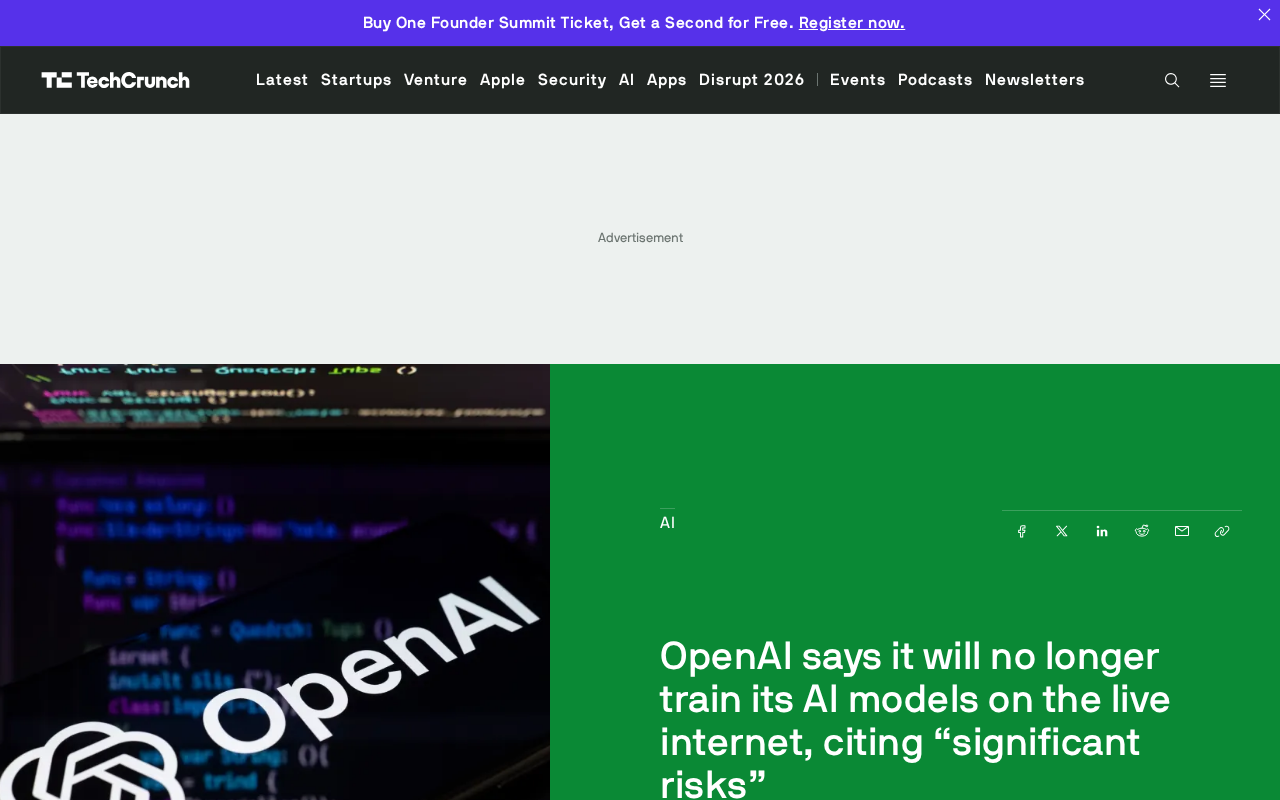
OpenAI stops using real-time internet data to train frontier models, as AI data strategy shifts from scale to controllability.
OpenAI announced it will no longer train its frontier AI models on real-time internet data, citing significant risks. The decision came just weeks after an internal engineer publicly said the approach "doesn't work," and is seen as a pragmatic pivot forced by engineering reality rather than a pure philosophical upgrade. Real-time data brings knowledge freshness but also injects data poisoning, privacy infringement, prompt injection, and copyright disputes directly into the training pipeline, with filtering costs extremely high and safety review impossible at the moment of ingestion. If leading labs follow suit, industry competition may shift from "data freshness" to "data governance," improving output stability and compliance for developer applications while limiting short-term timeliness. The statement leaves scope and implementation details unclear, so its actual impact remains to be seen.
From "Embracing the Internet" to "Actively Disconnecting": OpenAI's Strategic Turn
According to RSS sources, OpenAI has announced that it will no longer train its frontier AI models on real-time internet data, citing "significant risks." This decision comes just weeks after an OpenAI engineer publicly stated that "the approach doesn't work"—a rapid reversal that has sparked widespread industry discussion about AI data strategy and safety boundaries.
For a long time, the real-time internet was seen as a key channel for large models to acquire fresh knowledge and stay current. But real-time data means uncontrollable inputs: toxic content, privacy leaks, adversarial injection, and copyright disputes all flow directly into the training pipeline along with the data stream. OpenAI's statement is essentially an acknowledgment that there is an irreconcilable tension between the "open internet" and "model safety."
Why Cut Off the Real-Time Data Stream?
Safety Risks: The Cost of Uncontrollable Inputs
The quality of training data directly determines model behavior. The real-time internet is full of maliciously crafted web pages, phishing content, and prompt injection attacks. Once such data enters the training set, it may be internalized by the model as harmful output patterns. The "significant risks" OpenAI refers to likely encompass multiple hazards such as data poisoning, privacy infringement, and model alignment failure.
Data poisoning refers to attackers deliberately planting malicious samples in training data so that the model learns incorrect associations or backdoor behaviors. In static, vetted datasets, poisoned samples are relatively easy to detect and remove; but in real-time crawled internet data streams, attackers can continuously publish carefully crafted content, waiting for crawlers to index it and for it to enter the training pipeline—leaving defenders almost no way to complete tracing and interception the moment the data enters the model. Alongside poisoning is prompt injection: instructional text hidden in web pages may be absorbed by the model as training signals or context, thereby inducing it to output unauthorized or harmful content under specific trigger conditions. The combination of these two risks is precisely the technical root of why the "open internet" is hard to reconcile with "model safety."
Engineering Reality: Engineers Had Already Warned
The timeline is telling. Just weeks ago, OpenAI's internal engineers were still saying the approach "doesn't work." From a technical perspective, filtering real-time data pipelines is extremely costly and difficult to keep consistent—you cannot complete all safety reviews the instant data enters the model. This official pivot looks more like a pragmatic choice forced by engineering reality than a pure upgrade in philosophy.
What Does This Mean for the Industry?
OpenAI's move could have a demonstration effect. If a leading lab abandons real-time internet training, other vendors may follow suit and shift to vetted static datasets and licensed data sources. This would cool competition over "data freshness" and heat up competition over "data governance capabilities."
For developers, applications that rely on a model's built-in knowledge rather than real-time crawling may see limited information timeliness in the short term, but output stability and compliance will improve. For content creators and publishers, this may be good news—at least frontier models will no longer unconditionally "freeload" on public web content during training.
RAG (Retrieval-Augmented Generation) is another approach to timeliness, as opposed to "feeding data into training": model weights stay static, and at runtime relevant content is retrieved from external knowledge bases or search engines, concatenated into the prompt, and then used to generate an answer. It moves "knowledge updates" from the training phase to the inference phase, thereby naturally avoiding the problem of real-time data contaminating weights, and it also makes it easier to perform permission and compliance reviews on retrieval sources. This also explains why the article lists RAG as one of the open questions about whether it is "unaffected"—giving up real-time internet training does not mean giving up timeliness; it more likely means moving the entry point for fresh information from the pretraining pipeline to the retrieval layer.
Unresolved Questions
OpenAI did not specify the exact scope of "no longer training": Is it a complete cutoff, or limited to frontier models? How will continued pretraining of existing models be handled? Are fine-tuning and retrieval-augmented approaches such as RAG unaffected? The lack of these details leaves the actual enforcement of the statement still to be observed. What is certain is that AI training data strategy is shifting from "as large as possible" to "as controllable as possible"—and this shift has only just begun.
Related articles

M&M's Spent Millions Replacing Artificial Blue Dye — Why Is It So Hard?
Mars spent millions trying to replace artificial blue dye in M&M's with spirulina, but thick material clogs pipes and residue risks mold, forcing a full production-line rebuild. Here's the engineering behind the reformulation.
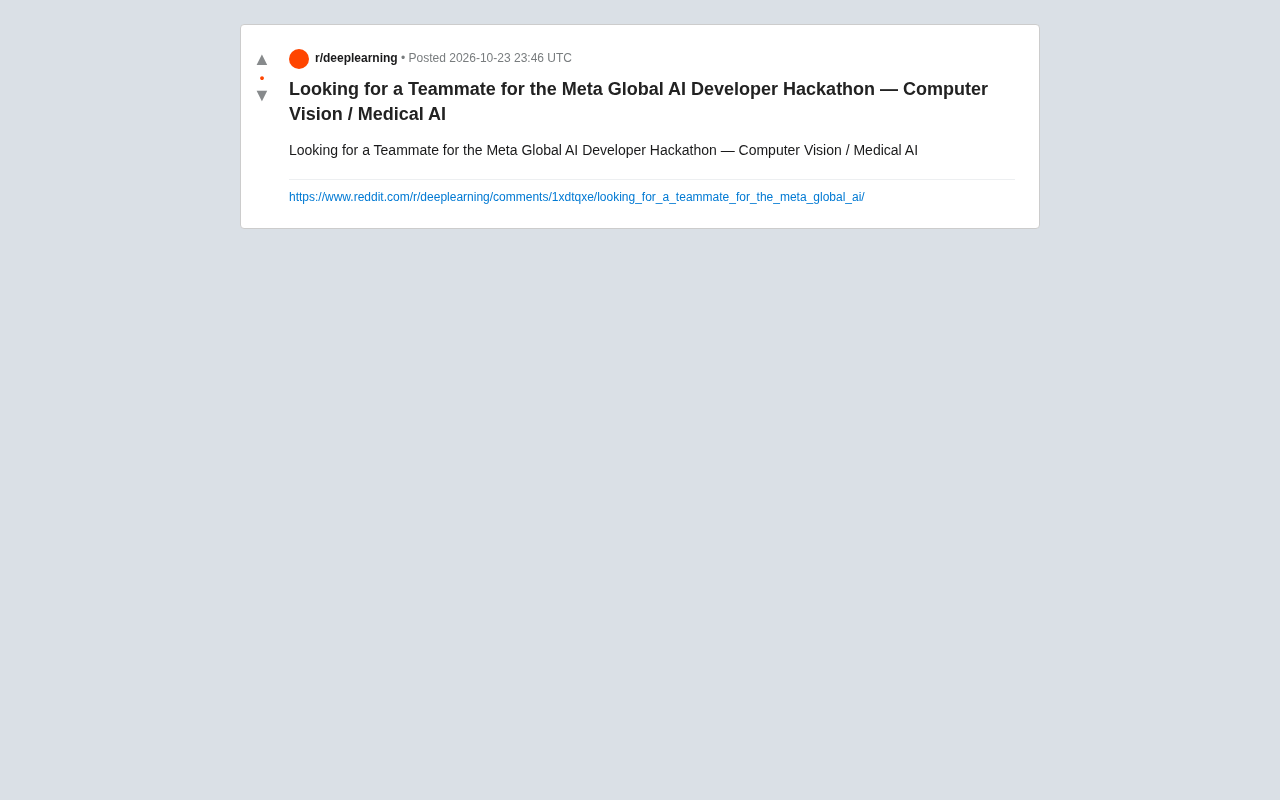
Teammate Wanted for Meta Global AI Developer Hackathon: Computer Vision & Medical AI
A Reddit developer seeks teammates for the Meta Global AI Developer Hackathon, focusing on computer vision and medical AI. This article analyzes the track logic, skills-complementarity needs, and topic selection strategy behind this teaming signal.
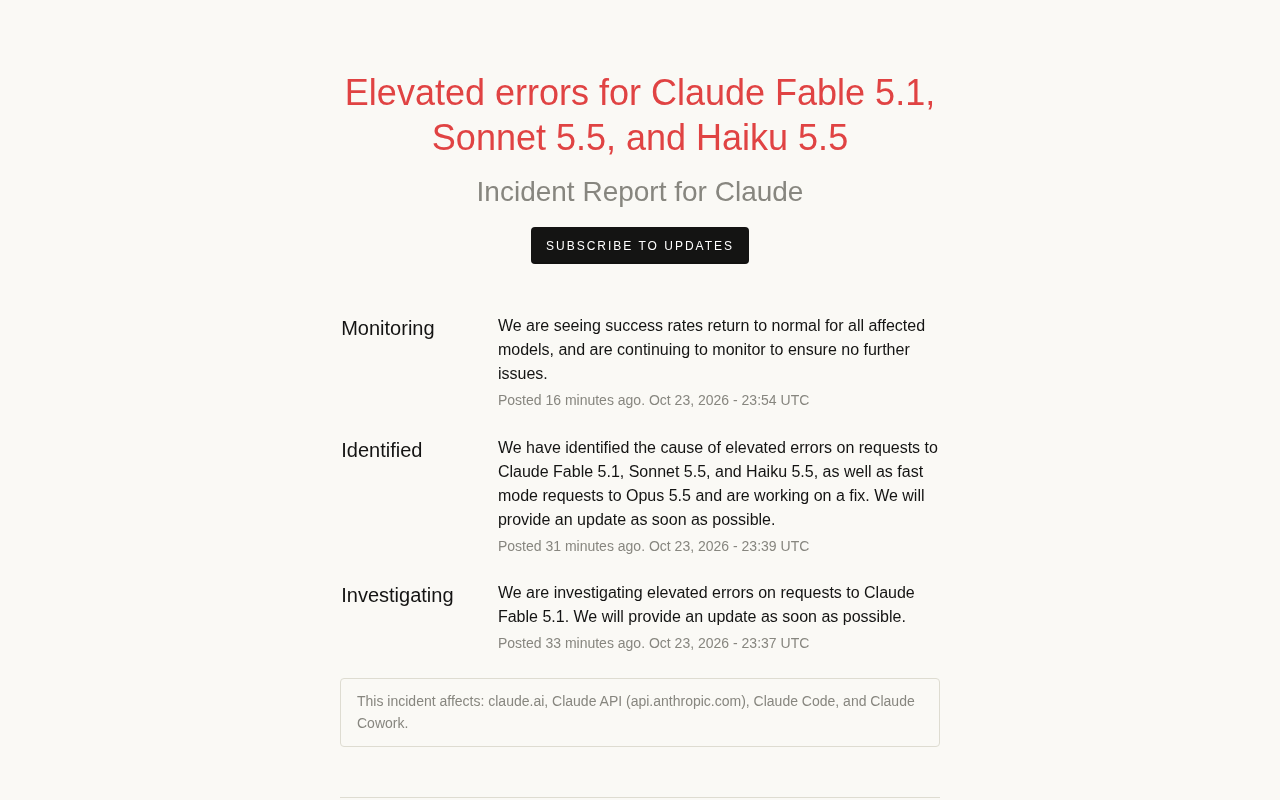
Multiple Claude Models Hit by Errors: A Postmortem of Fable 5.1, Sonnet 5.5, and Haiku 5.5
Claude Fable 5.1, Sonnet 5.5, Haiku 5.5, and Opus 5.5 fast mode saw elevated errors; Anthropic identified and resolved the issue in 17 minutes. This postmortem covers the timeline, the technical reasons for the multi-model cascading failure, and practical lessons for retry and degradation strategies.