OpenBot: A Local-First Desktop Workspace for AI Teammates

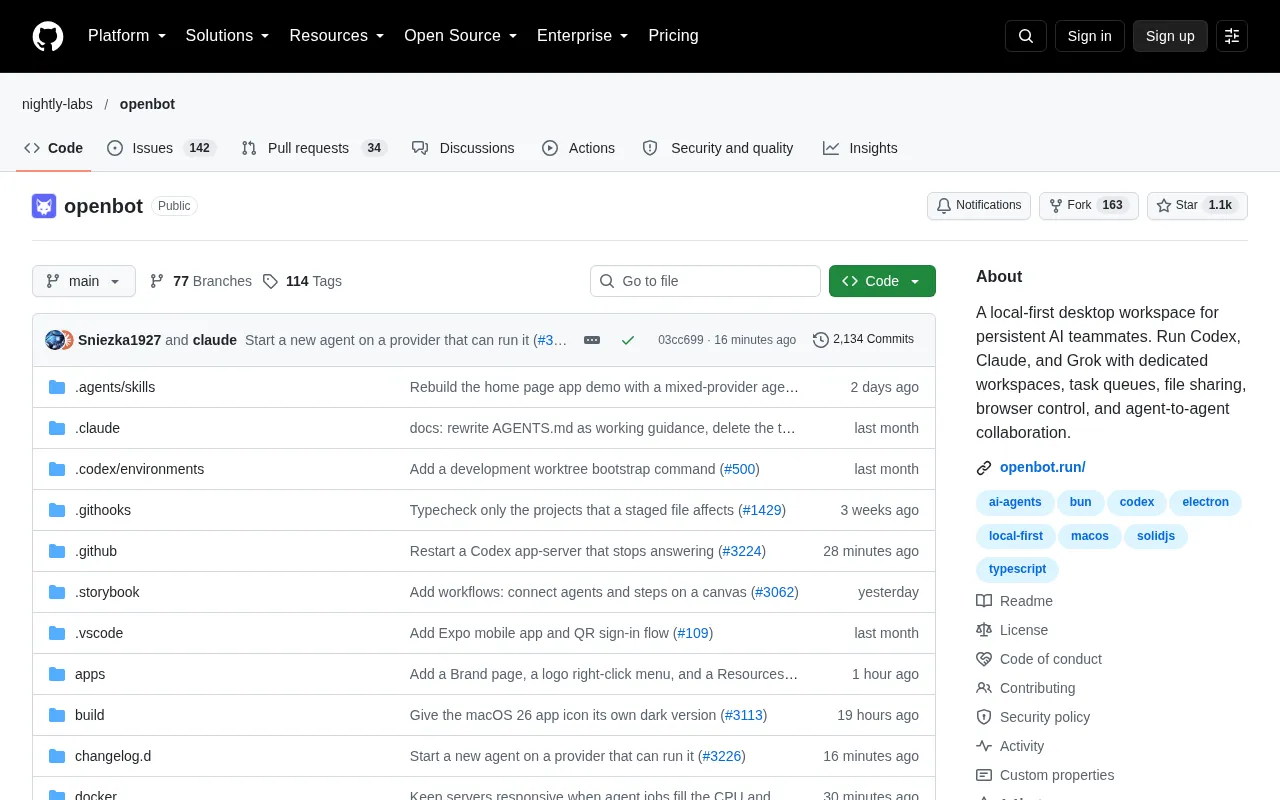
OpenBot turns multiple LLMs into persistent AI teammates with dedicated workspaces and task queues, all in a local-first desktop workbench.
OpenBot is an open-source desktop app on GitHub that transforms models like Codex, Claude, and Grok from use-and-discard chat tools into persistent AI teammates with dedicated workspaces, task queues, and file systems—all running locally. Each model has isolated context and file artifacts, and with task queues, file sharing, browser control, and agent-to-agent collaboration, it supports multi-agent division of labor like "one implements, one reviews." Local-first ensures data never leaves the machine and enables direct file system access, but setup is more demanding. Written in TypeScript, it has 1,063 Stars and 163 Forks. The article notes that multi-agent effectiveness depends heavily on task decomposition and scheduling design, and manual boundaries and acceptance criteria are still needed at this stage.
Why Do You Need "Persistent" AI Teammates?
Most AI coding assistants are still use-and-discard tools—open a chat window, paste code, get an answer, then close it. Every time you start over, context is lost, and task state no longer exists. The open-source project nightly-labs/openbot on GitHub tries a different approach: turning models like Codex, Claude, and Grok into "persistent teammates" with dedicated workspaces, task queues, and file systems—all running locally.
The project is currently written in TypeScript and has accumulated 1,063 Stars and 163 Forks, with 86 new stars in a single day, showing that the direction of a "local-first agent workbench" has indeed struck a chord with many developers.
Core Design: Giving Every AI Its Own "Workstation"
OpenBot's product form is a desktop application, but its underlying logic is more like an operating system for multi-agent collaboration. Its key capabilities can be broken down into several layers.
Dedicated Workspaces and Persistence
Each connected model (Codex, Claude, Grok) can have its own independent workspace. This means the context, file artifacts, and task history of different agents are isolated from one another and won't contaminate each other. The direct benefit of persistence is that you can have an agent continuously follow up on a refactoring task without having to re-explain the background in every conversation.
Workspace In multi-agent systems, this refers to an isolated runtime environment demarcated for a single agent, typically containing independent contextual memory, file directories, and task history. Unlike sharing the same conversation thread, workspace isolation prevents different agents' contexts from contaminating each other—for example, one agent's debugging logs won't get mixed into another agent's code review context. Persistence emphasizes that these states are written to local storage rather than discarded when the session ends, enabling agents to continue tasks across multiple interactions. This design borrows from containerized sandboxes and multi-tenant isolation, and is the foundational premise for "treating models as teammates" rather than "as function calls."
Task Queues and File Sharing
The project provides a task queues mechanism, allowing agents to receive, queue, and execute tasks rather than only passively responding to user instructions. Combined with file sharing, multiple agents can share working files, providing the infrastructure for workflows like "one agent writes code, another reviews it."
Browser Control and Agent-to-Agent Collaboration
OpenBot also includes browser control capabilities, allowing agents to operate a browser to complete tasks that require web interaction. Even more noteworthy is agent-to-agent collaboration—multiple agents can communicate and collaborate with each other, rather than having humans as the sole orchestration center.
What Local-First Means
"Local-first" is OpenBot's most core positioning. At a time when cloud agent services are emerging endlessly, the value of running locally is mainly reflected in three aspects: data never leaves the local machine, direct access to the file system, and no dependence on any vendor's cloud orchestration service. For teams handling private codebases or sensitive projects, this is often more important than the number of features.
Of course, local-first also means users need to manage model integration and runtime environments themselves, which is a higher barrier than out-of-the-box cloud services. This is a trade-off commonly faced by such tools.
The Practical Significance of Using Multiple Models Together
Putting Codex, Claude, and Grok in the same workbench is not just "having one more option." Different models have different strengths in code generation, long-context reasoning, and instruction following. Letting them divide labor as independent teammates—for example, one responsible for implementation and one for review—is closer to how real teams work than repeatedly switching prompts within a single model. OpenBot's workspace isolation and agent-to-agent collaboration are designed precisely for this kind of usage.
Who It's For, and What to Keep in Mind
This project is better suited to developers who are willing to tinker with local environments, have data privacy requirements, and are already using multiple models. Judging from the project's popularity, it is still in a rapid iteration phase, and the TypeScript tech stack also makes it easy for frontend and full-stack developers to contribute.
It should be noted that the actual effectiveness of multi-agent collaboration depends heavily on task decomposition and scheduling design; the tool itself only provides a framework. If you expect a fully automated "AI team," at this stage you still need to manually set boundaries and acceptance criteria.
Summary
OpenBot represents a shift in product thinking: from "calling models" to "managing a team of models." The combination of local-first, persistent workspaces, task queues, and agent-to-agent collaboration points to an AI workspace that is more like an IDE than a chat box. For developers interested in AI coding tools and open-source agent frameworks, its iteration direction is worth following closely.
Background Supplement
Agent-to-agent collaboration (A2A) refers to multiple agents directly exchanging messages, dispatching subtasks, or verifying each other's results, rather than routing all requests through a human intermediary. Common patterns include: an orchestrator agent decomposing tasks and assigning them to executor agents, or one agent generating code while another independently reviews it. The value of A2A lies in allowing differences in model capabilities to complement each other, but it also introduces scheduling complexity—how to divide task boundaries, how to roll back on failure, and how to adjudicate the outputs of multiple agents all require additional protocols and manually set acceptance criteria. Currently, there is no unified industry standard, and implementation approaches vary considerably across projects.
Related articles

23-Year-Old Builds $45K/Month App with Zero Code Using Claude Code + Cursor
23-year-old developer Conor Burr used Claude Code and Cursor to build the class-action settlement app Payout with zero code in 10 days, reaching $45K/month. Discover his rapid build, paywall design, and equity partnership growth strategy.

Mozy: An App Blocker That Trades Steps for Screen Time
Mozy is an app blocker that links walking to screen time, letting users earn minutes for distracting apps by taking steps. We analyze its core mechanism, target users, design highlights, and market prospects, exploring whether this step-for-screen-time model can effectively reduce phone dependency.
omerta: Using Real Environment Variable Values to Stop .env Secret Leaks
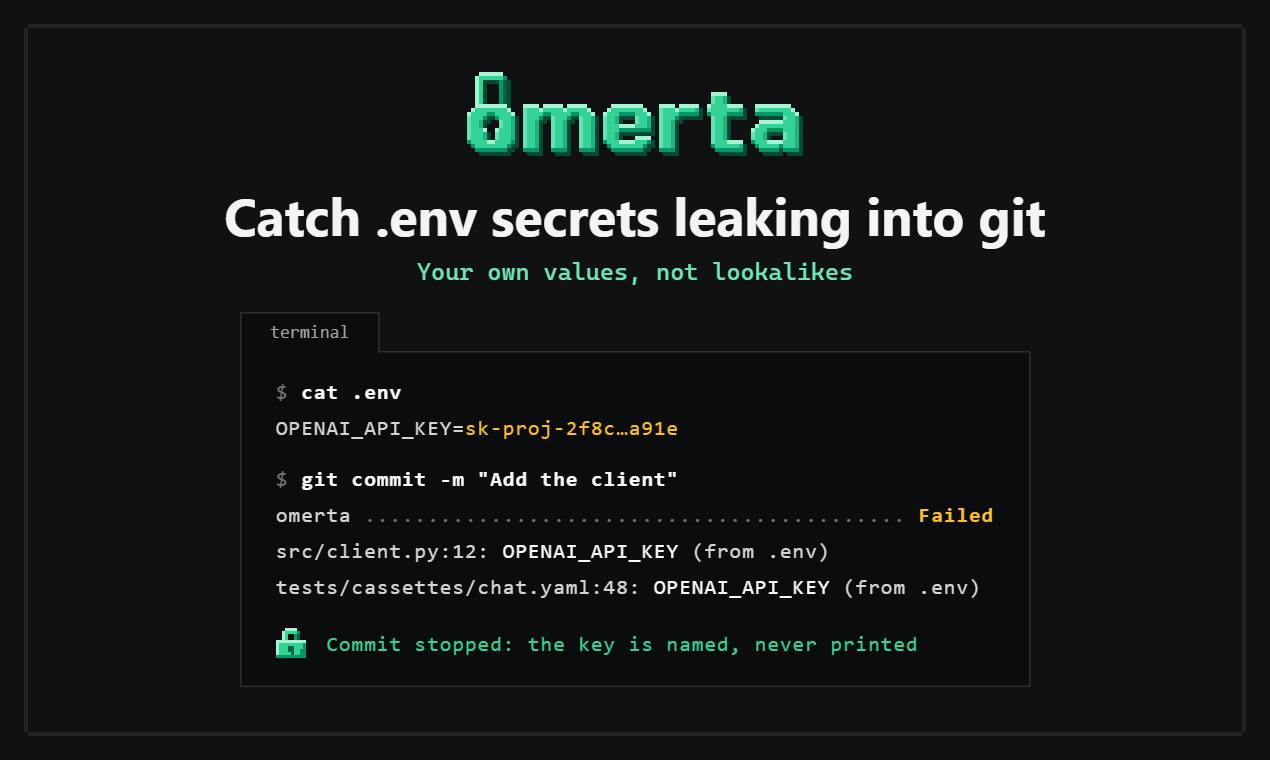
omerta is an open-source developer tool that catches .env secret leaks in pre-commit and Git history by comparing real environment variable values rather than pattern matching, reducing false negatives and false positives.