Opus 5.5 Hands-On: More Human-Like Writing, Lower Costs

Opus 5.5 tops agentic coding benchmarks at lower cost while finally ditching the robotic "AI voice."
Anthropic has launched Opus 5.5, the first model in the Claude 5.5 series, matching or surpassing Fable 5.1 in performance at lower compute cost and reduced API pricing. It leads competitors on the unsaturated Terminal Bench 4.0 benchmark and notably improves the stiff, robotic communication style that users had long criticized. In hands-on agentic coding tests, the model demonstrates strong visual verification loops and excels at long-horizon autonomous tasks. Usage quotas have also been raised across the board.
Opus 5.5: Did Anthropic Finally Listen to User Feedback?
Anthropic has officially released Opus 5.5, the first model in the Claude 5.5 series, outperforming its contemporaries on nearly every benchmark. But what truly stands out isn't just the numbers — it's that this model has finally shed the stiff, mechanical "AI voice" that plagued previous Opus releases, and is now capable of genuinely natural, human-like expression.
In terms of positioning, Opus 5.5 matches or exceeds Fable 5.1 in performance while consuming less compute than Opus 5. In other words, Anthropic isn't just stacking intelligence — it's also doubling down on making that intelligence cheaper. For users, this performance-to-cost ratio is one of the most important factors when choosing a model today.
Alongside the release, Anthropic has also cut API pricing — with modest reductions across input tokens, output tokens, and cached tokens. This kind of comprehensive competition across model quality, pricing, and usage incentives is exactly the kind of real-world benefit that a competitive market delivers to users.
Benchmark Performance: Terminal Bench 4.0 Steals the Spotlight
Across agentic coding benchmarks, Opus 5.5 dominates virtually every other model. The most notable result is on Terminal Bench 4.0 — the latest iteration of Terminal 2.1 and one of the few benchmarks not yet saturated. Opus 5.5 performs strongly here, even surpassing Astra and Fable 5.1.
The cost dimension is equally important. Across different reasoning settings, Opus 5.5 leads other models on Terminal Bench while doing so at significantly lower cost. This "better and cheaper" combination holds up across almost all agentic coding benchmarks.
That said, benchmarks deserve some healthy skepticism. Scores often can't fully represent real-world coding ability — they're more of a leading indicator. For example, on reasoning benchmarks like Frontier Code, some counterintuitive results emerge: the medium reasoning tier actually outperforms high and extra high, approaching the max tier. This unusual curve appears not just in Opus but in Fable as well. A reasonable explanation is that model performance is highly distribution-dependent — this benchmark may represent out-of-distribution data for these models, producing the counterintuitive results.
On "Saturation" and Benchmark Failure
A benchmark becomes "saturated" when its questions or solutions have been widely covered in training data, meaning high scores no longer reflect genuine capability — just memorized answers. This is a persistent problem in AI evaluation: once a benchmark gains popularity, it gradually seeps into the training data of the next generation of models, inflating scores over time. Terminal Bench 4.0 draws attention precisely because it focuses on completing multi-step tasks in real terminal environments — tasks that are difficult to cover with static datasets, and therefore harder to "memorize." Out-of-distribution data is a related concept: when test samples differ significantly from what a model saw during training, performance tends to become erratic — which is exactly the plausible explanation for why higher reasoning tiers paradoxically underperform on Frontier Code.
The Real Upgrade: A More Human Communication Style

Anthropic says they made significant improvements to how Opus 5.5 writes and communicates. This was the most concentrated complaint about Opus 5 — its messages often had an unnatural, awkward quality that felt distinctly robotic.
The improvement is quite apparent in comparison examples. Given the same question, the older Fable model dances around the point and piles on redundant information, while Opus 5.5 delivers a clean, focused answer like "changes to the free tier account for just 1.1% of Acme's August decline." Testers report that this kind of immediately readable output makes a real difference during long-running sessions.
For everyday users, this means reading model outputs becomes easier and more enjoyable. These experience-layer improvements often have a greater impact on real workflow efficiency than raw benchmark scores.
Agentic Coding in Practice: The Verification Loop Is Key
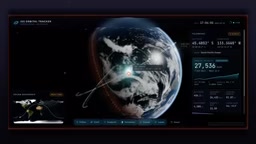
On agentic coding tasks, Opus 5.5 genuinely impresses — particularly its "verification loop." In hands-on testing, the model doesn't just write code; it visually verifies outputs in the browser. This step is critical for running long-horizon tasks without human supervision — without self-verification, complex multi-step pipelines can easily go off the rails midway through.
A few demo results illustrate the point:
- Black hole simulation: With a detailed prompt, the model generated visually impressive output with adjustable parameters for density and other properties.
- Real-time ISS tracking: A standard test for the reviewer, covering not just visual output but live API calls. Opus 5.5 tracked the ISS position in real time and correctly positioned the sun on the right side — a thoughtful detail.
- Voxel art: The model performed strongly in a Three.js scene, generating the most detailed version seen to date while closely following the prompt.
What Is a "Verification Loop" and Why Does It Matter for Agents?
Traditional code generation models typically produce a one-shot output: write the code, hand it to the user, and let the human decide if it's correct. In agentic scenarios, the model must autonomously complete multiple steps — fetching data, writing code, executing it, checking results, fixing errors — over a process that may run for minutes or even hours without human intervention. Without a self-verification mechanism, a single error in any intermediate step causes all subsequent steps to be built on a flawed foundation, and the final result may be completely off-target with no clear indication of where things went wrong. The core idea behind a verification loop is to have the model actively check whether each key step's output meets expectations (for example, rendering in a browser and visually confirming) before deciding whether to continue or roll back and retry. This "execute-verify-correct" cycle is one of the key engineering capabilities that elevates a language model from a "code completion tool" to a "fully autonomous agent."
Availability and Usage Limits
Opus 5.5 is now live in Claude Code and the Claude desktop app — users will need to update their clients. It's also accessible via API using the opus-5.5 tag. The default reasoning tier is set to medium, which is the recommended setting; for more complex tasks, bumping up to high may yield better results.
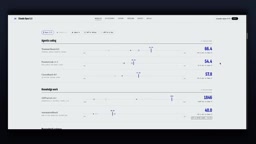
In a test where the model was asked to autonomously research and build a product launch website, Opus 5.5's visual quality still has room to grow — but it added elegant animations to the benchmark figures and put real care into the layout. Notably, all the visual elements were generated entirely by the model within Claude Code, without using any pre-made assets.
There's also good news on usage limits: Anthropic has boosted quotas by 5x, raised weekly caps, and given users the ability to reset rate limits. This was likely inspired by OpenAI's approach — cross-competitor borrowing that ultimately benefits users.
Summary
Opus 5.5 is a balanced and solid upgrade: more natural communication, stronger code quality and verification capabilities, lower pricing, and reduced token consumption. For users long frustrated by the old Opus series' robotic "AI voice," Anthropic appears to have genuinely taken the feedback to heart. Beyond the benchmark scores, the real question is whether these improvements hold up consistently in real-world, everyday workflows.
Related articles

Free Unlimited Claude Code Solution: Agnes AI + CC Switch Setup Guide
No paid subscription needed — pair the free AI platform Agnes AI with the open-source tool CC Switch to provide a backend for Claude Code, enabling unlimited free calls to text, image, and video models. This guide covers the full setup, test results, and usage boundaries.

A Complete Zero-Cost Guide to Getting Started with Claude Code for Beginners in China
A beginner's guide to Claude Code for users in China: two installation methods (command line and IDE plugin), full configuration steps for replacing the official API with the free domestic LongCat model, and a hands-on demo of building a small tool with natural language, plus tips.

When the NSA Gets Involved: The AI Supply Chain Crisis Behind Open-Source CVEs and API Key Hijacking
Multiple open-source projects disclosed severe CVEs in one day, PHP flaws alarmed the FBI, and Railway and OpenCode were breached with API keys stolen. This article breaks down the vulnerability window, AI-accelerated exploitation, and the AI supply chain crisis behind the API key black market, with a developer defense checklist.