Otter AI Supports 30+ Languages, Cross-Language Conversation Tracking Coming Soon

Otter AI adds 27 languages and previews cross-language following transcription as multilingual competition shifts to scenario coverage.
Otter AI announced support for 27 new languages, bringing total coverage to over 30, with direct multilingual support from its underlying speech recognition model rather than interface localization. More notably, it previewed cross-language following: when speakers switch languages mid-conversation, the system keeps tracking and transcribing, addressing the real pain point of code-switching. The article notes that competition is shifting from accuracy to scenario coverage. Otter AI is taking a breadth-first strategy to rapidly expand its user base, but quality for lower-resource languages, launch timing, and technical implementation still need verification. Multilingual meetings, education and research, and bilingual users are the most direct beneficiaries, while the specific language list and non-Latin-script performance will determine actual usability.
From English to 30+ Languages: Otter AI Expands Its Transcription Reach
Otter AI recently added support for 27 new languages, bringing its total language coverage to over 30. This means more non-English users can directly transcribe meetings, interviews, and class notes in real time using their native languages.
As a tool centered on speech transcription and meeting notes, Otter AI previously focused primarily on English scenarios. This language expansion is not simple interface localization but direct support for multiple languages by the underlying speech recognition model. For multinational teams, multilingual content creators, and researchers who need to process foreign-language materials, this step means fewer manual switches and a more seamless workflow.
Cross-Language Conversation Tracking: The Feature That Truly Deserves Attention
More noteworthy than the number of languages is a forthcoming feature Otter AI also revealed: when speakers in a conversation switch between languages, the system can continue to follow along and complete transcription.
This capability addresses a real pain point. In multinational team meetings or bilingual family settings, speakers often mix another language into the middle of a sentence—for example, embedding Spanish phrases in English, or suddenly using English terminology in a Chinese conversation. Traditional transcription tools usually require a single language to be specified in advance and tend to miss words or misrecognize speech when encountering code-switching. If Otter AI can achieve cross-language following, it will evolve from a "multilingual tool" into a "multilingual conversation understanding tool."
The feature has not yet been officially launched, and Otter AI has not disclosed the specific technical implementation or an exact release date.
Code-Switching is a core concept in sociolinguistics and language technology, referring to the phenomenon in which speakers alternate between two or more languages within the same conversation or sentence. It is extremely common in bilingual communities, multinational teams, and immigrant families—for example, mixed Chinese-English expressions like "I have a deadline to meet today." For speech recognition systems, code-switching is a recognized challenge: traditional models usually require input speech to belong to a single language, with both acoustic models and language models trained on monolingual assumptions. Once a language switch is detected, segmentation ambiguity, missed vocabulary, or incorrect translation easily occurs. Academia generally divides code-switching into inter-sentential and intra-sentential switching, with the latter being more difficult. Solving this problem requires techniques such as multilingual joint modeling, language boundary detection, and dynamic language model switching. Otter AI's claimed cross-language following capability is essentially about handling intra-sentential code-switching at the engineering level.
The Competitive Logic of the Multilingual Transcription Track
Competition in the speech transcription market is shifting from "accuracy" to "scenario coverage." English transcription accuracy has generally reached a usable level, and the space for differentiation has moved to support for less common languages, accent adaptation, and mixed-language processing.
Otter AI added 27 languages at once, taking a breadth-first approach. The advantage of this strategy is quickly covering more user groups, but whether recognition quality is consistent across each language—especially for lower-resource languages—still needs to be verified through actual use. The rollout pace of the cross-language following feature will also determine whether it can establish a first-mover advantage in mixed-language scenarios.
For users, the more practical questions are: Which specific 27 languages are included? How do transcription and punctuation handling perform for non-Latin-script languages? These details will directly affect the tool's usability in real work scenarios.
The resource dilemma of low-resource speech recognition is key background for understanding differences in multilingual transcription quality. Training mainstream speech recognition models relies on hundreds or thousands of hours of annotated speech data, while major languages such as English and Chinese have abundant public and commercial corpora; for lower-resource languages such as Icelandic and Swahili, available annotated data often amounts to only dozens of hours or less. Data scarcity directly leads to insufficient acoustic model coverage and high language model perplexity, which manifests as lower recognition accuracy, punctuation restoration errors, and difficulty recognizing proper nouns. In addition, non-Latin-script languages face additional challenges such as word segmentation, morphological variation, and differences in writing systems. Common industry mitigation methods include multilingual joint training, transfer learning, self-supervised pretraining (such as wav2vec 2.0 and the Whisper series), and data augmentation. Therefore, "adding 27 languages" does not mean all 27 languages reach the same usable level; the actual performance of lower-resource languages requires independent evaluation.
Who Will Benefit Most
Multilingual meetings are the most direct target scenario for Otter AI's update. Daily syncs at multinational companies, records of communication with overseas clients, and content organization for multilingual podcasts can all reduce the workload of later manual proofreading.
Education and research scenarios also deserve attention. Recordings of international students' classes and multilingual field research interviews often previously required additional translation tools or manual dictation. If transcription tools can directly process multilingual content, organization costs will drop significantly.
If the cross-language following feature is delivered, the most typical beneficiaries will be bilingual users themselves—those who naturally switch languages in conversation but cannot find a suitable tool to record it.
From a technical route perspective, Otter AI's multilingual capability is most likely built on an end-to-end speech recognition architecture rather than the traditional "acoustic model + pronunciation dictionary + language model" pipeline. End-to-end models map speech directly to text, making it easier to share underlying acoustic representations through multilingual joint training; this is also why models such as Whisper in recent years can cover nearly a hundred languages with a single model. However, the performance of end-to-end models on lower-resource languages depends heavily on the distribution of pretraining data, and "negative transfer" may occur across languages—that is, adding more language types may dilute per-language recognition accuracy. For users, the key indicators for judging whether a multilingual update is substantive include word error rate (WER) for each language, punctuation and capitalization restoration quality, and real-time following latency in mixed-language scenarios. These indicators usually do not appear in product marketing, yet they determine the tool's usability in real meetings.
One-line Summary
Otter AI adds 27 languages and previews cross-language following transcription, as multilingual transcription competition shifts toward scenario coverage.
Paragraph Summary
Otter AI announced support for 27 new languages, bringing total coverage to over 30, and it is not interface localization but direct multilingual support by the underlying speech recognition model. More noteworthy is its previewed cross-language following feature: when speakers switch languages during a conversation, the system can continue tracking and complete transcription, directly addressing the real pain point of code-switching. The article notes that competition in the speech transcription market is shifting from accuracy to scenario coverage. Otter AI adopts a breadth-first strategy to rapidly expand its user base, but recognition quality for lower-resource languages, the launch timing of the cross-language feature, and its technical implementation remain to be verified. Multilingual meetings, education and research, and bilingual users are the most direct beneficiary groups, while the specific list of new languages and performance for non-Latin-script languages will determine actual usability.
Related articles
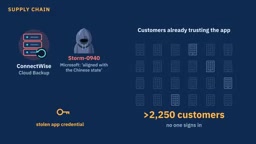
FBI-Warned AI Hacking Tool ARTEX: Cost Disruption and Defensive Restructuring
The FBI-warned AI hacking tool ARTEX reduces penetration testing costs to $150-$1,500, causing financial data breaches and supply chain attacks. Learn how it works, real cases, and a five-step defense strategy.
FBI Warns: ARTEX AI Hacking Tool Breaches Systems in Three Hours
FBI warns the open-source AI pentesting framework ARTEX is being abused, with some intrusions gaining privileged access in under three hours, over 1,600 consoles exposed, and links to South Korean financial data breaches and the ConnectWise supply chain attack.

FBI Warns About Artex: AI-Driven Attack Framework Threatens Cloud Identity Security
FBI warns that the AI penetration testing framework Artex is being used for automated attacks: written in Go and driven by AI agents, it covers the full chain from reconnaissance to data exfiltration. This article analyzes its real threat to cloud identity and privilege security and key defense priorities.