Overseas Developer Tests: DeepSeek Already Rivals Opus — Stop Waiting for the Next Model
DeepSeek rivals top closed-source models at a fraction of the cost — stop waiting and start building.
An overseas developer blogger argues that DeepSeek V4 Pro now matches or surpasses Anthropic's Opus 4.8 in real-world use, at a tiny fraction of Claude Code's cost. He demonstrates this by building a $10K/month SaaS and integrating BrightData for web scraping, concluding that DeepSeek + BrightData can deliver comparable results to Claude Code's $200/month plan for just cents. His core message: stop waiting for better models — the tools you have now are already enough.
A overseas developer and YouTube blogger recorded a video on the eve of his bachelor party, putting forward a perspective that may prompt many AI coding users to rethink their tool choices: DeepSeek's performance today is already on par with Anthropic's Opus-class models. More importantly, it's open-source, affordable, and genuinely usable for building real products.
The Core Insight: "Stop Waiting for the Next Model"
The blogger's point isn't simply to hype a particular model — it's to correct a common misconception among developers: always waiting for the next, more powerful model to be released, believing that only then will they have enough "intelligence" to build what they truly want.
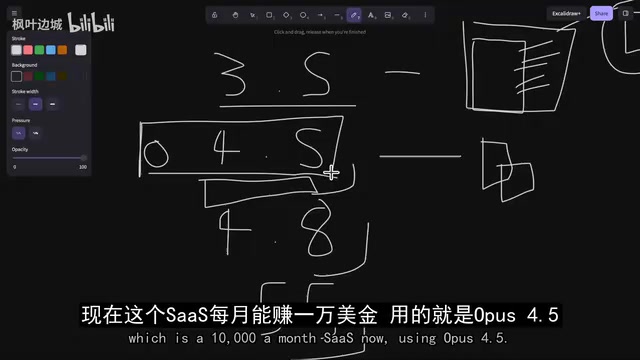
He uses his own product, Harbor, as a case study. Harbor started as a basic tool he built with Sonnet 3.5 to help his team generate content for clients. He later handed it to a development team to turn into a SaaS product, then rebuilt the entire system himself on Next.js and Convex using Opus 4.5. Today, Harbor is a SaaS generating $10,000 per month.
His key point: all of this was accomplished with Opus 4.5. "You already have the tools you need to build anything." In other words, model capabilities have long since crossed the threshold required to ship polished products. What actually blocks developers usually isn't model intelligence — it's the willingness to take action.
DeepSeek's Position: Doesn't Need to Be Better — Just Good Enough
The blogger's logic is clear: DeepSeek doesn't need to surpass Opus 5 or some hypothetical "Fable 5." As long as it lands somewhere in the Opus 4.5–4.8 range — or even close to it — it's worth using.
He even suggests that the DeepSeek V4 Pro release from the past two weeks may already outperform Opus 4.8. He acknowledges he's "not entirely sure about the specific benchmark numbers" — this is more a judgment based on hands-on experience — but his conclusion is direct: you now have a free, open-source coding harness.
After configuring it in the terminal, all he needs to type is DeepSeek, and the system checks for updates and starts a web server. Pair it with an API key from platform.deepseek.com and it's ready to use. He describes the overall experience as "incredibly cheap and incredibly efficient."
A "coding harness" refers to a localized toolchain built around a language model, typically including a CLI entry point, context management, tool-calling interfaces, and session state management. Its purpose is to wrap a raw model's API into a developer-friendly working environment, enabling the model to directly interact with the file system, execute terminal commands, and read/write codebases. Claude Code is essentially a similar harness, but it's a closed-source product from Anthropic. Because DeepSeek's harness is open-source, developers can read, modify, and even extend its tool-calling logic — which is the fundamental reason the blogger emphasizes "control."
Giving the Model "Eyes" with BrightData
The blogger doesn't shy away from DeepSeek's weaknesses. He explicitly notes that DeepSeek falls short in "correctly scraping web content" — a gap compared to mature tools like Claude Code.
His solution is integrating BrightData's Scraper Studio skill. He emphasizes its value in enabling the model to "correctly read the entire internet" rather than just receiving low-quality text. With it, the model can retrieve SERP (Search Engine Results Page) data to complete tasks like SEO analysis.
He demonstrated a live example: asking the model to look up search results for "glamping Galway" (luxury camping in Galway, Ireland) and reverse-engineer the ranking strategies of non-directory websites. The model's analysis covered Google Business Profiles, EEAT trust signals, real addresses and phone numbers, topical authority for local content, and concluded that "on-page optimization isn't the decisive factor — trust often matters more than on-page signals." This aligns well with prevailing SEO industry wisdom.
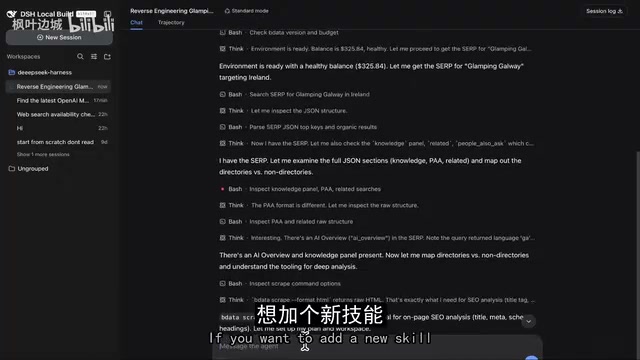
The modular capability of DeepSeek's harness is another feature he values. Want to add a new skill or functionality? You can write and plug it in yourself. Because it's open-source, he feels he has "more control over what I'm doing."
EEAT is the core framework Google uses to evaluate web page quality, standing for Experience, Expertise, Authoritativeness, and Trustworthiness. This standard was formally added to Google's Search Quality Evaluator Guidelines in 2022 and is particularly important for high-impact "Your Money or Your Life" pages like local services, healthcare, and finance. When the blogger mentions the model's finding that "trust matters more than on-page signals," this is a direct reflection of EEAT logic — for local search results, factors like the completeness of a Google Business Profile and consistency of real address and phone number often have a greater impact on rankings than keyword density or page structure. This also illustrates that BrightData gives the model not just the ability to "read page text," but to extract structured SEO signals for assessing competitive positioning.
The Cost Math: From $200/Month to "Cents"
The blogger runs a very straightforward financial comparison. BrightData offers new users $25 in free credits (with his discount code), which is roughly enough for 10,000–20,000 page scrapes, with additional usage running approximately $1 per 1,000 scrapes.
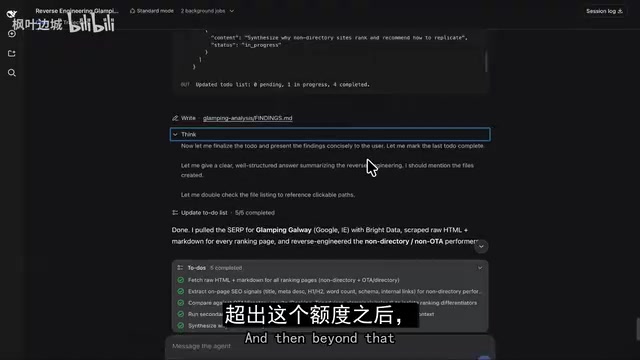
In comparison, Claude Code runs about $200 per month. He admits that for production reliability reasons, he'll continue paying for Claude Code — "We can afford it, if it means using the best model."
But his core conclusion is: Claude Code is no longer 100% necessary. "If I were on a budget, I probably wouldn't be paying for Claude Code anymore." That's something he wouldn't have said two weeks ago. For budget-conscious indie developers and small teams, the DeepSeek + BrightData combination can achieve results close to the "$200" solution at a cost of "cents."
For context: Claude Code uses a token-based pay-as-you-go pricing model, and the $200/month figure comes from Anthropic's subscription plan for high-volume users (the Max Plan), which includes higher rate limits and priority access. For heavy users who rely on multi-turn code generation and large-file context understanding, costs can go well beyond $200/month. By contrast, DeepSeek API pricing is extremely low for typical coding tasks — the R1 and V3 series charge approximately $0.14–$0.28 per million tokens for input/output, roughly 20–40x cheaper than Claude 3.5 Sonnet. This magnitude of price difference makes cost a real decision variable for indie developers and bootstrapped startups, not just a negligible detail.
One Caveat: A Bit Verbose, but Results-Oriented
The blogger also mentions one experiential drawback of DeepSeek — it's "a little verbose" and tends to do more research than necessary. However, he adds that if the final research output is good enough, the length of the process doesn't matter all that much.
He also expressed confidence that DeepSeek could independently build a full SaaS product, and promised to run more tests to verify this in a future video.
Final Thoughts
The value of this video isn't in providing precise benchmark comparisons — it's in reflecting a genuine mindset shift among frontline developers: when open-source model capabilities approach those of top closed-source models while costing hundreds of times less, the balance of tool selection begins to tip.
For developers, the most practical takeaway the blogger delivers may be that repeatedly emphasized line — stop waiting for a more powerful model before you start building. The tools in your hands are very likely already good enough. Of course, this is ultimately one blogger's judgment based on personal experience. Whether it suits your specific project still requires validation against your own use case and more rigorous benchmarking.
Related articles
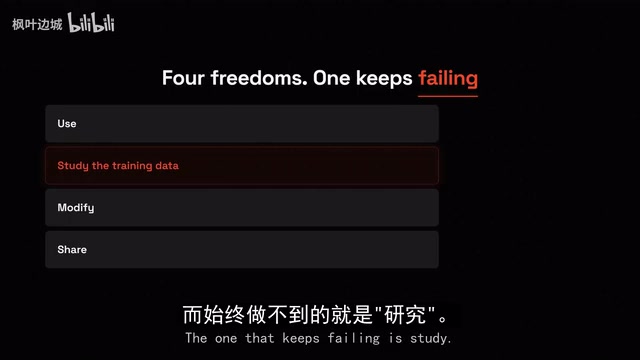
The Truth About Open-Source AI: You Got the Cake, Not the Recipe
Open-source AI exposed: what you download is weights (the cake), not training data or code (the recipe). A deep dive into open weights vs. true open source, Meta/Alibaba/DeepSeek business strategies, and how US/China/EU governments are redrawing the boundaries of openness.
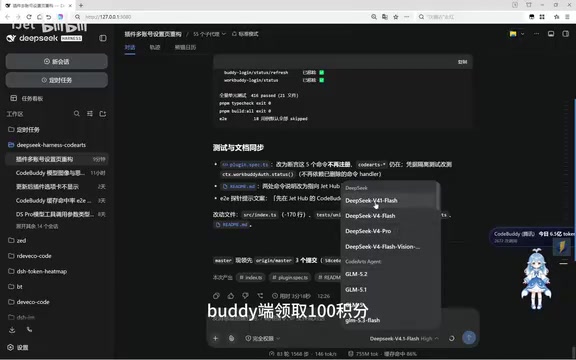
Free DeepSeek V4.1 Flash via DSH: Bulk Point Collection & International WorkBuddy Tested
DSH project update tested: WorkBuddy now offers 100 points per claim, rate limits raised beyond 80M tokens with faster resets, and international WorkBuddy supports free Hunyuan 4 and DeepSeek V4.1 Flash.
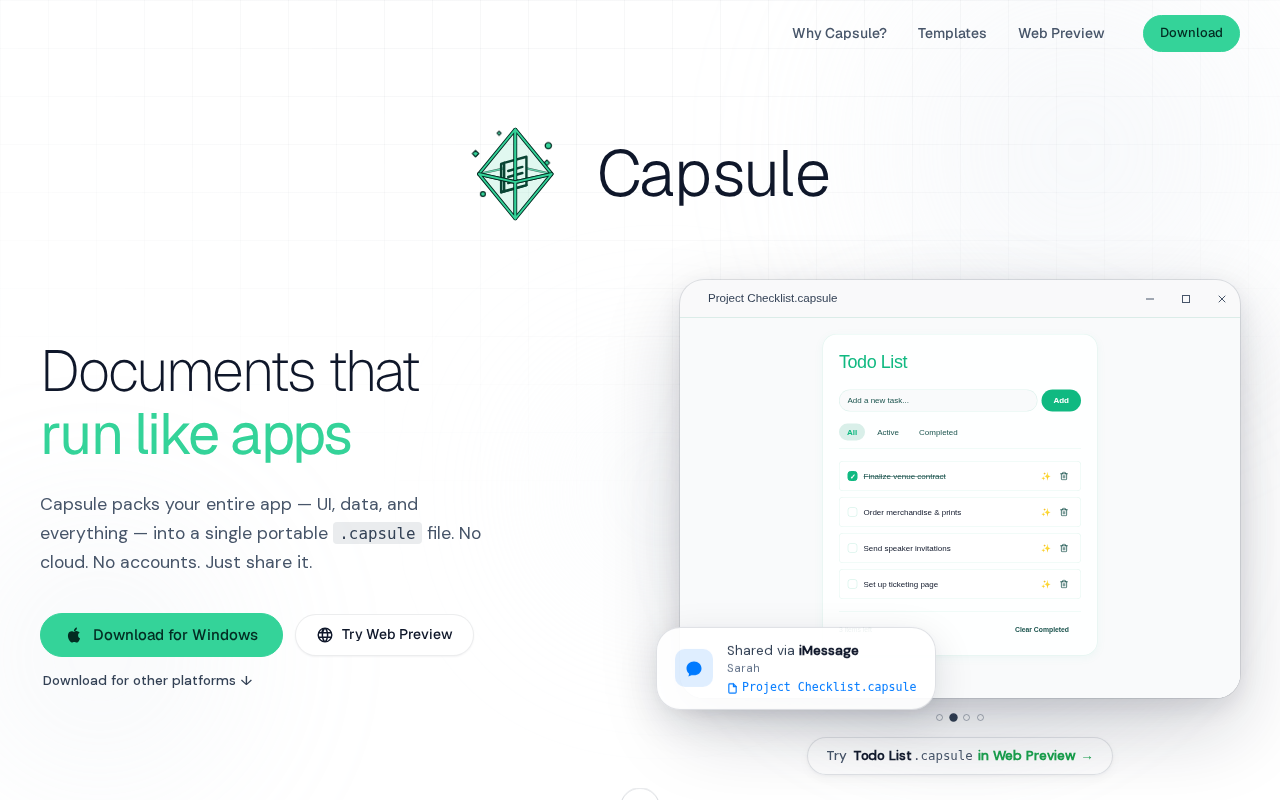
Capsule: Pack Web Apps and Data into a Single SQLite File
Capsule is a Rust/Tauri 2.0 tool that packs HTML web apps and data into a single SQLite file — privacy-first, local storage, portable sharing, with AI support.