Ozone Hole Expands to Decade High: A New Climate Warning
The ozone hole has expanded to its largest in a decade, reminding us that atmospheric repair is far more complex than imagined.
Starting from a brief scientific report on Hacker News, this article discusses the significance of Earth's ozone hole expanding to a size unseen in nearly a decade. The author notes that a single year's fluctuation does not equal failure of the Montreal Protocol or a reversal of long-term trends, since ozone layer recovery is influenced by natural variability such as stratospheric temperature, polar vortex, and atmospheric circulation. However, "largest in a decade" deserves serious attention. The article particularly highlights an easily overlooked connection: increasing greenhouse gases cause stratospheric cooling, which may actually create conditions for polar stratospheric cloud formation, thereby delaying ozone recovery. The overall judgment remains that the ozone layer is slowly recovering, but the process is nonlinear and requires sustained monitoring and long-term investment.
An Overlooked Signal
According to a scientific report shared in the Hacker News community, Earth's ozone hole has expanded to a size not seen in nearly a decade. The information itself is extremely brief—just a single headline—but it touches on an environmental issue that is often mistakenly considered "already solved." At a time when climate change discussions increasingly focus on carbon emissions and extreme weather, the dynamics of the ozone layer remind us that repairing atmospheric systems is far more complex than imagined.
The expansion of the ozone hole does not directly equate to the failure of the Montreal Protocol. The scientific community has long recognized that ozone layer recovery is a lengthy process influenced by stratospheric temperature, polar vortex activity, atmospheric circulation, and various other factors. A single year's fluctuation may reflect natural variability rather than a trend reversal. But the phrase "largest in a decade" still deserves serious attention, because it implies that some change beyond normal fluctuations is occurring.
Why the Ozone Hole Is "Bouncing Back"
The Interweaving of Natural Variability and Human Factors
The size of the ozone hole primarily depends on low-temperature conditions in the Antarctic stratosphere during winter. Extremely low temperatures promote the formation of polar stratospheric clouds, and chemical reactions on the surfaces of these clouds accelerate the destruction of ozone by chlorine and bromine compounds. When the polar vortex is unusually stable and cold, ozone depletion intensifies. Recent observations show that natural phenomena such as sudden stratospheric warming events can temporarily shrink the ozone hole, while opposite conditions may cause it to expand.
Polar Stratospheric Clouds (PSCs) are key to understanding the mechanism of ozone hole formation. They form only when stratospheric temperatures in the Antarctic or Arctic drop below approximately -78°C, consisting of ice crystals or nitric acid trihydrate particles. The surfaces of these cloud particles provide sites for heterogeneous chemical reactions that convert otherwise relatively inert chlorine reservoir molecules (such as HCl and ClONO₂) into active chlorine (Cl₂, etc.), which rapidly releases chlorine atoms when sunlight returns in polar spring, triggering catalytic ozone destruction cycles. Therefore, the lower the polar winter stratospheric temperature and the longer PSCs persist, the more severe the ozone depletion. This also explains why stratospheric cooling directly intensifies ozone hole expansion.
The Complex Role of Climate Change
An easily overlooked connection is that increasing greenhouse gases cause surface warming but simultaneously cool the stratosphere. Stratospheric cooling creates more favorable conditions for polar stratospheric cloud formation, potentially delaying ozone layer recovery and even intensifying ozone depletion in certain years. This means there is a delicate tension between climate change and ozone layer recovery—reducing greenhouse gas emissions is not only a climate issue but also indirectly related to the long-term health of the ozone layer.
Sudden Stratospheric Warming (SSW) refers to the phenomenon where winter stratospheric polar temperatures rise by tens of degrees Celsius within days, usually caused by enhanced planetary wave activity. SSW weakens or even splits the polar vortex, transporting ozone-rich air from mid-to-low latitudes toward the polar region while reducing the formation time of PSCs, thereby temporarily shrinking the ozone hole. The article's mention that "natural phenomena such as sudden stratospheric warming events can temporarily shrink the ozone hole" refers precisely to this mechanism. Conversely, when the polar vortex is unusually stable and cold and SSW events are rare, ozone depletion intensifies. Therefore, the frequency and intensity of SSW are important natural drivers of interannual ozone hole variability and are factors scientists must consider when attributing anomalies in a single year.
What "Largest in a Decade" Means
It must be made clear that a single observation of "largest in a decade" cannot overturn the overall judgment that the ozone layer is slowly recovering. Data from satellite and ground-based monitoring networks show that, under the control of the Montreal Protocol and its amendments, atmospheric concentrations of ozone-depleting substances have declined significantly. However, the recovery process is not linear, and interannual fluctuations can be considerable.
Although this piece of information on Hacker News is brief, its value lies in reminding us to pay attention to environmental indicators that rarely make headlines. The expansion of the ozone hole may not immediately affect daily life, but it is a symptom of systemic change. For the tech and policy communities, this means that monitoring systems, climate models, and long-term environmental governance frameworks still require sustained investment.
The Montreal Protocol, signed in 1987, is one of the most successful environmental treaties in the world, aimed at phasing out ozone-depleting substances (ODS), primarily chlorofluorocarbons (CFCs), halons, carbon tetrachloride, and others. Subsequent amendments through London, Copenhagen, Montreal, and others gradually expanded the list of controlled substances and accelerated phase-out schedules. The Kigali Amendment, adopted in 2016, further brought hydrofluorocarbons (HFCs) under control, as they do not destroy ozone but have strong greenhouse effects. The Protocol's success is reflected in the significant decline of atmospheric ODS concentrations, but ozone layer recovery will still take decades because emitted ODS have long atmospheric lifetimes (CFCs can last 50-100 years), and the recovery process is modulated by natural variability including climate change.
From a Single Event to a Long-Term Perspective
This brief share from Hacker News itself contains no detailed data or research paper links, so excessive interpretation is not appropriate. It is better suited as a reminder: the results of environmental governance take decades to manifest, and feedback from natural systems often appears in unexpected ways. This expansion of the ozone hole, whether ultimately attributed to natural variability or the effects of climate change, underscores the importance of continuous monitoring and scientific communication.
In an era of fragmented information, a one-sentence science news item is easily scrolled past. But the issues behind it—how human activities alter the atmosphere, and how we determine whether "repair" is on track—deserve more attention than a single community share.
Related articles

GLM-5.4 Coding Test 4.6x Slower? Unpacking the Loop Transformer Architecture
GLM-5.4 coding test took 431 minutes vs. competitor's 109, 4.6x more steps. We analyze its Loop Transformer architecture, KingBench4 score of 55.3, Max tier's 1.04M token cost, and tier selection advice.

Zhipu GLM-5.4 Quietly Released: A Debut for Loop Transformer Architecture
Zhipu GLM-5.4 quietly lands in coding plans: first Loop Transformer flagship with 750B params, 1M token context, AIM math up from 19.2 to 30.4, and native vision for coding from screenshots.
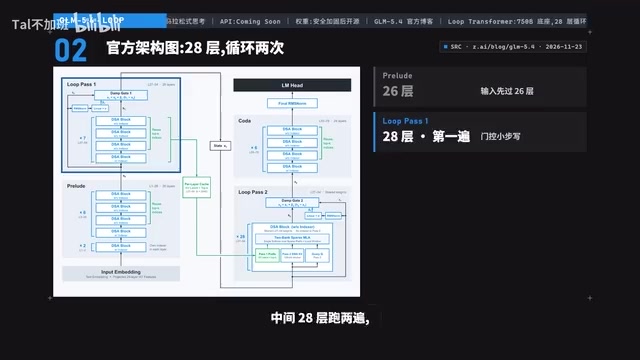
GLM-5.4 Releases 750B Model: Recurrent Transformer Architecture and the 30B Benchmark Controversy
GLM-5.4 releases a 750B model with a recurrent Transformer architecture that runs the same layers twice, claimed to match 2T–3T scale. But the benchmark table tests a 30B small model, not the main model. We break down the architecture changes, benchmark data, four demos, and open-source timeline.