P-FedSkill: Personalized Federated Skill Learning under Task Heterogeneity

P-FedSkill tackles task heterogeneity in federated skill learning via personalized skill selection and task-aware routing.
P-FedSkill addresses the neglect of client task heterogeneity in Federated Skill Learning (FSL) with a three-stage personalized framework. It uses Local Skill Extraction (LSE) to decompose trajectories into skill patches with applicability conditions and execution results, Personalized Skill Selection (PSS) to filter skills per client with theoretical guarantees, and Task-Aware Skill Routing (TASR) to dynamically invoke task-relevant skills during execution, placing personalization at both 'what to share' and 'when to use.'
Federated learning enables agents to collaboratively learn skills without sharing raw trajectories, but existing methods overlook the heterogeneity among tasks across different clients. P-FedSkill attempts to address this pain point by introducing personalized skill selection and task-aware routing.
The Dilemma of Federated Skill Learning: Privacy Protection vs. Task Heterogeneity
Agent skill learning typically relies on large amounts of trajectory data, and trajectories often contain sensitive information that is difficult to share directly among clients. Federated Skill Learning (FSL) addresses this by distilling trajectories into compact skill representations and uploading them to a central server for sharing.
The problem is that most existing FSL methods decide what to share based solely on skill similarity, without evaluating the actual contribution of these skills to each client's heterogeneous tasks. As a result, clients may receive a large number of skills irrelevant to their own tasks, which actually degrades agent performance.
The motivation behind P-FedSkill is clear: when sharing skills, it's not enough to ask "does it look similar?" — you also need to ask "is it useful?"
Federated Learning is a distributed machine learning paradigm in which multiple clients each train models locally and upload only intermediate results such as model parameters or gradients to a central server for aggregation, while raw data never leaves the local device. In the context of agent skill learning, this paradigm is used to mitigate the risk of leaking trajectory data (which contains sensitive information such as user behavior, location, and preferences). Federated Skill Learning (FSL) further distills trajectories into compact skill representations before sharing, to reduce communication overhead and enhance privacy protection. However, the classic assumption of federated learning is that client data is independent and identically distributed, whereas in reality client tasks are often highly heterogeneous (non-IID), which causes the aggregated global model to degrade on individual clients — this is precisely the fundamental motivation for P-FedSkill's introduction of personalization mechanisms.
Deconstructing the Three Components: A Personalized Pipeline from Extraction to Routing
The P-FedSkill framework contains three core components, each corresponding to a different stage in the skill lifecycle.
Local Skill Extraction (LSE): Breaking Trajectories into Reusable Skill Patches
LSE extracts two types of information from trajectories: skill patches and task execution results. A skill patch itself contains task applicability conditions and execution policies, effectively labeling each skill with "when it can be used." Task execution results record how that skill performed on specific tasks.
This decomposition makes skills no longer black boxes, but rather knowledge units with explicit applicability boundaries.
A skill patch can be understood as a structured, modular knowledge unit: it contains not only the policy parameters or action sequences needed to complete a certain type of subtask, but also meta-information describing the prerequisites for the skill's applicability (such as task type, state conditions, and preconditions). Unlike end-to-end policy networks that couple all capabilities in a single large model, skill patches partition capabilities into independently reusable and composable fragments, facilitating cross-client transmission and on-demand invocation. This dual structure of "parameters + applicability conditions" allows the receiver to first determine whether a skill matches its own task without unpacking and executing it, thereby providing a basis for subsequent personalized filtering and inference-time routing, and also reducing the risk of negative transfer caused by sharing irrelevant skills.
Personalized Skill Selection (PSS): Filtering for the Right Skills Using Execution Results
PSS uses the task execution results produced by LSE to evaluate how each skill patch performs on the client's tasks, and then combines this with task applicability conditions to construct a personalized skill set for each client.
This means clients no longer passively receive all skills distributed by the server, but instead filter based on their own task performance. The paper also provides theoretical guarantees for personalized skill selection, explaining the conditions under which this mechanism can stably improve client performance.
Task-Aware Skill Routing (TASR): Dynamically Invoking Relevant Skills at Execution Time
TASR operates during the agent's execution phase. Based on the degree of match between the current task and the applicability conditions of skill patches, it adaptively selects a task-relevant subset to guide agent execution.
This layer is essentially a lightweight skill retrieval at inference time, preventing irrelevant skills from interfering with decision-making.
Skill routing draws on the gating idea from Mixture-of-Experts (MoE) models: for different inputs, the system does not activate all capabilities, but instead selects the most relevant subset to participate in computation through a lightweight matching or gating mechanism. In P-FedSkill, routing is based on the degree of match between the current task description and the applicability conditions of each skill patch, constituting a dynamic retrieval at the inference stage. This has two benefits: first, it reduces interference from irrelevant skills on decision-making and improves execution quality; second, it invokes only a small number of skills, lowering inference computation overhead. Unlike skill selection during training, routing occurs per-task and per-moment, thus adapting to changes in the task distribution within the same client.
Experimental Results and Design Trade-offs
The paper validates the effectiveness of P-FedSkill through extensive experiments. Although the abstract does not disclose specific datasets or performance numbers, the experiments cover task-heterogeneous scenarios, demonstrating that the method maintains its advantages when client task distributions are inconsistent.
From a design perspective, P-FedSkill places personalization at two stages: the selection stage (PSS) and the execution stage (TASR). The former addresses "what to share," while the latter addresses "when to use." This two-pronged approach is closer to practical deployment needs than simply applying weighting at the sharing level.
One point worth noting is that PSS relies on task execution results to evaluate skill performance, which requires clients to have certain local evaluation capabilities or labeled feedback. For scenarios lacking clear reward signals, this mechanism may require additional adaptation.
Implications for Federated Skill Learning
The value of P-FedSkill lies in transforming "task heterogeneity" from a confounding factor into a basis for personalized design. Traditional FSL pursues universality in skill representations, whereas P-FedSkill acknowledges that different clients inherently have different tasks, and that shared skills need to undergo localized filtering.
The inclusion of theoretical guarantees also enhances the credibility of the method, showing that personalized skill selection is not a purely heuristic operation but a design with analytical foundations. For researchers and engineers interested in multi-agent collaboration under privacy protection, this framework offers a modular approach worth referencing: the three-stage structure of extraction, selection, and routing can be transferred to other federated knowledge-sharing scenarios.
Worth watching in future work is the scalability of this method to larger-scale clients and more complex task distributions, as well as how to maintain the accuracy of skill evaluation when execution results are sparse.
Background Supplement
Regarding theoretical guarantees: in personalized federated learning, "theoretical guarantees" typically refer to the ability of a method, under certain heterogeneity assumptions (such as measurable distribution differences among client tasks and bounded estimability of skill contributions), to provide proofs of convergence or lower bounds on performance improvement. P-FedSkill's provision of analysis for personalized skill selection means that its filtering mechanism is not empirical parameter tuning, but can be proven to be no worse than — or even better than — uniform sharing strategies under specific conditions. The practical significance of such guarantees lies in defining the applicability boundaries of the method: when task heterogeneity exceeds the assumed range, or when execution result signals are too sparse, the performance advantage may no longer hold — this is also a direction that future extension research needs to examine closely.
One-line Summary
P-FedSkill addresses task heterogeneity in federated skill learning through personalized skill selection and task-aware routing.
Paragraph Summary
P-FedSkill proposes a three-stage personalized framework to address the neglect of client task heterogeneity in Federated Skill Learning (FSL). Existing methods share skills based only on similarity, causing clients to receive many irrelevant skills that degrade performance. P-FedSkill first uses Local Skill Extraction (LSE) to decompose trajectories into skill patches with task applicability conditions and execution results; then Personalized Skill Selection (PSS) filters skills for each client based on execution results and applicability conditions, with theoretical guarantees; finally, during execution, Task-Aware Skill Routing (TASR) dynamically invokes the subset of skills matching the current task. This method places personalization at both "what to share" and "when to use," transforming task heterogeneity from a confounding factor into a design basis, and providing a transferable modular approach for multi-agent collaboration under privacy protection.
Related articles

GLM-5.4 Released: How a 750B Model Achieves Stronger Reasoning
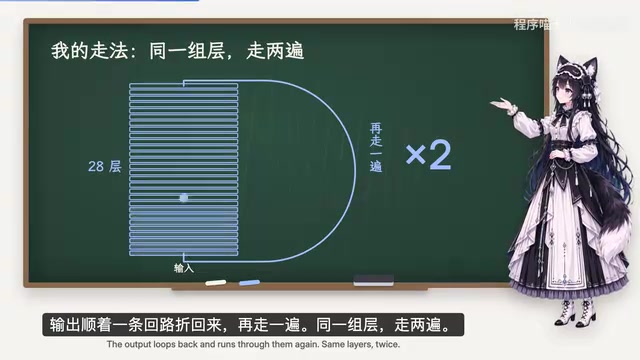
Zhipu AI releases GLM-5.4, a 750B model that boosts reasoning by running the middle 28 layers twice. GPQA Diamond rises from 47.58 to 56.26, with 1M token context and weights to be open-sourced after safety hardening.

Understanding GLM 5.4 in 8 Minutes: How Loop Transformer Makes AI Smarter Without More Parameters
GLM 5.4 didn't grow its parameters yet got smarter. Using the memorizer-vs-reasoner analogy, this article explains how Loop Transformer runs the middle 28 steps twice, how gated progressive update and two other techniques stabilize the second pass, and how generalized Coding uses code to command 3D, mechanical design, and game development — with official comparison data and open questions.
GLM-5.4 Released: An In-Depth Look at Zhipu's First Loop Transformer Flagship Model
Zhipu releases GLM-5.4, its first Loop Transformer flagship. Built on GLM-5 with 28 layers looped twice—no extra params, ~10% more compute, stronger math and long-context reasoning.