Paperless-AI: The Open-Source Tool That Uses LLMs to Auto-Tag Your Documents
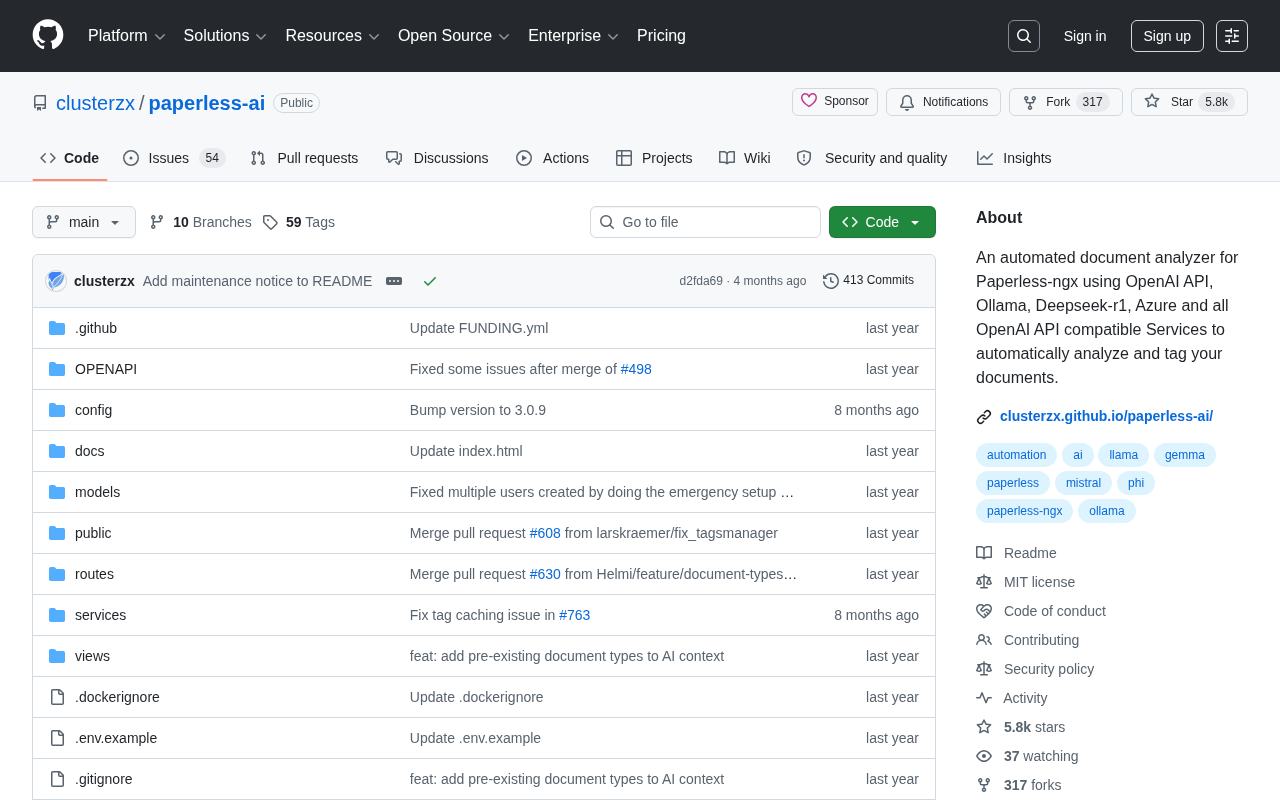
Paperless-AI integrates LLMs into Paperless-ngx for automatic document classification and tagging.
Paperless-AI is an open-source project that adds intelligent document understanding to Paperless-ngx. It feeds newly ingested documents to a large language model, which automatically determines categories, tags, and correspondents and writes them back to Paperless-ngx — eliminating tedious manual rule maintenance. It supports OpenAI, Ollama (local), Deepseek-r1, Azure OpenAI, and any OpenAI-compatible service, letting users balance privacy, cost, and accuracy. Deployed via Docker, it suits households and small offices managing mixed documents and can batch-process historical files. The project has surpassed 5,600 GitHub Stars.
Paperless-AI: Giving Your Document Management an AI Brain
For anyone who relies on Paperless-ngx for paperless document management, the real headache usually isn't scanning and archiving — it's manually categorizing, tagging, and filling in metadata for hundreds or thousands of files. The open-source project clusterzx/paperless-ai was built specifically to solve this problem. It leverages large language models to bring fully automated document analysis and tagging to Paperless-ngx. The project has already earned over 5,600 Stars and 300+ Forks on GitHub, with JavaScript as its primary language.
What Problem Does It Solve?
Paperless-ngx itself is a mature document digitization and archiving system capable of OCR recognition, full-text search, and storage of PDFs and scanned files. However, its classification logic relies primarily on rule-based matching and manual user configuration. As document volume grows, maintaining a tagging system by hand becomes nearly unsustainable.
Paperless-AI's approach is to feed the content of each newly ingested document to a large language model to "read and understand" it. The model then determines which category the document belongs to, which tags apply, and which correspondent it's associated with — and automatically writes this information back into Paperless-ngx. This semantic-understanding-based automation is far more flexible than traditional keyword rules, making it especially well-suited for real-world document collections with varied content and inconsistent formats.
Supported Models and Backends
One of the project's biggest highlights is its broad compatibility with multiple AI services. According to the project description, it supports:
- OpenAI API: Directly calls GPT-series models for analysis;
- Ollama: Runs open-source models locally, keeping data within your own network for privacy;
- Deepseek-r1: Integrates a reasoning-capable model;
- Azure OpenAI: Microsoft's managed offering for enterprise deployments;
- Any OpenAI API-compatible third-party service: Meaning a wide range of proxy services and self-hosted inference endpoints can be connected seamlessly.
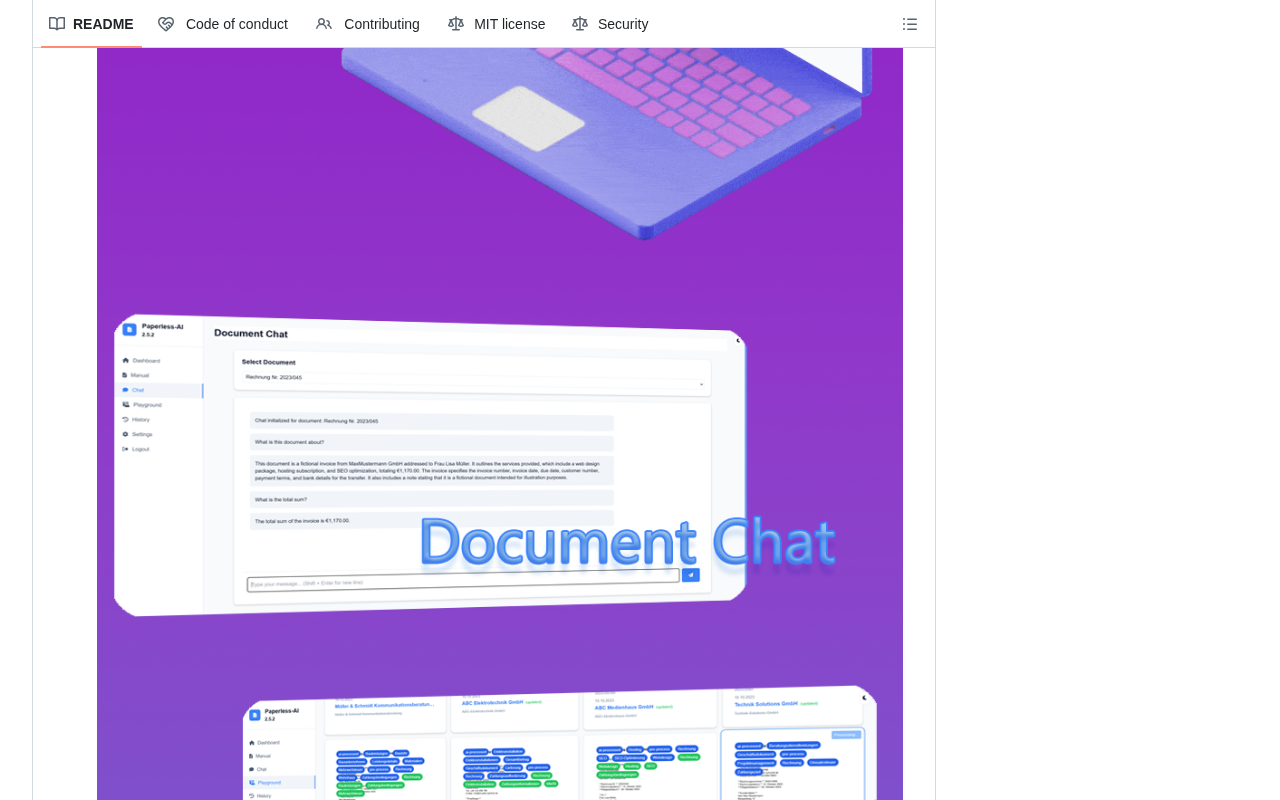
This "broad compatibility" design is highly pragmatic. Privacy-conscious individual users can choose Ollama to run models locally, avoiding sending sensitive document content to the cloud. Users who prioritize quality can go straight to high-performance models from OpenAI or Deepseek. Enterprise users can meet compliance requirements through Azure. Everyone can make their own trade-offs across cost, privacy, and accuracy.
Typical Use Cases
Imagine a document library for a household or small office: bank statements, utility bills, insurance contracts, invoices, and medical records all mixed together. The traditional approach requires writing matching rules in advance for each document type — rules that can break the moment a format changes.
With Paperless-AI integrated, the system automatically reads the document body, identifies that "this is an electricity bill from Company X," and immediately applies tags like "Utilities" and "Company X" while filing it into the appropriate category. For a backlog of historical documents, it can batch re-analyze everything at once, retroactively filling in missing metadata. This dramatically lowers the maintenance bar for paperless archiving.
Deployment and Technical Considerations
As a JavaScript-based project, Paperless-AI is typically deployed as a Docker container running alongside a Paperless-ngx instance. Users need to have an API key for their chosen AI service ready (or a local Ollama environment set up), along with the configuration parameters for connecting to Paperless-ngx.
A few things are worth weighing in practice. First, cost control: with large document volumes and a commercial API, token consumption can add up to a significant expense; local models are free but require capable hardware. Second, privacy boundaries: sending document content to a cloud-based model means data leaves your local environment — for sensitive materials, local solutions like Ollama should be the priority. Third, accuracy: LLM classification isn't 100% reliable, so it's advisable to retain a human review step, especially for critical financial or legal documents.
Conclusion
Paperless-AI is a prime example of the open-source community grafting large language model capabilities onto practical, everyday tools. Rather than reinventing the wheel, it cleverly fills the "intelligent understanding" gap on top of the mature Paperless-ngx platform. For heavy document users exhausted by manual organization, it offers a low-cost, self-hostable, model-agnostic path to automation. Its 5,600+ Stars speak to the genuine demand for this kind of "AI + existing workflow" integration.
Related articles
Altman: Taking OpenAI Public This Year Would Be 'Ill-Advised'
OpenAI CEO Sam Altman says going public this year would be 'ill-advised,' even as the company has confidentially filed IPO paperwork. Here's what it means for AI.
An Open Letter to Dario: If AI Safety Is Real, Open the Model Weights
Developer Jacob's open letter to Anthropic CEO Dario Amodei went viral on Hacker News, challenging the contradiction between AI safety rhetoric and closed-source models: if safety truly matters, why not open the weights?
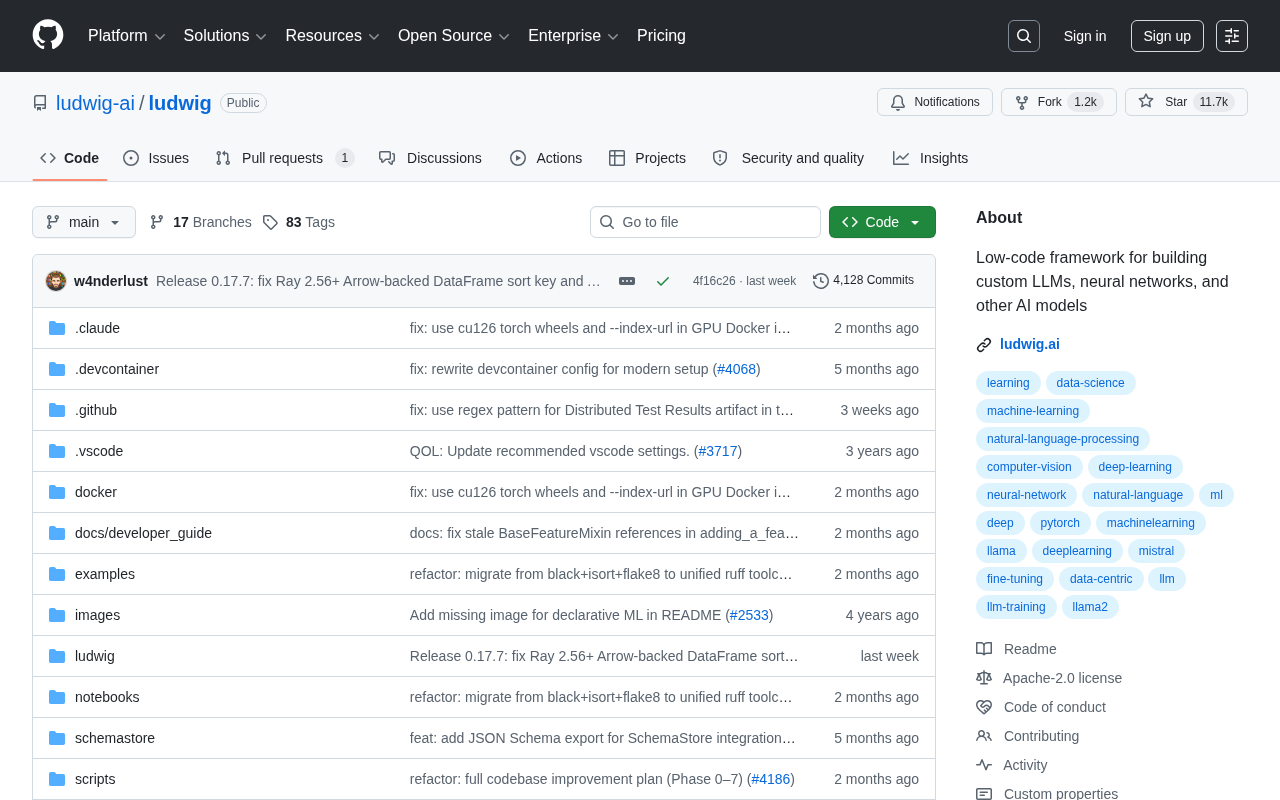
Ludwig: Building Custom LLMs and Neural Networks with Declarative Low-Code Configuration
Ludwig is an open-source low-code ML framework that builds custom LLMs and neural networks via declarative YAML config — no boilerplate training code required.