Penetration Testing vs Vulnerability Scanning: Which Security Testing Strategy Should SaaS Teams Choose?

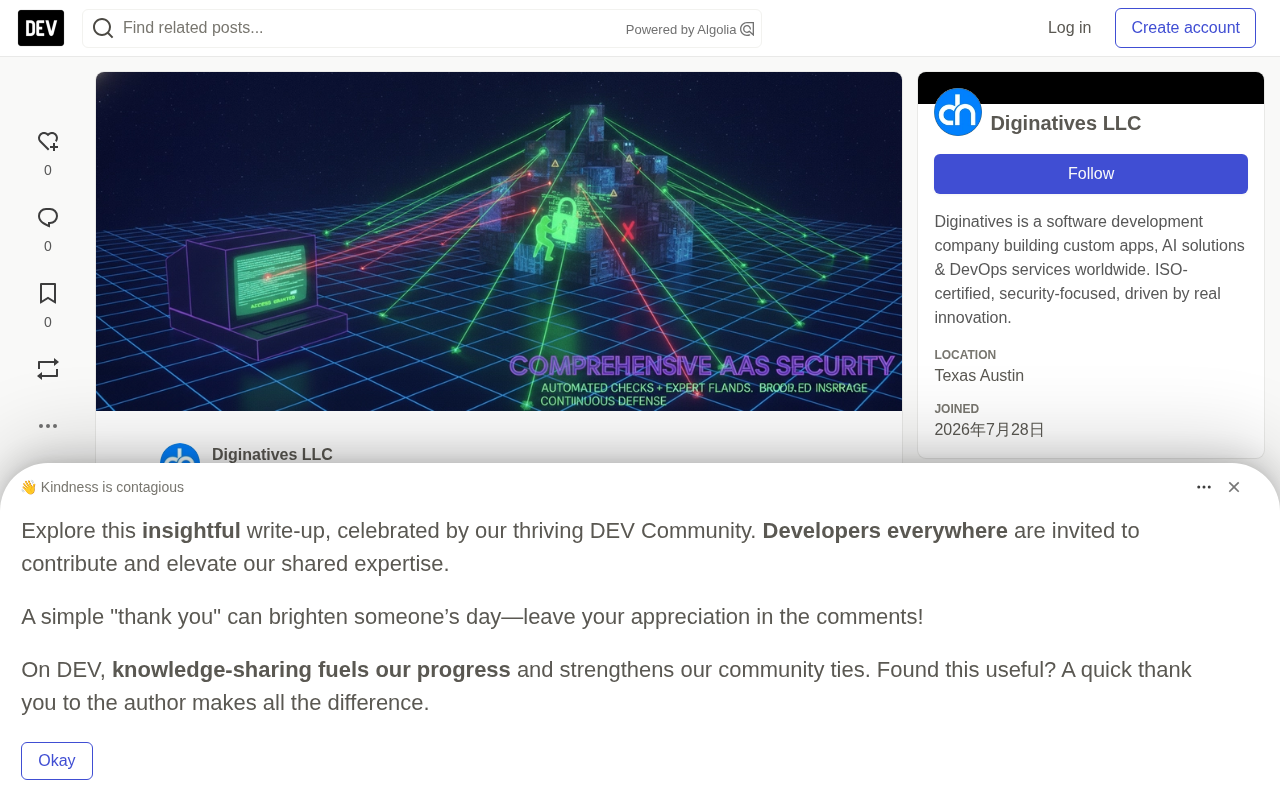
Vulnerability scanning offers automated breadth; penetration testing delivers human-validated depth—SaaS teams should use both in stages.
The article distinguishes vulnerability scanning from penetration testing: scanners are automated tools that compare systems against known weakness databases—fast, cheap, but surface-level, blind to business logic, and prone to false positives; penetration testing has experts chain weaknesses from an attacker's perspective to validate real exploitability and impact, yielding more credible reports. The two differ across six dimensions: executor, depth, false positives, business logic coverage, cost and frequency, and compliance value. The author recommends a staged approach: early-stage teams with limited budgets can start with periodic scanning; when signing larger customers, filling out security questionnaires, or preparing for SOC 2/ISO 27001, add formal penetration testing; mature products should combine continuous scanning with at least annual manual testing and post-major-release tests. The piece also offers a question-based method for deciding, tips for choosing vendors, and four common mistakes, including passing scanning off as penetration testing, testing before fixing, never retesting, and testing once and forgetting.
Penetration Testing vs Vulnerability Scanning: Which Security Testing Strategy Should SaaS Teams Choose?
"We're already using a scanner, so security isn't a problem." If you've heard or said this, you may be falling into one of the costliest misconceptions in security. In the penetration testing vs vulnerability scanning debate, the two serve fundamentally different roles, and conflating them only leaves blind spots.
Vulnerability Scanning: The Automated Smoke Alarm
Scanners are automated software that compare your systems against databases of known weaknesses: outdated dependencies, missing patches, misconfigured servers, open ports, and more. They're fast and inexpensive—running one weekly is no burden at all.
Think of it as a smoke alarm—it tells you something may be wrong, but it won't tell you how the fire will spread through the building. Scanners stay on the surface, matching known patterns, and cannot understand business logic.
Penetration Testing: The Fire Drill That Simulates an Attacker
Penetration testing is performed by security experts (tools are only aids) who act as attackers. They don't just list weaknesses—they chain them together: a small information leak here, a weak privilege there, ultimately gaining access to the admin panel.
The core difference: scanning finds individual issues, while penetration testing reveals what an attacker can actually do with those issues and which ones matter most. Testers validate findings before reporting, greatly reducing false positives.
Six Key Differences
- Depth: Scanning stays on the surface matching known patterns; penetration testing probes business logic in depth.
- Executor: Scanning runs automatically; penetration testing requires human experts with creative thinking.
- False positives: Scanners produce many false positives; testers verify before reporting.
- Business logic: Scanners can't tell whether one customer can see another customer's data—testers can.
- Cost and frequency: Scanning is cheap and can run continuously; penetration testing costs more and is performed periodically.
- Compliance value: Auditors and enterprise buyers typically require penetration test reports; raw scanner output won't suffice.
False positives refer to a scanner reporting a vulnerability that doesn't actually exist, usually due to version number misjudgment, configuration read deviations, or overly broad rules; the opposite, a false negative, is a real weakness that goes undetected. The harm of false positives is often underestimated: they consume engineers' triage time and, over time, numb teams to alerts, creating "alert fatigue" in which genuinely critical issues get buried. Human validation during penetration testing essentially moves false-positive filtering upstream into the reporting stage, which is one reason its reports are better suited to hand directly to auditors and customers.
How Should SaaS Teams Choose?
Honestly: you need both, just at different times.
Early stage, tight budget: Start with periodic scanning to catch obvious issues at very low cost. Tools like Intruder suit this stage, but be clear that they are scanners and cannot replace manual testing.
When signing larger customers, filling out security questionnaires, or preparing for SOC 2 or ISO 27001 certification: Add formal penetration testing. At that point, someone will ask to see reports, and scanner export files won't cut it.
Mature products: Usually both run in parallel—continuous background scanning plus manual penetration testing at least annually and after major releases.
SOC 2 is a trust services framework developed by the American Institute of Certified Public Accountants (AICPA) that evaluates service organizations across five dimensions: security, availability, processing integrity, confidentiality, and privacy. Reports come in Type I (control design at a point in time) and Type II (actual operating effectiveness of controls over a period). ISO 27001 is the internationally recognized information security management system standard, emphasizing the establishment and continuous improvement of an ISMS. Both are widely required during vendor due diligence, enterprise procurement, and fundraising, and penetration test reports are often one of the key pieces of evidence—proving that an organization hasn't just designed controls but had them independently validated. This also explains why, during certification preparation, customers or auditors explicitly request manual testing reports rather than scanner exports.
A Simple Way to Decide
Ask yourself: what question do you want to answer?
- "Are we missing patches or exposing known issues?"—that's scanning.
- "Can someone actually break into our product and reach customer data?"—that's penetration testing.
Choosing a Penetration Testing Partner
If manual testing is your next step, compare vendors on testing depth, report quality, and price. Be careful to distinguish which services lean automated and which lean manual, so you don't pay penetration testing prices for scanner output.
Four Mistakes Worth Avoiding
- Calling scanning penetration testing: Some vendors do this. Press them on what the human testers actually did and how many hours they invested.
- Running penetration testing before fixing scanner findings: Don't pay testers to find issues your scanner could have caught.
- Never retesting: Fixes can introduce new problems.
- Testing once and forgetting: Products keep changing, and testing should keep pace.
Retesting means, after fixes are complete, re-verifying that previously confirmed vulnerabilities are truly closed and checking whether the remediation introduced new attack surface. Fixes often modify permission models, authentication middleware, or dependency versions—changes that can themselves bring out new logic flaws or regressions. Standard practice is to stipulate free retesting within a certain period in the penetration testing contract, or to arrange a separate focused retest round after fixes; for continuous scanning, confirm the corresponding rule no longer triggers after remediation and add the vulnerability to your regression checklist to avoid reintroducing it in later iterations.
FAQ
Is vulnerability scanning the same as penetration testing? No. Scanning automatically flags known issues; penetration testing has humans chain weaknesses together and uncover logic flaws tools can't see.
Which is cheaper? Scanning is far cheaper. Penetration testing costs more because skilled testers invest substantial manual time in your product.
Do you need both? Most growing SaaS companies do: continuous scanning for coverage, periodic penetration testing for depth and compliance evidence.
Final Thoughts
Scanning gives you breadth of coverage; penetration testing gives you depth. Missing either leaves blind spots. Start wherever your stage and budget allow, and build toward both. Next time someone says, "We run a scanner, so we're fine," you'll know what to ask.
Related articles

Huberman's Rational Supplement Guide: A Five-Layer Health Framework and Scientific Decision-Making
Stanford neurobiology professor Huberman proposes a rational supplement framework: behavior and nutrition are the foundation, basic combination supplements serve as insurance, and sleep/hormonal/cognitive directions should stick to single-ingredient experiments. Omega-3 is the top single-ingredient choice, and melatonin is not recommended.

The Unsung Painter Behind Gilded Age Manhattan Interior Design
HN discussion highlights the painter behind Gilded Age Manhattan interiors: he created murals and decorative paintings but was long overlooked as his work was seen as architectural appendage.

Can AI Agents Be Socially Engineered? Understanding Prompt Injection and Tool Permission Risks
Through Invariant Lab's GitHub Issue injection and Brave's AI browser attack, this article analyzes how Prompt Injection induces AI Agents to perform unauthorized actions, and offers protection advice across three layers: least privilege, tool validation, and operation auditing.