Perplexity Builds AI Sandbox with Rust: A Deep Dive into the RustConf Technical Talk
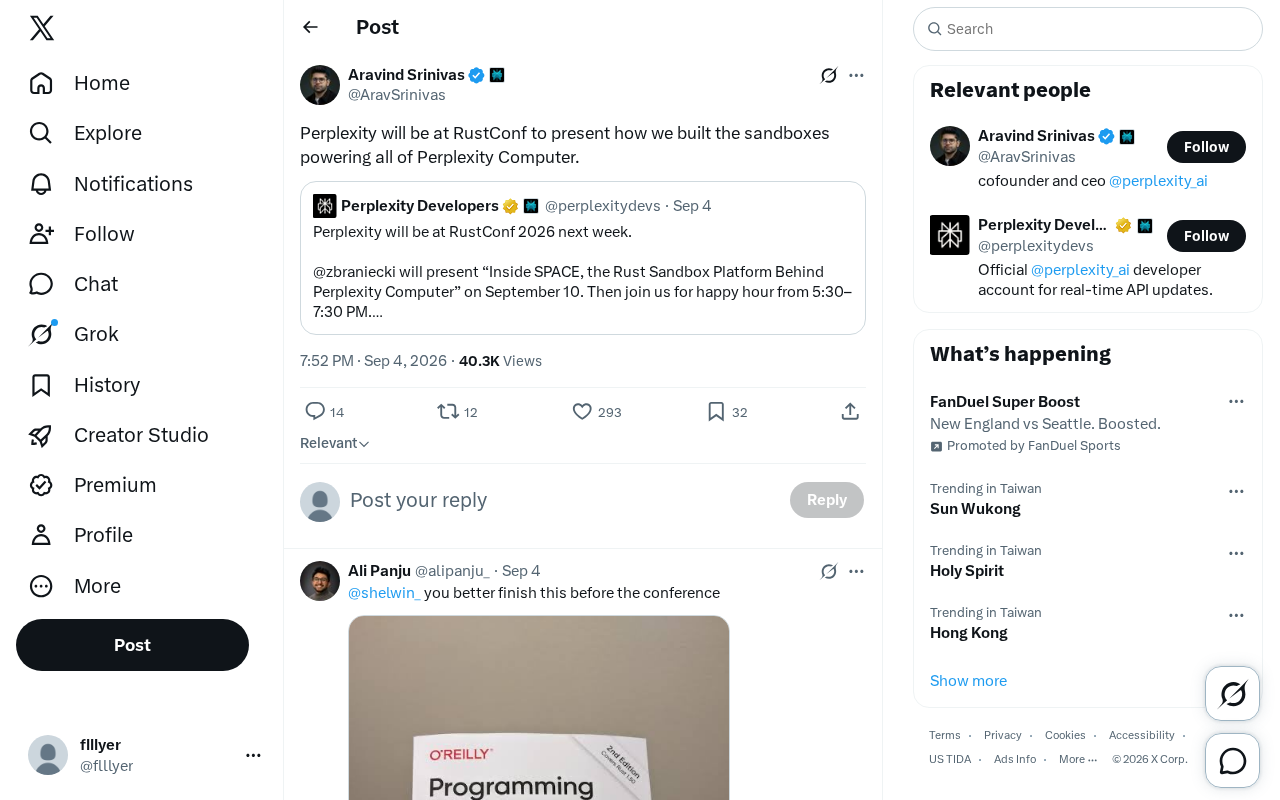
Perplexity reveals its Rust-based sandbox architecture for AI code execution at RustConf.
Perplexity AI announced it will present the Rust sandbox technology behind its Computer product at RustConf. The article explores why Rust's memory safety, zero-cost abstractions, and mature ecosystem make it ideal for building secure AI execution environments. It also examines the broader trend of AI companies adopting Rust for critical infrastructure, with implications for the industry's engineering practices.
Perplexity's Technology Choice: Building an AI Sandbox with Rust
Perplexity has officially announced that it will share the sandbox technology behind its Computer product at the RustConf conference. This move reveals the infrastructure-level technology choices made by a leading company in AI search, while also providing the industry with a practical case study of Rust's application in secure AI execution environments.
Why Choose Rust for Building a Sandbox
Sandbox technology is a critical security isolation mechanism in AI products, especially in scenarios like Perplexity Computer that require executing user code or dynamic content. Sandbox technology originated in the operating system security domain, with the core idea of creating a restricted execution environment that prevents programs running within it from accessing or modifying external system resources. In AI products, sandboxing is particularly important — when an AI system needs to execute dynamically generated code (such as data analysis scripts, web rendering, tool calls, etc.), the absence of sandbox isolation could allow malicious or erroneous code to compromise servers, leak user data, or cause service outages. Common sandbox implementations include container isolation based on Linux namespaces and cgroups, system call filtering based on seccomp-BPF, and hardware-level isolation based on virtual machines, each with its own trade-offs in security, performance overhead, and flexibility. As a systems programming language, Rust has unique advantages in this domain:
Memory safety guarantees are Rust's core feature. Through the ownership system and borrow checker, Rust can eliminate most memory vulnerabilities at compile time — which is critical for security components like sandboxes that require strict isolation. Rust's ownership system is based on three rules: each value has exactly one owner, values are automatically freed when the owner goes out of scope, and at any given time there can be either one mutable reference or multiple immutable references. The Borrow Checker statically verifies these rules at compile time, eliminating dangling pointers, double frees, data races, and other memory safety issues without introducing a garbage collector (GC). According to statistics from Microsoft and Google, approximately 70% of critical security vulnerabilities stem from memory safety issues — Rust eliminates this entire class of vulnerabilities at the language level. Sandboxes traditionally implemented in C/C++ often face escape risks due to memory errors — a single out-of-bounds memory vulnerability could lead to a sandbox escape, allowing attackers to break through isolation and access the host system. Rust mitigates these issues at the language level.
Zero-cost abstractions with performance close to C/C++ make Rust suitable for building high-performance infrastructure. Zero-Cost Abstractions mean that features you don't use incur no overhead, and features you do use cannot be implemented more efficiently by hand. In Rust, generics are expanded into type-specific code at compile time through monomorphization, trait objects support both static and dynamic dispatch, and iterator chains are optimized into equivalent hand-written loops after compilation. This means developers can write clear, safe code using high-level abstractions (such as Option/Result types, pattern matching, and lifetime annotations) without worrying about runtime performance penalties. Sandboxes typically need to handle a large volume of concurrent requests, and Rust's async runtime and efficient system call wrappers ensure low-latency responses. For an AI service like Perplexity that requires real-time user query responses, sandbox performance directly impacts user experience.
Ecosystem maturity is also a key factor. Rust already has rich library support in areas like containers, virtualization, and process isolation. Among them, tokio is the most widely used async runtime in the Rust ecosystem, implementing an event-driven, non-blocking I/O model with core components including a multi-threaded work-stealing scheduler, a cross-platform I/O event loop based on epoll/kqueue/IOCP, a timer wheel, and async socket abstractions. Unlike Go's goroutines or Java's virtual threads, Rust's async/await compiles into state machines with no runtime stack allocation overhead. In sandbox scenarios, tokio enables a single service process to efficiently manage the lifecycle of thousands of concurrent sandbox instances, handling I/O events, timeout control, and resource reclamation while maintaining extremely low tail latency. Additionally, the nix library provides safe wrappers around Linux system calls — all foundational components for building sandboxes.
Technical Challenges Facing Perplexity Computer
Perplexity Computer is a product capability launched by Perplexity AI that enables its AI assistant to operate computers like a human — browsing the web, executing code, processing files, and more. This aligns with product directions like Anthropic's Computer Use and OpenAI's Code Interpreter, representing the trend of AI evolving from pure text conversation toward Agentic AI. In such products, AI needs to perform operations in real or simulated computing environments, expanding the sandbox's role from traditional code execution isolation to full operating environment isolation — including filesystem virtualization, network access control, process lifecycle management, and more. This dramatically increases sandbox complexity and security requirements.
As an AI search product, its sandbox must address several core challenges:
Code execution security is the top priority. User-submitted queries may trigger various code execution needs, and the sandbox must ensure that malicious code cannot access system resources or affect other users. This requires fine-grained permission control and resource limitation mechanisms, typically involving multi-layered defense: the outermost layer uses Linux namespaces to isolate filesystems, networking, PIDs, and other resources; the middle layer uses cgroups to limit CPU, memory, disk I/O, and other resource quotas; the innermost layer uses seccomp-BPF whitelists to filter system calls, allowing only the minimum set of system calls required by the execution environment.
Balancing performance and isolation is difficult to achieve. Overly strict isolation leads to performance degradation that affects AI response speed, while relaxed isolation may leave security gaps. For example, full virtual machine isolation provides the strongest security boundary, but startup time and resource overhead may not meet the requirements of real-time AI responses; process-level isolation offers excellent performance but shares a larger kernel attack surface. Rust's zero-cost abstractions allow developers to implement complex security logic without sacrificing performance, encoding security policies in the type system and transforming runtime checks into compile-time guarantees.
Observability and debugging capabilities are indispensable. Sandbox issues in production environments are often difficult to reproduce and require comprehensive logging, monitoring, and tracing mechanisms. In distributed systems, this typically means integrating distributed tracing frameworks like OpenTelemetry to record the complete lifecycle of each sandbox instance — full-chain data from creation, resource allocation, and code execution through to destruction and reclamation. Rust's type system and error handling patterns (particularly the Result type and the ? operator that forces handling of error paths) help build reliable observability infrastructure and prevent errors from being silently ignored.
The Trend of Rust in AI Infrastructure
Perplexity's technology choice reflects a broader industry trend. An increasing number of AI companies are adopting Rust in critical infrastructure:
Exploration by leading AI companies. Companies like OpenAI and Anthropic are exploring the use of Rust to rebuild parts of their infrastructure. Rust's safety and performance characteristics make it an ideal choice for scenarios like AI inference services and data processing pipelines. For instance, in model inference services, Rust can be used to build efficient request routing layers and batching schedulers — components that need to handle complex queuing and priority logic under microsecond-level latency constraints. In data processing pipelines, Rust's memory safety features can prevent memory leaks and crashes when processing massive training datasets.
Success stories in containers and virtualization. Firecracker is a lightweight virtual machine monitor (VMM) open-sourced by AWS in 2018, written in Rust, and serves as the underlying technology for AWS Lambda serverless computing and AWS Fargate container services. It creates microVMs based on KVM (Kernel-based Virtual Machine), with each microVM booting in approximately 125 milliseconds with memory overhead as low as 5MB, while providing hardware-level security isolation. Firecracker's success powerfully demonstrates the viability of Rust for building high-performance isolation infrastructure. Additionally, Google's gVisor (though written in Go) provides application-level sandbox isolation by intercepting and reimplementing system calls, representing an alternative isolation approach. These practices provide rich technical references and architectural inspiration for AI sandboxes.
Active community ecosystem. As the Rust community's most important annual technical conference, RustConf brings together Rust developers and enterprise users from around the world. Perplexity's decision to share its technical approach here is both a contribution to the community and a reflection of the Rust ecosystem's vitality in the AI domain. In recent years, Rust's penetration in AI/ML infrastructure has increased significantly — from Hugging Face's tokenizers library to Meta's Buck2 build system, more and more AI toolchain components are choosing Rust. This talk is expected to provide valuable engineering experience for other AI companies.
Implications for AI Engineering Practice
Perplexity's practice offers several insights for AI engineers:
Safety should be the top priority in infrastructure language selection. In an era of increasingly complex AI applications, the traditional "good enough" mindset is no longer sufficient to address security challenges. Adopting memory-safe languages can reduce vulnerabilities at the source. The U.S. White House Office of Science and Technology Policy (OSTP) explicitly recommended that software developers adopt memory-safe programming languages in its 2024 report, and the Linux kernel has officially introduced Rust as a second development language. These signals indicate that memory safety is evolving from a "best practice" to an industry standard.
Performance and safety are not mutually exclusive. Rust has proven that it's possible to achieve performance close to C/C++ while guaranteeing safety, offering new approaches for building high-performance AI infrastructure. Benchmark data shows that Rust programs typically perform within 95%-105% of C/C++, while eliminating the cognitive burden and security risks of manual memory management.
The value of the open-source community cannot be overlooked. The rapid development of the Rust ecosystem is inseparable from community contributions. AI companies participating in open-source projects both benefit from community wisdom and drive technological progress through sharing. There are currently over 150,000 open-source libraries on crates.io, covering everything from network communication to cryptography, serialization to database drivers. This rich ecosystem significantly lowers the barrier to building complex systems with Rust.
Perplexity's upcoming talk at RustConf is worth looking forward to. The technical details will provide an important reference for AI sandbox design and further drive the adoption of Rust in AI infrastructure.
Related articles
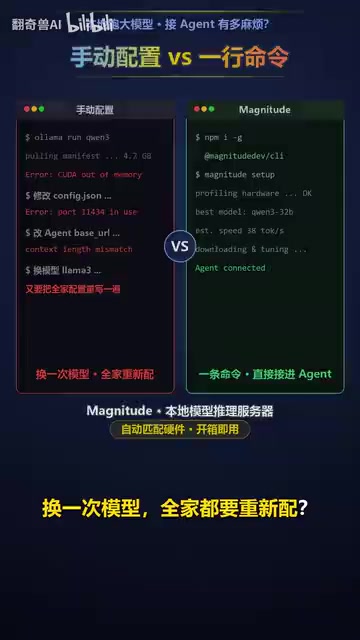
Magnitude: One Service to Handle Local LLM Inference and Agent Integration
Magnitude is an open-source local LLM inference server that auto-optimizes for your hardware and integrates seamlessly with Codex, Claude Code, and other AI Agents.
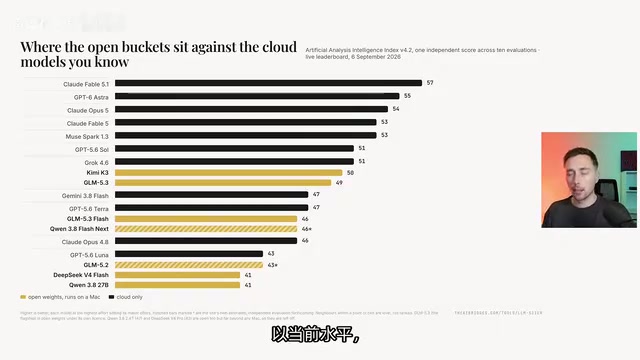
Mac Local AI Buying Guide: A Complete Breakdown of Memory Configurations and Model Speed
In-depth analysis of Mac memory requirements, inference speed, and costs for running local AI LLMs. From 48GB to 512GB configs — which models fit, how bandwidth affects speed, and local vs. cloud cost comparison.
How Knowledge Graphs Extend LLM Context: From Vector Retrieval to Relational Reasoning
Deep dive into how knowledge graphs enhance LLM context. Compares vector retrieval limitations, reveals how graphs enable multi-hop reasoning through explicit relational structures, and covers GraphRAG workflows and use cases.