Perplexity Pro/Max Gets Gemini 4 Carbon, Slashing Agent Task Costs

Perplexity rolls out Gemini 4 Carbon to Pro and Max users, focusing on low-cost agentic research.
Perplexity is rolling out Gemini 4 Carbon to all Pro and Max subscribers. The model is optimized for agentic workflows and supports multi-step reasoning, tool calling, and sustained interaction. Users can create persistent Teammates that remember context and preferences for long-term research, or launch one-off agent sessions in Computer for temporary complex tasks. Perplexity says Carbon matches Fable 5.2 on agentic research tasks at about 40% of the cost (2.5x cheaper), directly affecting subscription sustainability and usage limits. The update moves Perplexity from a Q&A tool toward a collaboration platform and enriches its model lineup. Official pricing and benchmark data are not yet disclosed.
Perplexity has announced that it is rolling out the Gemini 4 Carbon model to all Pro and Max subscribers. This update not only lets users create persistent Teammates (agent collaborators) but also supports one-off agent sessions in Computer. More importantly, Carbon's capability on agentic research tasks is similar to Fable 5.2, but at roughly a quarter of the cost (officially described as 2.5x cheaper).
What Is Gemini 4 Carbon?
According to Perplexity's official tweet, Gemini 4 Carbon is a model optimized specifically for agentic workflows. It is not a pure chat model; rather, it has been tuned for research tasks that require multi-step reasoning, tool calling, and sustained interaction. Users can use it in two ways: first, by creating long-lived Teammates that let the AI assistant remember context and preferences and become a fixed member of the team; second, by launching one-off agent sessions in Perplexity's Computer feature to handle temporary, complex tasks.
This dual-mode design covers scenarios ranging from ongoing collaboration to instant response. For research projects that require repeated follow-up, Teammates can maintain state and reduce repetitive communication; for quickly validating ideas or handling isolated tasks, one-off sessions are more lightweight.
Agentic Workflow refers to a mode of operation in which AI no longer merely answers single-turn questions passively, but can autonomously plan steps, call tools (search, code execution, data analysis, etc.), adjust strategy based on intermediate results, and keep advancing a task until completion. Compared with conventional chat models, it requires stronger multi-step reasoning, error recovery, and state management capabilities, and the token consumption and number of tool calls per task are also significantly higher. This is precisely why inference cost becomes a scaling bottleneck in agentic scenarios, and it also explains why Perplexity emphasizes that Carbon is specially tuned for such tasks and uses cost advantage as its core selling point.
Cost Advantage: 2.5x Cheaper Than Fable 5.2
The official tweet explicitly states that Carbon's capability on agentic research tasks is similar to Fable 5.2, but at 2.5x lower cost. This means that at the same task complexity, users or the platform can run more agent sessions at lower expense. For a subscription service like Perplexity, lower model costs directly affect service sustainability and user experience—lower costs may translate into more generous usage limits or faster response times.
Although the tweet does not disclose specific pricing details or task benchmark data, the phrase "2.5x cheaper" is already enough to interest enterprises and developers focused on AI application costs. At a stage when agents are gradually moving from demos to real productivity, inference cost is often the key bottleneck to scaling.
Inference cost is usually determined jointly by input/output token unit prices, context length, and the number of tool-calling rounds in agentic tasks. Agentic research tasks often require repeated retrieval, reading long documents, and multiple rounds of self-correction, so the token consumption of a single session can be several times or even dozens of times that of ordinary Q&A; therefore, small differences in unit price are amplified by the number of task rounds. The phrase "2.5x cheaper" in the article is colloquial; its actual meaning is that the cost is about 40% of the comparison model. Strictly speaking, the multiplier by which cost is reduced is not equivalent to "what percentage cheaper," and readers comparing different models side by side should rely on official pricing tables or per-task costs in benchmarks.
What Does This Mean for Perplexity Users?
For Pro and Max subscribers, this update is immediate. Users can now try creating Teammates or launching Computer sessions in the Perplexity interface. From a product perspective, the introduction of persistent Teammates makes Perplexity no longer just a Q&A tool, but closer to a collaboration platform—AI teammates can accumulate project knowledge and reduce the cost of repeatedly explaining background.
At the same time, the addition of Gemini 4 Carbon also enriches Perplexity's model selection. Perplexity had already integrated multiple models, and Carbon's positioning is clearly oriented toward agentic and tool-calling scenarios, complementing general-purpose chat models. Users can choose the most suitable model based on task type, while the platform maintains price competitiveness through cost optimization.
The Next Step for Agentic Research
Perplexity positions Carbon as a powerful tool for "agentic research tasks," which hints at its direction: enabling AI not only to answer questions but also to proactively perform a series of actions such as searching, organizing, and analyzing. The persistent nature of Teammates makes multi-turn, cross-session research workflows possible, while the cost advantage allows such workflows to run frequently.
Official information is currently limited, but it is foreseeable that as Carbon rolls out to Pro and Max users, feedback on its actual performance, task completion quality, and cost savings will gradually emerge. For AI application developers and heavy research users, this is an update worth watching—it may change the economics of how they build agentic workflows.
(This article is based on information from Perplexity's official tweet; actual feature availability is subject to the product.)
One-line Summary
Perplexity rolls out Gemini 4 Carbon to Pro and Max users, focusing on low-cost agentic research.
Paragraph Summary
Perplexity announced that it is rolling out the Gemini 4 Carbon model to all Pro and Max subscribers. The model is optimized for agentic workflows and supports multi-step reasoning, tool calling, and sustained interaction. Users can use it in two ways: creating persistent Teammates that let AI collaborators remember context and preferences and take on long-term research projects; or launching one-off agent sessions in the Computer feature to handle temporary complex tasks. Perplexity says Carbon's capability on agentic research tasks is similar to Fable 5.2, but at only about 40% of the cost (2.5x cheaper), which has a direct impact on the sustainability and usage limits of a subscription service. This update moves Perplexity from a Q&A tool toward a collaboration platform and also enriches its model selection, complementing general-purpose chat models. Official pricing details and benchmark data have not yet been disclosed.
Related articles

How Do Cursor, Devin, TRAE, and Copilot Compare on Price? Calculate Your Credits Before You Compare Monthly Fees
Side-by-side comparison of individual and team pricing for Cursor, Devin Desktop, TRAE, and Copilot, breaking down credit rules, third-party model inclusion, overage billing, and practical methods for measuring usage before paying, setting spending caps, and choosing the right tool.
Copilot Retires Three Models: Pro Users Left With Only One Alternative
GitHub Copilot retires Claude Opus 4.8, Claude Opus 5, and GPT-5.6 Tera on Nov 16 across Chat, code completion, and Agent mode. Pro users have only GPT-6 Luna left; Legacy annual plans miss Opus 5.5; admins must enable replacements manually.
Gemini 4 Carbon Arrives: The LLM Race Enters the Era of Million-Token Context and Trillion-Parameter Open Source
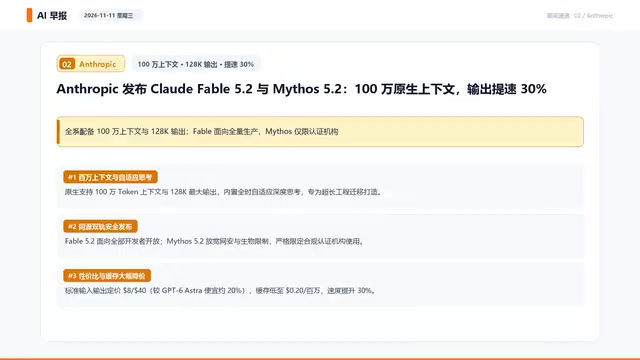
Google launches Gemini 4 Carbon and multi-agent tool Swarm; Anthropic debuts million-context Fable 5.2 and Mythos 5.2; OpenAI releases security-focused GPT-6 Cyber; Mistral and Kimi open-source trillion-parameter models — the LLM race accelerates across the board.