Phrack 73 Released: The Enduring Legacy of the Hacker Zine and Its Security Implications

Phrack Issue 73 draws security community attention, highlighting the lasting value of hardcore technical writing.
Phrack Issue 73 has been officially released, gaining 308 points and 46 comments on Hacker News, showing the security community's continued interest in this legendary hacker magazine. Founded in 1985, Phrack is known for in-depth technical articles, vulnerability analysis, and hacker culture commentary, and many classic security concepts were first systematically disseminated there. Combining historical background and community reactions, this article analyzes Phrack's high-barrier, hands-on editorial style, discusses issues such as editorial quality, technical depth, and cultural change that community discussion may focus on, and points out that Phrack documents the co-evolution of attack techniques and defense approaches. In an age of fragmented information, it represents a tradition of slow, careful technical writing and still holds methodological value and mental training significance for security practitioners.
Introduction
Phrack is a long-running underground electronic magazine with legendary status in the hacker and security research community. Recently, Phrack Issue 73 was officially released and sparked widespread discussion on Hacker News (308 points, 46 comments). Although the original material only provided the release link and community feedback data, the event itself reflects many deeper issues in the security research field. This article combines Phrack's historical background with community reactions to analyze its significance, content characteristics, and implications for security practitioners.
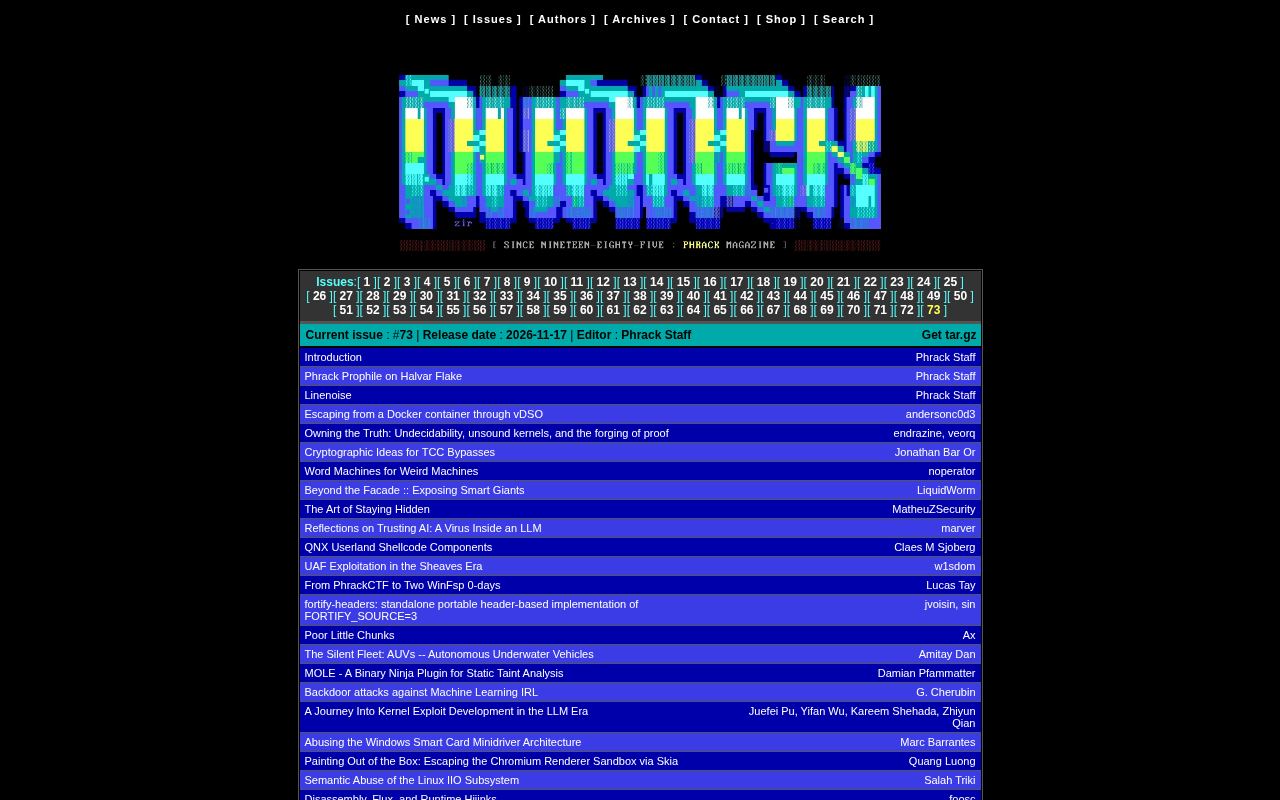
What Is Phrack and Why Its Release Matters
Phrack was founded in 1985 and is one of the oldest and most respected hacker magazines on the Internet. It is not an ordinary technical publication but is known for in-depth technical articles, vulnerability analysis, penetration testing techniques, and commentary on hacker culture. Many classic security concepts (such as buffer overflow exploitation techniques) were first systematically disseminated in Phrack. Therefore, each new issue is regarded by the security community as an important update of technical intelligence.
Although the material does not detail the specific article list of Issue 73, judging from Phrack's consistent editorial style, this issue likely continues its tradition of high barriers to entry, deep technical content, and emphasis on practical operation. For security researchers, reverse engineers, and vulnerability hunters, Phrack's content often has direct methodological value.
Phrack was founded in 1985, and its birth is closely related to early BBS culture and the phreaking community. The name is a combination of "phreak" (phone phreak) and "hack." It was initially circulated as electronic text on bulletin board systems and later gradually shifted to Internet distribution. Phrack adopts an irregular publication model, with each issue organized by a different editorial team, and articles undergo rigorous peer review, so the publication cycle is often measured in years. This decentralized, community-driven editorial model has allowed it to maintain technical independence and cultural continuity for nearly four decades. Many later widely used security tools and attack techniques, such as stack overflow exploitation, heap spraying, and return-oriented programming (ROP), were systematically explained in Phrack, thus establishing its classic status in the history of security research.
Community Reaction: Discussion Focus on Hacker News
On Hacker News, the release post received 308 points, showing the community's continued attention to Phrack. Although the specific content of the 46 comments cannot be known from the material, it is reasonable to infer that the discussion focused on several aspects: first, evaluations of Phrack's editorial quality; second, in-depth discussions of a particular technical article; and third, reflections on the changes in hacker culture. This level of interest also shows that, beyond commercial security conferences and rapidly iterating bug bounty platforms, Phrack still retains an appeal rooted in "technical purity."
Technical Depth and Content Trends: The Evolution of Security Research Through Phrack
Phrack's long-term value lies in its documentation of the co-evolution of attack techniques and defense approaches. From early stack overflows and format string vulnerabilities to later heap exploitation, browser vulnerabilities, and kernel offense and defense, Phrack articles have often been years ahead of mainstream security media. The release of Issue 73 at this particular moment means it may touch on frontier directions such as cloud-native security, AI-assisted vulnerability discovery, and hardware side channels—of course, readers need to consult the original text to confirm.
For security practitioners, Phrack is not only a learning tool but also a form of mental training. Its articles usually assume that readers have solid system knowledge and reverse engineering skills, so the reading process itself is a deep technical dive. This positioning of "not catering to beginners" has instead shaped its irreplaceable authority.
A side-channel attack is a type of attack that does not directly exploit software logic vulnerabilities but instead infers sensitive data by observing information leaked through the physical implementation of a system (such as execution time, power consumption, electromagnetic radiation, and cache access patterns). Hardware side channels specifically refer to such attacks conducted at the hardware level, such as CPUs, memory, and cryptographic coprocessors. Typical examples include microarchitectural vulnerabilities based on speculative execution and caching, such as Spectre and Meltdown. With the spread of cloud-native and multi-tenant environments, the impact of hardware side channels has expanded from single machines to virtualization scenarios involving shared physical hosts, exposing isolation boundaries to new challenges. Phrack has historically published in-depth analyses of side channels and microarchitectural attacks multiple times. If Issue 73 covers this direction, it likely continues its tradition of detailed analysis of low-level hardware behavior and exploitation feasibility.
Implications for the Security Community: Why We Still Need Phrack
In an era of fragmented information and increasingly templated vulnerability reports, Phrack represents a tradition of technical writing that values slow, careful work. Its release reminds us that the core driving force of security research remains curiosity about the lower layers of systems and a rigorous experimental spirit. For enterprise security teams, Phrack's technical articles can serve as reference material for threat modeling and defense hardening; for academic researchers, it offers problem definitions from an industry perspective; and for independent researchers, it is a stage for showcasing hardcore technical skills.
Conclusion
The release of Phrack 73 is not only the launch of a new issue but also a confirmation of the continuity of hacker culture and security technology. Although this article cannot introduce each article based on limited material, the event itself deserves the security community's attention. Readers are encouraged to visit the official Phrack website, read this issue in depth, and participate in community discussions to draw technical inspiration from it.
Related articles
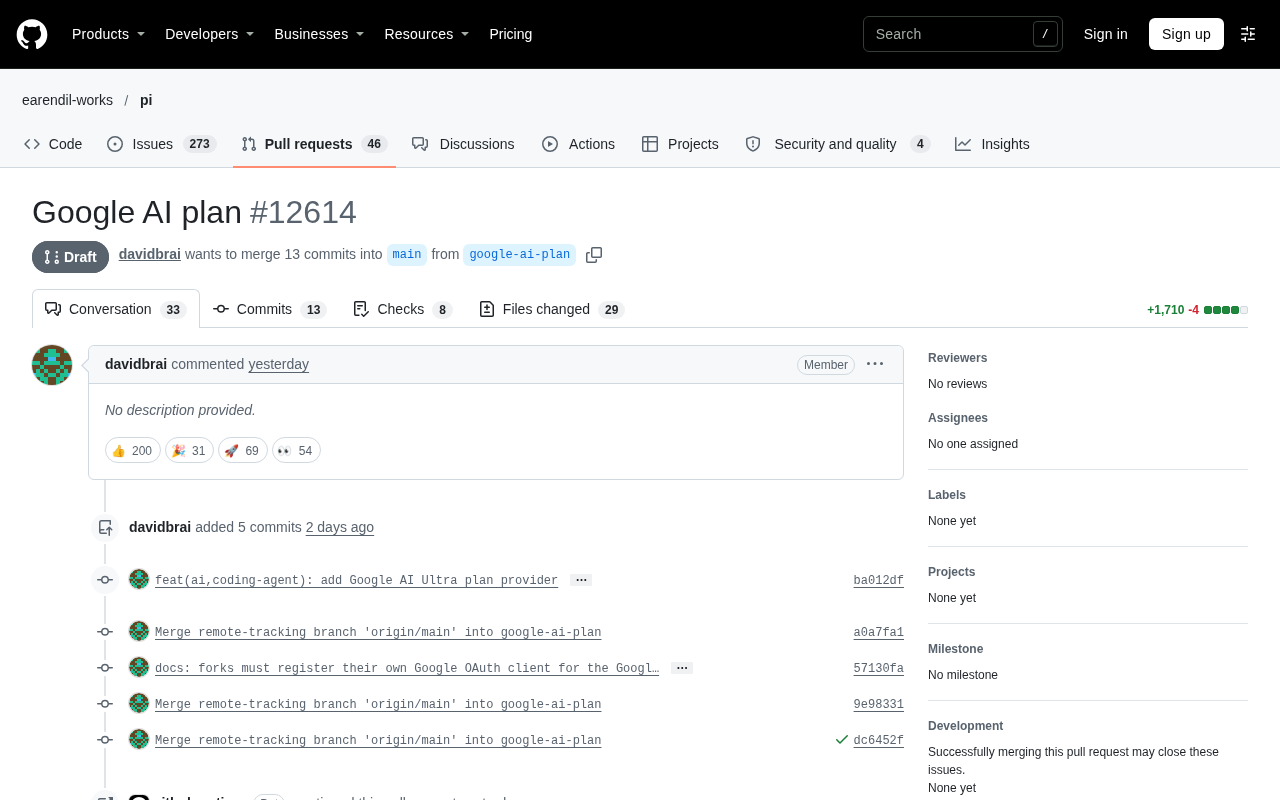
Google Officially Supports Pi Coding Agent: The AI Programming Tool Ecosystem Expands Further
Google adds official Google AI plan support for the open-source coding agent Pi, signaling accelerating integration between large model vendors and coding agent tool ecosystems. This article analyzes the impact on developer workflows, the tool ecosystem landscape, and model binding relationships.

Loom: One Machine for Weaving, Knitting and Braiding
Loom is a device that aims to seamlessly combine weaving, knitting and braiding in a single machine, drawing attention on Hacker News. This article examines its engineering challenges, significance for flexible manufacturing, and lessons for makers and hardware developers.
Running Local AI Agents on Mac: A Full Breakdown of the MLX Four-Layer Stack
A breakdown of Apple engineer Joanna's local Mac AI agent solution: the MLX four-layer stack, a three-step setup, and how the neural network accelerator, continuous batching, and distributed inference solve local agent performance bottlenecks.