Piramidal (YC W24) Is Hiring: Expanding in the EEG AI Healthcare Space
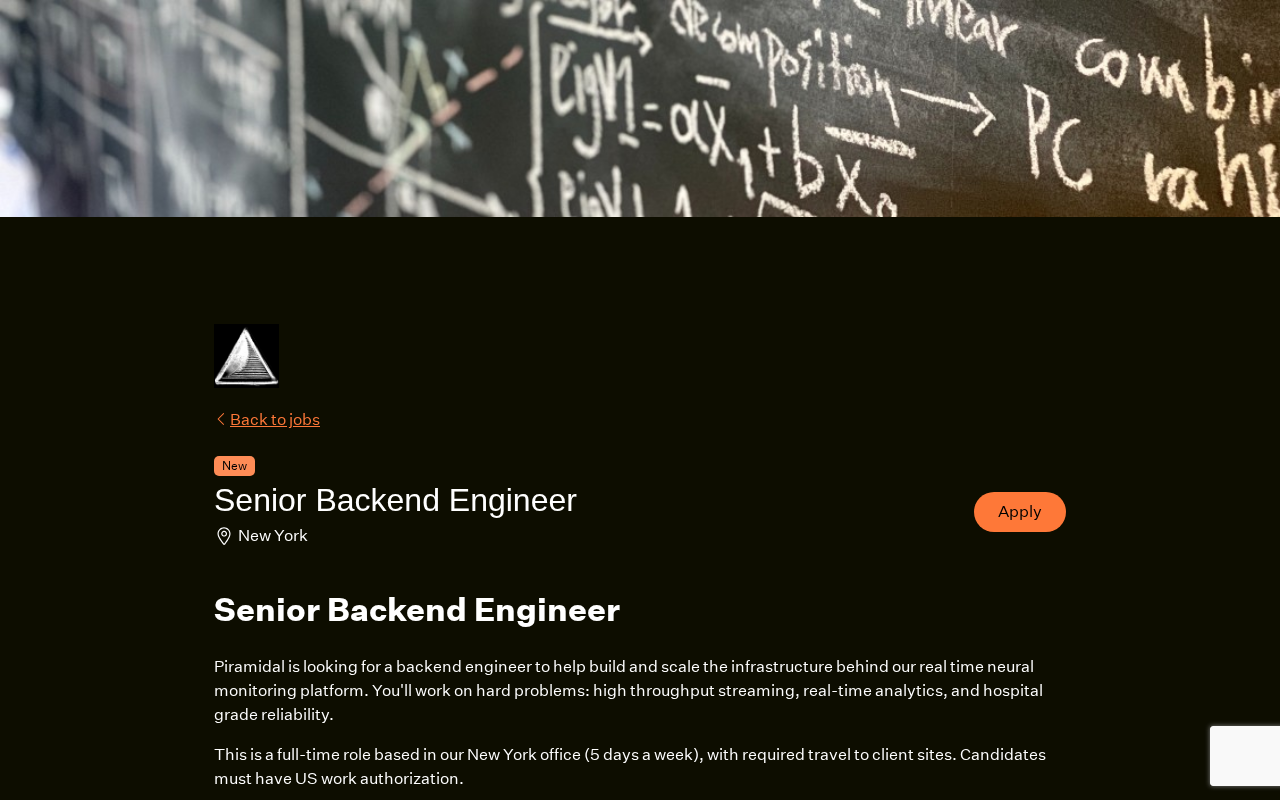
YC W24 healthcare AI company Piramidal is expanding, focusing on EEG foundation models and betting on the technical inflection point in EEG analysis.
Piramidal is a YC W24 healthcare AI company whose core focus is EEG-based foundation models, aiming to use large-scale pretraining plus downstream fine-tuning to tackle seizure detection, sleep staging, and ICU brain monitoring. EEG data poses significant technical barriers due to low signal-to-noise ratios, high inter-individual variability, and high annotation costs. The company seeks engineers with time-series modeling, signal processing, and healthcare compliance skills, and its choice of Hacker News as a recruiting channel reflects an engineering-oriented, low-polish culture. Despite long commercialization cycles, EEG foundation models could eventually extend to brain-computer interfaces and psychiatric biomarkers.
The hiring news in one sentence
Piramidal, a healthcare AI company from Y Combinator's W24 batch, is expanding its team. The job posting appeared on Hacker News' hiring section, with a link to the official comment thread — a typical direct-from-the-technical-team hiring path.
The source material itself is just a link and a headline, but the combination of tags — "YC W24 + healthcare AI + EEG signals" — already sketches out the company's technical DNA: applying deep learning to neuroelectrophysiological data to deliver clinical-grade decision support. Below, we break down why this space is worth watching and what this kind of role typically entails.
What Piramidal is working on
Piramidal's core focus is foundation models built on electroencephalography (EEG). Traditional EEG analysis relies heavily on neurologists manually interpreting waveforms segment by segment — slow, subjective, and with limited inter-rater consistency. Piramidal's approach is to pretrain a general-purpose representation model on large-scale EEG data, then fine-tune it downstream for specific tasks like seizure detection, sleep staging, and ICU brain function monitoring.
This mirrors the "pretrain then fine-tune" paradigm from NLP and CV, but the data modality brings extra challenges: EEG signals have low signal-to-noise ratios, high inter-individual variability, inconsistent electrode montage configurations, and extremely high annotation costs. The fact that they secured YC backing suggests the team has presented investors with convincing early solutions to these problems.
EEG foundation models borrow the pretraining paradigm from natural language processing: first learn general representations from massive unlabeled or weakly labeled data, then transfer to specific downstream tasks. In the EEG domain, this means the model is first exposed to tens of thousands of hours of EEG recordings spanning different ages, pathologies, and electrode configurations, learning spatiotemporal features reusable across tasks. During downstream fine-tuning, only a small amount of labeled data is needed to adapt to specific scenarios like seizure detection or sleep staging. Unlike text, EEG signals are continuous multi-channel time-series data, and pretraining objectives typically include masked reconstruction, contrastive learning, and predictive coding. The model must simultaneously capture millisecond-level transient waveforms and minute-level rhythmic changes. If this paradigm holds, it could significantly reduce the dependence on expensive expert annotations for each new clinical task.
Why EEG is a tough nut to crack in healthcare AI
EEG data is inherently unfriendly. Sampling rates typically range from 250–1000 Hz, and a single 24-hour long-term monitoring session produces tens of gigabytes of time-series data. Artifacts (eye movements, muscle activity, cardiac interference) require specialized handling. Clinically, there's also a large "gray zone" in interpretation — the same waveform segment may yield different conclusions from different physicians.
Precisely because it's hard, the barriers in this space are high. Whoever solves data standardization and annotation consistency first is more likely to train a genuinely usable foundation model. Piramidal is betting on exactly this window: the performance inflection point for EEG foundation models hasn't arrived yet, but early signs are visible.
Electrode montage refers to the spatial arrangement of electrodes on the scalp during EEG acquisition, commonly the international 10-20 system and its extensions. Different hospitals, devices, and even research protocols may use different montages, resulting in inconsistent channel counts, positions, and naming. For foundation models, this means: if training directly mixes data from different montages, the model needs the ability to handle missing channels and spatial position variations; otherwise, the learned representations won't generalize. Common strategies include standardized mapping to a common space, using graph neural networks to model inter-electrode relationships, or designing attention mechanisms insensitive to channel sets. Montage inconsistency is one of the most challenging aspects of EEG data standardization and a key obstacle to improving cross-center model generalization.
What the W24 batch signals about healthcare projects
YC's W24 batch has a significant proportion of healthcare and biotech projects, and Piramidal falls into the "AI infrastructure + clinical deployment" category. These projects don't build pure software tools — they embed directly into clinical workflows and pursue FDA or CE medical device approval pathways.
This means the team composition skews toward a dual-track engineering + clinical profile: they need ML engineers who understand PyTorch, distributed training, and signal processing, as well as medical advisors or product members who understand neuroelectrophysiology and can read clinical needs. Hiring typically revolves around these role types.
What these roles typically require
If we reference the hiring profiles of similar EEG AI companies, core requirements cluster around a few areas:
- Time-series modeling experience: Hands-on experience with Transformers, state space models (like Mamba-class architectures), and convolutional temporal networks on long sequences
- Signal processing fundamentals: Filtering, re-referencing, artifact removal, frequency-domain analysis — these aren't just library calls; you need to understand the physical meaning
- Healthcare data compliance awareness: HIPAA, GDPR, as well as clinical data de-identification and ethics review processes
- Cross-disciplinary communication: Ability to converse with neurologists and translate clinical problems into modelable ML tasks
On the soft skills side, early-stage companies value the ability to push projects forward when data is messy, labels are scarce, and objectives are ambiguous.
State Space Models (SSMs) are a class of architectures for sequence modeling that have gained attention in recent years through variants like Mamba. At their core, they use a set of continuous or discrete state equations to describe sequence evolution, achieving long-range dependency modeling through selective scan mechanisms. Compared to Transformers, SSMs have linear computational complexity during inference, with memory usage growing more gently with sequence length — making them particularly suitable for high-sampling-rate, long-duration time-series data like EEG. In EEG tasks, SSMs can efficiently process hours or even overnight recordings while retaining sensitivity to transient abnormal waves. However, best practices for SSMs on medical signals are still being explored, and engineers need to understand the trade-offs versus convolutional networks and Transformers to select the right approach for specific clinical scenarios.
A hiring detail worth noting
The job posting appeared on Hacker News, not LinkedIn or traditional job platforms. This is a common choice for technical startups: HN's audience is already self-selected, and people who apply here typically have genuine interest in the underlying technology and company direction rather than mass-applying. This channel preference itself sends a cultural signal — engineering-oriented, direct, low on polish.
The long-term outlook for this space
If EEG foundation models truly work, the impact extends beyond the two mature scenarios of epilepsy and sleep. ICU brain function monitoring, anesthesia depth assessment, brain-computer interface decoding front-ends, and even objective biomarkers for psychiatric disorders could all benefit.
But let's be clear-eyed: healthcare AI has a long commercialization cycle, with regulatory approval, hospital procurement, and physician trust standing as three gates between technical validation and clinical adoption. Piramidal is still at an early stage — the hiring expansion is a positive signal, but large-scale revenue is still some distance away. For job seekers, this is a bet on direction, not a bet on certainty.
To learn more, check out the original comment thread on HN, where team members typically respond directly.
One-line Summary
YC W24 healthcare AI company Piramidal is expanding, focusing on EEG foundation models and betting on the technical inflection point in EEG analysis.
Paragraph Summary
Piramidal is a YC W24 healthcare AI company whose core focus is foundation models based on electroencephalography (EEG), aiming to use large-scale pretraining plus downstream fine-tuning to tackle tasks like seizure detection, sleep staging, and ICU brain monitoring. EEG data has low signal-to-noise ratios, high inter-individual variability, and high annotation costs, creating significant technical barriers. The company's hiring leans toward engineers with time-series modeling, signal processing, and healthcare compliance skills, and its choice of Hacker News as a recruiting channel reveals an engineering-oriented, low-polish team culture. Although the commercialization cycle is long, EEG foundation models could eventually extend to brain-computer interface decoding, psychiatric biomarkers, and other scenarios — worth watching for technical talent.
Related articles

M&M's Spent Millions Replacing Artificial Blue Dye — Why Is It So Hard?
Mars spent millions trying to replace artificial blue dye in M&M's with spirulina, but thick material clogs pipes and residue risks mold, forcing a full production-line rebuild. Here's the engineering behind the reformulation.
Teammate Wanted for Meta Global AI Developer Hackathon: Computer Vision & Medical AI
A Reddit developer seeks teammates for the Meta Global AI Developer Hackathon, focusing on computer vision and medical AI. This article analyzes the track logic, skills-complementarity needs, and topic selection strategy behind this teaming signal.
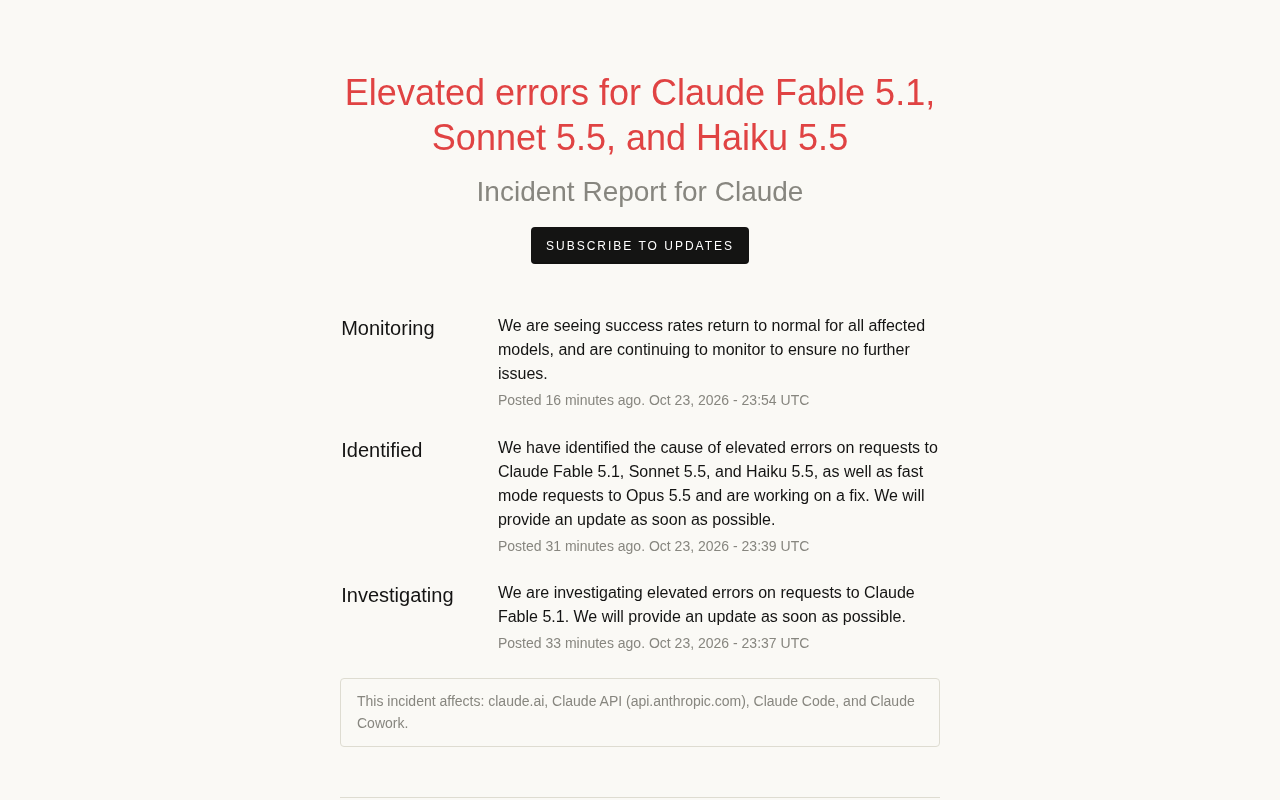
Multiple Claude Models Hit by Errors: A Postmortem of Fable 5.1, Sonnet 5.5, and Haiku 5.5
Claude Fable 5.1, Sonnet 5.5, Haiku 5.5, and Opus 5.5 fast mode saw elevated errors; Anthropic identified and resolved the issue in 17 minutes. This postmortem covers the timeline, the technical reasons for the multi-model cascading failure, and practical lessons for retry and degradation strategies.