Playwright E2E Builder: Engineering AI-Driven Web Automation Testing

An AI Skill in Cursor that turns Playwright UI automation into maintainable engineering assets via a four-step workflow.
Playwright E2E Builder is an AI Skill installed in Cursor that upgrades UI automation from throwaway scripts to sustainable, maintainable engineering assets. Through a four-step workflow of profiling, blueprinting, implementation, and acceptance, plus built-in locator health checks, it helps test engineers shift from passive firefighting to proactive architecture design.
The Dilemma of Hand-Written Test Scripts
For engineers who have long worked in web automation testing, the following scenarios are all too familiar: a button's class name on a page gets changed, and an entire carefully crafted set of locators instantly breaks, forcing you to fix them one by one late into the night. After running a round of tests, the report shows only red and green blocks—product managers have no idea which business behaviors were actually covered or what was missed. Failure logs flood the screen, and you can't even tell whether to fix the selector or the assertion first.
The root of these pain points is not that engineers "don't know how to write scripts," but that traditional UI automation often produces only "throwaway scripts that run once," lacking maintainability and long-term value. According to a relevant Bilibili content creator, a web automation Skill called Playwright E2E Builder is attempting to solve this problem at its root.

What Is the Playwright E2E Builder Skill
Before diving into this toolset, it's worth understanding the technical background of Playwright itself. Playwright is a modern web automation testing framework developed by Microsoft and officially open-sourced in 2020, supporting the three major browser engines: Chromium, Firefox, and WebKit. Compared to traditional solutions like Selenium, Playwright offers capabilities such as automatic waiting, network interception, and concurrent multi-tab testing, and natively supports multiple languages including TypeScript/JavaScript, Python, Java, and .NET. Its greatest advantage lies in an API design that aligns more closely with the asynchronous nature of modern web applications, effectively reducing test instability (flaky tests) caused by timing issues—this is also the core reason it has rapidly become the mainstream E2E testing framework in recent years.
Understanding Playwright's position within the testing framework ecosystem helps explain why it has become the preferred foundation for AI-assisted testing. Traditional Selenium, born in 2004, remotely invokes browsers via HTTP based on the WebDriver protocol, inherently introducing communication latency and instability. Playwright, on the other hand, uses the Chrome DevTools Protocol (CDP) to communicate directly with the browser core. CDP is a low-level debugging interface exposed by the Chrome browser, allowing external programs to directly control the browser's JavaScript engine, network layer, and rendering layer with extremely low latency. This direct-connection architecture not only executes faster but can also precisely intercept network requests, simulate device sensors, capture browser console logs, and even control multiple independent browser contexts in parallel within the same test process. More importantly, CDP grants the testing framework deep capabilities such as intercepting and modifying arbitrary network requests, injecting arbitrary JavaScript, and capturing performance metrics, enabling AI Agents to treat the browser as a precisely programmable execution environment—the AI only needs to generate standard API calls to precisely control complex user interaction sequences, without having to battle numerous timing issues and waiting strategies as with Selenium. This generational architectural difference is the fundamental reason Playwright is naturally suited to being driven by AI Agents.
It's worth noting that CDP is not unique to Playwright—Puppeteer is also based on CDP, but Playwright further abstracts a unified cross-browser API layer on top of it and introduces a browser context (BrowserContext) isolation mechanism, making concurrent multi-user session testing possible. A BrowserContext is essentially an independent "browser instance" with its own Cookies, LocalStorage, and permission states, and different Contexts are completely isolated from one another—meaning that within a single test process, you can simultaneously simulate multiple users with different identities operating concurrently on the same application without state contamination. This design decision makes Playwright far superior to single-browser solutions in enterprise-grade CI/CD pipelines, and also provides AI Agents with richer test orchestration capabilities, such as validating race conditions and permission isolation logic in multi-user collaboration scenarios.
Unlike traditional standalone testing frameworks, Playwright E2E Builder is positioned as a Skill installed within Cursor. Understanding this positioning first requires understanding Cursor's working mechanism: Cursor is an AI programming IDE deeply reworked from VSCode, whose Agent mode allows large language models (LLMs) to autonomously perform multi-step operations, including reading and writing files, running terminal commands, and calling external tools. A Skill is essentially a set of structured prompt engineering assets—by using the .cursorrules file to codify best practices into persistent constraints, every AI interaction automatically applies a predefined baseline of standards. Through predefined specifications, constraints, and process templates, it constrains the AI's random output into deliverables that meet engineering standards. The core value of this mechanism is that it makes the tacit knowledge of "how excellent engineers collaborate with AI" explicit, versionable, and reusable—the quality of a single prompt determines the ceiling of a single output, while the Skill specification determines the engineering quality baseline of the entire system, transforming AI output quality from dependence on individual skill to being guaranteed by engineering standards.
From the perspective of the evolution of prompt engineering, the Skill mechanism represents an important shift toward an engineering paradigm. Early AI-assisted programming relied on engineers constructing prompts on the fly, with output quality heavily dependent on individual experience and difficult to replicate across teams. Codifying best practices into Skill specifications is essentially making the tacit knowledge of "how excellent engineers collaborate with AI" explicit and reusable. Cursor's .cursorrules file and Rules for AI mechanisms are precisely the infrastructure for this paradigm—they allow teams to inject constraints such as project specifications, code style, and testing standards into every AI interaction in a structured manner, ensuring AI output always aligns with engineering quality requirements rather than "teaching" the AI what to do from scratch every time. From a deeper cognitive science perspective, the working mechanism of the .cursorrules file resembles the process of structurally encoding a human expert's "professional intuition": the judgments a senior test architect automatically triggers during a code review—"this selector is too fragile," "this needs POM encapsulation"—are transformed in the Skill specification into explicit constraints the AI must follow before generating any code. This process of knowledge externalization not only reduces the team's dependence on specific individual experts but also allows organizational knowledge assets to be preserved and passed on amid personnel turnover.
This distinction is crucial. Directly asking the AI to "help me write Playwright tests" often yields only a script that runs once; whereas through a collaboration workflow constrained by Skill specifications, you get a sustainable, maintainable automation engineering asset.
The barrier to entry for users is not high—no need to master Playwright; you just need a basic foundation in web testing and familiarity with terminal command lines to collaborate with the AI in Cursor and run through the entire workflow, significantly lowering the entry barrier to automation testing.
Three Core Values
According to the video author's breakdown, this Skill primarily delivers improvements in the following three areas.
Value One: Turning UI Automation into a Standard Delivery Process
For many teams, the UI automation dilemma is not "not knowing how to write" but "not daring to maintain what was written over the long term." Once scripts pile up, they evolve into technical debt no one dares to touch.
End-to-end testing (E2E Testing) sits at the top of the software testing pyramid model, simulating real user operation paths to validate complete business processes. Its engineering implementation has long faced three challenges: high maintenance cost (frequent UI changes), slow execution (dependence on real browser rendering), and complex failure causes (network, data, and selector factors intertwined). Industry strategies have gradually shifted from "pursuing high coverage" to "focusing on core user journeys," complemented by the Page Object Model (POM) design pattern to decouple page interaction logic from test logic and reduce maintenance costs.
Understanding the testing pyramid model helps accurately position the value boundaries of E2E testing. The testing pyramid, proposed by Google engineer Mike Cohn, ranks from bottom to top as: Unit Tests (most numerous, fastest to execute, covering the finest-grained logic), Integration Tests (validating collaboration between modules), and E2E Tests (fewest in number, slowest to execute, but the only ones that can validate complete user journeys). The core insight of the pyramid model is that E2E tests should not pursue comprehensive coverage but should focus on a few critical business paths—typically the core flows users use most frequently and whose failure causes the greatest loss. In practice, Google's internal statistics suggest maintaining a ratio of E2E tests to unit tests of 1:10 or lower; excessive stacking of E2E tests instead slows down the CI/CD pipeline and produces numerous hard-to-attribute flaky tests. This "few but essential" strategy aligns closely with the design logic of the "profiling" phase (identifying core user journeys) in the Playwright E2E Builder's four-step workflow, reflecting a rational weighing of testing investment versus return.
The Page Object Model is the most mature design pattern in the E2E testing domain, with the core idea of encapsulating page interaction logic into independent objects, thoroughly decoupling test cases from DOM structure. In a POM architecture, each page or component corresponds to an independent Page Object class encapsulating all locators and operation methods related to that page; the test case layer only calls these methods and never operates on the DOM directly. When the page UI changes, engineers only need to modify the corresponding Page Object, and all test cases referencing that object are automatically updated—this aligns closely with the "single responsibility" and "open-closed" principles of object-oriented programming. However, manually maintaining a POM system is itself a heavy engineering task, especially in projects with complex page structures and frequent iterations, where Page Object files often quickly balloon into another unmaintainable "mountain of technical debt." AI-assisted automatic generation and updating of Page Objects is precisely the core value entry point for automating this repetitive engineering labor, and it is also the technical foundation enabling the Playwright E2E Builder's four-step workflow to produce maintainable engineering assets.
Playwright E2E Builder breaks down the entire process into a four-step standard workflow of profiling, blueprinting, implementation, and acceptance, which aligns closely with POM design thinking and is an AI-assisted implementation path for mature industry practices. After going through the workflow once, what you produce is no longer a throwaway script that just runs, but a reviewable, sustainably maintainable test engineering asset.
This process-oriented approach essentially upgrades testing from "a craft" to "engineered delivery"—the generation of test cases, decomposition of requirements, and implementation of scripts all have a basis to follow, greatly reducing the cost of team collaboration and subsequent handovers.
Value Two: Early Warning of Locator Failures
"Minor page changes causing widespread selector failures" is the biggest nightmare of UI automation. The traditional approach often involves passive firefighting only after scripts crash.
This problem has deep technical roots. Modern front-end frameworks (React, Vue, Angular) commonly adopt CSS Modules or atomic CSS solutions (such as Tailwind CSS), and each build may generate different class hash values, making selectors that depend on class names extremely fragile. Take Tailwind CSS as an example: its atomic style class names directly describe visual properties (such as text-blue-500, px-4), and every time a designer adjusts the visual style, these class names change directly, making test selectors that depend on them nearly impossible to survive across versions. Playwright officially recommends prioritizing semantic locators—such as getByRole(), getByText(), and getByTestId()—because these approaches rely on the semantic attributes of elements rather than visual styles, offering significantly stronger resistance to UI refactoring.
In terms of selector strategy stability, the industry typically ranks locators from most to least fragile as follows: based on CSS class hashes (extremely fragile) → based on absolute XPath paths (fragile) → based on CSS structural selectors (moderate) → based on the data-testid attribute (fairly stable) → based on ARIA roles and semantic attributes (most stable). The reason getByRole() is placed at the top of Playwright's recommended priority is that ARIA (Accessible Rich Internet Applications) roles are a W3C-defined HTML semantic-layer standard specification, defining the semantic identities of elements such as button, textbox, heading, and dialog. These semantic identities do not change with visual design and mandatorily require developers to attend to accessibility (A11y), thereby forming a positive feedback loop between test stability and accessibility quality assurance—a single test suite both validates functional correctness and implicitly ensures usability for assistive technologies such as screen readers. A selector health scoring model built on this tiered system can quantitatively assess the fragility distribution of existing test scripts, precisely concentrating maintenance resources on high-risk areas, thereby achieving a fundamental shift from passive firefighting to proactive risk management.
It's worth noting that while the data-testid attribute approach offers higher stability, it requires front-end developers to actively add test anchors in components, which necessitates establishing collaboration norms between the test team and development team. By contrast, getByRole() is based on elements' native semantics and requires no intrusion into business code—which is why in engineering environments with clear front-end/back-end separation and team collaboration boundaries, semantic locator strategies are often more engineering-viable than the testid approach. Playwright E2E Builder prioritizes semantic approaches when generating selectors, precisely codifying this engineering experience into a default specification.
This Skill has a built-in set of auxiliary scripts for scanning, scoring, and failure analysis, whose essence is precisely to tier-score existing selector strategies, prioritizing the identification and replacement of high-risk fragile selectors, allowing you to identify potential risk points before your scripts actually crash. This means the role of the test engineer can shift from a passive "firefighter" to a proactive "architect."

After mastering this methodology, you can not only run automation but also independently maintain and extend the entire system. Going from "the grunt who fixes locators" to "the person who designs the automation architecture"—this is the true leap in capability.
Value Three: AI Collaboration Producing Maintainable Engineering Assets
The third point is also the most fundamental difference: Playwright E2E Builder is not a standalone testing framework but a capability enhancement layer embedded in an AI programming tool (Cursor).

Simply having the AI generate test scripts easily falls into the "runs once" trap; whereas under Skill specification constraints, the AI Agent follows a standard workflow and produces sustainable, maintainable automation engineering assets. This is precisely the key dividing line between AI-assisted programming and "casually asking AI to write code"—the former focuses on engineering quality and long-term value, while the latter only solves the immediate problem. In essence, Skills codify prompt engineering best practices into reusable process assets, so that the quality ceiling of AI output no longer depends on the engineer's ability to construct prompts on the fly, but is guaranteed by a predefined specification baseline.
Examined from a more macro software engineering perspective, this model shares the same lineage as the DevOps concept of "Everything as Code" (EaC). DevOps manages infrastructure (Infrastructure as Code), configuration (Configuration as Code), and pipelines (Pipeline as Code) in the form of code, making them versionable, auditable, and reusable; AI Skills, meanwhile, codify and assetize the knowledge of "how to effectively use AI" itself, which could be called "AI Collaboration as Code." When a team encapsulates test engineering best practices as a Skill, this knowledge asset can evolve alongside the codebase and be shared and passed on across the team, rather than being scattered in each engineer's individual "prompt collection." This ability to engineer AI collaboration knowledge foreshadows that the core competitiveness of future software teams will manifest not only in mastery of the tech stack but even more in the organizational capacity to systematically and engineeringly implement AI capabilities.
Extending from the perspective of organizational learning, Skill assetization also solves a deep problem that has long troubled software teams: the "Bus Factor" of knowledge—that is, whether team capability will be lost when a key member is "hit by a bus" (unexpectedly leaves). This concept originates from the Extreme Programming (XP) community and quantifies a team's dependence on specific individuals for knowledge: a Bus Factor of 1 means a certain piece of critical knowledge exists only in the head of a single member, and once that member leaves, the entire engineering capability collapses. Traditional test automation knowledge heavily depends on the accumulated experience of specific engineers, so the Bus Factor is often extremely low; but when this experience is encoded as Skill specifications and incorporated into the code repository, the team's automation capability is elevated from a "personal skill" to an "organizational asset," significantly enhancing the resilience and sustainability of the engineering system. This feature is especially important in technical teams with frequent personnel turnover, and is also an organizational dimension that technical managers cannot ignore when evaluating the value of introducing AI tools.
A Rational View: Opportunities and Aspects Requiring Validation
Statements in the video such as "100x efficiency improvement" and "generate a maintainable engineering suite in minutes" are typical self-media marketing rhetoric; actual benefits vary significantly depending on project complexity and team circumstances, and readers should maintain rational expectations. What truly deserves attention is the design thinking behind this methodology.

The author's perspective from a career development standpoint is worth pondering: manually "clicking around" only solves today's work, while mastering the ability to develop and apply AI Skills solves the problem of long-term career competitiveness. When others are still staying up late fixing locators, those who can rapidly produce maintainable engineering with AI tools naturally possess stronger irreplaceability.
It should be noted that the project claims to come with complete source code and Markdown design documentation and to be open-source, but its specific engineering quality, stability, and applicable scope still need to be validated through hands-on testing in your own projects. From a practical implementation standpoint, the following dimensions deserve key evaluation: the stability of generated Page Objects in complex dynamic component scenarios (such as infinite scroll lists and WebSocket real-time data update interfaces); whether the AI-generated selector strategy truly follows the semantic-first principle or still tends to output fragile CSS selectors; and the compatibility of the Skill specification with existing engineering constraints (such as custom ESLint rules and existing test architectures) in large projects. A rational engineer will treat it as an efficiency tool rather than a silver bullet, gradually expanding its application scope with the support of hands-on test data, rather than migrating everything all at once.
Conclusion
Playwright E2E Builder represents a trend worth continuing to watch: AI-assisted testing is moving from "generating scripts" toward "delivering engineering." It breaks down UI automation into a standard workflow, has a built-in locator health check mechanism, and achieves efficient human-AI collaboration with the help of the Cursor Agent.
For test engineers, rather than continuing to grind through Playwright error logs, it's better to try to understand and master the design thinking behind such AI Skills—the real value lies not in any single tool itself, but in the methodology and practical path of engineering AI capabilities into implementation. The essence of this capability is to systematically combine the mature practices accumulated over decades of software engineering (the testing pyramid, the POM pattern, semantic selectors, DevOps culture) with the generative power of AI, rather than simply using AI to replace manual input. Engineers who master this combination will occupy a more advantageous position in the coming era of human-AI collaboration.
Key Takeaways
Related articles
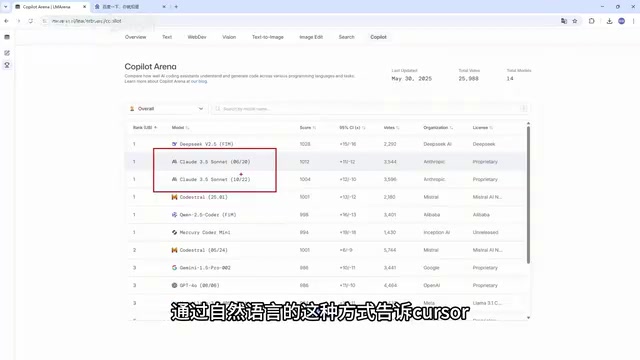
What Is Cursor? Core Differences Between This AI Coding Tool and Traditional IDEs
What is Cursor? This guide explains the AI-native code editor built on VS Code, how it compares to traditional IDEs, and its integration with Claude, DeepSeek, and Gemini.
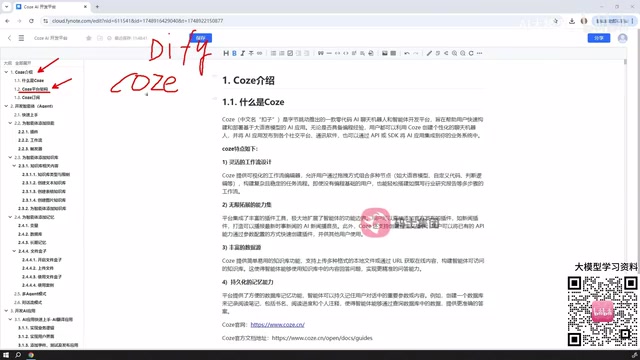
Coze 3.0 Beginner's Guide: A Complete Overview of Agents and AI Applications
A beginner's guide to Coze 3.0: covering agents, AI applications, workflows, and plugins on ByteDance's AI platform, plus a comparison with Dify.
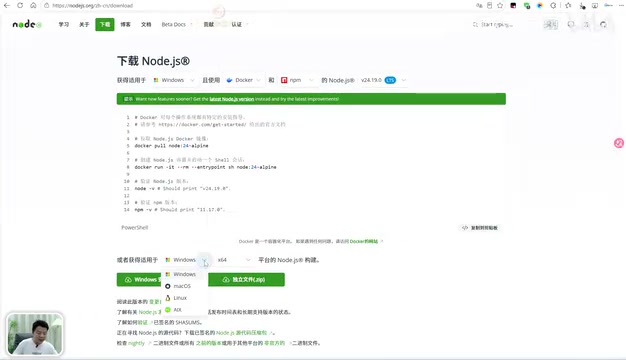
Setting Up the DeepSeek Harness Environment: A Complete Guide to Node.js Installation and Configuration
A beginner-friendly guide to setting up the DeepSeek Harness environment: Node.js installation, Add to PATH, redirecting npm global and cache directories, and configuring system environment variables.