Plex Removes Watch Together Feature and Users Are Furious: The 'Enshittification' Trap of Raising Prices While Cutting Features

Plex removed a daily-use co-viewing feature, pushing self-hosters toward open-source Jellyfin.
A Plex user posted on Reddit blasting the media server software for quietly removing the Watch Together feature after an app redesign — a tool he and his long-distance girlfriend used daily. The post captured the core contradiction with two words: 'enshittification' and 'shrinkflation' — Plex keeps raising prices while cutting features. For self-hosters already bearing all hardware costs, software-side cuts feel especially unacceptable. Rejecting suggestions to downgrade or find workarounds, the user announced a switch to the fully open-source Jellyfin. The incident highlights a broader dilemma in subscription software: statistically 'low-usage' features may be indispensable to specific user groups, and the combined signal of rising prices plus shrinking features is enough to push the most capable users straight to the competition.
A Feature Used Every Day — Gone Without Warning
A long-time Plex user took to Reddit to voice growing frustration with the media server software company. The immediate trigger was specific: the Watch Together feature had been quietly removed following an app redesign.
For this user, it wasn't some obscure, rarely-used feature. He and his long-distance girlfriend used it to watch shows together almost every day — it was how they spent time with each other across the miles. "It was working fine a few minutes ago, and then it just disappeared from my Google TV." A feature that worked well, that real people genuinely relied on, was simply discarded.
What made the experience so infuriating was how sudden and irreversible it was. Users received no warning, were never consulted, and were given no meaningful alternative. A software update that should bring improvements instead became a justification for stripping away functionality.
'Enshittification' and 'Shrinkflation': Two Loaded Words
The poster used two pointed terms to describe Plex's behavior: enshittification and shrinkflation.
"Enshittification" has become a popular term of criticism in tech circles, describing the process by which platforms or products gradually sacrifice user experience in pursuit of commercial gain. "Shrinkflation" is a concept borrowed from consumer goods — where prices stay the same or rise while the product quietly gets smaller.
The core grievance comes down to this contradiction: Plex keeps raising prices while removing features, so users pay more and get less. For self-hosted server users, this frustration runs especially deep.
The Particular Anger of Self-Hosters
The user made a point of noting that he runs his own Plex server: "The hardware, storage, electricity, bandwidth, maintenance — I pay for all of it. Plex just provides the software, and yet they always find a way to make that software less useful."
This cuts to a subtle tension in Plex's business model. One of Plex's core value propositions has always been letting users manage their own media libraries, with the company providing only the software layer. When users are already bearing virtually all the hardware costs, cuts to the software side feel especially egregious — users feel like they're paying more for a service that keeps getting worse.
The term "enshittification" was coined by Canadian tech writer Cory Doctorow in late 2022, originally used to describe TikTok's evolution, before quickly becoming a defining term for critiquing the platform economy. Its core logic follows a three-stage degradation: a platform first pampers users to build scale, then favors merchants and content suppliers to establish a commercial ecosystem, and finally extracts value from both to funnel profits to shareholders. The term resonated so widely because it precisely named something many users vaguely felt but struggled to articulate — services becoming harder to use, yet too deeply embedded to abandon. Doctorow calls this the "walled garden" effect: platforms exploit users' migration costs to maintain lock-in, steadily degrading service quality in the absence of competitive pressure. Plex fits this framework neatly: once users have accumulated a substantial media library, habits, and configurations within its ecosystem, the friction of leaving itself becomes the company's license to cut features.
"Why Should I Have to Find a Workaround?"
The poster anticipated the usual community responses and preemptively pushed back: "Before anyone suggests I downgrade the app, use a browser, or find a third-party alternative — why should I have to? This feature existed, and it worked fine."
This rhetorical question points to something often overlooked in product decision-making. When a vendor removes a feature, they often shift the burden of finding alternatives onto the user. But from the user's perspective, having a working feature taken away and then being told to figure out a workaround is itself a degraded experience.
This pattern of "updates as subtraction" — using an interface redesign as cover for deleting functionality — is precisely why so many users have grown weary of software update cycles. Nobody asked for Watch Together to be removed. It vanished anyway.
Voting With Their Feet: Jellyfin Is Already Running
The post ended with a signal that should give Plex pause: "Jellyfin is already up and running."
Jellyfin is a fully open-source, free media server solution long considered Plex's primary alternative. For technically capable users who already self-host, the barrier to migrating to Jellyfin isn't particularly high. And when Plex keeps cutting features and raising prices, these power users are precisely the ones most likely — and most able — to leave.
The poster's challenge was pointed: "When is Plex going to realize that cutting features while raising prices is driving away the very people who supported it from the beginning?"
The Other Side of the Community Conversation
Worth noting: the user also complained about the community itself. "Post anything even slightly critical in the Plex subreddit and it gets downvoted into oblivion. There are actual shills in those communities."
Whether or not that accusation holds up, it reflects a familiar dynamic — when official channels make criticism difficult, dissatisfied voices migrate to more open platforms. A single user's personal experience doesn't necessarily represent all users, but posts like this tend to attract a flood of solidarity, which suggests an underlying current of widespread feeling.
Jellyfin forked from another open-source project, Emby, in 2018 — triggered precisely by community concerns about Emby's shift to commercial licensing, which raised doubts about its open-source commitments. That history is itself a cautionary tale about the tension between user trust and monetization. Jellyfin is maintained by community volunteers, contains no tracking code, requires no account registration, has no paywalls, and offers all features to all users at no cost. In terms of functionality, Jellyfin already covers the vast majority of Plex's core capabilities, including transcoding, multi-client sync, and metadata fetching; its "Syncplay" feature also enables synchronized co-viewing. For technically capable self-hosters, the main migration cost lies in re-organizing media library metadata and reconfiguring clients — not any technical barrier per se. This explains why every time Plex stirs up controversy, discussion of Jellyfin spikes in parallel: the potential migrants were already there, just waiting for the last straw.
The Product Philosophy Behind Feature Removal
Setting aside the emotional reaction, Plex's removal of Watch Together reflects a broader product management challenge: how do you handle existing features as a product evolves?
When redesigning an app, teams often need to re-implement legacy features within a new architecture — and that costs resources. Features with low usage stats and high maintenance overhead frequently end up on the chopping block. The problem is that "usage rate" metrics may not capture the real value a feature holds for specific user segments — for long-distance couples or remote friends, Watch Together may be an irreplaceable necessity, not a nice-to-have.
When a company both raises prices and reduces features, no matter how internally rational the reasoning, the signal it sends to users is a negative one. For technically capable users who have viable alternatives, that signal can be enough to tip the decision to migrate. The Plex case is a reminder for all subscription software: what users are paying for isn't just the current feature set — it's also their trust in the product's direction.
Related articles

REA: Reverse Engineer Any App with AI, No Coding Required
REA is a viral open-source AI reverse-engineering tool that lets Claude, Codex, and other AI agents analyze any app and generate functional clones—no coding required. This article covers how it works, installation, a hands-on test, and legal risks.
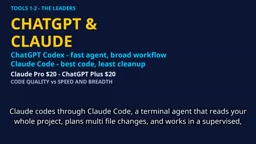
2026 AI Coding Tools Comparison: Claude, ChatGPT, Gemini — Which Is the Best?
A 2026 comparison of five mainstream AI coding tools — Claude Code, ChatGPT Codex, Gemini, DeepSeek, and GitHub Copilot — on real projects, pricing, and code quality, to help you decide where that $20/month should go.

ChatGPT Codex Can Clone Any Software? Testing the Risks and the Truth
YouTube shorts claim ChatGPT Codex or Claude Code can clone Adobe, Excel, and Figma for lifelong free use. We break down the feasibility, legal risks, and DM-funnel tactics—and explain what AI coding tools are truly good for.