Plugin4Shell: Zero-Click RCE Vulnerability Allegedly Affects Top Four AI Coding Agents
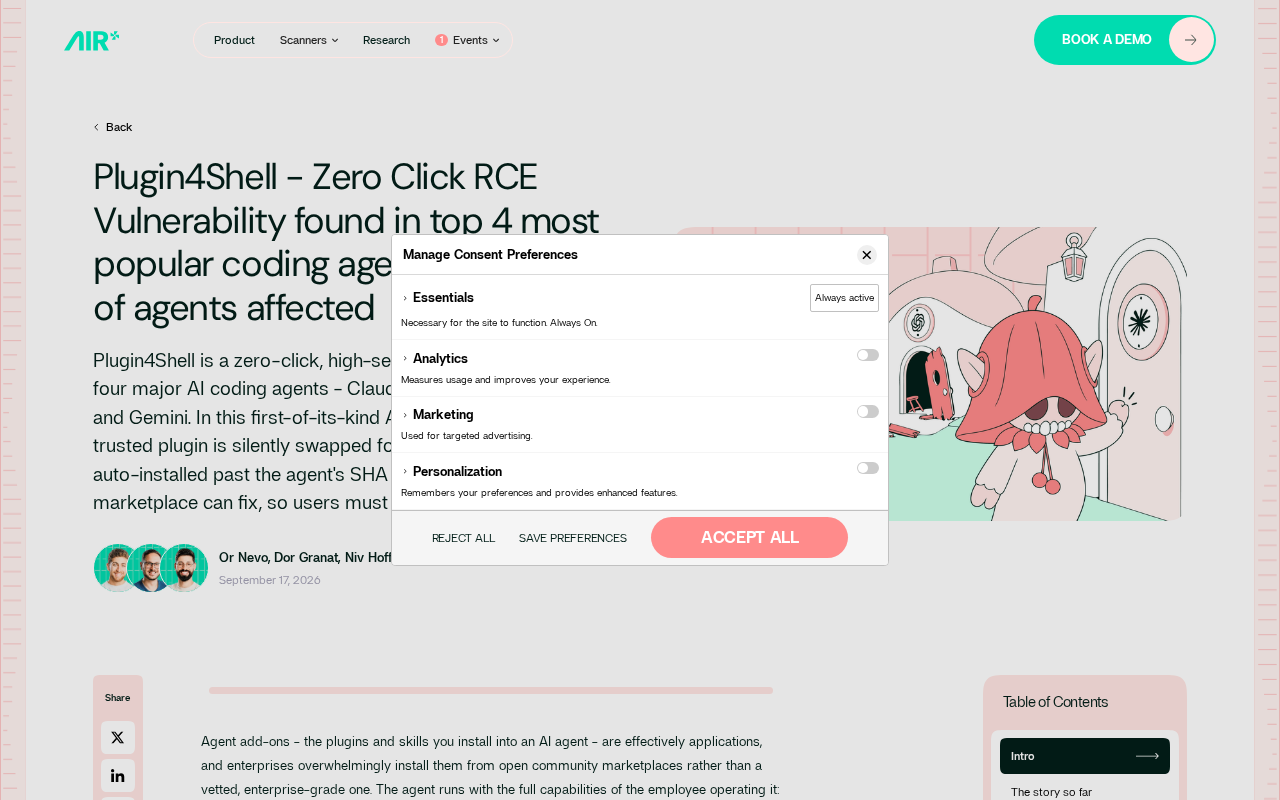
Plugin4Shell is a reported zero-click RCE flaw allegedly targeting the plugin mechanisms of the top four AI coding agents.
Plugin4Shell is a security vulnerability that has caught the developer community's attention, described as a zero-click Remote Code Execution (RCE) issue affecting the top four AI coding agents. The zero-click nature means no user interaction is required, making it extremely dangerous. The name evokes Log4Shell, suggesting the root cause may lie in plugin loading or injection chains. Since AI coding agents typically run with elevated privileges in developer environments — with file access, command execution, and plugin invocation capabilities — a successful exploit could compromise private code, cloud credentials, and production systems. Official technical details have not yet been fully disclosed; developers are advised to apply the principle of least privilege, use sandbox isolation, disable unnecessary plugins, and follow official vendor advisories.
Overview
A security vulnerability dubbed Plugin4Shell has recently drawn attention in the developer community. According to discussions on Hacker News, the flaw is described as a zero-click Remote Code Execution (RCE) issue that allegedly affects the current top four coding agents. "Zero-click" means an attacker can trigger malicious code execution without any interaction from the victim — a class of vulnerability that is typically rated as high-severity in the security world.
It's worth noting that publicly available information remains limited at this time, coming primarily from community post titles and scattered discussion threads, with no complete technical disclosure, official confirmation from affected vendors, or detailed vendor responses. This article synthesizes what is currently known and explores the potential impact of such vulnerabilities from a technical perspective.
What Is Zero-Click RCE
Remote Code Execution (RCE) is among the most dangerous categories of security vulnerabilities, allowing an attacker to run arbitrary code on a target system and thereby gain full control over the affected process or host. Zero-click raises the risk level even further — traditional attacks typically require the user to click a malicious link, open an attachment, or perform some action, whereas zero-click vulnerabilities can be exploited without the victim's knowledge.
In the context of coding agents, this means an AI coding assistant could be manipulated into executing unauthorized code while processing external inputs such as repository contents, dependency packages, plugins, or model-returned results. This attack surface has precedent in traditional software; the "4Shell" in the name also evokes the notorious Log4Shell vulnerability, hinting that the issue may be related to plugin loading mechanisms or some form of injection chain.
Prompt Injection is one of the most representative zero-click attack techniques in AI agent scenarios and deserves special mention. An attacker embeds malicious instructions into external content that an agent will read — such as code comments, README files, issue descriptions, or dependency package metadata. When the agent parses this content, the malicious instructions are treated by the model as legitimate tasks to execute. The underlying principle is analogous to traditional SQL injection: the root cause is a blurred boundary between "data" and "instructions." In a coding agent context, a carefully crafted comment could cause the agent to automatically run shell commands that delete files, exfiltrate credentials, or install backdoors — all without any developer involvement. This is the core logic behind why Plugin4Shell is classified as a zero-click vulnerability.
Why Coding Agents Are a High-Value Target
In recent years, AI coding agents have been widely integrated into development workflows. They don't just generate code — they often have the ability to execute commands, read and write files, and call external tools and plugins. This "agentic" architecture significantly boosts productivity, but it also dramatically expands the attack surface.
- Running with elevated privileges: Coding agents typically run in a developer's local environment or CI/CD pipeline, with access to source code, secrets, and system commands.
- Trusting external content: Agents need to read repositories, documentation, dependency manifests, and even web content — all of which can be poisoned.
- Plugins and toolchains: Modern agents rely on plugin systems to extend functionality. Any flaw in the plugin loading or invocation logic can become an entry point for code execution.
The name Plugin4Shell points directly at the plugin mechanism as the weak link. If a maliciously crafted plugin, prompt injection, or data source can trigger code execution without user confirmation, the consequences would affect every developer environment using that agent.
Supply Chain Poisoning is another high-value attack vector targeting coding agents. An attacker doesn't need to directly compromise a developer's machine — they only need to poison upstream resources that the agent automatically consumes. For example, they could embed prompt injection instructions in the description fields of public npm/PyPI packages, or submit Pull Requests to open-source repositories containing malicious comments. When the agent reads this content while handling dependency installation, code review, or documentation summarization tasks, the attack chain triggers automatically. This approach is extremely stealthy, because the poisoned content looks identical to normal data, and traditional static code scanning tools struggle to identify malicious instructions disguised as natural language. If Plugin4Shell does exploit plugin or dependency loading mechanisms, supply chain poisoning would be one of the most likely initial infection vectors.
Potential Impact and Mitigation
For a vulnerability that allegedly affects the "top four" coding agents, the potential blast radius is significant. Developer environments typically store high-value assets: private code, cloud credentials, and production environment access. If exploited, attackers could achieve lateral movement at the supply chain level.
In the absence of official patch details, developers can consider the following protective measures:
- Principle of least privilege: Restrict coding agents' filesystem and command execution permissions; run them in a sandbox or container whenever possible.
- Treat external content with caution: Be wary of content from external repositories and third-party plugins; avoid automatically executing unreviewed operations.
- Monitor vendor announcements: Stay current with official security updates from coding agent vendors and apply patches as soon as they become available.
- Disable unnecessary plugins: Reduce the plugin-loading attack surface by enabling only extensions from trusted sources.
Observations and Outlook
Plugin4Shell reflects the security challenges facing AI coding tools as they rapidly proliferate. As agents evolve from "assistive suggestions" to "autonomous execution," their security models must evolve accordingly — privilege isolation, input validation, and plugin sandboxing will become essential capabilities for this category of product.
Given that public information remains incomplete, readers are advised to rely on vendors' official security disclosures and avoid over-interpreting vulnerability details based on fragmentary information. As more technical details become available, the community's understanding of "agentic security" issues will continue to deepen.
Responsible Disclosure is an important norm in the dissemination of security vulnerability information, and understanding it helps assess the credibility and completeness of current information. The standard process typically has three phases: a researcher privately reports the vulnerability to the vendor, both parties negotiate a remediation window (generally 90 days), and technical details are only made public after a fix is in place. Plugin4Shell's current state — only community headlines, no technical details, and no vendor confirmation — is consistent with either "the vulnerability is still within the coordinated disclosure window" or "the information has not yet been verified." This also explains why this article repeatedly emphasizes "defer to official vendor announcements": before responsible disclosure is complete, fragmented community information may be incomplete and could inadvertently give attackers advance exploitation leads.
Related articles
AI Daily Briefing: Qwen3-Omni Full-Modality Model Launches, Huawei Ascend 960 and Grok's New Model Surface
AI Daily: Qwen3-Omni Flash launches with full-modality support and 93% cost cuts; Huawei unveils million-processor AI architecture; Ascend 960 rumored; Grok spotted on GCP; N8N hits CVSS 10 vulnerability.
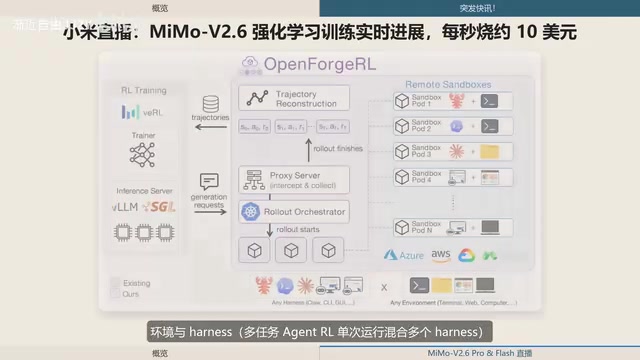
Xiaomi MiMo-V2.6 Live Training: ¥8.55M Spent in One and a Half Days, ~$10 per Second
Xiaomi's MiMo team live-streams MiMo V2.6 Pro/Flash RL training, spending ¥8.55M (~$1.28M) in 1.5 days — ~$10/sec. Covers compute scaling, open-source plans, and DeepSWE benchmarks.
ByteDance Trae Work Getting Started Guide: 11 Use Cases Explained
A hands-on guide to ByteDance's Trae Work AI agent — covering Work, Code, and Design sections across 11 use cases including PPT generation, data analysis, coding, and more.