PowerShips: When Battleship Meets Hero Skills — Jump Into Battle With No Sign-Up
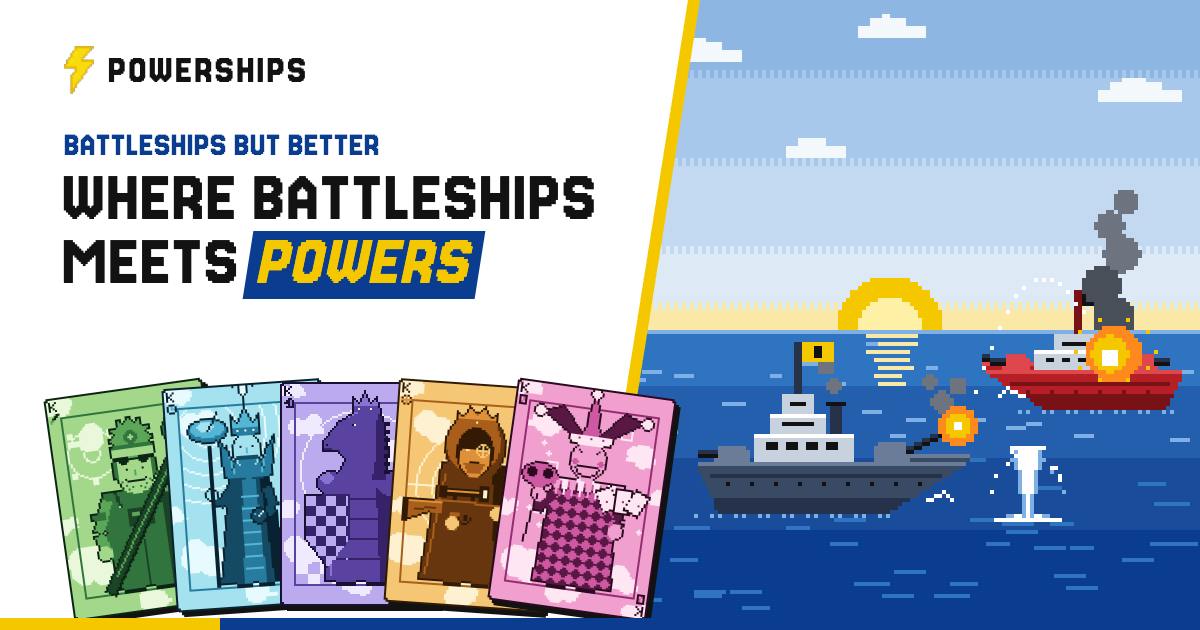
PowerShips adds a class system to Battleship, lowering the barrier with no sign-up link-based matches.
PowerShips is a lightweight versus game that layers a class system onto classic Battleship rules. Each class has one active and one passive skill; players pick a class before the match and adjust fleet layout and tactics accordingly, turning a luck-and-memory guessing game into strategic composition. It's free, requires no registration, and supports link invites and online matchmaking. On Product Hunt it got 73 votes, ranked 11th, and drew just 1 comment. The no sign-up model aids spread but weakens account accumulation and re-engagement; long-term retention depends on skill balance and combinatorial depth. Skill values, class count, and balance mechanisms are undisclosed, so its depth remains to be proven.
In the battleship genre, whose rules are all but set in stone, PowerShips does something small but clever: it gives every warship a "class." This product, which earned 73 votes and ranked 11th on Product Hunt, blends classic battleship with a character skill system—and lets you play instantly with no registration.
Core Gameplay: Pick a Class, Deploy Your Fleet, Fight
PowerShips keeps the familiar skeleton of battleship—deploy your fleet on a grid, take turns guessing the opponent's positions, score on hits. The real variable comes from the "class" system: each class comes with one active skill and one passive skill, which players choose before the match and use to adjust fleet layout and tactical tempo.
The point of this design is that it pulls a match—normally highly dependent on luck and memory—toward strategic composition. Active skills mean you can actively change the situation; passive skills give certain playstyles a hidden edge. Which class you pick, how you position, and when to fire off a skill form three layers of decision-making rather than plain "guess the grid."
Battleship is a two-player guessing game typically played on a 10×10 grid. Each player secretly places a set number of ships on their own grid (e.g., a carrier occupying 5 cells, a destroyer occupying 3), then takes turns calling out coordinates to guess where the opponent's ships are. A hit lets you continue; a miss passes the turn, and the first to sink all of the opponent's ships wins. Its core mechanic is imperfect-information gameplay: neither side can see the other's layout, so players can only narrow things down through probabilistic inference and by remembering prior guesses. The rules are simple and the barrier to entry extremely low, which has made it a classic casual-versus genre—but it also limits strategic depth, and matches often degrade into a luck-driven game of "guessing the grid." PowerShips keeps this skeleton precisely to leverage players' existing understanding and lower the teaching cost.
Active and passive skills are a common skill classification in role-playing games. Active skills require players to actively choose to use them during a turn, usually with a cooldown or limited uses, and can directly change the state of battle (e.g., scanning a region of the opponent's board, making an extra attack). Passive skills require no action—they trigger automatically or persist when certain conditions are met, giving specific playstyles a hidden edge (e.g., ships placed on the edges are harder to hit, or you gain extra information after a hit). In PowerShips, this system is ported into battleship matches, meaning that beyond "guessing the grid," players must also plan when and on what to use their skills, partially converting a purely probabilistic match into a strategic problem of resource management and timing. The interplay between class composition and fleet layout adds yet another layer of pre-match decision-making.
Social Play and the Barrier to Entry: A Link Is All It Takes
The product is remarkably restrained in how it distributes itself: free, no registration, invite friends via a link, or match directly with online opponents. This combination cuts out the most common churn point in casual games—the registration wall.
For lightweight versus games like this, no sign-up + link invites is an effective spread structure: the invite itself is the share, and the match itself is the product demo. The data on Product Hunt—73 votes and 1 comment—shows it has caught the attention of a small group of early users, but discussion is still limited, and whether a community ecosystem will form remains to be seen.
No sign-up + link invites is a common lightweight acquisition and spread design, often seen in web-based casual games and collaboration tools. Its core logic: users can jump straight into a match via a shared link without creating an account; the act of sending the link is itself product exposure, and the invitee's first experience is a complete product demo. This model significantly lowers the barrier for new users and reduces churn at the registration step, but it comes with a clear cost—without an account system, players' match records, levels, and achievements are hard to accumulate, leaving the product with no effective hook to bring users back. For strategy versus games that depend on long-term retention, a no sign-up model usually needs to be paired with other retention mechanisms (such as in-match progression or social relationship chains) to make up for the re-engagement shortfall caused by the lack of accounts.
Design Trade-offs Worth Noting
From its positioning, PowerShips bets on a combination of "familiarity + a bit of novelty." Battleship's cognitive cost is near zero—players understand the goal without a tutorial; the class system provides differentiation and a reason to replay. This approach is a proven winner in the casual versus genre, but it also means long-term retention depends heavily on the balance and combinatorial depth of the skill system—if clear power tiers emerge between classes, the strategic feel will quickly degrade into "copying the meta."
Another variable is matchmaking. No sign-up lowers the entry barrier but also means a weaker account system and thinner progress accumulation, leaving players with little to pull them back. The quality of online opponents and wait times will directly shape the first experience.
Public information is currently limited: the specific values of active/passive skills, the number of classes, and whether any balance-adjustment mechanism exists have not been disclosed. These details are precisely what determine whether it's a "two matches and you're done" trifle or a strategy versus game you can keep playing with friends long term.
Who Should Give It a Try
If you're a veteran battleship player curious about how much the class system changes things, or if you're looking for a versus game you can start with a friend via a link and no registration, PowerShips is worth ten minutes. Players with higher demands for strategic depth and competitive balance should watch for future balance updates and player feedback first.
One-line Summary
PowerShips adds a class system to battleship rules, lowering the barrier with no sign-up link-based matches.
Paragraph Summary
PowerShips is a lightweight versus game that layers a class system onto classic battleship rules. Each class comes with one active and one passive skill, and players choose a class before the match and adjust fleet layout and tactical tempo accordingly, pushing a guess-the-grid match—normally reliant on luck and memory—toward strategic composition. The product is free and requires no registration, supports link invites and online matchmaking, and greatly lowers the entry barrier. It earned 73 votes, ranked 11th, and drew just 1 comment on Product Hunt, indicating some early attention but limited community discussion. The no sign-up model aids spread but weakens account accumulation and player re-engagement, and long-term retention depends on the skill system's balance and combinatorial depth. Skill values, the number of classes, and balance mechanisms are all currently undisclosed, so the product's depth remains to be proven.
Related articles

Gemini 4 Neon Review: Benchmark Scores Rival Carbon, API Pricing and Quota Breakdown
Google Gemini 4 Neon is now live, benchmark scores closely tracking Carbon, API pricing 3/15 at twice Hydrogen's rate. This article compiles Bilibili creator testing: Neon can replace 90% of Carbon scenarios, AntiGravity quota consumption is only one-third of Carbon, plus subscription channel restrictions and 2API ban risks.

Gemini 4 Helium Coming Soon? Signals of Google Loosening Subscription Restrictions
Google team member hints releases will continue; community speculates Gemini 4 Helium (Flash Lite) may be next. Subscription ban controversy gets a response as product lead says "Soon," suggesting restrictions may be lifted. This article covers Gemini developments, OpenAI Coding Agent and risk management, Doubao real-time audio-video API, and compute business dynamics.

AI-Assisted React Development in Practice: Optimizing a Video App and Handling Errors
A 14-year veteran developer demonstrates AI-assisted React video app optimization: compressing video from 80MB to 5MB (~94%) via ImageKit, plus reliable error handling and retry mechanisms. Includes planning, code understanding, and verification methods for working with AI.