Professional System Prompts Don't Help Scientific Reasoning: A 503-Profile AI Benchmark Reveals Hidden Cost Traps
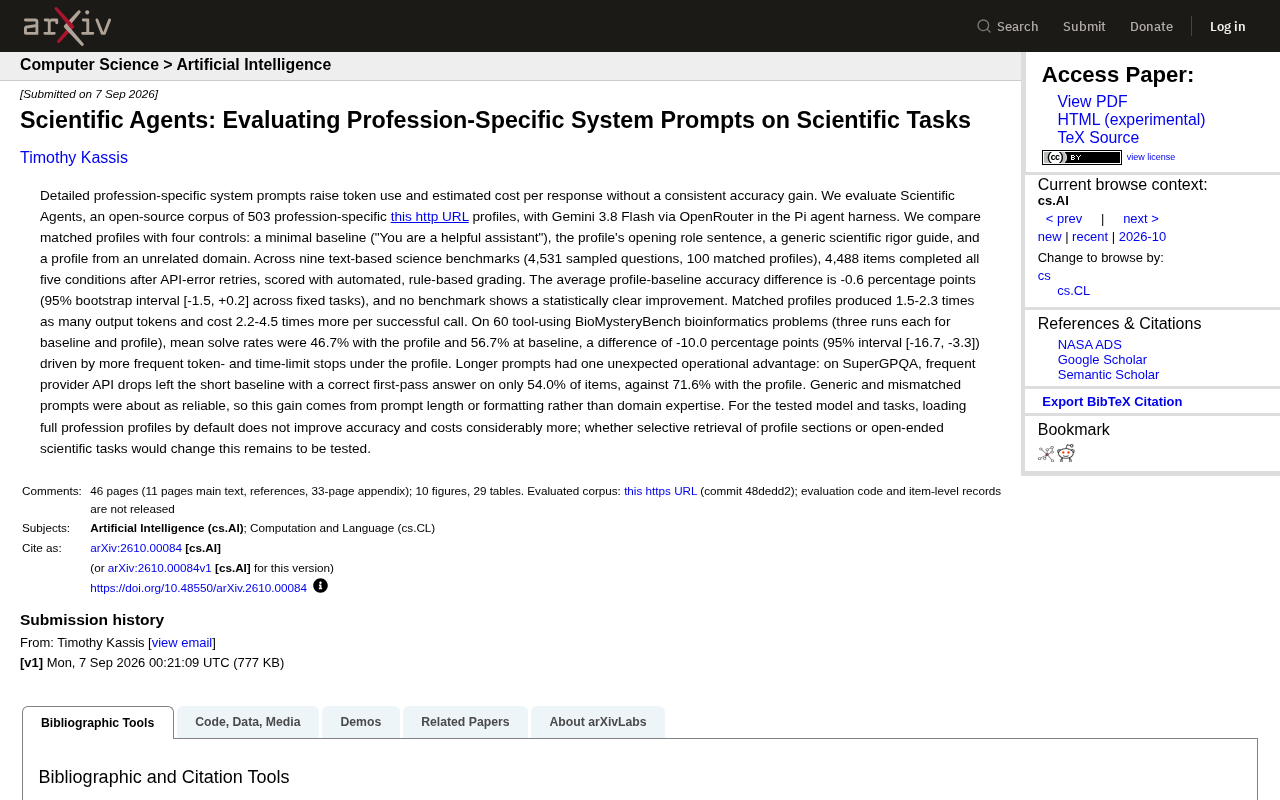
Detailed AI persona prompts yield no accuracy gains on scientific tasks while doubling costs, study finds.
A systematic experiment across 503 professional profiles and 4,531 scientific questions found that injecting detailed "professional persona" system prompts into AI agents yields an average accuracy difference of just -0.6 percentage points versus a minimal baseline — statistically insignificant. Yet the costs are real: profiles increase output tokens by 1.5–2.3× and per-call costs by 2.2–4.5×. In multi-turn tool-calling tasks, profiles actually reduced task completion rates from 56.7% to 46.7% by consuming context budget and triggering more timeouts. The one apparent exception was traced to prompt length and format, not domain expertise.
A Widespread Practice That Lacks Empirical Validation
When building AI agents, injecting a detailed "professional persona" into the system prompt has become standard industry practice — telling the model "you are a senior bioinformatician," followed by lengthy descriptions of professional background, working methods, and domain-specific considerations. The intuition behind this is straightforward: the more specialized and specific the role definition, the more expert the model's responses should be.
But a new arXiv study challenges this assumption with empirical evidence. The research team systematically evaluated an open-source corpus called Scientific Agents, which contains 503 profession-specific AGENTS.md profile files, seeking to answer a critical question: do these carefully crafted professional prompts actually improve accuracy on scientific tasks?
The conclusion is unambiguous: for the models and tasks tested, loading full professional profiles by default neither improves accuracy nor justifies the significantly higher costs it incurs.
Experimental Design: Rigorous Comparison Across Five Conditions
Much of this study's value lies in its methodological rigor. The team used Gemini 3.8 Flash (accessed via OpenRouter, running in the Pi agent harness) and compared matched professional profiles against four control conditions:
- Minimal baseline: A single sentence — "You are a helpful assistant"
- Role opener only: Just the role-defining sentence from the beginning of the profile
- Generic scientific rigor guideline: A generalized prompt with no profession-specific content
- Cross-domain mismatched profile: A profile from an unrelated discipline
The evaluation covered nine text-based scientific benchmarks, sampling 4,531 questions across 100 matched profiles. After retrying API errors, 4,488 items completed all five conditions in full, with automated rule-based scoring. This "same question, five prompts" controlled design effectively isolates the impact of the prompt variable itself.
Bootstrap confidence intervals are the core statistical tool in this study and deserve a brief explanation. Unlike traditional parametric tests, bootstrapping estimates the sampling distribution of a statistic by repeatedly resampling from the existing data (typically thousands of times), without assuming normality or other prior distributional assumptions. The 95% intervals reported here mean: if you repeatedly resampled the same question set, 95% of the time the accuracy difference would fall within that interval. An interval that fully contains zero (e.g., [-1.5, +0.2]) means we cannot rule out the null hypothesis that both conditions perform equally — the difference is likely just random noise, not a genuine signal from the professional profile. This framing conveys the uncertainty around effect sizes more intuitively than a p-value alone.
Core Finding: No Accuracy Gain, But Costs Double
The most critical number: the average accuracy difference between professional profiles and the minimal baseline is -0.6 percentage points, with a 95% bootstrap interval of [-1.5, +0.2] across fixed tasks. In other words, not a single benchmark shows a statistically clear improvement — any accuracy gains from a professional persona fall within the noise floor, effectively rounding to zero.
The cost, however, is substantial. Matched profiles generate 1.5 to 2.3× more output tokens than the baseline, and cost 2.2 to 4.5× more per successful call. For large-scale agent deployments, this means inference bills could double or quadruple — with no visible return.
Tool-Calling Tasks Are Even Worse: Profiles Hurt Success Rates
On BioMysteryBench — a bioinformatics task set that more closely mirrors real-world workflows (60 tool-calling questions, three runs each for baseline and profile conditions) — the results are even more striking.
The average task completion rate with professional profiles was 46.7%, compared to 56.7% for the minimal baseline — a gap of -10.0 percentage points (95% interval [-16.7, -3.3]). The authors attribute this decline primarily to more frequent token limit and time limit interruptions under profile conditions: lengthy system prompts consume precious context and reasoning budget, making agents more likely to stall mid-task.
This finding is particularly worth heeding for engineers: in complex multi-turn tool-calling tasks, prompt length is itself a cost — one that can directly translate into higher failure rates.
Context windows and reasoning budgets help explain this phenomenon. Large language models have an upper limit on the text they can process in a single inference pass (the context window), and system prompts, conversation history, and tool call outputs all share this finite space. In agentic settings with multi-turn tool calls, the model must iterate through "think → call tool → receive result → think again" cycles within the same context. If the system prompt already occupies thousands of tokens, the space available for intermediate reasoning steps and tool outputs is proportionally reduced. Once the token limit is reached, the model is forced to truncate its output or abort the reasoning chain, causing task failure. This explains why verbose professional profiles in multi-step tool-calling tasks like BioMysteryBench translate directly into higher mid-task failure rates, not merely increased costs.
The One Surprising Advantage — And It Has Nothing to Do with Expertise
The study does surface one intriguing counterexample. On the SuperGPQA benchmark, due to frequent provider API outages, the minimal baseline only received a correct first-attempt response on 54.0% of questions, while professional profiles reached 71.6%.
At first glance, this looks like a win for longer prompts. But the authors' analysis deflates that interpretation: generic prompts and mismatched profiles performed equally well. This means the advantage stems from the prompt's length or format, not any domain-specific expertise. In essence, longer inputs altered call behavior under certain API reliability edge cases — and had nothing to do with whether the model was "actually an expert."
SuperGPQA is a large-scale graduate-level knowledge QA benchmark spanning 285 subfields, primarily composed of closed-form multiple-choice questions designed to test models' depth of specialized knowledge. The API reliability issues noted (with the minimal baseline completing only 54% of first-attempt responses) suggest that in high-failure-rate conditions, longer inputs may have altered request timeout behavior or triggered different server-side processing paths — rather than genuinely improving domain capability. This also highlights the need, when evaluating prompt effectiveness, to distinguish between "task success rate" (influenced by infrastructure stability) and "answer accuracy" (which actually reflects the intellectual value of the prompt).
Implications for AI Engineering Practice
This research offers a pragmatic reality check on today's widespread "persona engineering" trend. A few key takeaways:
- Defaulting to full professional profiles is not a free lunch: With zero accuracy gain, they consistently amplify token consumption and costs.
- Long prompts can be actively harmful in tool-calling tasks: Squeezing the reasoning budget leads to more timeouts and failures.
- When you see an apparent "benefit," ask where it comes from: Length and format, or genuine domain knowledge? In this study, it was the former.
The authors also honestly define the study's boundaries. These findings are specific to a particular model (Gemini 3.8 Flash) and closed-form evaluation tasks. Whether selectively retrieving relevant sections of a profile, or using open-ended scientific tasks, would change the conclusions remains to be tested — a clear direction for future research. Rather than injecting entire profiles by default, "retrieval-augmented prompting of relevant excerpts" may be a more cost-effective path forward.
For teams currently building scientific agents, this work offers a simple but powerful reminder: before adding complexity to your prompts, prove through controlled experiments that the complexity actually helps.
Related articles

M&M's Spent Millions Replacing Artificial Blue Dye — Why Is It So Hard?
Mars spent millions trying to replace artificial blue dye in M&M's with spirulina, but thick material clogs pipes and residue risks mold, forcing a full production-line rebuild. Here's the engineering behind the reformulation.
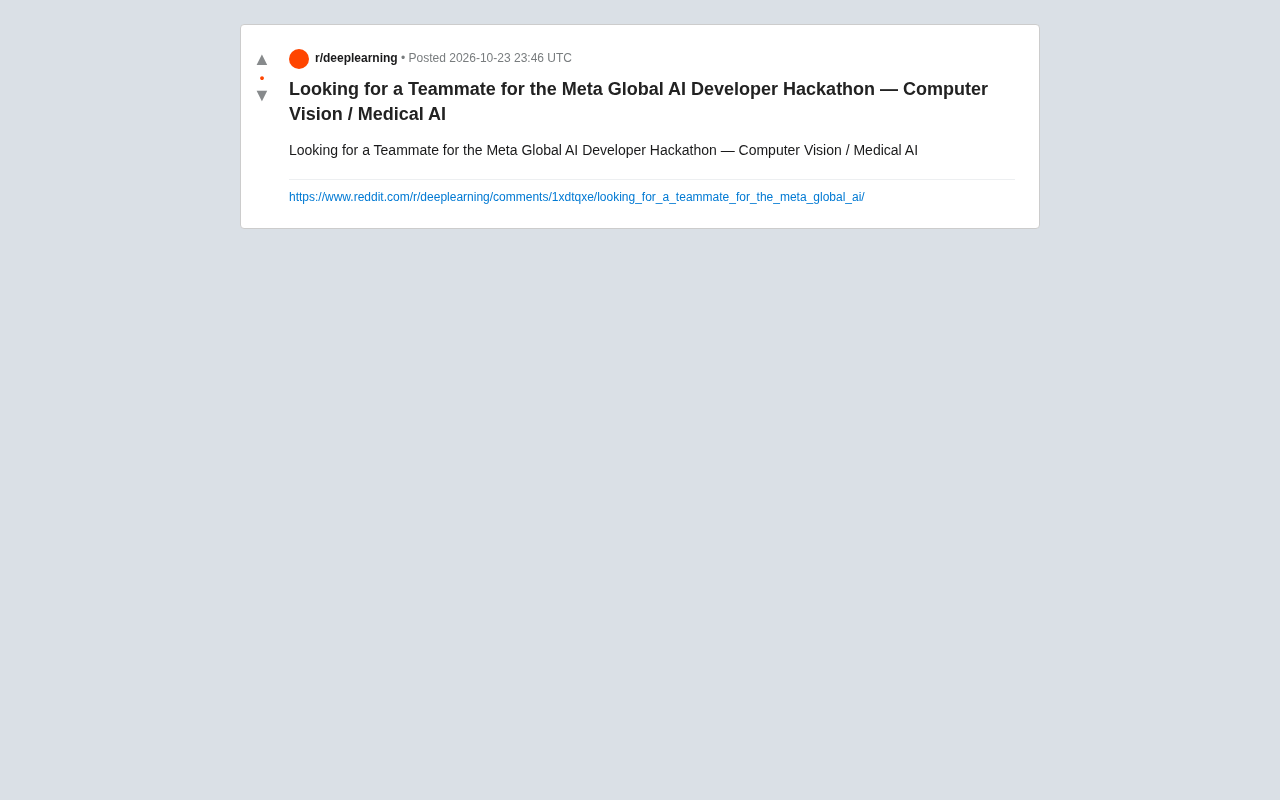
Teammate Wanted for Meta Global AI Developer Hackathon: Computer Vision & Medical AI
A Reddit developer seeks teammates for the Meta Global AI Developer Hackathon, focusing on computer vision and medical AI. This article analyzes the track logic, skills-complementarity needs, and topic selection strategy behind this teaming signal.
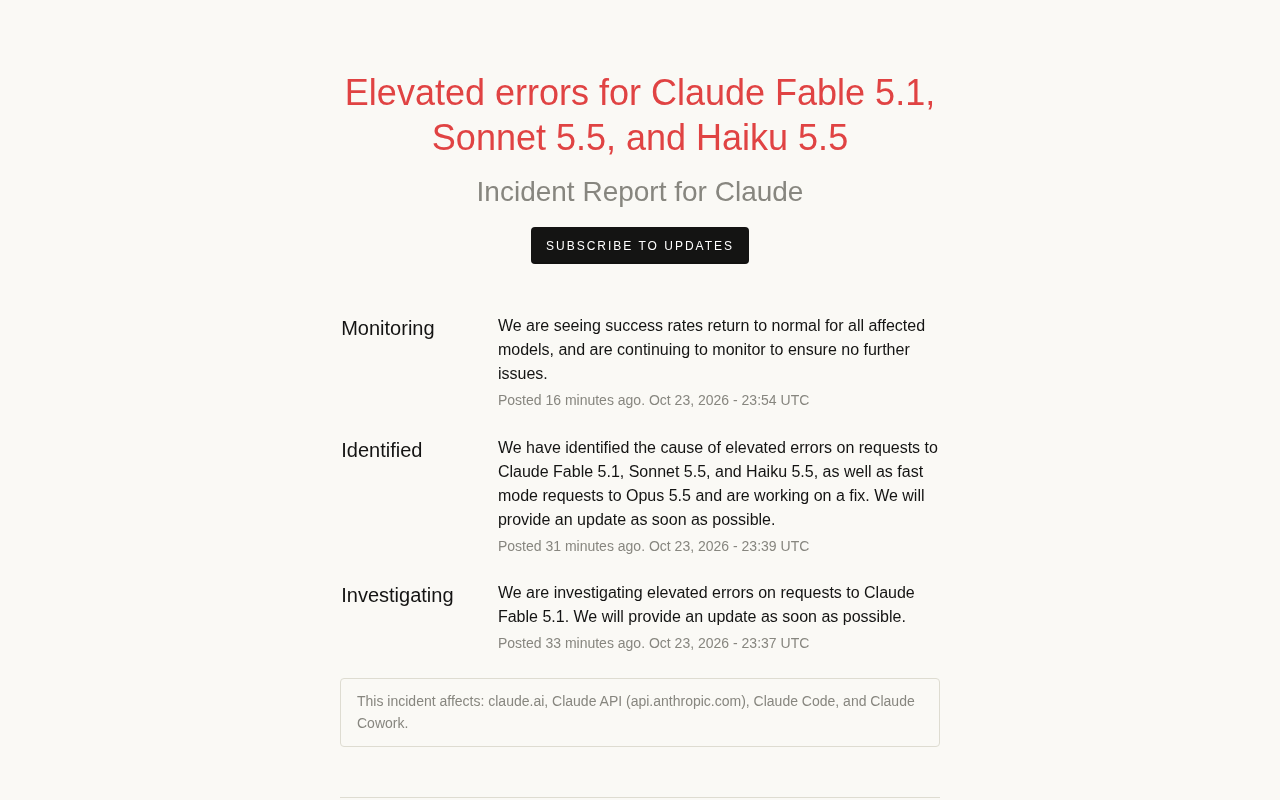
Multiple Claude Models Hit by Errors: A Postmortem of Fable 5.1, Sonnet 5.5, and Haiku 5.5
Claude Fable 5.1, Sonnet 5.5, Haiku 5.5, and Opus 5.5 fast mode saw elevated errors; Anthropic identified and resolved the issue in 17 minutes. This postmortem covers the timeline, the technical reasons for the multi-model cascading failure, and practical lessons for retry and degradation strategies.