Python Freelancing Side Hustle in Practice: Platform Channels, Pitfall-Avoidance Guide & Complete Monetization Breakdown

A practical guide to Python freelancing covering platforms, risk management, and client accumulation strategies.
This article systematically covers the complete path to Python tech freelancing: comparing platforms like Programmer Inn, Zhubajie, and Upwork; explaining the three core principles of milestone payments, legal compliance, and delivery management; and detailing how code reuse and client relationships create compound returns over time — helping developers rationally evaluate this side hustle's real feasibility.
Introduction: The Real Picture of Tech Side Hustles
A recent Bilibili video caught the attention of many programming learners — a creator shared their experience earning approximately 25,000 RMB over two months through Python freelancing, along with a systematic walkthrough of the entire process from zero to one. Setting aside the marketing flair of titles like "easily achieve financial freedom," the video itself provides a useful roadmap for those looking to explore tech side hustles, covering freelancing platforms, monetization methods, and risk avoidance.
This article provides an objective summary and analysis of that material, helping readers rationally evaluate "tech freelancing" for what it is: neither a get-rich-quick myth nor something unattainable. The core logic is straightforward — use technical skills to meet real demands, and build a stable client base through continuous accumulation.
Understanding this path requires grasping the macro context it operates within. The proliferation of mobile internet in the 2010s, cloud computing lowering development barriers, and the maturation of online payment systems collectively fueled the explosive growth of the "Gig Economy." A 2016 McKinsey Global Institute report estimated that approximately 162 million people globally engage in some form of independent work. Technical freelancers enjoy a significant premium due to skill scarcity — unlike physical gig workers such as ride-hailing drivers or food delivery riders, developers sell highly specialized cognitive labor. Their pricing power is stronger, and they're unconstrained by geography, enabling them to seek optimal rates globally. It's precisely this structural advantage that makes "tech freelancing" one of the highest-return segments within the gig economy.
Full Landscape of Freelancing Channels: From Major Platforms to Niche Outlets
The channels mentioned in the video fall broadly into two categories: established third-party freelancing platforms with built-in protections, and lower-barrier niche channels.
Major Third-Party Platforms
The biggest advantage of these platforms is guaranteed payment processing, making them suitable as starting points for beginners and primary channels for long-term business:
-
Chengxuyuan Kezhan (Programmer Inn): Founded in 2013, this is one of the earliest vertical platforms in China focused specifically on tech talent freelancing. Its business model is essentially an early implementation of the "tech talent sharing economy" — before the sharing economy concept was widespread, it was already attempting to precisely match enterprises' short-term technical needs with developers' fragmented time.
The "Sharing Economy" concept was systematically articulated by Harvard Business School professor Lawrence Lessig around 2008. The core idea is reducing transaction friction costs through digital intermediary platforms, enabling efficient allocation of idle resources. Just as Uber aggregates idle vehicles and Airbnb aggregates idle rooms, Programmer Inn aggregates developers' fragmented time and professional skills. The platform uses a standardized process of "requirement posting → developer bidding → platform review → contract signing → fund escrow → delivery acceptance → payment release," bringing the otherwise highly non-standard tech outsourcing transactions into a manageable framework. This process design is no accident — tech outsourcing inherently suffers from severe information asymmetry: clients struggle to assess developer capability beforehand, while developers can't confirm clients' willingness to pay. The standardized process introduces the platform as a trusted third party, systematically reducing trust friction costs in this two-sided market. This is also the institutional foundation enabling platforms to consistently facilitate high-value collaborations between strangers. The core model connects enterprises' short-term technical needs with freelance developers, covering project types including web development, mobile apps, and data analysis. The platform targets mid-to-senior technical professionals, with monthly project values potentially exceeding 20,000 RMB, but isn't very beginner-friendly — you need some project track record to earn client trust.
-
Coding Mart: A platform under Coding, closer to an "outsourcing contract platform" that requires developers to sign formal agreements with highly documented projects. It's essentially about signing contracts with enterprises, with a documented workflow suitable for experienced developers who want to take on enterprise-level projects through compliant channels. Coding Mart's emphasis on documentation isn't bureaucratic red tape — it has deeper logic: complete requirement documents, API specifications, and acceptance criteria transform vague verbal agreements into actionable written evidence, significantly reducing the probability of disputes caused by "requirement misunderstandings" during delivery. In software engineering, this is called "requirements baseline management" and is a core practice in large-scale project management.
-
Eleduck Community: Relatively niche, covering roles like web scraping, data analysis, and AI engineering, with plenty of freelancing opportunities. Eleduck's unique characteristic is its community culture — the platform gathers many freelancers who embrace the "remote work" philosophy, with a relatively professional atmosphere and high-quality information, suitable for developers who want industry insights and peer exchange alongside their freelancing work.
-
Yun Woke, Open Source Crowdsourcing, Alibaba Cloud Crowdsourcing: High workload with fast settlements, among which Alibaba Cloud Crowdsourcing deserves special attention. Leveraging the Alibaba Cloud ecosystem, its clients are typically enterprises with cloud service experience, making technical requirements relatively clear, and Alibaba Cloud's brand endorsement somewhat reduces client credit risk.
-
Zhubajie (Witmart): A veteran bidding platform that's more team-friendly; individual participation requires solid project experience and a complete portfolio. Zhubajie uses a bidding system, meaning freelancers need to demonstrate not only technical capability but also "proposal skills" — the ability to translate technical solutions into business language clients can understand, which is an additional capability requirement for developers with purely technical backgrounds.
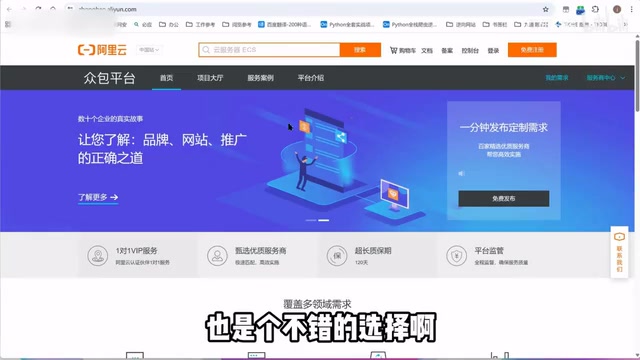
It's worth noting that these platforms generally have commission mechanisms (the video mentions approximately 40%), and the rates are essentially non-negotiable. Platforms like "Yipin Weike" also require registration fees and favor teams, making it difficult for individuals with insufficient capability to recoup costs.

International Platform: Upwork
For more capable developers looking to expand into overseas markets, Upwork is worth considering. Formed in 2015 through the merger of oDesk and Elance, Upwork is currently the world's largest freelancing platform, with over 18 million registered users and annual transaction volume exceeding $4 billion. The platform offers both hourly and fixed-price collaboration models, with built-in time tracking tools to protect both parties' interests.
It's worth understanding that Upwork's Time Tracker automatically takes screenshots at regular intervals and records keyboard/mouse activity, creating an auditable work log for clients. This mechanism effectively solves the "Labor Visibility" trust challenge in remote collaboration — in traditional employment, employers supervise labor input through physical presence; in globally distributed collaboration, the Time Tracker digitally reconstructs this visibility. From a broader perspective, this design reflects the general trend of "Algorithmic Surveillance" in the platform economy: as human resource management migrates from physical to digital space, platforms must invent new technical means to rebuild trust and accountability mechanisms in employment relationships. Upwork's Time Tracker is a typical case, also sparking academic discussions about "Digital Taylorism" — applying fine-grained monitoring similar to industrial-era assembly line management to knowledge workers through digital tools. This is also the institutional foundation enabling Upwork to facilitate high-value collaborations between strangers globally.
Its rates are significantly higher than domestic platforms, with a tiered commission structure: 20% on the first $500, 10% on $500 to $10,000, and only 5% beyond $10,000. This tiered structure is essentially a "relationship incentive mechanism" — encouraging developers to build long-term partnerships rather than pursuing short-term high-frequency transactions. The comprehensive cost for long-term clients is far lower than domestic platforms' flat 40% commission. From a game theory perspective, this design deeply aligns platform interests with developers' long-term returns: the more developers maintain existing clients, the higher the platform's overall retention and transaction stability, creating a positive flywheel effect. However, competition is equally fierce, requiring strong English communication skills, high account ratings, and the ability to handle USD payments — typically through cross-border payment tools like Payoneer or WorldFirst. Payoneer provides local bank accounts in the US, EU, and other regions for direct platform payments; WorldFirst is known for favorable exchange rates and convenient withdrawals. Both hold payment licenses in their respective jurisdictions, ensuring compliance. The creator's recommendation: suitable for those whose "domestic business is stable and who want to test international markets."
Niche Channels: Opportunities and Risks Coexist
Beyond professional platforms, the following niche channels have lower barriers but require stronger risk awareness:
- Taobao Stores: Searching for "Python freelance" or "web scraping orders" reveals numerous stores. Contact customer service at stores with high transaction volumes for opportunities to join order-grabbing groups where speed matters.
- Xianyu (Idle Fish): Suitable for posting your own listings to attract clients. Listed prices are typically low to attract interest, with actual pricing negotiated based on requirements.
- Self-Media Channels: Xiaohongshu, Douyin, Kuaishou, WeChat Official Accounts, CSDN, and others can all serve as lead generation and order acquisition channels, with better results from long-term operation. The core logic of self-media channels is "content as trust endorsement" — by consistently outputting technical content (tutorials, case analyses, Q&A), developers build a professional image in potential clients' minds, establishing preliminary trust before any contact occurs. This "content marketing" strategy essentially converts implicit technical capability into visible public signals, reducing clients' screening costs and gaining differentiated competitive advantages. From the perspective of Signaling Theory, this works similarly to academic credentials and professional certifications: in markets with information asymmetry, observable public signals effectively convey capability information that's difficult to directly verify, helping buyers reduce screening costs. Consistently updated technical content not only demonstrates depth of knowledge but also proves stability and professional commitment through the time dimension — something that resumes or portfolios alone struggle to replace as trust-building mechanisms.

The risks of niche channels are also more apparent. The creator candidly acknowledges that some order-grabbing groups or intermediaries carry "disappearing" risks — small orders get settled frequently, but large orders might result in withheld final payments or outright blocking. Additionally, intermediaries on Xiaohongshu often underbid drastically for resale — orders like "a few dozen RMB for high-difficulty requirements" should be firmly rejected.
Monetization Pitfall-Avoidance Guide: Three Core Principles
This section contains the most practically valuable content from the video, distilled into three key principles.
Principle One: Milestone Payments to Mitigate Financial Risk
For individual clients or larger projects, the creator strongly recommends a 442 or 343 milestone payment structure:
40% upfront before work begins, 40% at a key milestone, and the remaining 20% upon final delivery.
This model has solid economic foundations. In economics, this corresponds to a classic scenario from "Incomplete Contract Theory": when both parties cannot fully specify all terms upfront and information asymmetry is high, single lump-sum payments cause one party to bear excessive default risk.
Incomplete Contract Theory was systematically developed by economists Oliver Hart and John Moore in the 1980s-90s, earning Hart the 2016 Nobel Prize in Economics. The theory's core insight is that real-world contracts are always incomplete — they cannot enumerate all future states — making reasonable property rights arrangements and payment structure design the key to reducing post-hoc opportunistic behavior. In the tech freelancing context, code quality and functional completeness are difficult for clients to fully assess before delivery (classic "information asymmetry"), while developers' time investment is equally unverifiable by clients in real-time — this is precisely the "Non-verifiability" problem described by Incomplete Contract Theory.
The 442 or 343 milestone structure essentially transforms a one-shot game into a multi-round repeated game — each payment milestone forms a new "Nash Equilibrium," giving both parties motivation to continue cooperating at each stage rather than choosing to default at any single point. This is logically identical to the construction industry's "progress payment" system and the film industry's "per-episode payment" convention — standard solutions mature industries use to address information asymmetry. It's worth adding that choosing "key milestones" is itself an art: ideal milestones should be points where clients can intuitively perceive value (e.g., core functionality is demonstrable, data is queryable), rather than milestones meaningful only to developers (e.g., completing an internal module). This "anchor milestones to client-perceivable value" design maximizes the persuasiveness of each payment node and reduces the space for client payment refusal excuses. This way, even if something unexpected occurs mid-project, losses remain relatively controllable. For clients who "won't pay a cent upfront," declining the project is recommended.
This is also why prioritizing third-party platforms matters — platforms' fund escrow mechanisms (releasing payment to developers only after confirmed delivery acceptance) are currently the most mature risk hedging tool, providing the most basic financial security guarantee through platform protection.

Principle Two: Stay Within Legal Boundaries
The video explicitly lists several categories of orders that must absolutely be rejected:
- Game cheats/hacks, gambling-related projects (easily involving legal risks related to gambling, pornography, or drugs);
- Requirements that could trigger public controversy (such as hospital appointment-grabbing scripts, scraping sensitive institutional data, etc.).
Even if these projects offer short-term returns, they carry enormous legal risks. It's particularly worth noting that web scraping projects exist in a legal gray area under China's legal framework: the successive implementation of the Cybersecurity Law, Data Security Law, and Personal Information Protection Law (collectively known as the "Three Data Laws") means that unauthorized scraping of certain data types (especially personal information, government agency data, or content explicitly prohibited by robots protocols) faces administrative penalties or even criminal prosecution.
The legislative logic of the "Three Data Laws" is progressively layered: the Cybersecurity Law (2017) establishes the foundational framework for cyberspace security; the Data Security Law (2021) treats data as an independent protected object and introduces data classification systems; the Personal Information Protection Law (2021) aligns with the EU's GDPR, establishing principles of "informed consent" and data subject rights. Combined, the three laws have transformed the legality of web scraping from a technical issue into a complex legal compliance matter. The 2019 "first scraping case" (Hantao v. Meijing) and subsequent criminal cases involving web scraping both demonstrate that judicial tolerance boundaries for such activities are narrowing.
For freelancers, a practical self-check framework is the "Three-Question Principle": First, does the data source have explicit authorization or public licensing? Second, does the scraped content involve personal privacy or government agency data? Third, does the robots.txt protocol explicitly prohibit scraping? Only if all three pass should you evaluate the order's feasibility. Note particularly that while robots.txt is not technically legally binding, it has been cited multiple times in judicial practice as a reference for determining "unauthorized access" — the legal risk of ignoring it is rising. The judgment standard is singular: Is it legal and legitimate?
Principle Three: Delivery Management and Communication Cadence
Regarding delivery, the creator emphasizes "never send complete code before final payment is cleared." Data and software delivery is irreversible — once everything is sent, the other party may refuse final payment. The correct approach is to first send partial results or record a demonstration video, then deliver final files only after acceptance is confirmed and payment is cleared.
On the other hand, proactive communication and progress synchronization are crucial. During the agreed timeline, regular progress reports should be provided to avoid clients having to chase updates — this not only affects trust but can easily put you in a passive position. From a project management perspective, proactive communication's value far exceeds its surface meaning: it can expose requirement deviations promptly, transforming the high-cost problem of "rework after delivery" into the low-cost problem of "adjustment during development." The famous "defect repair cost curve" (Boehm Curve) in software engineering shows that the cost of fixing problems discovered at the requirements stage is orders of magnitude lower than those found post-delivery. For freelancers, regular progress synchronization is essentially a low-cost risk management tool, not merely a customer service courtesy.
At the practical level, an effective communication cadence is "milestone-driven reporting": decompose the project into 3 to 5 demonstrable intermediate deliverables, proactively showing clients upon each completion, rather than waiting for a full review only at final delivery. This approach not only calibrates requirement understanding in real-time but also maintains client confidence and cooperation willingness through continuous "small wins," significantly reducing the probability of major disagreements in later project stages.
From Taking Orders to a Stable Side Hustle: The Compound Effect of Accumulation
The complete freelancing workflow can be summarized as: Resource integration → Requirement matching → Deposit agreement → Development with progress sync → Demo delivery → Final payment settlement → After-sales maintenance.
The creator particularly emphasizes the value of "accumulation." They shared real data: one client started with an 800 RMB cooperation, subsequently generating maintenance orders of 10K, 8K, 6,600, and 14K RMB. This demonstrates that doing your first order well and maintaining client relationships can generate sustained repeat business.
More critically is the efficiency advantage from technical reuse. Code Reuse is a core efficiency principle in software engineering, first systematically proposed by Douglas McIlroy at the 1968 NATO Software Engineering Conference, later evolving into the theoretical foundation for modular programming, object-oriented design, microservices architecture, and other engineering practices. McIlroy's core argument was that the software industry should establish standardized "software component" libraries like manufacturing, enabling developers to assemble existing modules like building blocks rather than starting from scratch each time. This thinking directly gave rise to Unix's pipe philosophy ("do one thing and do it well"), the later open-source ecosystem, and today's thriving package management ecosystems like npm and PyPI.
For freelancers, this means that after completing a certain type of requirement for the first time (such as a scraping framework for a specific website or a data cleaning pipeline), the marginal cost of subsequent similar orders drops dramatically. As order volume increases, developers gradually accumulate a "solution library" validated through real projects — the value of these code assets lies not only in reusability but in the implicit requirement understanding, exception handling experience, and debugging knowledge behind them. This Tacit Knowledge is the real barrier that newcomers cannot quickly replicate.
The concept of tacit knowledge was proposed by philosopher Michael Polanyi in 1958, with the core thesis being "We can know more than we can tell." In the software development context, this means an experienced developer knows far more than just code — it includes intuitive judgment about specific business scenarios, the ability to anticipate common pitfalls, and experiential patterns for communicating requirements with clients. This knowledge is difficult to document and can only be gradually internalized through extensive real project experience. This is precisely why "freelancing experience" itself has irreplaceable value. It's worth noting that the rise of Large Language Models (LLMs) is changing some aspects of this landscape: AI tools can rapidly generate boilerplate code, lowering the barrier to acquiring explicit knowledge. However, judgment about business scenarios, communication skills with clients, and experience handling exceptional situations — these forms of tacit knowledge — still heavily depend on humans' real project accumulation. This means that in the era of AI-assisted programming, freelancers' core competitiveness is shifting from "being able to write code" toward "understanding requirements, managing delivery, and building trust."
This "code as assets" mindset shares the underlying logic of the SaaS (Software as a Service) business model: marginal costs approach zero with significant scale effects. Experienced freelancers sell not just their time, but a solution library validated through real projects — code for similar requirements can be "sold multiple times." This is the core logic behind why experienced freelancers can generate considerable income in relatively short periods.
Rational Assessment: The Real Barriers Behind the Opportunity
It's important to clearly recognize that claims like "easy" or "anyone can do it" involve obvious marketing exaggeration. The reality is:
- Technical capability is the fundamental prerequisite. Whether it's low-price orders on Xianyu or high-price ones on Upwork, real development ability is required. "Without technical skills, there's nothing to discuss."
- The early stage requires patient accumulation. The creator admits they persisted for two months and recommends beginners start with small orders worth tens or hundreds of RMB to gradually familiarize themselves with the freelancing rhythm.
- Risk management is indispensable. Milestone payments, legal boundaries, delivery management — each principle was earned through real lessons.
For those with programming foundations who want to increase income during spare time, Python tech freelancing is indeed a path worth exploring. But it's more like a "small business" requiring careful management than a shortcut to overnight wealth. Creating value through technology and accumulating clients through trust — that's the fundamental basis for making this path sustainable long-term.
Related articles

Moving On from ownCloud: Building a 5-Copy, 3-Location Home NAS Backup System
A Reddit user's journey from WD MyCloud to a 5-copy, 3-location ZFS+Proxmox home NAS, and the hard choices facing ownCloud Classic users as the official client drops support.

What Are Agent Skills? A Beginner's Guide from Understanding to Customization
What are Agent Skills? This guide breaks down the Skill concept, its role in ecosystems like Claude Code, and a three-step learning path from understanding to customization.

AI Agent Terminology Too Confusing? One Interactive Concept Map to Untangle 40+ Core Terms
Confused by AI Agent terms like MCP, harness, orchestration, and skills? AI Concept Atlas is an interactive map visualizing 40+ concepts and their relationships, with cited sources.