Python from Zero to Practice: A Three-Stage Learning Path Breakdown
A 3-stage Python learning framework to help beginners avoid fragmented learning and build real, applicable skills.
Based on a systematic Bilibili course by a 9-year Python veteran, this article outlines a structured learning path for complete beginners. It argues that the real reason beginners quit isn't lack of resources, but fragmented learning. The course breaks the journey into three stages: fundamentals for syntax, intermediate for OOP and regular expressions, and skills training for scraping, data analysis, machine learning, and automation. The article also cautions readers against "one-week mastery" marketing claims, emphasizing that consistent practice and real project work are what truly drive progress.
For complete beginners looking to get into programming, the internet is flooded with thousands of Python tutorials — and the more you browse, the more overwhelmed you feel. A senior Python developer with nine years of experience shared a systematic course on Bilibili that pinpoints a core problem: fragmented learning without a coherent structure, combined with rushing into advanced projects before mastering the basics, makes the journey into software development unnecessarily painful.
This article is based on the framework of that course, outlining a clear learning path from beginner to practical application — helping you understand what a systematic Python learning journey should actually look like.
Why Beginners So Often Quit Python Halfway
The most common struggle isn't a lack of resources — it's an abundance of unorganized ones. Learners cobble things together from different sources: one day a tutorial on variables, the next a web scraping project. Without logical continuity between topics, what you end up with is a pile of isolated fragments rather than transferable skills.
The course author makes the point bluntly: the root cause of most people giving up is impatience — chasing advanced topics before the basics are solid. Programming ability is built in layers. The seemingly boring fundamentals — variables, loops, functions — are the very foundation that everything else rests on: web scraping, data analysis, machine learning. Skip the foundation and try to build on top of nothing, and you'll find yourself hitting walls over and over again.
The Three-Stage Learning Framework: Fundamentals, Intermediate, and Skills Training
This course breaks the learning path into three major sections that build on each other logically — a worthwhile reference template for self-study planning.
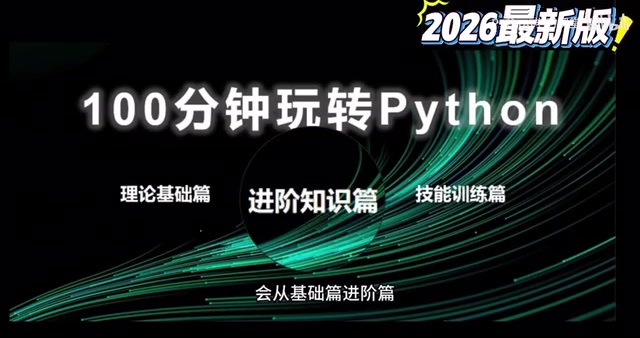
Stage 1 — Fundamentals: Building Your First Understanding of the Language
The fundamentals section covers software installation, variables and arithmetic, conditionals and loops, strings, tuples, and more. The goal at this stage isn't to write complex programs — it's to help learners understand Python's basic syntax structure and independently write simple scripts. For newcomers, just getting the development environment running and executing your first working script is itself an important confidence booster.
Stage 2 — Intermediate: From Knowing How to Doing It Well
The intermediate section focuses on more abstract concepts: functions, object-oriented programming (OOP), and regular expressions. These are what separate "writing code" from "writing good code." OOP in particular is critical — it determines whether you can organize clean, reusable project code, and it underpins every practical application direction that follows.
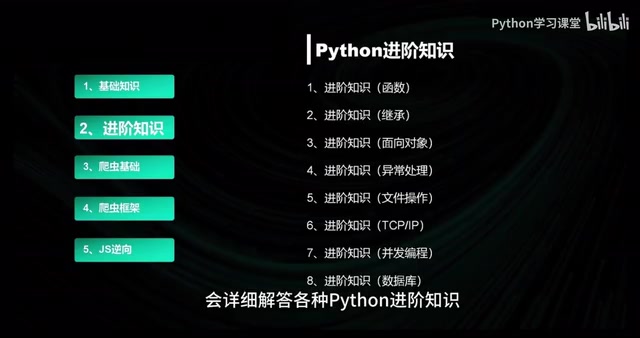
OOP is the first real "conceptual barrier" many beginners encounter. The core idea is to encapsulate data and the functions that operate on it into "objects," using classes (Class) to define object templates and then instantiating them into concrete objects. Compared to procedural programming, OOP makes code far easier to maintain and reuse — a well-written class can be called across a scraping project, a data analysis script, and an automation tool without rewriting the logic each time. Regular expressions are another tool beginners tend to avoid, yet they're incredibly practical: they're a "pattern language" specifically designed for matching, extracting, and replacing strings, and they appear constantly in scenarios like cleaning scraped web data, parsing logs, and validating forms. These two topics are placed in the intermediate stage rather than the fundamentals stage precisely because they require a certain fluency with basic syntax first — forcing them too early only leads to frustration.
Stage 3 — Skills Training: Turning Knowledge Into Capability
The skills training section is where the course becomes concrete and applicable, covering popular domains like web scraping, data analysis, machine learning, and office automation. The point of this stage is practical payoff — taking the syntax and programming thinking you've built up and applying it to real-world scenarios. Office automation boosts everyday productivity; scraping and data analysis correspond to a wide range of job roles; machine learning connects to the hottest AI developments today.
These four application areas differ significantly in entry barrier and market positioning, so they're worth discussing individually. Office automation (e.g., using openpyxl to work with Excel or python-docx to handle Word files) is the fastest to pick up and requires virtually no math background — ideal for working professionals who want to see tangible results quickly. Web scraping requires understanding HTTP requests, HTML structure, and anti-scraping mechanisms; common libraries include requests and BeautifulSoup, with more advanced work involving Selenium for browser simulation and async frameworks. Data analysis centers on the pandas, NumPy, and matplotlib toolchain, and typically needs some statistical knowledge to truly unlock its value. Machine learning has the highest barrier — while scikit-learn offers a friendly API, understanding the logic behind the models requires linear algebra and probability theory. Beginners are better off picking one direction to go deep in based on their background and target role, rather than spreading themselves thin across all four at once.
The Value of Structured Learning
The course author also mentions providing supplementary materials: study mind maps, assets, lecture notes, and e-books. The value of these supporting resources is often underestimated.
The core value of a mind map is that it helps learners build a knowledge map — so you always know where you are in your journey and what comes next. Used alongside a structured course, it effectively combats the directionlessness that fragmented learning tends to produce. For beginners, "knowing the learning path" is sometimes more valuable than "having a lot of materials."
A Rational Take on the "Master Python in One Week" Promise
It's worth a candid reminder: phrases in the video title like "from beginner to expert in one week" or "ready to freelance after completion" are classic marketing copy. Developing real programming ability takes substantial deliberate practice. A week is enough to get comfortable with basic syntax — but reaching the level where you can independently take on freelance work or land a job typically requires months of hands-on project experience.
Using this course as a clearly structured learning roadmap makes perfect sense. But treat speed-learning promises with healthy skepticism. What actually determines how well you learn is whether you consistently work through the exercises at each stage and apply what you know to real projects.
Conclusion
The greatest value of this Python course isn't that it's free — it's the three-stage learning framework it provides: build foundations, level up your skills, then apply them practically. For beginners struggling with scattered tutorials, a clear path significantly reduces the chances of giving up. As for the "master it in a week" promises in the marketing copy, take them with a grain of salt. Solid fundamentals and consistent practice are the real shortcut in learning to code.
Related articles
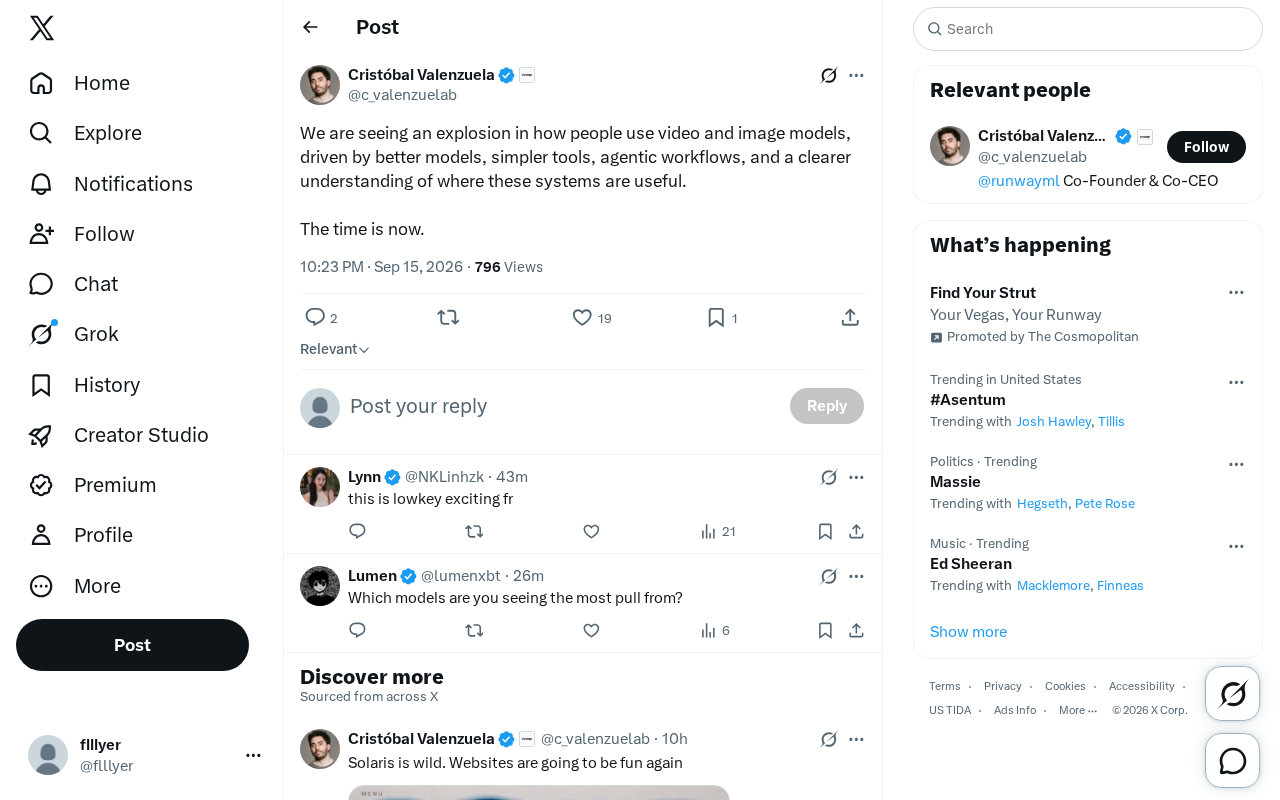
The Breakout Moment for Video and Image Models: How Stronger Models and Agentic Workflows Are Transforming Creative Work
Video and image generation models are experiencing explosive growth, driven by stronger models, simpler tools, agentic workflows, and clearer use-case understanding. Here's what's behind the visual AI revolution.
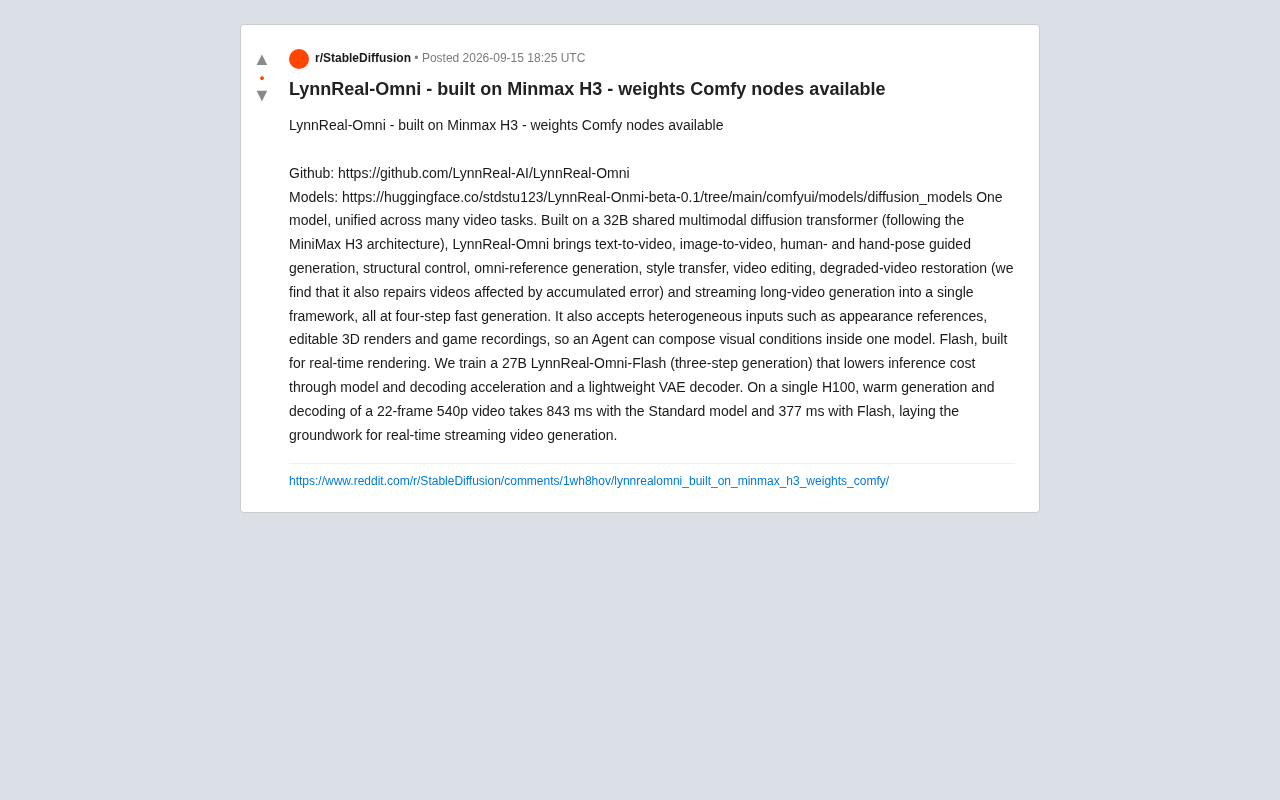
LynnReal-Omni: 32B Unified Video Diffusion Model Goes Open Source with Multi-Task Coverage in Four Steps
LynnReal-Omni is a 32B unified video diffusion model on MiniMax H3, covering text-to-video, pose guidance, style transfer, restoration in 4 steps. Flash version generates 540p video in 377ms on one H100.

Anthropic Co-Founder: AI 'Kill Switch' May Need to Be Mandatory by Law
Anthropic's co-founder tells the BBC that AI 'kill switches' may need to be legally mandated. We analyze the industry logic, technical challenges, and the tension between regulation and innovation.