Python Self-Study Roadmap: A Three-Phase Learning Method from Zero to Hands-On Projects

A structured three-phase Python self-study roadmap from zero to hands-on projects.
This article outlines a systematic three-phase approach to self-studying Python: mastering fundamentals (environment setup, variables, control flow, functions), advancing through intermediate topics (OOP, regex, exception handling), and applying skills in real-world projects (web scraping, office automation, data analysis). It offers practical tips including project-driven learning and consistent study habits.
As one of the most popular programming languages today, Python is widely used in data analysis, artificial intelligence, office automation, and many other fields. Python's ability to stand out among so many programming languages is inseparable from its unique design philosophy — when Guido van Rossum released Python in 1991, he established the core principles of "elegant, explicit, and simple." According to the TIOBE Programming Language Index, Python has topped the rankings multiple times since 2021. The key to its success lies in its extremely low barrier to entry and incredibly rich third-party library ecosystem — PyPI (Python Package Index) hosts over 500,000 open-source packages, covering virtually every technical domain.
However, many beginners tend to take detours during self-study — either getting bogged down in syntax details or rushing past the fundamentals to jump straight into projects. A Tsinghua-educated content creator on Bilibili shared a systematic 308-episode Python course that proposes a three-phase learning roadmap worth referencing for every Python beginner.
Phase 1: Python Fundamentals — Build a Solid Foundation Before Reaching for the Sky
When learning any programming language, the fundamentals are always the most important part. The fundamentals section of this course covers all the core knowledge points for getting started with Python:
- Environment Setup: Python installation and development environment configuration
- Variables and Data Types: Understanding basic data structures in Python
- Operators and Control Structures: Program flow control including conditionals and loops
- Function Definitions: Learning to encapsulate reusable code logic
- Modules and Packages: Mastering code organization and management
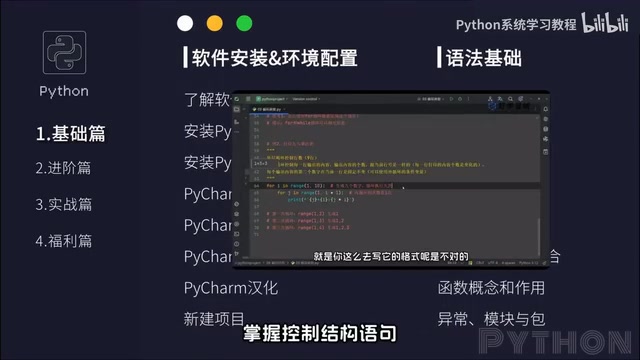
Among these, environment setup may seem simple, but it actually involves multiple dimensions including Python version management (the historical split between Python 2 and Python 3), package management tools (pip, conda), virtual environments (venv, virtualenv), and IDE selection (PyCharm, VS Code, Jupyter Notebook). A common issue for beginners is path conflicts caused by multiple Python versions on the system, or dependency version conflicts between different projects. Understanding the concept of virtual environments can fundamentally prevent the classic "it works on my machine" problem.
This phase may seem straightforward, but it's the part most self-learners tend to overlook. Many people rush to skip the basics and jump into projects, only to find themselves stuck when encountering slightly complex problems. In reality, a deep understanding of fundamental concepts like variables, strings, tuples, and loops directly determines the efficiency and ceiling of subsequent learning.
Phase 2: Intermediate Python — From "It Works" to "I Know What I'm Doing"
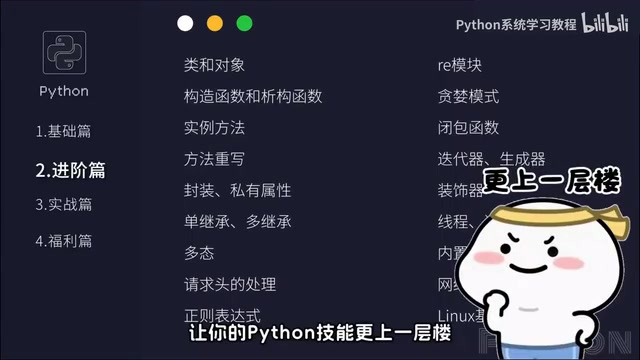
Once you've mastered the basic syntax, the intermediate content is what truly separates learners. This phase covers the following core topics:
Object-Oriented Programming (OOP)
Object-oriented programming is one of Python's core paradigms. Understanding concepts like classes and objects, inheritance and polymorphism makes your code more modular and maintainable. Many beginners write code that runs but lacks structure and design — the root cause is not having truly grasped the OOP mindset.
Object-Oriented Programming is a paradigm centered around "objects," first proposed by Alan Kay in the 1960s and later fully implemented in the Smalltalk language. Python supports multiple programming paradigms — procedural, functional, and object-oriented — but OOP is its most mainstream approach to code organization. Python's OOP has some unique features: support for multiple inheritance, duck typing for polymorphism, and magic methods (such as __init__, __str__) for customizing object behavior. Understanding SOLID design principles and common design patterns (such as Factory, Singleton, and Observer patterns) can elevate your code architecture from "it runs" to "elegant."
Regular Expressions
Regular expressions are a powerful tool for text processing and are almost indispensable in scenarios like data cleaning and web scraping. Mastering matching and replacement techniques can significantly improve data processing efficiency.
The theoretical foundation of Regular Expressions comes from mathematician Stephen Kleene's regular language theory proposed in the 1950s, later introduced into Unix text editors by Ken Thompson. Python provides regex support through the built-in re module. Common metacharacters include: . (matches any character), * (zero or more times), + (one or more times), ? (zero or one time), \d (digits), \w (alphanumeric and underscore), etc. In practice, regular expressions are commonly used for validating email formats, extracting URLs from web pages, and cleaning unstructured text data. Python 3.6+ can also use the more efficient third-party regex library, which supports advanced features like Unicode property matching.
File Operations and Exception Handling
File I/O is one of the most common operations in real projects, and exception handling determines the robustness of your programs. A mature Python developer must be able to write code that is both efficient and crash-resistant. Python provides the try-except-finally statement structure for catching and handling exceptions, and combined with the with statement (context manager), it ensures file resources are properly released, preventing issues like memory leaks.
Learning at the intermediate level requires extensive practice and reflection — you can't just stop at "I understand it" but must reach the level of "I can use it" and "I know how to use it well."
Phase 3: Hands-On Python Projects — Making Your Skills Create Real Value
The ultimate purpose of learning to code is solving real-world problems. The hands-on project phase is the crown jewel of the entire course, covering multiple popular application areas:
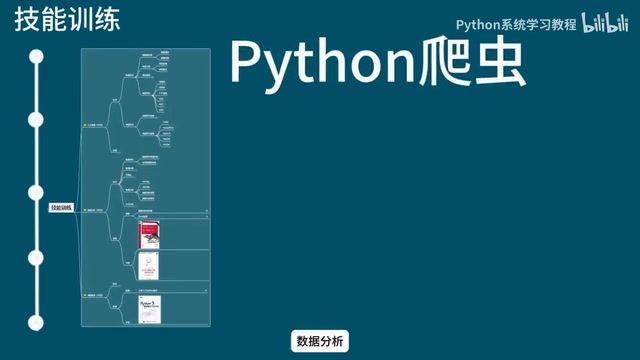
Python Web Scraping
Automatically extracting images, videos, and other data from web pages is one of Python's most popular use cases. Through web scraping projects, you can gain a deep understanding of HTTP protocols, HTML parsing, data storage, and more.
The Python web scraping tech stack typically includes: the requests library (sending HTTP requests), BeautifulSoup or lxml (parsing HTML/XML), Scrapy (industrial-grade scraping framework), and Selenium or Playwright (handling JavaScript-rendered dynamic pages). The working principle of web scraping is essentially simulating browser behavior — sending HTTP requests, receiving responses, parsing the DOM tree, and extracting target data. It's particularly important to note that web scraping has legal boundaries: you should comply with the target website's robots.txt protocol, must not scrape personal privacy data, and must not place excessive load on servers. The technology itself is neutral, but its use must be legal and compliant.
Office Automation
Using Python to process Excel, Word, PDF, and other office files — automatically generating reports and batch-processing data — is the most direct productivity boost for professionals. Many non-programmers' primary motivation for learning Python comes from this very application.
Python office automation relies on the following core libraries: openpyxl and xlrd/xlsxwriter for Excel read/write operations, python-docx for Word document generation and editing, PyPDF2 and pdfplumber for PDF file parsing, and python-pptx for PowerPoint slide creation. More advanced scenarios include: using smtplib to send emails automatically, the schedule library for scheduled task execution, and pyautogui for GUI automation. A simple Python script can compress hours of repetitive Excel operations into just a few seconds — the efficiency gains are immediate and tangible.
Data Analysis and Artificial Intelligence
Data storage, analysis, and mining represent Python's core value in the business world. With libraries like pandas, numpy, and matplotlib, you can quickly complete data visualization and analysis tasks, providing data-driven support for decision-making.
The core tech stack for Python data analysis is known as the "PyData ecosystem": NumPy provides high-performance multidimensional array operations and serves as the cornerstone of the entire scientific computing ecosystem; Pandas is built on top of NumPy and provides the DataFrame data structure, making tabular data cleaning, transformation, and aggregation extremely convenient; Matplotlib and Seaborn handle data visualization — the former offers greater flexibility while the latter produces more aesthetically pleasing statistical charts; Scikit-learn provides standard implementations of machine learning algorithms. In the AI field, TensorFlow and PyTorch are the two major deep learning frameworks, and in recent years, with the explosion of large language models, Hugging Face's Transformers library has also become an essential tool for AI developers.
Practical Tips for Self-Studying Python
Based on the design philosophy of this course, here are some practical tips for Python self-learners:
1. Follow a progressive approach. Don't skip the basics to jump straight into projects, and don't linger too long at the foundational stage. The three phases should be progressive, with each phase preparing you for the next.
2. Let projects drive your learning. During the intermediate and hands-on phases, choosing projects that interest you is far more effective than simply doing exercises. For example, scrape data from websites you follow, or use Python to automate your daily office tasks. Project-Based Learning has been confirmed by educational research as one of the most effective approaches to learning programming, because it creates direct connections between abstract syntax knowledge and concrete problem scenarios, forming deeper memory and understanding.
3. Make good use of learning resources. This course provides supplementary materials including environment setup packages, study planners, e-books, and courseware. Systematic resources can help beginners avoid many detours.
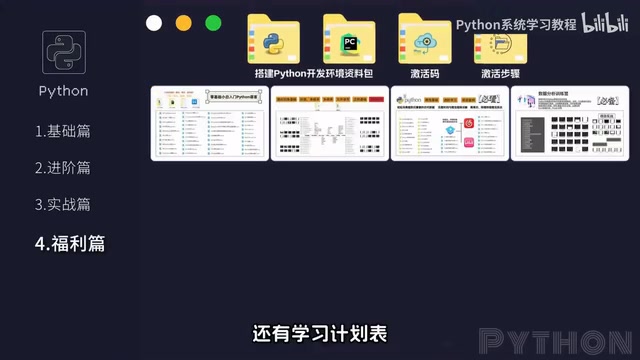
4. Consistency is the ultimate methodology. With 308 episodes, the course contains a massive amount of content. The biggest pitfall is "bookmarking it and calling it done." Setting a reasonable study plan and maintaining a consistent daily study time is far more effective than sporadic bursts of effort.
Final Thoughts
The core approach to learning Python has never changed: solid fundamentals, deep intermediate knowledge, and hands-on project experience. All three phases are indispensable. Whether you're a complete beginner or a developer with some programming experience looking to systematically fill in the gaps, following this learning roadmap can effectively help you avoid detours.
However, it's worth noting that any course is merely the starting point of learning, not the destination. True programming ability comes from extensive practice, troubleshooting, and reflection. Choose a tutorial that suits you, then stick with it — that's the right way to learn.
Related articles
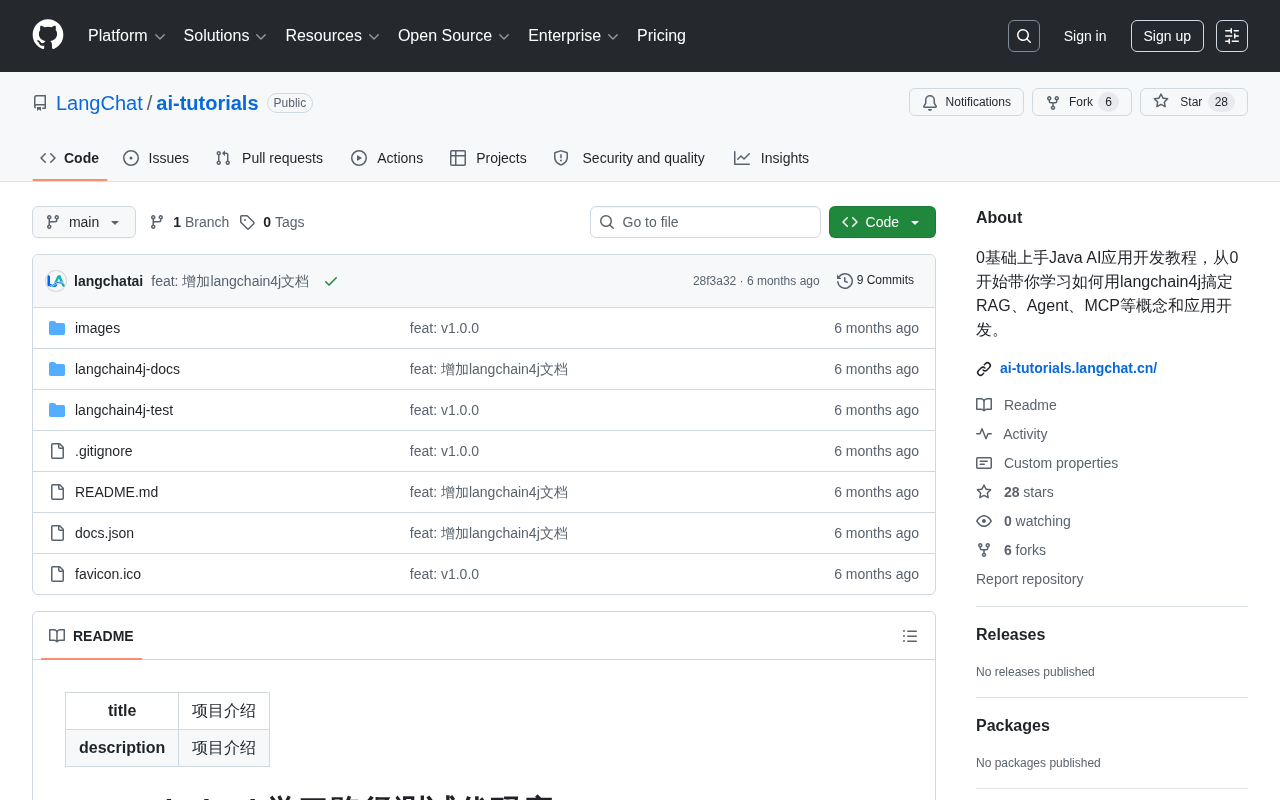
LangChat ai-tutorials: A Beginner's Guide to AI App Development for Java Developers
LangChat ai-tutorials is a beginner-friendly Java AI tutorial series built on langchain4j, covering RAG, Agent, and MCP for Java developers entering AI development.
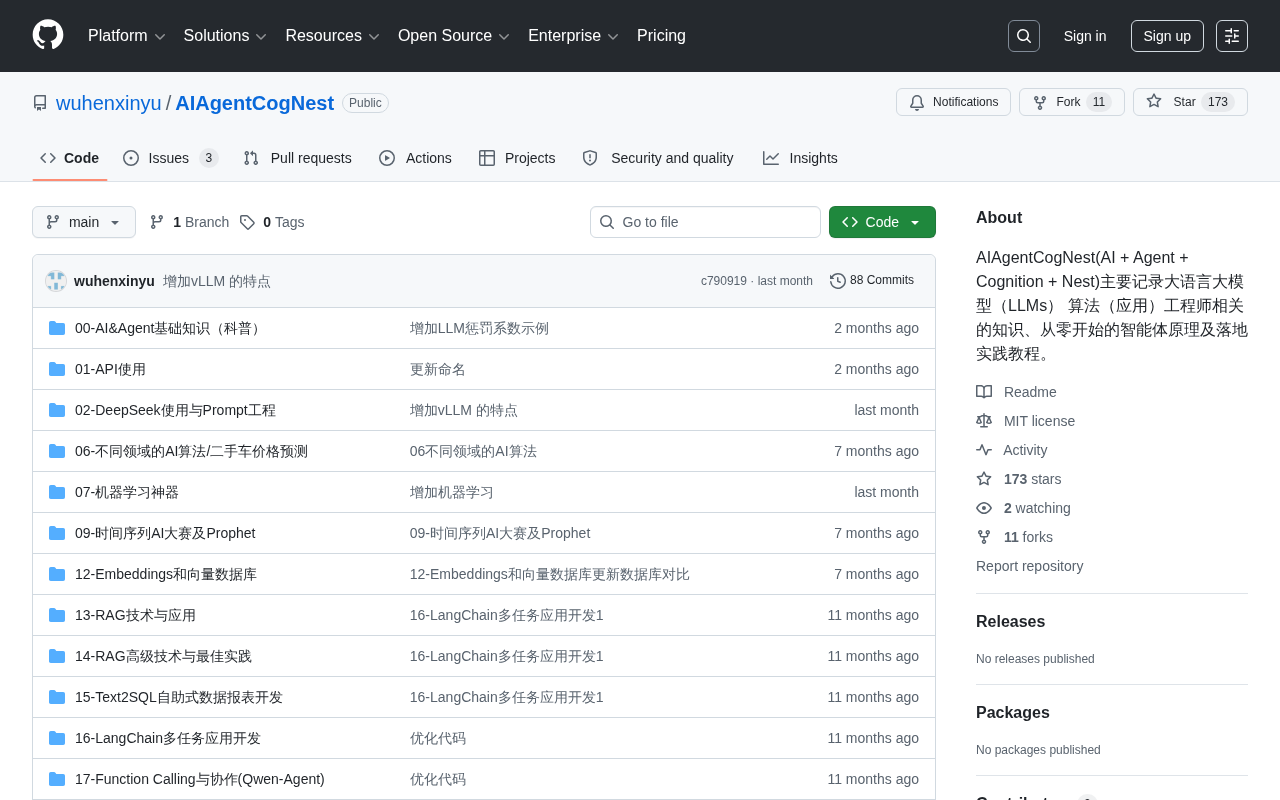
AIAgentCogNest: An Open-Source AI Agent Knowledge Incubation & Development Tutorial Project
AIAgentCogNest is an open-source AI Agent knowledge incubation project offering structured LLM application development tutorials for developers, engineers, and teams transitioning to AI.
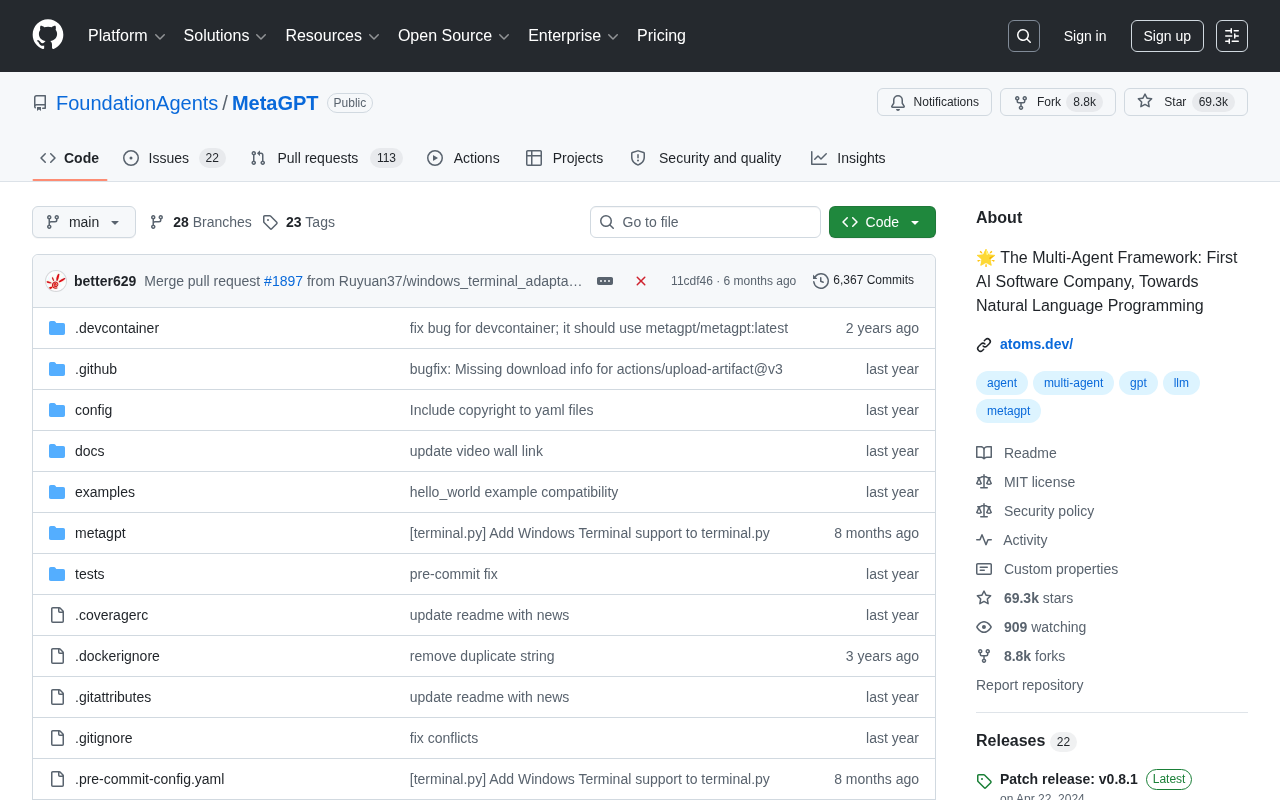
MetaGPT Explained: Building the First AI Software Company with a Multi-Agent Framework
MetaGPT is an open-source multi-agent framework with 67K+ GitHub stars that simulates a full AI software company — with PM, architect, and engineer agents — to enable natural language programming.