Qwen 2.1 Output Ownership Clarified: What You Generate Belongs to You

Alibaba's Qwen team officially confirms Qwen 2.1 outputs belong to users, lowering the bar for commercial adoption.
The Alibaba Qwen team has officially confirmed that outputs generated using Qwen 2.1 belong to the user — directly addressing a long-standing concern around copyright ownership for developers and commercial users. This means AI-generated code, copy, and other content can be freely integrated into commercial products without fear of retroactive rights claims, simplifying enterprise compliance. The announcement sparked discussion on Reddit and highlights how licensing terms have become as critical as model performance in production decisions. Notably, owning the output does not exempt users from third-party infringement liability: if generated content reproduces copyrighted training data, that legal risk remains with the user.
The Alibaba Qwen team has officially confirmed something that matters enormously to developers and commercial users: outputs generated using Qwen 2.1 belong to the user. This statement quickly sparked discussion on Reddit and other technical communities, because output ownership has direct implications for whether AI-generated content can be legally and freely used in commercial contexts.
Why Output Ownership Matters
For any team working with large language models, the question of "who actually owns what I generate" is an unavoidable legal and business concern. If the model provider retains rights over outputs, users may face unclear copyright attribution, restricted sublicensing, or even potential litigation when using AI-generated code, copy, or images in products or public-facing work.
By clearly stating that outputs belong to the user, Qwen enables developers to confidently integrate Qwen 2.1's results into their applications and commercial products without worrying about retroactive rights claims. This is especially critical for startups, independent developers, and enterprise users — it reduces compliance overhead and removes hesitation about embedding the model deeply into existing workflows.
The legal complexity here stems from the fact that the copyright status of AI-generated content (AIGC) remains contested. Most jurisdictions require "human authorship" for copyright protection, which means purely AI-generated content often exists in a legal gray zone — neither claimable by the model provider nor necessarily protected by copyright. In commercial practice, however, what matters most is usually not "can copyright be established" but rather "who has the right to use this content and in what ways." Model Terms of Service serve as the key document filling this gap: they define usage boundaries through contract law, independent of copyright legislation. Major providers including OpenAI, Anthropic, and Google all specify in their terms that outputs belong to users, while attaching restrictions such as prohibitions on using outputs to train competing models or claiming copyright over those outputs. Qwen's clarification matters because it provides contractual certainty for users and removes potential barriers to commercial adoption.
Qwen's Official Statement
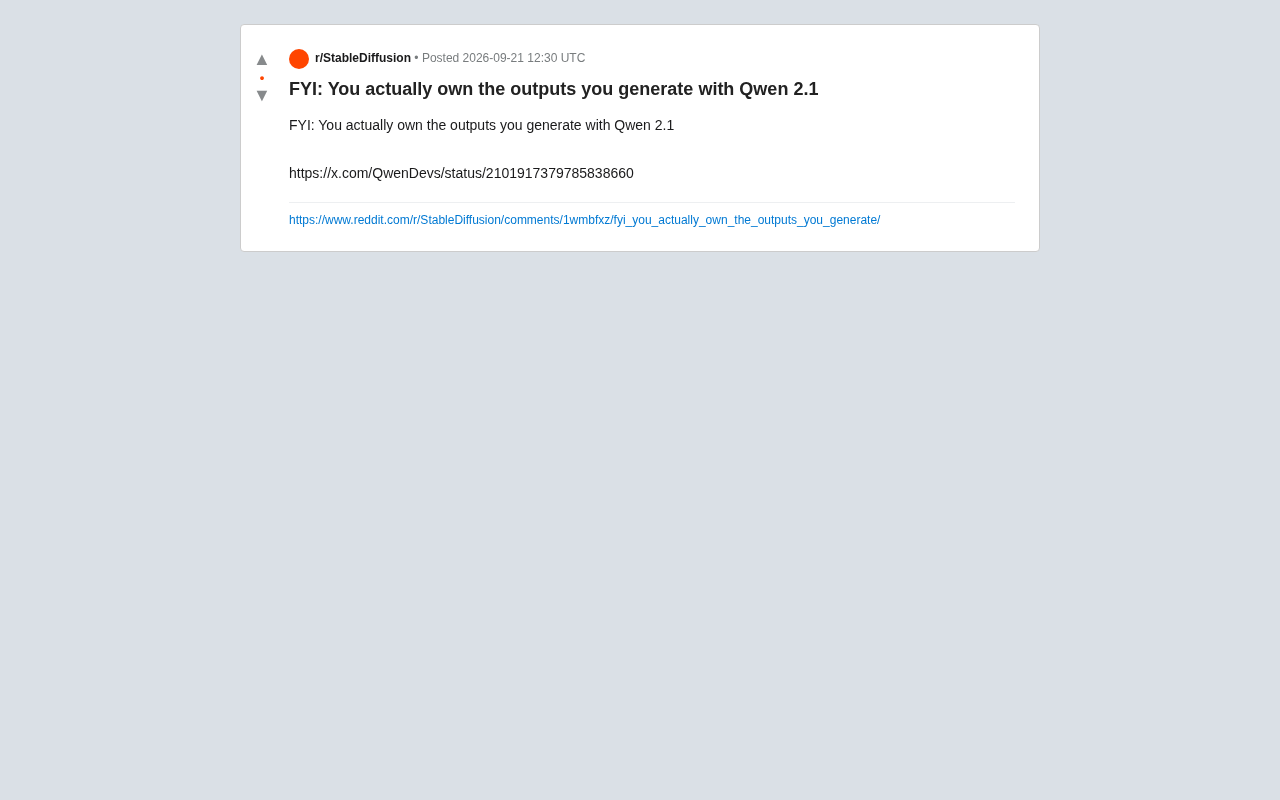
According to information published on the official Qwen X (formerly Twitter) account, the team directly confirmed that users own the outputs generated by Qwen 2.1. This kind of proactive clarification is fundamentally an act of trust-building with the developer community.
In today's highly competitive LLM landscape, how favorable a model's terms are has become a meaningful factor in model selection. Compared to some closed-source services that attach complex usage restrictions to generated outputs, Qwen's clear "outputs are yours" stance significantly increases its appeal to both open-source and commercial users.
What This Means in Practice
From a practical standpoint, this announcement has several direct implications:
- More freedom to commercialize: Content generated with Qwen 2.1 can be used directly in paid products or external services without requiring additional licensing.
- Reduced compliance risk: Clear ownership shrinks legal gray areas, which is particularly valuable for enterprise review processes.
- Lower integration barrier: Developers can more confidently embed the model as a foundational capability within their own tech stacks.
That said, it's worth noting that "owning the output" does not mean "the output is guaranteed not to infringe on third-party rights." If generated content inadvertently reproduces copyrighted material, users remain responsible for their own review. Ownership attribution resolves the relationship between the provider and the user — not potential disputes between the user and external third parties.
This additional caveat about third-party rights deserves elaboration. Large language models are trained on vast amounts of text data, and there is a possibility that generated content may closely resemble copyrighted material from the training set — a phenomenon known as "memorization." Research suggests that larger models may exhibit higher degrees of training data memorization. In the United States, several copyright lawsuits against AI companies have touched on exactly this issue, including Getty Images v. Stability AI and multiple authors' suits against OpenAI. This means that even with Qwen clearly assigning output ownership to users, those using generated content in high-stakes contexts (such as publishing or brand materials) should still consider running similarity checks on outputs or consulting legal counsel, in order to mitigate potential claims from copyright holders of training data.
Community Reaction and Context
The news was shared and discussed across relevant technical subreddits, reflecting how attuned the community has become to model usage terms. As more teams move large models into production, the fine print — including output ownership, data retention, and commercial use restrictions — has become just as important an evaluation criterion as model performance.
The Qwen series has long been known for its open approach, and this explicit statement on output ownership continues its developer-friendly trajectory. For teams evaluating domestic and open-source LLMs, clear licensing signals like this often carry more weight in the final decision than benchmark scores alone.
Summary
What looks like a simple announcement actually addresses a core — yet frequently overlooked — aspect of AI deployment: the rights to generated content. By explicitly returning output ownership to users, Qwen 2.1 removes one more barrier to adoption in commercial and development contexts. For users, the freedom this provides is real — but it should be paired with due diligence on generated content, to ensure what you ship to market is truly clear to use.
Related articles
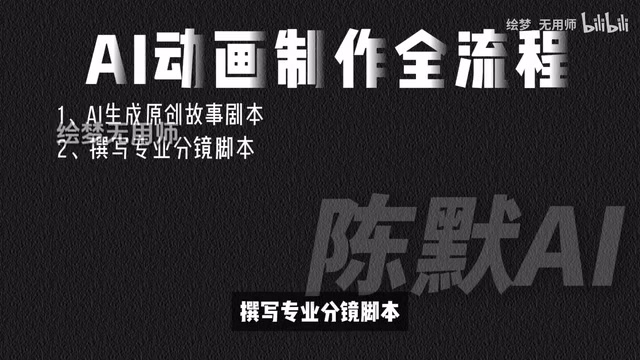
One Person Producing 90 Episodes of AI Anime Shorts: The Complete Production Workflow in 10 Hours for 10 Yuan
No screenwriting experience needed for AI anime shorts: 10 hours and 10 yuan in costs, 4,200 yuan earnings per work on Hongguo. This article breaks down the complete six-step workflow from AI-generated scripts and storyboard scripts to the finished film, with a universal questioning formula and beginner pitfall guide.
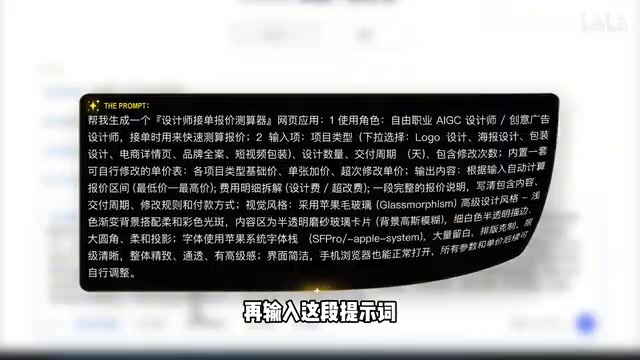
Build a Quote Calculator with Doubao Agent: Stop Guessing Your Freelance Rates
A Bilibili creator uses Doubao Agent to build a no-code quote calculator that auto-generates itemized quotes with rush and copyright buyout rates, one-click copy, and mobile quoting.
WorkBuddy Hands-On Tutorial: 10 Agent Projects from Beginner to Resume-Worthy
WorkBuddy tutorial: a Chinese-language AI work assistant with simpler setup than Codex or Claude Code. 10 hands-on Agent projects for beginners, resume-ready.