Qwen3.8-Flash-Next Open-Sourced: A Complete Breakdown of Four Major Architecture Upgrades and Deployment Optimizations
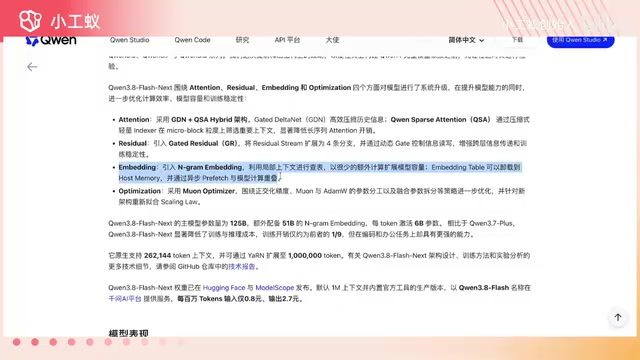
Qwen3.8-Flash-Next previews Qwen4's architecture with 125B MoE model using only 6B active parameters.
Alibaba's Qwen team open-sourced Qwen3.8-Flash-Next, a 125B sparse MoE model with only 6B activated parameters that outperforms the 27B dense Qwen3.8 model. Key innovations include QSA sparse attention for long-context efficiency, N-Gram Embedding enabling 51B parameters to be offloaded to CPU (saving ~48GB GPU memory), multi-branch residual gating, and the Muon optimizer. The model signals the technical direction of the upcoming Qwen4 architecture.
Overview: An Early Preview of the Next-Generation Qwen4 Architecture
Alibaba's Qwen team recently open-sourced their next-generation model, Qwen3.8-Flash-Next, widely regarded as a prototype of the upcoming Qwen4 model architecture. As a model built on an entirely new architecture, it introduces systematic upgrades across multiple dimensions including attention mechanisms, residual connections, embedding design, and training optimizers.
Based on publicly available information, the model's most notable characteristic is being "lightweight yet powerful" — with a total parameter count of 125B but only about 6B activated parameters, making it a classic sparse MoE architecture.
MoE Architecture Explained: MoE (Mixture of Experts) is a neural network architecture design approach. In traditional dense models, every input activates all parameters for computation. MoE models, however, partition parameters into multiple "expert" modules and use a routing mechanism to dynamically select only a few experts for each input. This design maintains a large total parameter count (preserving model capacity) while activating only a small fraction of parameters per inference, dramatically reducing computational cost. Sparse MoE architectures have become a major direction in large model development in recent years, with models like Mixtral and DeepSeek-V2 adopting similar designs. The core advantage lies in achieving stronger performance with fewer activated parameters.
Compared to the widely used Qwen3.8-27B dense model, Flash-Next surpasses it across multiple benchmarks while significantly reducing both inference and training overhead.
Four Core Architecture Upgrades
QSA: Lightweight Compressed Attention Mechanism
The model introduces Qwen's proprietary "absorptive attention" mechanism for its attention layer, dubbed QSA. This design closely parallels DeepSeek's previously released DSA (DeepSeek Sparse Attention) — it uses compressed, lightweight indices to re-select important context at the micro-block granularity, thereby reducing the computational overhead of attention over long sequences.
Technical Challenges of Long-Context Processing: The attention mechanism is a core component of the Transformer architecture, but its computational complexity scales quadratically with sequence length. When processing million-token-level long texts, standard Self-Attention faces two major bottlenecks: explosive growth in computation and a sharp increase in memory usage (due to storing attention matrices). Sparse attention mechanisms employ various strategies (such as local windows, sliding attention, compressed indices, etc.) to selectively attend to important context segments rather than computing full connections across all tokens. These techniques reduce the computational and memory requirements of long-text processing to practically deployable levels while preserving the model's comprehension capabilities.
As a notable detail, similar sparse attention approaches have already appeared in models like GLM-4.5/4.6. The core value proposition is: simultaneously reducing computational cost and memory usage when processing long contexts — which is critically important for scenarios involving million-token-level long texts.
Multi-Branch Residual Connections with Dynamic Gating
For residual connections, the model introduces a four-branch residual structure with dynamic gate-controlled read/write operations.
The Evolution of Residual Connections: Residual connections were first introduced by ResNet, using cross-layer shortcut connections to solve the vanishing gradient problem in deep networks. In the Transformer architecture, residual connections allow information to bypass complex attention or feed-forward layers and pass through directly, ensuring training stability. Multi-branch residual structures take this idea further: instead of simple "input + output" addition, they introduce multiple parallel information pathways with dynamic gating mechanisms that adaptively adjust the weight of each branch. This design enables the model to more flexibly choose information flow paths during training, improving the expressiveness and convergence efficiency of deep networks.
This mechanism enhances cross-layer information propagation while improving training stability. This also draws on earlier related work from DeepSeek.
N-Gram Embedding: A Low-Cost Parameter Expansion Strategy
This is one of the more eye-catching innovations in this architecture. In traditional models, each token in the vocabulary maps to a single embedding vector. N-Gram Embedding, however, combines multiple embeddings to form local context lookup tables, providing additional representations specifically for common phrases or local patterns.
The Parameter Economics of the Embedding Layer: In large language models, the embedding layer maps discrete token IDs to continuous vector representations, serving as the model's input gateway. For a model with a vocabulary of 100K+ tokens and an embedding dimension of 4096, the embedding parameters alone can account for 5-10% of total parameters. In traditional models, each token corresponds to a fixed vector. N-Gram Embedding allocates independent vector representations for common token combinations (such as bigrams or trigrams of frequently co-occurring words). This is analogous to building a fast lookup table for high-frequency word groups, allowing the model to avoid recomposing representations for common patterns each time. This expands the model's "memory capacity" with virtually no additional computational cost.
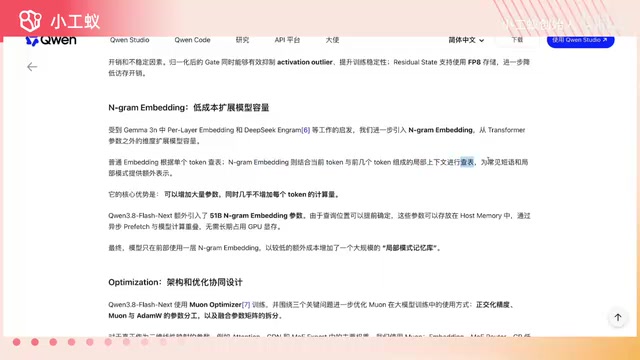
The core advantage is: it can significantly expand model parameter capacity while adding virtually no per-token computation. More importantly, this embedding table (approximately 51B parameters) can be offloaded to CPU memory, further reducing GPU memory requirements.
CPU-GPU Collaborative Memory Management Strategy: In modern AI inference systems, GPU memory is fast but limited in capacity and expensive, while CPU memory offers larger capacity but relatively slower access speeds. Offload techniques store less frequently accessed model parameters (such as embedding tables) in CPU memory, transferring them to the GPU via the PCIe bus only when needed, striking a balance between memory usage and inference speed. For lookup operations like N-Gram Embedding, the impact of CPU-GPU data transfer latency is relatively manageable due to their low computational density and relatively regular access patterns. Given the high cost of GPU memory today, this heterogeneous memory management strategy holds significant engineering value for reducing deployment costs.
This is essentially a "local pattern memory bank" design approach.
Muon Optimizer: Industry Convergence in Training Methodology
On the training front, the model adopts the Muon optimizer. This type of optimizer was first used at scale by the Kimi team. Looking at current trends, the technical architectures of mainstream Chinese open-source large models are gradually converging — whether it's GLM, DeepSeek, Kimi, or Qwen's new version, their underlying architectures are all gravitating toward DeepSeek's technical roadmap, exhibiting a high degree of homogeneity.
Parameter Configuration and Memory Optimization Strategy
In terms of specific parameter configuration, the Flash version of Qwen3.8-Flash-Next has a total parameter count of 125B, of which approximately 51B are N-Gram Embedding parameters (offloadable to CPU memory), with approximately 6B activated parameters.
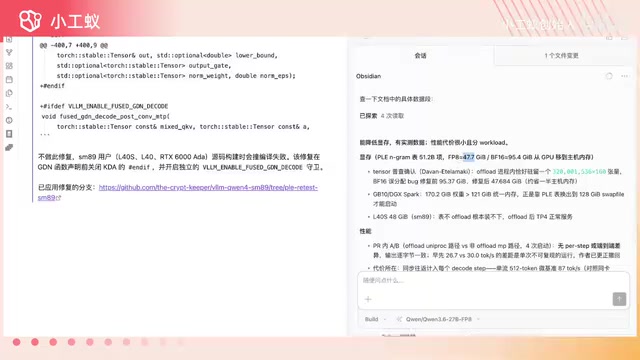
This means that in actual deployment, the parameters that truly need to be loaded into GPU memory amount to approximately 70B. At FP8 precision, the N-Gram Embedding table occupies about 47.7GB of memory. By offloading it to CPU memory, approximately 48GB of GPU memory can be saved — given today's high GPU memory prices, the practical value of this optimization is substantial.
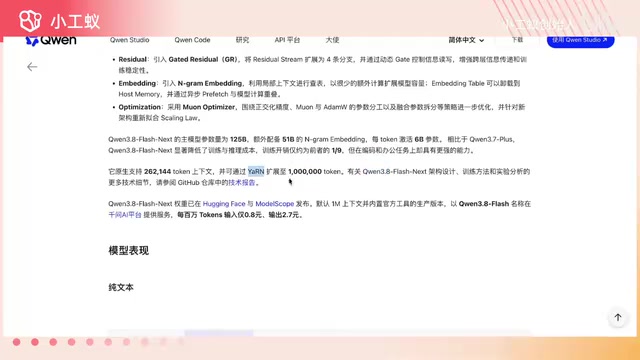
Regarding native context length, the model supports 256K tokens and can be extended to approximately 1 million tokens through 4x scaling using YaRN technology, continuing Qwen's established approach to long-context capability extension.
Technical Principles of Context Length Extension: The native training length refers to the maximum sequence length actually used during pretraining. YaRN (Yet another RoPE extensioN method) is a positional encoding extension technique that adjusts the frequency parameters of RoPE (Rotary Position Embedding) to enable the model to extrapolate and process sequences beyond the training length. A 4x scaling means a model natively supporting 256K can process approximately 1 million tokens of ultra-long text during inference. The core challenge of such techniques is maintaining positional information distinctiveness to prevent "positional confusion" or performance degradation on ultra-long sequences. Multiple approaches exist in the industry (such as NTK-aware scaling, Dynamic NTK, etc.), and YaRN is one of the more mature implementations.
Performance Results and Open-Source Ecosystem Support
According to official benchmarks, Qwen3.8-Flash-Next comprehensively outperforms the Qwen3.8-27B dense model across both text and multimodal tasks, showing clear advantages.
This corroborates an emerging industry consensus: as sparse MoE architectures mature, dense models may gradually fade from the scene. The reason is straightforward — dense models demand too much compute, while sparse models like Flash-Next with only 6B activated parameters not only require less compute and produce fewer hallucinations, but actually deliver better performance.
On the open-source ecosystem front, mainstream inference frameworks like vLLM have begun providing initial support for the model.
The Importance of Inference Framework Compatibility: vLLM is one of the most popular large model inference acceleration frameworks, developed and open-sourced by UC Berkeley. It optimizes KV Cache memory management through innovations like PagedAttention and supports Continuous Batching to improve throughput. The release of new model architectures (such as sparse MoE, custom attention mechanisms) often requires inference frameworks to develop adaptations, including operator optimization, memory scheduling, and parallelism strategies. The maturity of ecosystem support directly impacts actual deployment efficiency and cost. Current mainstream frameworks like vLLM, TensorRT-LLM, and llama.cpp are all rapidly iterating to support emerging architectural features.
However, the previously mentioned embedding offload-to-CPU feature is still under development. According to official data, the throughput difference between enabling and disabling the offload feature is only about 3.3 tokens/second (roughly 10%), while saving nearly 48GB of GPU memory — a cost-performance tradeoff that is highly favorable for most deployment scenarios.
Conclusion: The Technical Direction of Qwen4 Is Taking Shape
Qwen3.8-Flash-Next represents an important architectural exploration by the Qwen team and signals the technical direction of Qwen4. The combination of QSA sparse attention, N-Gram Embedding for low-cost capacity expansion, multi-branch residual connections, and CPU offload significantly lowers the deployment barrier while maintaining strong performance.
Of course, current evaluations are primarily based on official data. Once vLLM's offload functionality is officially released, the model's real-world inference performance and deployment experience will warrant further hands-on testing and verification.
Related articles
OpenAI Declares the AGI Era Has Arrived: Conceptual Controversies and Technical Realities
OpenAI launches GPT-6 Astra claiming the AGI era has arrived, sparking controversy. Deep analysis of AGI definition ambiguity, technical progress realities, industry standards battle, and practical impacts on users and developers.
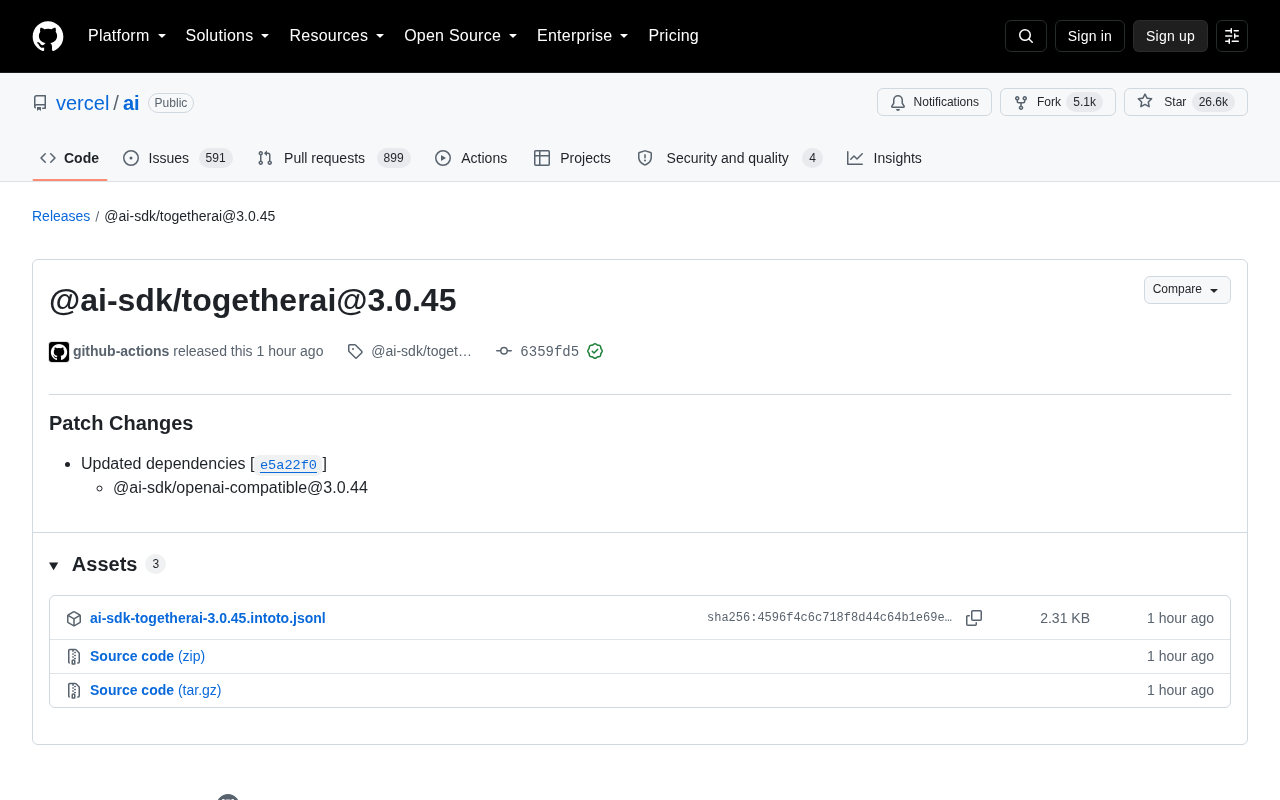
Vercel AI SDK TogetherAI Adapter 3.0.45 Update Analysis
Analysis of @ai-sdk/togetherai 3.0.45 patch update covering dependency sync, OpenAI compatibility layer architecture, and semantic versioning strategy in Vercel AI SDK.
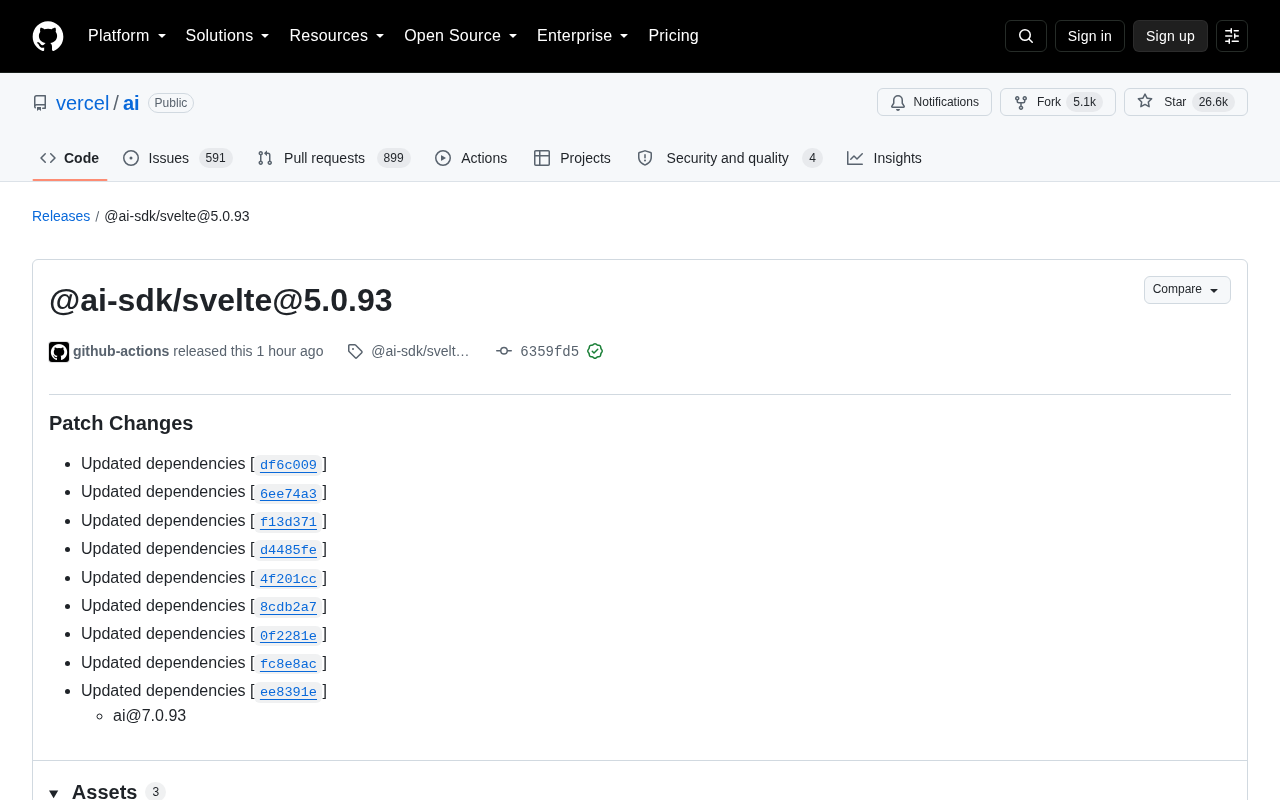
Deep Dive into Vercel AI SDK Svelte 5.0.93 Release Update
In-depth analysis of Vercel AI SDK Svelte 5.0.93 patch update, covering multi-framework adaptation, dependency sync, and automated release pipelines for Svelte AI app development.