Ransomware Negotiation Expert Turned Mole: DOJ Charges Former Executive with Double-Dealing

DOJ charges former cybersecurity executive with underpaying hackers and overcharging victims in ransomware negotiations, exposing an industry trust crisis.
The U.S. Department of Justice recently charged a former cybersecurity executive who, while representing ransomware victims in negotiations with hackers, secretly paid lower ransoms but charged victims higher amounts and pocketed the difference. The case reveals the gray zone of the ransomware negotiation industry's long-standing lack of transparency and regulation: victims in crisis are in an information-disadvantaged position, heavily reliant on "professional consultants," while intermediaries may exploit this asymmetry for profit. The article analyzes how this behavior damages industry trust and offers recommendations for businesses, including demanding transparent negotiation records, introducing third-party audits, establishing internal incident response teams, and understanding the legal boundaries of ransom payments. The case may push the industry toward standardized regulation, requiring incident response firms to disclose ransom payment processes.
The Core of the Case: When the "Firefighter" Becomes the Arsonist
The U.S. Department of Justice recently charged a former cybersecurity executive with exploiting his position to secretly pay ransom to hackers while representing ransomware victims in negotiations, then charging the victims a higher amount and pocketing the difference. The case reveals an unsettling reality: in the field of digital crisis response—where trust is most essential—insiders can become the biggest risk.
According to prosecutors, the company where the former executive worked specialized in providing incident response and negotiation services to businesses hit by ransomware attacks. Normally, the company would communicate with hackers on behalf of victims, negotiate lower ransom amounts, and assist victims in completing payment. But the indictment alleges that this executive bypassed normal transparent procedures, secretly reached an agreement with hackers to pay a ransom lower than what the victim paid, then reported a higher figure to the victim and pocketed the difference.
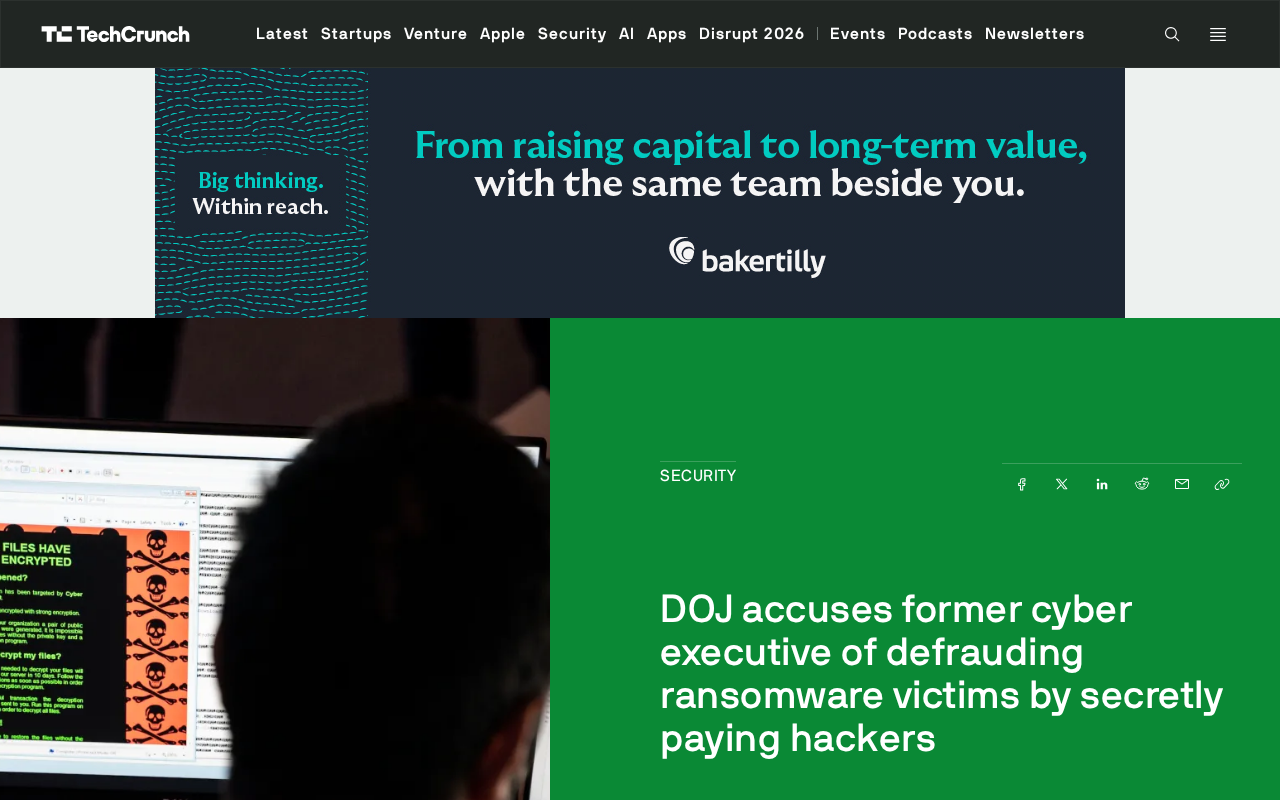
What makes this conduct particularly egregious is that it directly exploited victims' vulnerability during a crisis. When businesses are hit by ransomware—with data encrypted and operations disrupted—management is often in a state of extreme anxiety and information asymmetry, heavily reliant on the advice of "professional consultants." Yet this consultant turned that trust into a tool for profit, betraying both the victims and violating the professional ethics of the cybersecurity industry.
Incident Response Firm (IR firm) is a third-party organization that provides emergency services to businesses suffering cyberattacks, typically including attack attribution, damage containment, system recovery, and negotiating with ransomware gangs on behalf of victims. Such firms often have experience dealing with various hacker groups, and some even possess negotiation scripts and contact channels for specific ransomware families. Since victims are in a highly passive state during this period, IR firms effectively play the role of "crisis agents," holding core information such as ransom amounts and payment paths. Well-known IR firms in the industry include Mandiant and CrowdStrike, which typically cooperate with law enforcement agencies. However, this field has long suffered from conflicts of interest: some companies both provide negotiation services and may be associated with ransom payment channels, lacking firewall mechanisms.
The Gray Zone of Ransomware Negotiations
Ransomware attacks have formed a complete criminal industrial chain, and the negotiation and ransom payment stages are the most sensitive part of it. Many victims, in order to avoid data leaks or prolonged business paralysis, choose to hire professional incident response firms to assist with negotiations. These firms typically claim to have experience dealing with hacker groups and can help victims resolve issues at lower cost.
However, this field has long lacked unified standards and regulation. The negotiation process is often opaque, making it difficult for victims to verify the true destination and amount of ransom payments. The prosecutors' charges specifically target this information asymmetry: the defendant is accused of exploiting his role as an intermediary to deceive both the victims and law enforcement.
One detail worth noting: the U.S. Department of Justice has become increasingly strict in its stance on ransomware payments in recent years. While paying ransom itself is not illegal in most cases, concealing payments, making false statements, or committing fraud may constitute crimes. This case sends a clear signal to the industry: "gray operations" at the negotiating table will face legal scrutiny.
The Breaking of the Trust Chain
The core asset of the incident response industry is trust. Victims are willing to entrust their most sensitive system access and crisis decisions to external consultants because they believe the other party will prioritize the victim's interests. When this trust is abused, it damages not only individual clients' interests but also the credibility of the entire industry. In the future, victims may be more cautious when selecting service providers, demanding greater transparency and third-party oversight.
Ransomware-as-a-Service (RaaS) is the dominant business model for ransomware attacks today. Developers write ransomware and provide it to "affiliates" on a subscription or revenue-sharing basis; affiliates are responsible for infiltrating victim networks, deploying encryption programs, and negotiating ransoms, with proceeds split proportionally. This model has significantly lowered the barrier to cybercrime and means that negotiation counterparts are often affiliates lacking unified discipline, with ransom amounts being highly flexible—this is precisely the operating space that allows intermediaries to buy low and report high. Additionally, ransoms are typically paid in cryptocurrency; while blockchain is traceable, mixers and cross-chain transfers can increase tracking difficulty. The U.S. Treasury Department's Office of Foreign Assets Control (OFAC) has warned that paying ransom to sanctioned entities may violate sanctions regulations, further increasing the compliance complexity of the negotiation and payment stages.
Implications for Businesses: How to Avoid Secondary Harm
For businesses, this case provides an important warning: when hit by a ransomware attack, in addition to dealing with hackers, necessary oversight of "helpers" is also required. Here are some actionable recommendations:
- Demand transparent negotiation records: Businesses should require service providers to supply key records of communications with hackers, including the negotiation process for ransom amounts and final payment receipts, to avoid completely black-box operations.
- Introduce third-party audits: For high-ransom cases, consider hiring independent third-party organizations to oversee the payment process, ensuring that fund flows match agreements.
- Establish an internal incident response team: Do not outsource all decision-making authority. Businesses should designate legal, financial, and security leaders to jointly participate in crisis decisions, creating checks and balances.
- Understand legal boundaries: Before paying ransom, consult legal counsel to clarify relevant compliance requirements and avoid legal liability arising from improper payments.
The Inevitable Trend of Industry Regulation
This case may accelerate the standardization of the ransomware negotiation field. In the future, regulators may require incident response firms to disclose detailed ransom payment processes, or even establish a filing system. For compliant businesses, this is not a bad thing—transparent rules help eliminate bad actors and restore market confidence.
Conclusion: The Security Industry's Self-Purification
The cybersecurity industry should be the guardian of the digital world, but this case reminds us that bad actors can emerge in any industry. The DOJ's charges are not only accountability for individual conduct but also a wake-up call for the entire industry. For security professionals, professional ethics are not slogans on the wall but the bottom line in every crisis decision. For businesses, trust needs to be built and also verified. In today's increasingly severe ransomware threat landscape, vigilance should be directed not only at external attackers but also at internal service providers.
The case is still in judicial proceedings, and whether the defendant's charges will be upheld awaits the court's ruling. But regardless of the outcome, this incident has already dropped a bombshell on the ransomware response ecosystem, and the discussions and reflections it has triggered will continue to influence the industry's future direction.
Background Supplement
In the United States, paying a ransomware ransom is not inherently illegal at the federal level, but it may trigger multiple legal risks. OFAC has explicitly stated that paying ransom to sanctioned cybercriminal organizations may constitute a violation of the International Emergency Economic Powers Act (IEEPA); additionally, if payment involves concealing criminal proceeds or making false statements, it may constitute fraud. Some states (such as North Carolina) have legislated to prohibit public institutions from paying ransom. Before paying ransom, businesses should assess: whether the recipient is on the sanctions list, whether the payment triggers anti-money laundering reporting obligations, and whether it needs to be reported to law enforcement. In China, the Cybersecurity Law and Data Security Law require network operators to report security incidents promptly, but do not directly prohibit ransom payments; businesses still need to assess whether payment involves financing illegal criminal activities.
One-line Summary
DOJ charges former cybersecurity executive with underpaying hackers and overcharging victims in ransomware negotiations, exposing an industry trust crisis.
Paragraph Summary
The U.S. Department of Justice recently charged a former cybersecurity executive who, while representing ransomware victims in negotiations with hackers, secretly paid lower ransoms but charged victims higher amounts and pocketed the difference. The case reveals the gray zone of the ransomware negotiation industry's long-standing lack of transparency and regulation: victims in crisis are in an information-disadvantaged position, heavily reliant on "professional consultants," while intermediaries may exploit this asymmetry for profit. The article analyzes how this behavior damages industry trust and offers recommendations for businesses, including demanding transparent negotiation records, introducing third-party audits, establishing internal incident response teams, and understanding the legal boundaries of ransom payments. The case may push the industry toward standardized regulation, requiring incident response firms to disclose ransom payment processes.
Related articles

@ai-sdk/sandbox-vercel 1.0.196 Patch Release: Dependency Update
Interpretation of the @ai-sdk/sandbox-vercel 1.0.196 patch release: @ai-sdk/harness dependency upgraded in sync, analyzing the AI SDK sandbox component's versioning strategy and practical impact on developers.

AI SDK Svelte 4.0.339 Released: The Ecosystem Coordination Behind a Minor Version Update
The AI SDK Svelte adapter releases patch 4.0.339, with core package ai updated to 6.0.339. We explain this coordinated release, Svelte's role in AI development, and upgrade advice.

@ai-sdk/tool-bash 1.0.38 Released: Analyzing a Patch in the AI SDK Toolchain
@ai-sdk/tool-bash 1.0.38 patch released via GitHub Actions, pointing to ai@7.0.184. An analysis of version alignment, automated release pipelines, and practical tips for handling patch updates.