REA: Reverse-Engineer Any App with a Single AI Agent Command

Open-source MCP server REA connects Ghidra, IDA, and other reverse-engineering tools to coding agents for auditable local reverse-engineering analysis.
REA is an open-source MCP server that acts as a bridge layer, exposing professional reverse-engineering tools like Ghidra, Hopper, and IDA as MCP tools to coding agents such as Claude Code, Codex, Cursor, and Gemini CLI. When users ask questions, agents call REA tools to inspect target programs, infer implementations without source code, present evidence point by point, and can even build similar functionality. REA supports desktop apps, native binaries, Electron apps, websites, Android APKs, .NET assemblies, and firmware, with all analysis performed locally and installation via npx rea-agent-setup. The official notice emphasizes it's only for legitimate research, interoperability, and authorized software. The article argues its value lies in preserving the auditable reverse-engineering workflow of observation, hypothesis, and verification—lowering the barrier to entry without replacing human judgment.
AI Agents are extending their capabilities from "writing code" to "reading binaries." An open-source MCP server called REA (Reverse Engineer Anything) connects professional reverse-engineering tools like Ghidra, Hopper, and IDA to coding agents such as Claude Code, Codex, Cursor, and Gemini CLI—turning "how is this feature implemented?" from a simple question into an auditable analysis process backed by an evidence chain.
What REA Does: Equipping Coding Agents with a Reverse-Engineering Toolbox
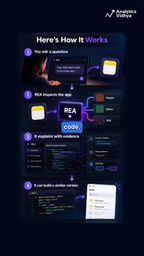
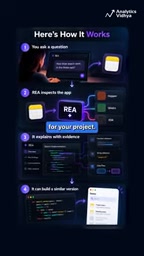
According to the YouTube channel Analytics Vidya, REA is positioned as an open-source MCP (Model Context Protocol) server. It doesn't analyze programs directly; instead, it acts as a bridge layer—exposing reverse-engineering tool capabilities to upper-layer agents in the form of MCP tools. When a user asks an agent, "How is the search feature in this note-taking app implemented?", the agent calls REA-provided tools to inspect the target program, infers the implementation without source code, presents the evidence behind each conclusion point by point, and can even build a similar version in your project.

The key to this design philosophy is "auditability." Reverse-engineering conclusions are inherently uncertain, and REA requires agents to present evidence rather than just giving answers—effectively preserving the reverse-engineering workflow of observation, hypothesis, and verification. For developers, this has more practical value than a black-box "AI tells you the answer."
MCP (Model Context Protocol) is an open protocol introduced by Anthropic in late 2024 to standardize how AI assistants connect to external tools and data sources. Think of MCP as a "tool interface standard for AI applications": servers implement specific capabilities (such as file I/O, database queries, or invoking reverse-engineering tools), while clients (such as Claude Code or Cursor) discover and call these tools via a unified protocol. Compared to the past where each agent had its own custom plugins, MCP lets the same set of tool capabilities be reused across multiple agents—which is why REA only needs to be implemented once to connect to various coding agents.
Underlying Toolchain and Coverage
REA calls mature industry reverse-engineering tools under the hood. According to the same source, Ghidra, Hopper, and IDA are all part of its toolchain, with the agent selecting which to invoke based on the target type.
Coverage is another notable aspect of REA. It doesn't just handle desktop applications—it also supports native binaries, Electron apps, websites, Android APKs, .NET assemblies, and even firmware. This breadth suggests it aims to be a general-purpose analysis entry point rather than a specialized tool for a single platform.
From an engineering perspective, supporting Electron and websites is relatively straightforward, but APKs, .NET assemblies, and firmware each correspond to different file formats and analysis paradigms. Unifying them under a single MCP interface requires a considerable amount of abstraction work. This is also what distinguishes REA from ordinary "code interpreter"-style tools.
Ghidra is a disassembly and decompilation framework open-sourced by the U.S. National Security Agency (NSA). It supports multiple instruction sets and file formats, is free to use, and supports script extensions—making it a commonly used reverse-engineering platform in academia and the open-source community. IDA (Interactive Disassembler, now maintained by Hex-Rays) is the de facto standard for commercial reverse-engineering tools, known for its powerful disassembly, cross-referencing, and decompilation capabilities, and has long been used by security researchers for vulnerability analysis and malware research. Hopper is a commercial disassembler/decompiler for macOS and Linux, known for being lightweight and interactive-friendly. The three have different positioning: Ghidra is open-source and extensible, IDA is the most feature-complete but expensive to license, and Hopper is lightweight. REA unifies them under one wrapper, letting the agent choose the appropriate backend based on target type.
Local Execution and One-Command Deployment
Another selling point of REA is privacy and deployment cost. According to the source, all analysis is performed locally—target files are never uploaded—and installation requires just one command: npx rea-agent-setup.
This is especially important for reverse-engineering scenarios. Binary files often involve commercial software or internal enterprise systems, and uploading them to the cloud for analysis is almost infeasible from a compliance standpoint. Local execution gives REA a usability prerequisite in real-world work scenarios, rather than being just a demo toy.
npx is a package runner bundled with the Node.js ecosystem. It temporarily downloads and runs commands from npm packages without requiring a prior global install, and is commonly used for "quick one-command trials." npx rea-agent-setup means REA is distributed as an npm package, and the install script automatically handles MCP server configuration, dependency preparation, and registration across various coding agents. This distribution method lowers the barrier to entry, but it also requires Node.js on the user's machine. For analysis scenarios involving sensitive binaries, it's recommended to run it in an isolated environment or on a dedicated machine.
Boundaries of Legitimate Use
The source specifically emphasizes one restriction: REA is intended for legitimate research, interoperability purposes, and software that users own or are authorized to analyze.

Reverse engineering has long been a legal gray area, with significant differences across jurisdictions. REA proactively draws this boundary as both a disclaimer and a reflection of the real-world constraints such tools face: the more powerful the capability, the more important it is to clearly define its scope of use. For developers planning to try it, this notice shouldn't be skipped as boilerplate—confirming authorization status is a necessary step before analyzing any software you don't own.
What It Means for Developers
The trend REA represents is more noteworthy than any single tool. MCP is becoming the standard protocol for agents to access external capabilities, and REA demonstrates just how high the barrier can be for what this protocol can carry—reverse engineering has long been regarded as a craft requiring years of accumulated experience, and it's now being broken down into a sequence of tools that agents can invoke.
For everyday development, its most direct use is learning and benchmarking: if you want to know how an app handles a particular interaction, how a protocol is implemented, or how a binary is organized, you no longer have to figure it out from scratch. For security research and interoperability development, it offers a semi-automated path with an evidence chain.
It's important to stay clear-headed: an agent's reverse-engineering conclusions still require human verification. Tools can accelerate hypothesis generation and evidence collection, but final judgment still depends on the user's technical expertise. REA lowers the barrier to entry and reduces repetitive work—it doesn't replace professional skill.
Related articles

Bilibili's Hit Dify Tutorial: A Practical Guide to Building 20+ AI Apps from Scratch
A distilled guide to Bilibili's top-rated Dify tutorial: Windows + Docker deployment, MySQL connection, five app types, model integration strategy, and publishing.

Agent Skills Beginner's Guide: From Concepts to Multi-Agent Collaboration in Practice
A comprehensive guide to Agent Skills: core concepts, components, the importance of Description, standardization, beginner learning paths, and multi-agent collaboration.

One Neuron Detects Both Cats and Cars? We Reproduced It and Found a New Explanation
The cat-car neuron reinterpreted: researcher Cammarata argues it distinguishes pointy from round, not cats from cars. We reproduced the experiment and found the new explanation holds on most inputs—but cars are the exception. The interpretability debate continues on language models.