Reactive Resume v6: A Full Upgrade for the Free, Open-Source Resume Builder

Reactive Resume v6: free, open-source resume builder with job tracking and AI — no paywalls after six years.
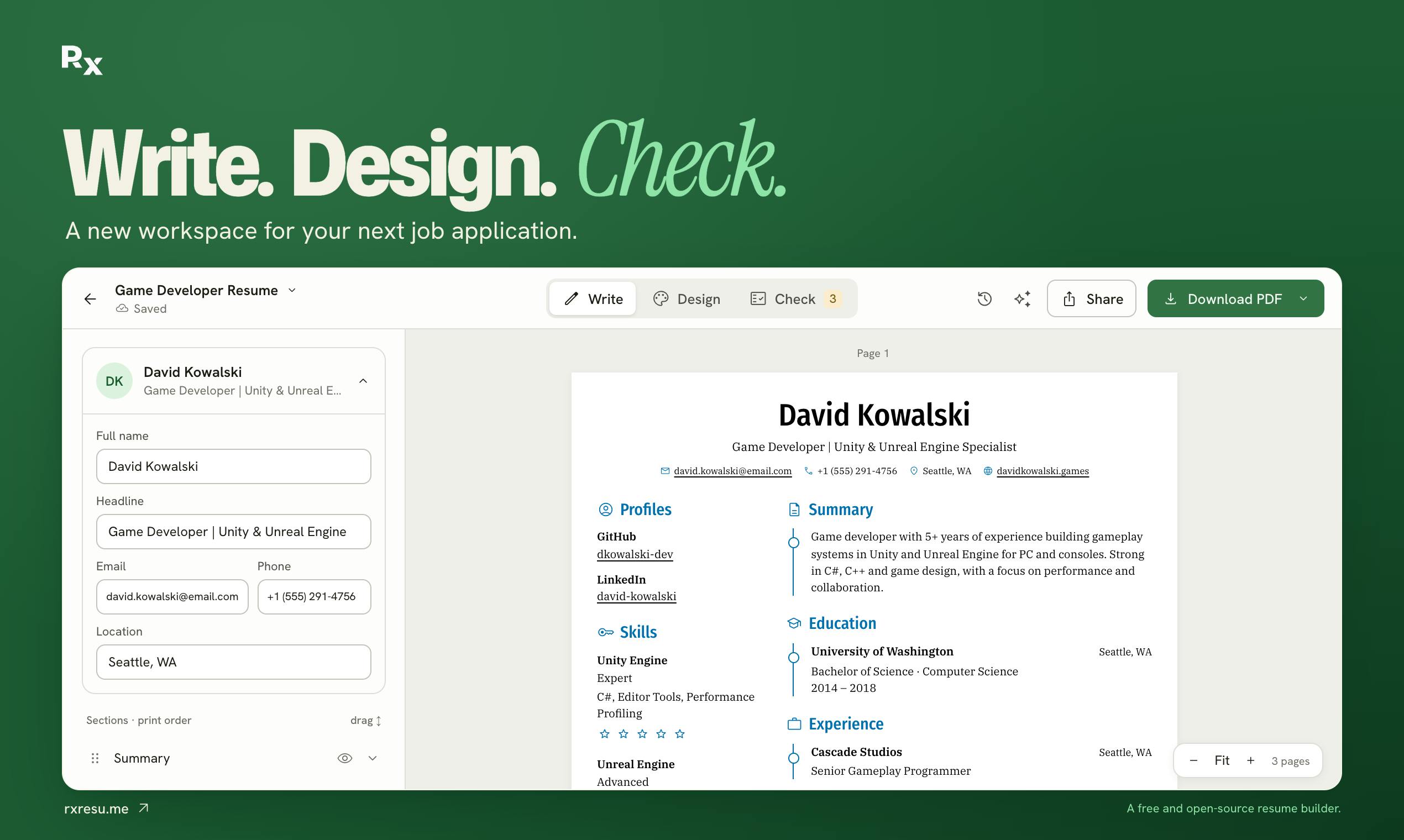
Reactive Resume is a free, open-source, self-hostable resume tool maintained for six years by indie developer Amruth Pillai. The new v6 release landed on Product Hunt and brings a unified workflow combining resume editing, cover letter creation, and job tracking, along with built-in AI assistance and rich customization. Self-hosting keeps all sensitive personal data under the user's control — a major advantage for privacy-conscious individuals and enterprise teams alike.
A Six-Year Open-Source Resume Tool That Kept Its Promise
At a time when most resume tools are moving toward paid subscriptions with features locked behind paywalls, Reactive Resume has taken a different path — staying free, open-source, and self-hostable. The newly released v6 debuted at #11 on Product Hunt with 78 upvotes, built entirely by indie developer Amruth Pillai.
The product's core strength isn't any single flashy feature — it's six years of accumulated trust. For many users, it has become the default choice for resume creation. In a space where tools come and go rapidly, sustaining six years of continuous iteration speaks volumes about the product's stability and community recognition.
What's New in v6
The most significant change in this redesign is workflow integration. Previously, resumes, cover letters, and job tracking were typically scattered across different tools. v6 unifies all three into a single, redesigned workflow:
- Resume: The core feature, with detailed customization options
- Cover Letter: Coordinated with your resume's style, reducing redundant formatting work
- Job Tracking: Manage your application pipeline and bring the entire job search process into one platform
This integrated approach addresses a real pain point for job seekers — finding a job isn't just about writing a resume. It's a systematic process involving applications, follow-ups, and targeted adjustments. Having all of these in one interface reduces the friction of switching between multiple tools.
AI Assistance and Deep Customization
v6 includes built-in AI assistance while retaining detailed customization options. For efficiency-focused users, AI can help quickly generate or polish content. For those who want full control over their presentation, rich customization options ensure freedom over layout and style. This "have it both ways" design philosophy attempts to serve two distinct types of users simultaneously.
Job Tracking (also known as Applicant Tracking) is a feature that helps job seekers systematically manage their application process. It's typically presented in a Kanban board or list format, recording each position's source, application date, current status (e.g., "Applied," "Interviewed," "Rejected"), and follow-up tasks. Dedicated tools like Huntr and Teal exist in this space, but they're separate from resume editors — users have to manually sync information across platforms. Building job tracking directly into a resume tool lets users complete the full loop of "edit resume → apply → track progress" in a single interface, reducing the risk of information slipping through the cracks.
The Value of Open Source and Self-Hosting
Reactive Resume's most noteworthy characteristics are its open-source nature and self-hosting capability. Resumes contain a wealth of sensitive personal information — names, contact details, work history, educational background, and more. Using a closed-source commercial service means entrusting all of that data to a third-party server.
Self-hosting lets users deploy the entire system on their own servers, with complete control over where their data goes. For privacy-conscious individuals, or companies looking to set up an internal resume tool for their team, this is a value proposition that closed-source competitors simply can't match.
Being open source also means transparency and auditability. Anyone can view the code, submit improvements, or fix issues. The product is tagged on Product Hunt under Design Tools, Open Source, GitHub, and No-Code — an accurate reflection of its positioning: a no-code design tool for general users, with its underlying architecture fully open to the technical community.
Self-hosting refers to deploying an application on servers you control, rather than using a hosted version provided by the vendor. For a tool like Reactive Resume, self-hosting typically means deploying via Docker or a similar containerization approach in just a few commands. The core advantage is that data is stored entirely in your own environment and never passes through the developer's servers. Even if the product stops being maintained or the vendor shuts down, your data and functionality remain unaffected. For enterprise users, self-hosting can also satisfy internal data compliance requirements and integrate resume data into existing security governance frameworks.
Who Is It For
From a product positioning standpoint, Reactive Resume v6 primarily serves three groups:
- General job seekers: Those who need a professional resume but don't want to pay for a subscription — the out-of-the-box online version is more than sufficient
- Privacy-conscious users: Those who don't want their resume data passing through third parties, and can opt for a self-hosted deployment
- Developers and technical teams: Those who can build on top of the open-source code for secondary development, or set up an internal team tool
The product also offers sharing and collaboration features, making it well-suited for scenarios where you need others to help review or refine your resume.
Closing Thoughts
Reactive Resume v6 doesn't rely on aggressive concepts or marketing gimmicks to attract attention. Its persuasive power comes from six years of built-up reputation and the rare combination of being free, open-source, and self-hostable. As resume tools broadly trend toward paywalls, a product that holds firmly to an open philosophy — and still manages to integrate AI assistance, collaboration, and job tracking — offers a genuinely compelling alternative. For anyone currently job hunting who doesn't want to hand over their data or their wallet to a closed-source service, this is almost a no-brainer.
Related articles

Free Unlimited Claude Code Solution: Agnes AI + CC Switch Setup Guide
No paid subscription needed — pair the free AI platform Agnes AI with the open-source tool CC Switch to provide a backend for Claude Code, enabling unlimited free calls to text, image, and video models. This guide covers the full setup, test results, and usage boundaries.

A Complete Zero-Cost Guide to Getting Started with Claude Code for Beginners in China
A beginner's guide to Claude Code for users in China: two installation methods (command line and IDE plugin), full configuration steps for replacing the official API with the free domestic LongCat model, and a hands-on demo of building a small tool with natural language, plus tips.

When the NSA Gets Involved: The AI Supply Chain Crisis Behind Open-Source CVEs and API Key Hijacking
Multiple open-source projects disclosed severe CVEs in one day, PHP flaws alarmed the FBI, and Railway and OpenCode were breached with API keys stolen. This article breaks down the vulnerability window, AI-accelerated exploitation, and the AI supply chain crisis behind the API key black market, with a developer defense checklist.