Reddit User Successfully Gains Cyber Defense Access, Shares Mythos 5.1 Configuration Experience
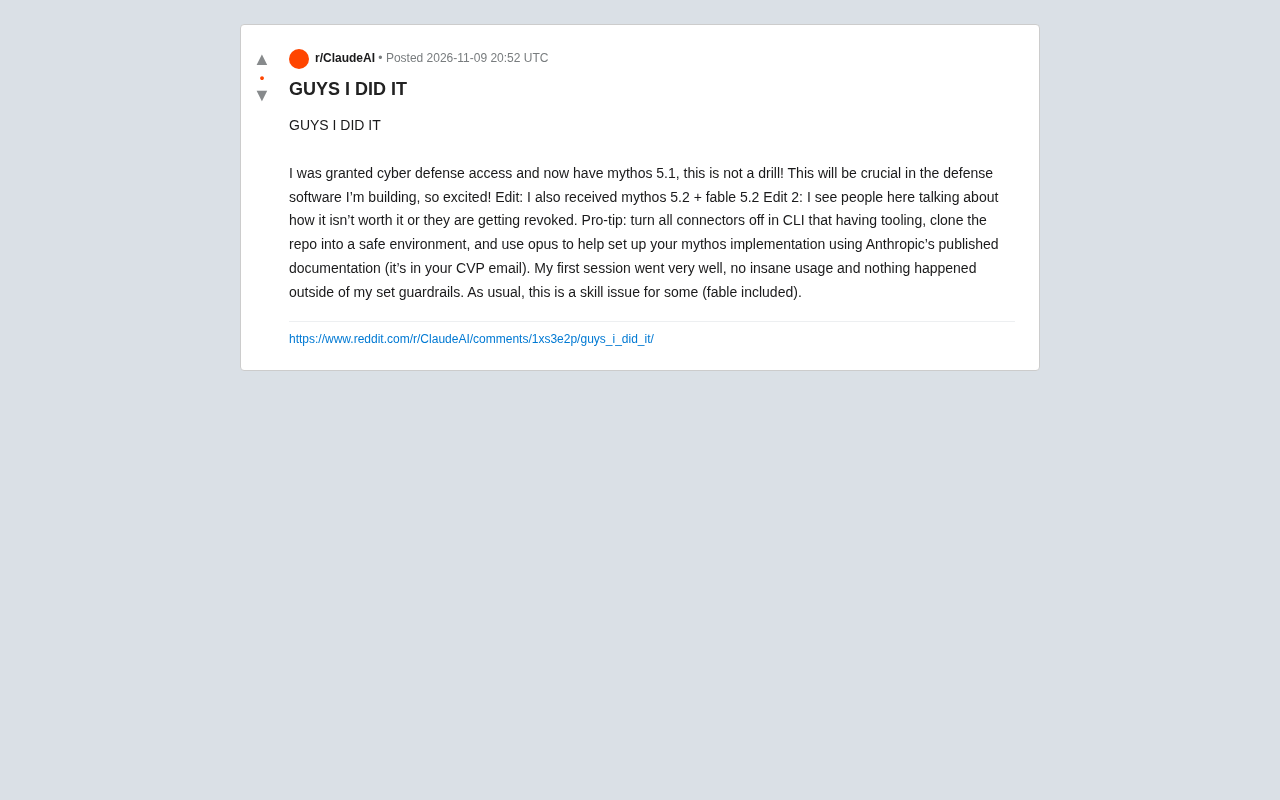
Reddit user shares experience and controversy around gaining Cyber Defense access and securely configuring Mythos models.
The article recounts a Reddit user who, after gaining Cyber Defense access and obtaining Mythos 5.1, 5.2, and Fable 5.2, posted to celebrate and then added security configuration advice: disabling all connectors in the CLI, cloning the repository to an isolated environment, and referencing Anthropic's official documentation from the CVP email with Opus-assisted integration. Commenters questioned the access's value and stability, and the OP responded that "this is usually a skill issue," implying improper configuration is the main obstacle. The article argues the case illustrates the importance of security isolation and documentation adherence when using restricted AI tools, and reflects the community's complex attitude of both desiring use and fearing risk.
A Reddit Post's Takeaway: How to Safely Obtain and Use Restricted AI Tools
Recently, a Reddit user posted to celebrate gaining Cyber Defense access and successfully obtaining the Mythos 5.1 model. The post quickly drew attention—not only because of the Mythos series' potential in specialized domains, but also because the OP shared specific configuration tips and pitfalls to avoid in a follow-up edit.
Event Recap: From Excitement to Practical Advice
The OP could hardly contain their excitement in the post: "GUYS I DID IT," noting that after gaining Cyber Defense access they got Mythos 5.1 and emphasizing that "this is not a drill." The OP later added that they also received Mythos 5.2 and Fable 5.2. These models will be used in the defensive software they are building.
However, some skeptical voices appeared in the comments, with some arguing it wasn't worth it or that the access would be revoked. In response, the OP offered professional advice: disable all connectors in the CLI, clone the repository to a secure environment, and use Opus to reference the documentation published by Anthropic (in the CVP email) to help set up the Mythos implementation. The OP said the first session went very smoothly, with no abnormal usage and no exceeding of the configured guardrails.
Cyber Defense access generally refers to restricted model access channels that some AI vendors provide for security defense scenarios. Unlike general-purpose APIs, it typically requires applicants to specify concrete defensive use cases and comes with stricter usage agreements and audit mechanisms. Mythos in this context is a series of models targeting specific vertical domains (versions 5.1 and 5.2 in the article), whose capabilities and deployment methods may vary by access tier. Fable is another model line, with version 5.2 appearing alongside Mythos, suggesting the user may have obtained access to multiple product lines simultaneously. Understanding these terms helps clarify that "getting the model" in the post does not mean it is publicly downloadable, but rather that the user obtained invocation or deployment eligibility in a controlled environment.
Technical Points: Steps to Securely Configure Mythos
According to the OP's sharing, the key to successfully configuring Mythos lies in isolation and documentation use. Specific steps include:
- Disable connectors: Disable all tool connections in the command-line interface to reduce potential security risks.
- Clone to a secure environment: Clone the code repository into a controlled environment to avoid sensitive data leakage.
- Use official documentation: Reference the documentation Anthropic published via the CVP email, using Opus to assist with the Mythos integration.
These steps reflect an emphasis on security and echo the original intent of Cyber Defense access—to safely use AI capabilities in defensive software.
Connectors in CLI or IDE tools typically refer to plugins or configuration items that connect the model to external services (such as code repositories, databases, browsers, or third-party APIs). Disabling connectors means cutting off the model's automatic access to external resources, reducing the risk of prompt injection, data leakage, or unauthorized operations. Opus is Anthropic's high-performance model series, used here as an auxiliary tool for "configuring by referencing documentation"—that is, having a model read official documentation and generate integration steps or configuration code. CVP email refers to official communications related to the Cyber Defense access program, whose attached documentation is the primary basis for configuring Mythos. Cloning the repository into an isolated environment is meant to test model behavior in a controlled sandbox, avoiding contamination of production code or leakage of sensitive information.
Community Reaction and Controversy
The post sparked two kinds of responses: on one hand, some congratulated the OP and asked for details; on the other, some questioned its value or worried that access would be reclaimed. The OP responded that "this is usually a skill issue," implying that some users may run into problems due to improper configuration. This divergence reflects the complex attitudes toward restricted AI tools in the community—both eager to use them and worried about the risks.
"This is usually a skill issue" is a phrase often used in developer communities to attribute failure to configuration or usage rather than the tool itself. It reflects a reality: the usability of restricted AI tools depends heavily on environment setup, permission boundaries, and documentation comprehension, and less experienced users are prone to errors involving connectors, guardrails, or version compatibility. Guardrails refer to built-in safety limits in models or platforms that prevent harmful output, unauthorized operations, or sensitive data leakage; the OP's emphasis that "no configured guardrails were exceeded" means their usage remained within what the platform allows. The concern about access being reclaimed stems from the fact that such access usually comes with compliance reviews—once usage deviates from the defensive scenarios declared at application time, eligibility may be revoked.
Takeaways for Developers
For developers hoping to obtain similar access, the OP's experience offers a reference: strictly follow official documentation, test in isolated environments, and control tool connections. At the same time, keeping an eye on access status is also important. Although the post does not mention the specific application process, it is clear that Cyber Defense-type access is usually tied to security-related projects and requires a clear use case.
Conclusion
This share on Reddit, though brief, contains practical information. In an era of increasingly powerful AI models, how to use restricted resources safely and compliantly is a question every developer needs to consider. The OP's approach may offer you some useful reference.
Related articles

How Do Cursor, Devin, TRAE, and Copilot Compare on Price? Calculate Your Credits Before You Compare Monthly Fees
Side-by-side comparison of individual and team pricing for Cursor, Devin Desktop, TRAE, and Copilot, breaking down credit rules, third-party model inclusion, overage billing, and practical methods for measuring usage before paying, setting spending caps, and choosing the right tool.
Copilot Retires Three Models: Pro Users Left With Only One Alternative
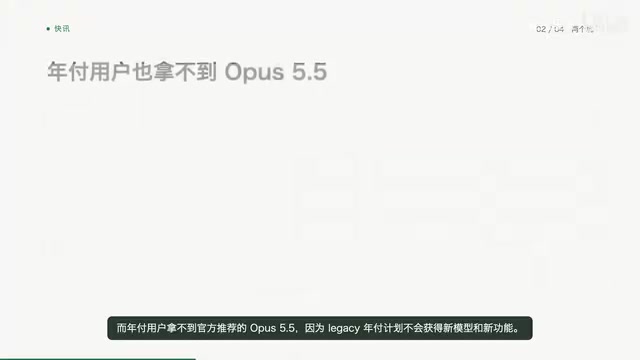
GitHub Copilot retires Claude Opus 4.8, Claude Opus 5, and GPT-5.6 Tera on Nov 16 across Chat, code completion, and Agent mode. Pro users have only GPT-6 Luna left; Legacy annual plans miss Opus 5.5; admins must enable replacements manually.
Gemini 4 Carbon Arrives: The LLM Race Enters the Era of Million-Token Context and Trillion-Parameter Open Source
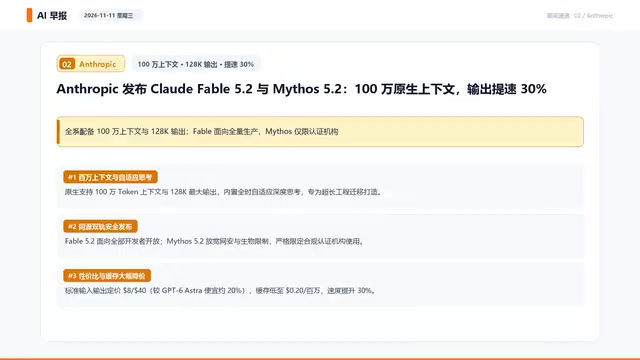
Google launches Gemini 4 Carbon and multi-agent tool Swarm; Anthropic debuts million-context Fable 5.2 and Mythos 5.2; OpenAI releases security-focused GPT-6 Cyber; Mistral and Kimi open-source trillion-parameter models — the LLM race accelerates across the board.