Reducing eBPF CPU Overhead by ~90% with Memoization
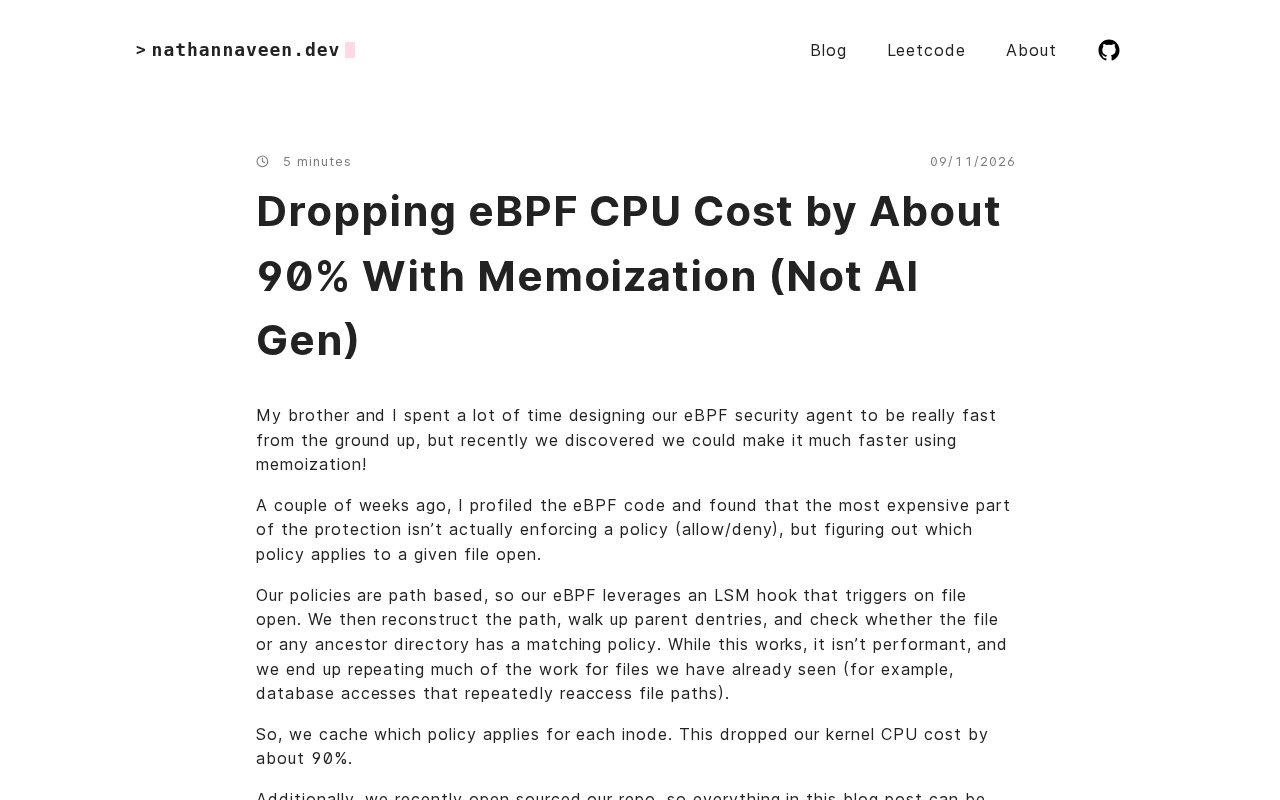
Applying memoization to eBPF probes eliminates redundant computation and cuts CPU overhead by ~90%.
This technical write-up explores applying classic memoization to eBPF performance optimization. eBPF probes in high-frequency scenarios repeatedly compute the same results for identical inputs — such as process metadata or network connection context — accumulating significant CPU cost. By caching results in eBPF maps (especially LRU hash maps and per-CPU maps), probes can hit the cache on repeated inputs and skip expensive recomputation, achieving ~90% CPU reduction. This effect is amplified across large clusters and reduces the observer effect on monitored workloads. Tradeoffs around cache invalidation, memory usage, and hit rates must be carefully considered.
Introduction: The Real Challenge of eBPF Performance Bottlenecks
eBPF (extended Berkeley Packet Filter) has become a core technology in modern Linux observability, networking, and security. It allows developers to safely run custom programs in kernel space without modifying kernel source code or loading kernel modules. However, as eBPF programs are deployed at scale in production environments, their CPU overhead has become an increasingly visible problem — especially in high-frequency event collection scenarios, where frequent probe triggers and data processing can consume significant CPU resources.
A technical write-up recently shared on Hacker News (notably labeled "Not AI Gen" — a genuine engineering case study, not AI-generated content) revealed that a team successfully reduced eBPF CPU costs by approximately 90% by introducing memoization. This is a remarkable figure and sparked considerable community discussion.
Note: This article is based on the original Hacker News post title and public discussion. Given the limited information available in the source material, some technical analysis is derived from general engineering principles around eBPF and memoization. Readers should refer to the full original technical documentation for production use.
What Is Memoization and Why Can It Optimize eBPF?
Memoization is a classic optimization technique in computer science: cache the results of expensive function calls so that when the same input appears again, the cached value is returned directly without recomputation. At its core, it's a space-for-time tradeoff.
In the context of eBPF, many probes repeatedly execute the same computation logic on identical or similar events — for example, parsing metadata for the same process, repeatedly looking up context for the same network connection, or symbolizing the same call stack. These redundant computations accumulate into a massive CPU burden at high trigger frequencies.
By introducing a caching layer in the eBPF program or its userspace companion (typically using an eBPF map as a key-value store), you can avoid reprocessing the same inputs. When a computed result already exists in the map, the program gets a cache hit and skips the expensive parsing or lookup step. This is the core idea behind achieving ~90% cost reduction in this optimization.
Typical Memoization Patterns in eBPF
Using eBPF Maps as the Caching Layer
eBPF provides several map types (such as hash maps, LRU hash maps, per-CPU maps, etc.) that are naturally suited to serve as memoization caches. LRU hash maps, for example, automatically evict the least recently used entries when the cache reaches capacity, making them ideal for caching hot data.
Per-CPU maps avoid lock contention when multiple cores access the same cache entry concurrently, further improving performance — each CPU core maintains its own cache copy, at the cost of increased memory usage and cross-core data consistency tradeoffs.
Dividing Work Between Kernel Space and Userspace
Memoization can be implemented either in kernel-space eBPF programs or in the userspace processing pipeline. Kernel-space caching minimizes data copy overhead and context switches between kernel and userspace; userspace caching is more flexible and better suited for complex logic that the eBPF verifier might not permit.
In practice, a common approach combines both: kernel space handles fast, structurally simple cache hit checks, while userspace handles complex result computation and cache backfilling.
The Engineering Significance of a ~90% Reduction
What does a ~90% reduction in CPU cost actually mean in practice? In large-scale clusters, observability agents are often deployed as persistent DaemonSets on every node. If a single agent's CPU usage drops from several percentage points to a fraction of a percent, multiplied across thousands of nodes, the savings in compute resources and energy costs are substantial.
More importantly, lower overhead means the observability system itself interferes less with the workloads being monitored. High-overhead probes can distort the true performance behavior of the observed system (the so-called "observer effect"), while memoization-optimized eBPF programs can accomplish the same data collection task with a much lighter footprint.
Tradeoffs to Consider in Practice
Memoization is not a silver bullet. Several issues require careful handling in real-world deployments:
- Cache invalidation and consistency: If cached data can change (e.g., a process exits or a connection closes), a proper invalidation mechanism must be in place, otherwise stale results will be returned.
- Memory usage: The cache itself consumes memory. In particular, the memory amplification effect of per-CPU maps on multi-core systems needs to be evaluated.
- Cache hit rate: Memoization is only effective when inputs show clear repetition patterns. For highly random inputs that rarely repeat, caching actually introduces extra overhead.
- eBPF verifier constraints: Kernel-space eBPF programs are subject to strict verifier rules; map operations and loop logic must comply with its requirements.
Conclusion
This technical write-up demonstrates how a simple but effective classic optimization technique — memoization — addresses the CPU overhead pain point of eBPF in high-frequency scenarios, achieving a significant ~90% reduction. It serves as a reminder that while chasing cutting-edge technology, solid engineering fundamentals and classic algorithmic thinking often deliver the most tangible results. The author's deliberate "Not AI Gen" label is, in a sense, a commitment to the value of authentic engineering practice.
For teams building or optimizing eBPF observability pipelines, auditing your probe logic for cacheable repeated computations might be an optimization worth trying right now.
Related articles
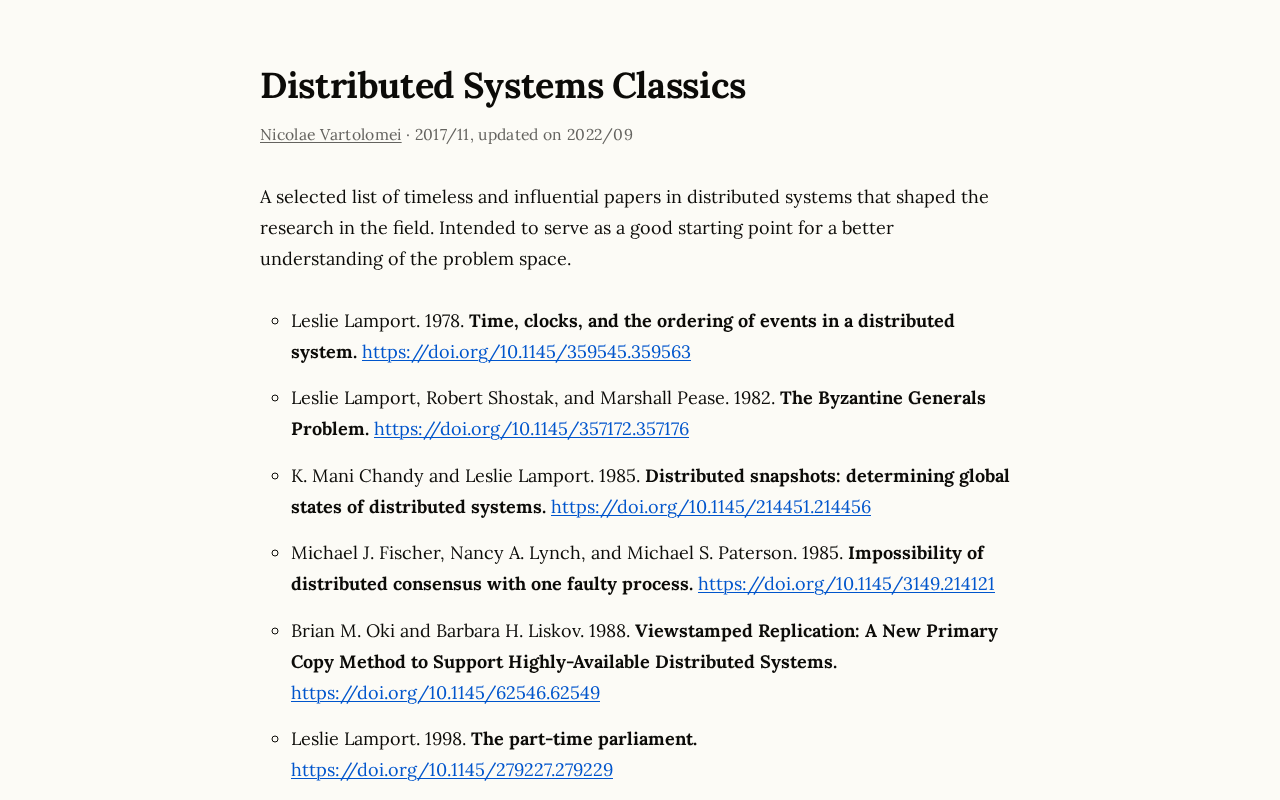
A Reading Guide to Distributed Systems Classic Papers: From Beginner to Expert
A viral Hacker News list of distributed systems classic papers covering consensus algorithms, logical clocks, and the CAP theorem — a structured learning path for engineers.

Valve Is Still Weighing When and How to Launch Steam Deck 2
Valve has completed its 2026 hardware lineup with Steam Controller, Steam Machine, and Steam Frame, but Steam Deck 2 still has no set timeline. Valve says it's still weighing "how and when" to launch.

Regulatory Capture Accusations: The Controversy Over Anthropic's Capital and Policy Loop
A Hacker News post questions whether Anthropic is caught in a regulatory capture financial loop. We unpack the concept and why it's being aimed at top AI firms.