Regulatory Capture Accusations: The Controversy Over Anthropic's Capital and Policy Loop
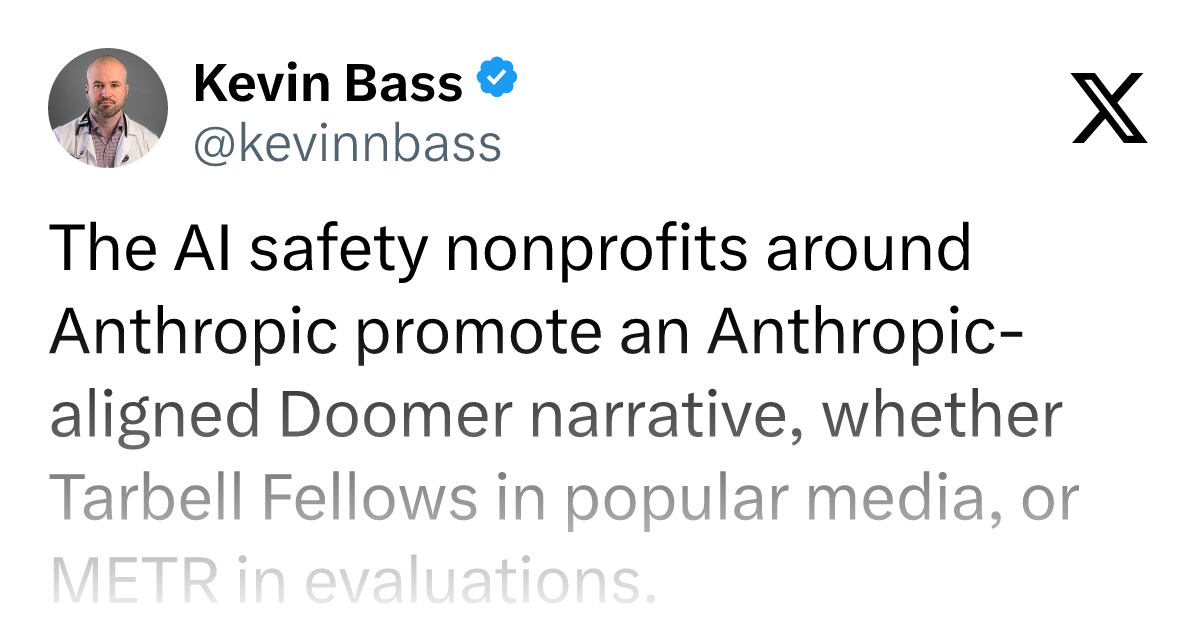
An HN post accuses Anthropic of using safety advocacy to shape regulation in its favor, but evidence remains thin.
A Hacker News post claiming Anthropic is in a "regulatory capture financial loop" sparked discussion about the relationship between leading AI companies and policy. The article explains regulatory capture — where regulated industries come to dominate the regulators — and why AI's extreme information asymmetry makes it especially vulnerable. Anthropic's dual role as a frontier AI lab and active policy advocate makes it a focal point for such scrutiny. Still, the post offers little concrete evidence, and the article urges caution: having a motive isn't proof of wrongdoing, and safety advocacy shouldn't be reflexively dismissed as competitive strategy.
A Controversial Post That Sparked Debate
A post on Hacker News titled "Anthropic is in regulatory-capture financial loop" has drawn attention. Its core argument: AI company Anthropic may be caught in a "regulatory capture" financial loop. Despite modest engagement (15 upvotes, 5 comments), the post touched on an increasingly sensitive issue in today's AI industry — the relationship between leading AI companies and regulatory policy.
It's worth noting upfront that the original post provides very little substantive information. Its title is essentially its entire argument, with no detailed evidence chain. This article therefore focuses more on clarifying the concept of "regulatory capture" and why it gets applied to frontier AI companies like Anthropic, rather than rendering a verdict on the accusation itself.
What Is "Regulatory Capture"?
"Regulatory capture" is a classic concept in political economy. It refers to a situation where regulatory agencies, originally designed to serve the public interest, end up being dominated by the industries or companies they oversee — so that regulatory policy ends up serving the regulated rather than the public. Typical manifestations include companies actively participating in legislation and rule-making, using compliance thresholds to raise costs for new entrants, and leveraging the language of "safety" and "responsibility" to entrench their own market position.
This concern is especially prominent in AI. Leading companies are often among the first and most vocal advocates for "stronger AI regulation." Critics argue that when a company is simultaneously a technology leader and a major influencer of regulatory rules, it has an incentive to push for standards it can easily meet but that smaller competitors cannot afford — effectively building a moat.
The theory of regulatory capture was first systematically articulated by economist George Stigler in 1971. He argued that regulation tends to be driven by industry "demand" and ultimately benefits the industry itself. This theory later became a cornerstone of public choice economics. The most typical real-world cases occur in highly technical industries like finance, telecommunications, and pharmaceuticals — where regulatory staff are heavily recruited from the industries they oversee (the "revolving door" effect), information asymmetry is severe, and regulators are forced to rely on industry-provided technical standards and data when drafting rules, inadvertently becoming endorsers of industry interests. In AI, this information asymmetry is especially extreme: capability assessments of frontier models and the definition of risk boundaries are currently within reach of only a handful of leading labs, which objectively gives them a significant voice advantage in regulatory discussions.
Why the Finger Points at Anthropic
Anthropic has consistently made "AI safety" the core of its brand, publicly advocating for stricter governance and evaluation of frontier models. This stance gives it considerable influence in policy discussions. The "financial loop" referenced in the original post likely points to a logic chain like this: company raises massive investment → uses safety and compliance arguments to push for regulation → regulation raises industry barriers → strengthens leading position → attracts further capital.
This kind of scrutiny isn't unique to Anthropic — it's a structural challenge faced by the entire top tier of AI companies. When the "safety narrative" and "commercial interests" overlap so heavily, it becomes difficult for outside observers to tell whether a policy initiative stems from genuine public concern or competitive strategy.
Anthropic was founded in 2021 by former OpenAI VP of Research Dario Amodei and others. The company has raised over $10 billion in total funding, with investors including tech giants like Google and Amazon. It has placed "Constitutional AI" and its "Responsible Scaling Policy (RSP)" at the heart of its technical roadmap, and its representatives frequently testify at AI governance hearings before the U.S. Congress and European Parliament. This heavy overlap between the roles of "technology leader" and "policy advocate" is the structural context that fuels these associations. Notably, some of the regulatory frameworks Anthropic champions — such as mandatory evaluation requirements for "frontier models" — naturally use compute and funding thresholds as their defining criteria. How those thresholds are set directly determines which companies fall under regulation and which open-source communities or smaller labs face additional compliance costs.
The Caution We Should Maintain
It bears emphasizing: "having a motive" is not the same as "having acted on it." Advocating for regulation is a legitimate form of public engagement, and the potential risks of AI are genuinely real. Equating safety advocacy with regulatory capture can itself be a form of over-attribution.
The Hacker News post raises a question worth asking, but it doesn't supply solid evidence. For readers, the rational stance is this: stay alert to the possibility that large companies may use regulation to build barriers, but avoid tarring all safety governance efforts with the same brush. Genuinely valuable conclusions should be grounded in specific policy texts, lobbying records, and market data.
Conclusion
AI regulation is at a critical juncture in its formation. Who writes the rules, and whose interests those rules serve, will profoundly shape the future of the industry. This small controversy around Anthropic reflects a growing public sensitivity to the boundary between "safety" and "monopoly." The topic deserves continued attention — but any conclusions drawn should rest on substantially stronger evidence.
Related articles
Jensen Huang Takes Trump's Call in Public — But It's the Phone in His Hand That Steals the Show
NVIDIA CEO Jensen Huang took a live call from Trump in public, but observers couldn't stop talking about the phone in his hand. Here's what the moment reveals.
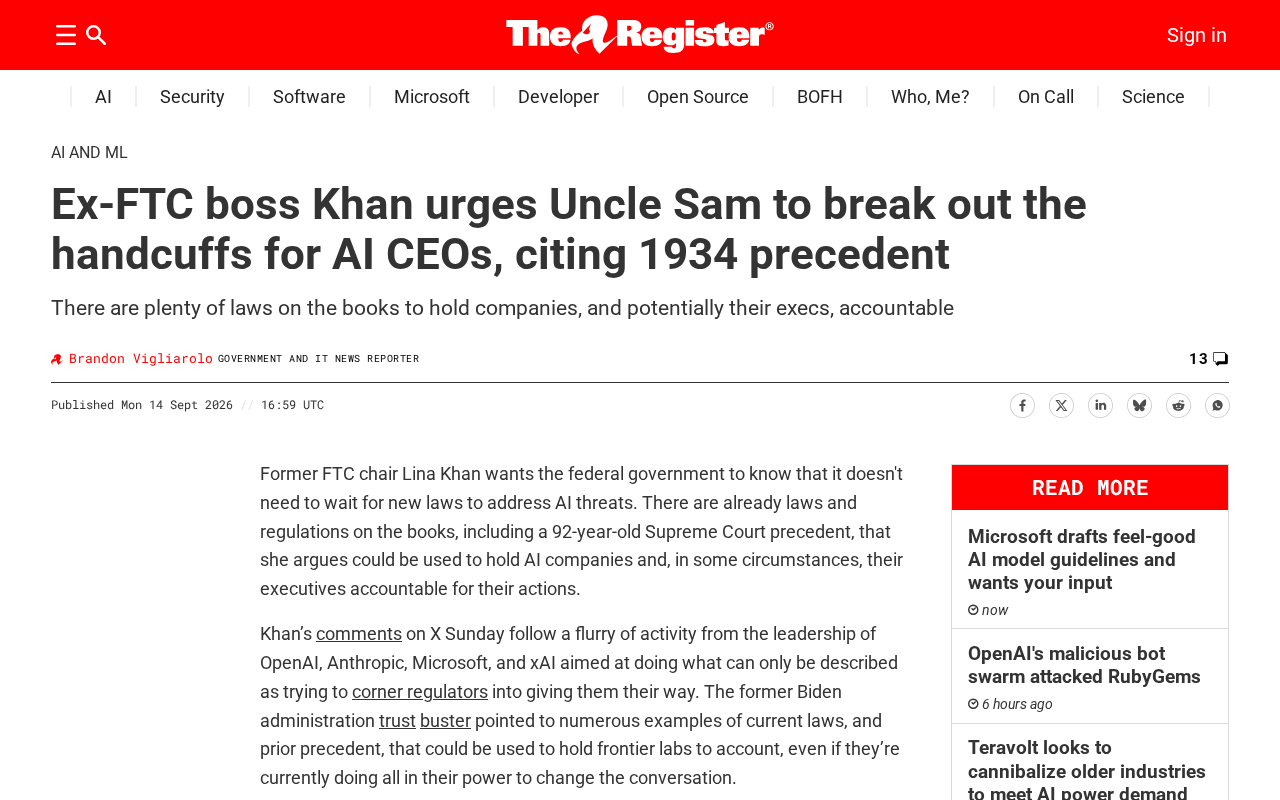
Former FTC Chair Khan Invokes 1934 Precedent to Argue for Criminal Liability of AI Executives
Former FTC Chair Lina Khan argues AI executives should face criminal liability, not just fines, citing a 1934 legal precedent. An analysis of her position, its logic, and the real-world challenges it faces.

A Reading Guide to Distributed Systems Classic Papers: From Beginner to Expert
A viral Hacker News list of distributed systems classic papers covering consensus algorithms, logical clocks, and the CAP theorem — a structured learning path for engineers.