Report: Nvidia Board Reportedly Weighs Removing Jensen Huang, Stock Falls
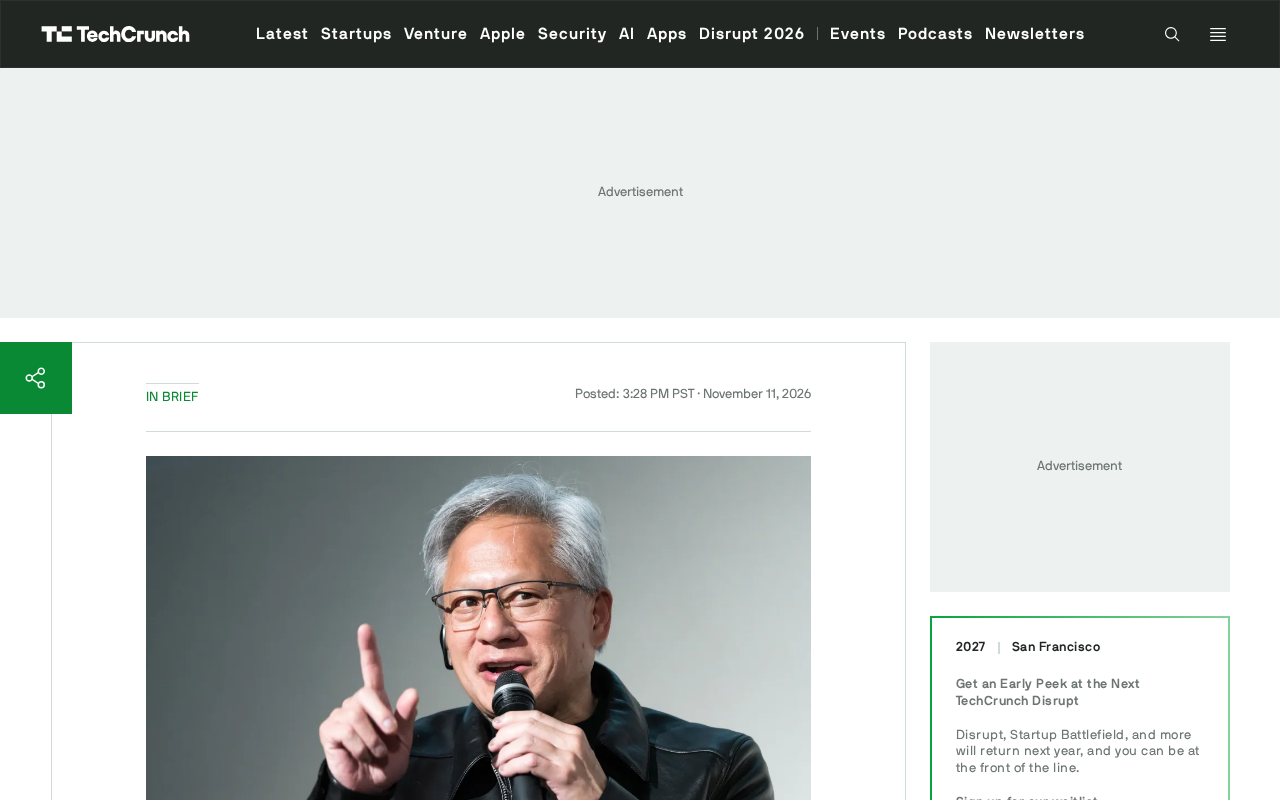
Rumor says Nvidia's board may remove CEO Jensen Huang; stock fell but information awaits official confirmation.
According to an RSS source report, Nvidia's board may decide as early as Wednesday evening whether to remove 33-year founder-CEO Jensen Huang, and the company's stock fell immediately on the news. The article notes that Huang is deeply tied to Nvidia as one of Silicon Valley's longest-tenured founder-CEOs—a structure that brings strategic continuity but also makes management change rumors high-impact. The stock decline reflects the market repricing key person risk, not a judgment that removal will necessarily happen. The report does not disclose the reasons for the motion, succession arrangements, or vote details; before official announcements, the news should be treated as a major governance signal pending verification, tracking formal statements rather than short-term fluctuations.
Event Overview: A Rumor Sparks Turmoil
According to an RSS source report, Nvidia's board of directors may decide as early as Wednesday evening whether to remove founder and 33-year CEO Jensen Huang. Following the news, Nvidia's stock price fell immediately.
The core information in this report is extremely brief: the board is preparing for a possible CEO change, with a time window pointing to Wednesday evening. Beyond that, the report does not disclose the specific reasons for the board's motion, the balance of support and opposition, or whether a clear successor arrangement is in place. Precisely because the information is so limited in granularity, the market reaction reflects more of an instinctive avoidance of uncertainty than a pricing of the full picture.
Why This News Deserves Attention
The relationship between Jensen Huang and Nvidia is a rare deep entanglement among tech companies. He co-founded the company 33 years ago and has served as CEO for a long time, making him one of Silicon Valley's longest-tenured founder-CEOs. Nvidia started with graphics chips, gradually shifted toward accelerated computing, and then became a key infrastructure supplier in the AI computing wave—a path that closely overlaps with Huang's own technical judgment and strategic bets.
This structure of long-term founder leadership brings strategic continuity and execution capability on one hand, and on the other makes management change rumors inherently high-impact—the market finds it hard to imagine an Nvidia without Jensen Huang, and the board likewise must face this governance challenge.
Founder-CEO is a specific category in corporate governance research: a company founder who serves as the top executive for an extended period. This structure is particularly common in the tech industry, and its governance characteristics are two-sided. On the positive side, founders often hold a large stake or super-voting rights, enabling them to withstand short-term performance pressure and persist with long-cycle technology investments, with strong strategic continuity and short decision chains. On the negative side, concentrated power weakens the board's checks and balances, succession planning tends to be deferred, and the company narrative becomes deeply tied to the individual's image, creating so-called "key person dependency." Metrics typically watched by academia and investors include: founder ownership and voting structure, board independence, whether a clear succession pipeline exists, and key-person insurance and governance provisions. For a company like Nvidia that has entered the trillion-dollar market cap club, removing a founder-CEO procedurally requires the board to initiate action under the company's charter and governance guidelines, typically involving an evaluation led by independent directors rather than a simple vote.
What the Stock Decline Signals
The immediate stock reaction to the rumor reflects investors repricing "key person risk." When a company's technology roadmap, customer relationships, and capital market narrative are all highly tied to one person, any uncertainty about that person's future is amplified.
It is important to distinguish: a stock decline itself does not mean the market believes removal will happen—it is more a risk premium paid for "possibility." Before the board formally announces its decision, this price movement remains within the range of sentiment-driven reaction.
Key Person Risk refers to the risk that organizational value is overly concentrated in a small number of individuals, typically viewed in investment analysis as an implicit risk exposure. For public companies, this risk manifests through valuation discounts, increased volatility, and event-driven selling. Quantitatively, the market often uses "event-window excess returns" to measure such shocks: subtract the industry index or broad market gain over the same period from the actual decline on the rumor day, and the difference is the market's pricing of the event itself. It should be emphasized that such reactions often include liquidity factors and amplification from algorithmic trading, and before the news is confirmed, their information content is limited. The standard approach for institutional investors is to distinguish "confirmed facts" from "unverified rumors"—the former triggers position adjustments, while the latter enters scenario analysis frameworks, weighting impacts by different probabilities rather than trading directly.
Information Gaps and Open Questions
Several key questions remain unanswered around this report:
- What triggered the board's motion—governance procedures, strategic disagreements, or other reasons;
- Whether a succession plan is already in place if removal proceeds;
- Whether Jensen Huang himself and the company have officially responded;
- The timing of the board vote and how the result will be confirmed.
Until these questions are clarified, any judgment about the direction of events should remain cautious. A brief report from a single source is not sufficient to support inferences about the outcome.
Single-source risk is a foundational concept in information verification: when a major news item comes from only one uncross-checked source, its accuracy cannot be confirmed through independent channels, and the probability of error is significantly higher than for information corroborated by multiple sources. Professional information processing typically requires "three-source verification"—the original source, an independent second source, and official confirmation mutually corroborating one another. In corporate governance events, official channels include: public company filings (such as the SEC's Form 8-K, used to disclose major executive changes), formal board statements, and public responses from company spokespeople. Absent such confirmation, media reports should be treated as "signals pending verification." Moreover, board removal of a CEO typically involves confidential procedures, and a leak itself is anomalous—an additional reason for caution regarding this report.
What to Watch
For readers following Nvidia, what is worth tracking next is the pace of official announcements and formal board statements, rather than short-term secondary market fluctuations. If governance-level changes do occur, their impact will first show in strategic continuity and management stability, and only then transmit to products and customer relationships. At this stage, when information is still incomplete, treating this news as a "major governance signal pending verification" is more prudent than rushing to conclusions.
Related articles
How Do Cursor, Devin, TRAE, and Copilot Compare on Price? Calculate Your Credits Before You Compare Monthly Fees
Side-by-side comparison of individual and team pricing for Cursor, Devin Desktop, TRAE, and Copilot, breaking down credit rules, third-party model inclusion, overage billing, and practical methods for measuring usage before paying, setting spending caps, and choosing the right tool.
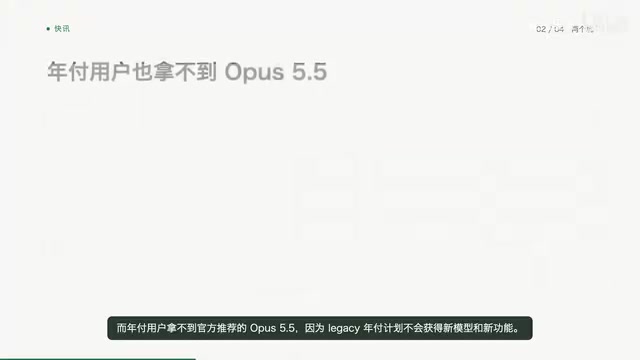
Copilot Retires Three Models: Pro Users Left With Only One Alternative
GitHub Copilot retires Claude Opus 4.8, Claude Opus 5, and GPT-5.6 Tera on Nov 16 across Chat, code completion, and Agent mode. Pro users have only GPT-6 Luna left; Legacy annual plans miss Opus 5.5; admins must enable replacements manually.
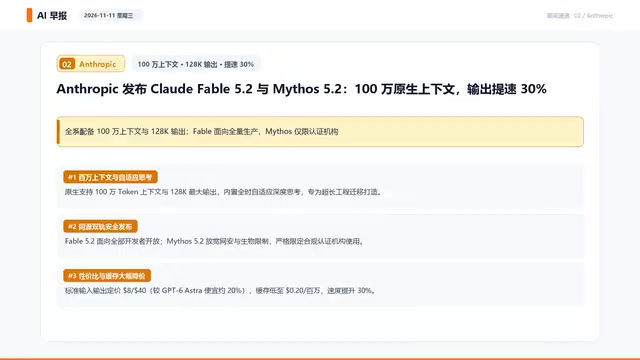
Gemini 4 Carbon Arrives: The LLM Race Enters the Era of Million-Token Context and Trillion-Parameter Open Source
Google launches Gemini 4 Carbon and multi-agent tool Swarm; Anthropic debuts million-context Fable 5.2 and Mythos 5.2; OpenAI releases security-focused GPT-6 Cyber; Mistral and Kimi open-source trillion-parameter models — the LLM race accelerates across the board.