Returning to 9/11: Survivors and Their Rescuers Reunite 25 Years Later
National Geographic's 9/11 25th anniversary doc captures ordinary heroism through survivor reunions and generational memory.
National Geographic's 25th anniversary 9/11 MEGA special forgoes macro-level political narrative in favor of intimate portraits: workers trapped in an elevator, a veteran who stayed to save a stranger, a guide dog and his blind owner, and a husband who papered New York with missing-person flyers. Structured around reunions held 25 years later, the film reveals how a window washer's squeegee, an ambulance driver's split-second stop, and a guide dog's decision to turn back each became the pivot point between life and death. The rebuilding of St. Nicholas Church and one family's effort to keep Carmen's memory alive across generations round out the film's meditation on resilience, collective trauma, and the urgency of remembrance for those with no living memory of that day.
National Geographic's special documentary marking the 25th anniversary of 9/11 forgoes sweeping political narratives, instead turning its lens on individual people — a Port Authority employee trapped in an elevator, a window washer, firefighters, an ambulance driver, a guide dog trainer, and those who never made it home. Through reunions and recollections, it tells the story of both the worst and the best of human nature in the face of catastrophe.
Three Strangers in an Elevator
The film's opening story unfolds inside an elevator in the North Tower. George, an assistant operations director at the Port Authority, Jan — a nuclear engineering professional from Poland — and several other strangers found themselves trapped after the elevator plummeted roughly 15 floors and came to rest against a concrete wall marked "50."
What changed their fate was a tiny gesture. Window washer Jan thrust his hand between the elevator doors at the very last second, stepping in with his bucket and squeegee. That squeegee blade became the tool they used to slowly chip an escape hole through the concrete wall. When the blade slipped into a gap in the wall, everyone froze — then Jan pulled out a backup handle and kept scraping.
"If Jan hadn't stuck his hand in that elevator door at the last second, we simply wouldn't be here talking about this." That's what George said at their reunion 25 years later. Jan, for his part, has always resisted the label of "hero": "Why do you call me a hero? Firefighters, police — there are many heroes."
A Stranger on the Street and an Ambulance
The second story follows Stefan, born in Germany and a former member of the French Foreign Legion. After the second plane struck the South Tower, a piece of aircraft debris hit a woman named Debbie who was running alongside him. Stefan didn't flee. He stayed to help the critically injured stranger — he describes reaching inside her body with his shirt as a makeshift bandage, his hands touching her organs.
As crowds streamed past in every direction, an ambulance driver made the decision to stop: "I looked at her and thought, she's somebody's daughter — maybe she has children, maybe she's someone's mother. I had to stop." Working together, they lifted Debbie onto a stretcher and got her to a hospital.
Twenty-five years later, Debbie is not only alive — she can walk and ride a bike. "I wanted Stefan to see me walk. I worked hard for that." At the reunion, Stefan repeated a line that surfaces throughout the film: "I'm glad it was me, and not you."
Firefighters, a Guide Dog, and the Pentagon
The documentary's middle section broadens its scope to take in more perspectives: a retired firefighter, Timothy Brown from the Mayor's Office of Emergency Management, a blind survivor who walked down from the 20th floor of the North Tower with his guide dog Salty, and Sheila Moody — pulled from thick smoke at the Pentagon by firefighter Chris Braman.
The story of Salty the guide dog is especially moving. At one point, his owner unclipped the leash on the narrow staircase, worried that the dog would slow others down, and told him to go. Salty walked partway down — then turned back. "He was telling me: no matter what, I'm with you." Salty worked as a guide dog for ten years and was euthanized due to illness in 2008, but his owner says, "Salty will always be in my heart."
Firefighter Timothy Brown carries a different kind of weight. His closest friend, Terry Hatton — captain of the elite Rescue 1 unit of the Manhattan Fire Department — embraced him before heading into the stairwell and said, "I love you, brother. I may never see you again." He never came back. Timothy says more than 100 friends he knew in his lifetime perished that day, and his mission now is to speak their names: "A person dies twice — once when the body stops, and again the last time someone says your name. As long as I'm alive, that second death won't happen."
The French Foreign Legion is a storied mercenary unit within the French military, established in 1831 and known for recruiting foreign nationals and subjecting them to grueling training and high-intensity combat experience. Stefan's background explains his ability to remain calm and administer trauma care in the chaos — Legion training encompasses battlefield first aid and crisis response, giving him a capacity for clear judgment under pressure that most civilians lack. This context also deepens the tension in his choice to stay: he wasn't unaware of the danger. He had survived far more extreme situations before, and he chose to remain anyway.
St. Nicholas Church: From Destruction to Rebirth
Running throughout the film is the story of a small church. St. Nicholas Greek Orthodox Church, which stood beside the World Trade Center, was completely destroyed when the South Tower collapsed. Its reconstruction dragged on for years — the memorial and museum had to come first.
For one family who lost a brother named John — who worked at Cantor Fitzgerald on the 104th floor, where all 658 employees perished — the church is a spiritual anchor. Its icons now incorporate fallen firefighters and police officers, making it a cenotaph for those who were never recovered. "We are turning evil into good, into hope, into life."
Cantor Fitzgerald was a financial services firm headquartered on floors 101 through 105 of the North Tower. Because its offices sat above the impact zone, almost no one escaped — 658 employees present that day died, representing two-thirds of the company's total workforce. This made Cantor Fitzgerald the single institution with the highest death toll on 9/11. Afterward, CEO Howard Lutnick — who lost his own brother — pledged to distribute 25% of the firm's profits over ten years to victims' families and provide five years of health insurance, a decision that sparked widespread public debate and became a landmark case study in corporate crisis response.
Finding Carmen: A Father's Perseverance
The documentary's most grief-stricken chapter belongs to the husband of a woman named Carmen. Carmen had risen from a childhood on public assistance to become a vice president at a global firm, with a corner office at the World Trade Center. On 9/11, she had already called her husband to say she was safe — then went back to help colleagues who couldn't get out, and never returned.
Her husband plastered some 3,000 missing-person flyers across the city and visited every hospital in all five boroughs and in New Jersey. "I kept thinking she was somewhere out there. I thought that when I put those flyers up, someone would tap me on the shoulder and say, 'I'm right here.'" Reality only settled in June 2002, when partial remains were identified. Their daughter was just eight years old at the time; the whole family spent weekends making signs together.
Years later, the daughter followed her mother's path — the same university, finance, an apartment facing the World Trade Center. "I wake up every day and she's in my sight. I've always tried to be like her in everything I do."
The identification of 9/11 victims became the largest and longest-running forensic operation in modern history. Due to the explosions, extreme heat, and structural collapse, a vast number of victims' remains were highly fragmented, making identification enormously difficult. The New York City Office of the Chief Medical Examiner employed DNA analysis, dental records, fingerprinting, and other methods — and by the end of 2001, nearly half of all victims had yet to be identified. As recently as 2022, new fragments of remains were successfully matched through DNA technology. Carmen's remains weren't found until June 2002, a vivid illustration of how long families were forced to wait — and how the state of being "unaccounted for" is often harder to bear than confirmed death, because hope and despair exist simultaneously.
A Documentary About Memory
This MEGA special's value lies not in new revelations, but in its compression of 25 years into a series of reunions. Its recurring theme is simple: on the worst day, ordinary people made extraordinary choices. A window washer's squeegee, an ambulance driver's decision to brake, a guide dog's decision to turn back — each became the three-second boundary between life and death.
On the generational gap — the fact that anyone under 30 has no personal memory of that day — the documentary's subjects express real concern. This is the practical reason such commemorative work matters: through testimony and film, to help those who came after understand what actually happened that day, and how high human nature is capable of reaching.
Related articles
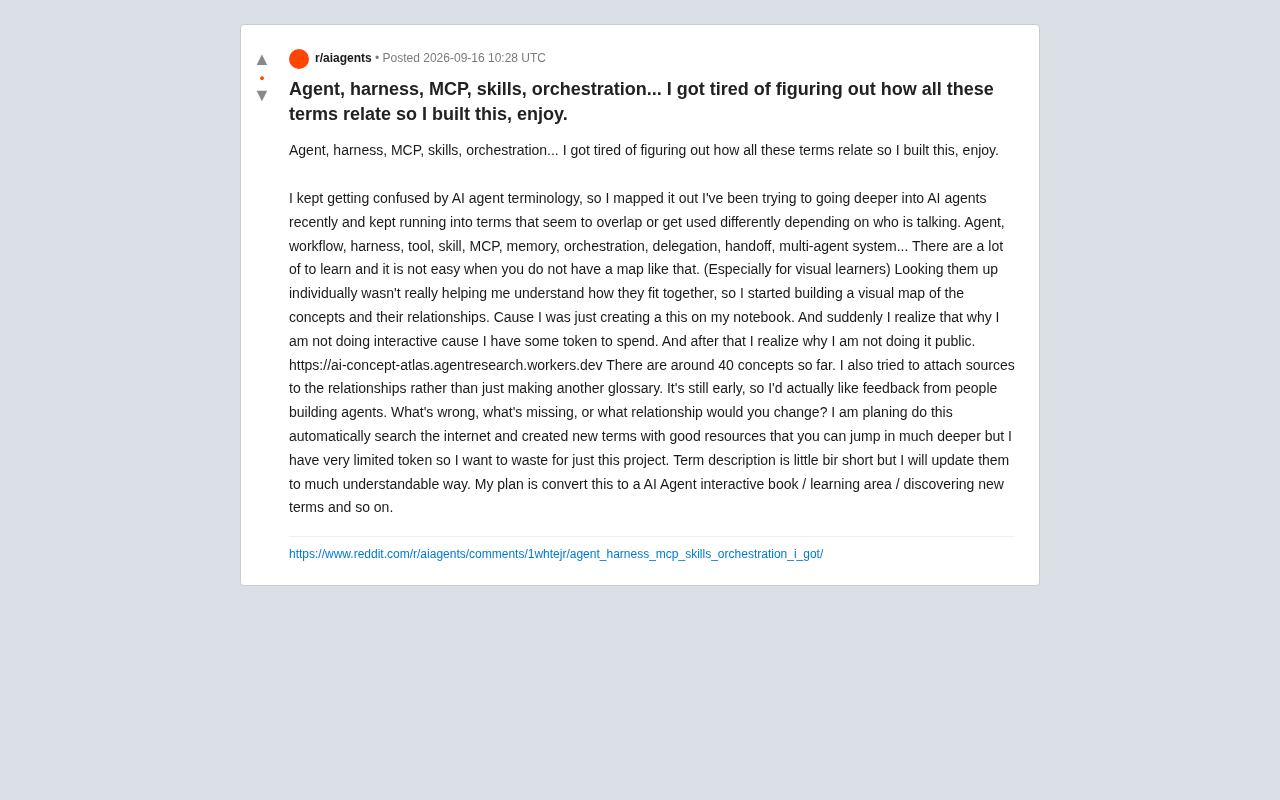
AI Agent Terminology Too Confusing? One Interactive Concept Map to Untangle 40+ Core Terms
Confused by AI Agent terms like MCP, harness, orchestration, and skills? AI Concept Atlas is an interactive map visualizing 40+ concepts and their relationships, with cited sources.
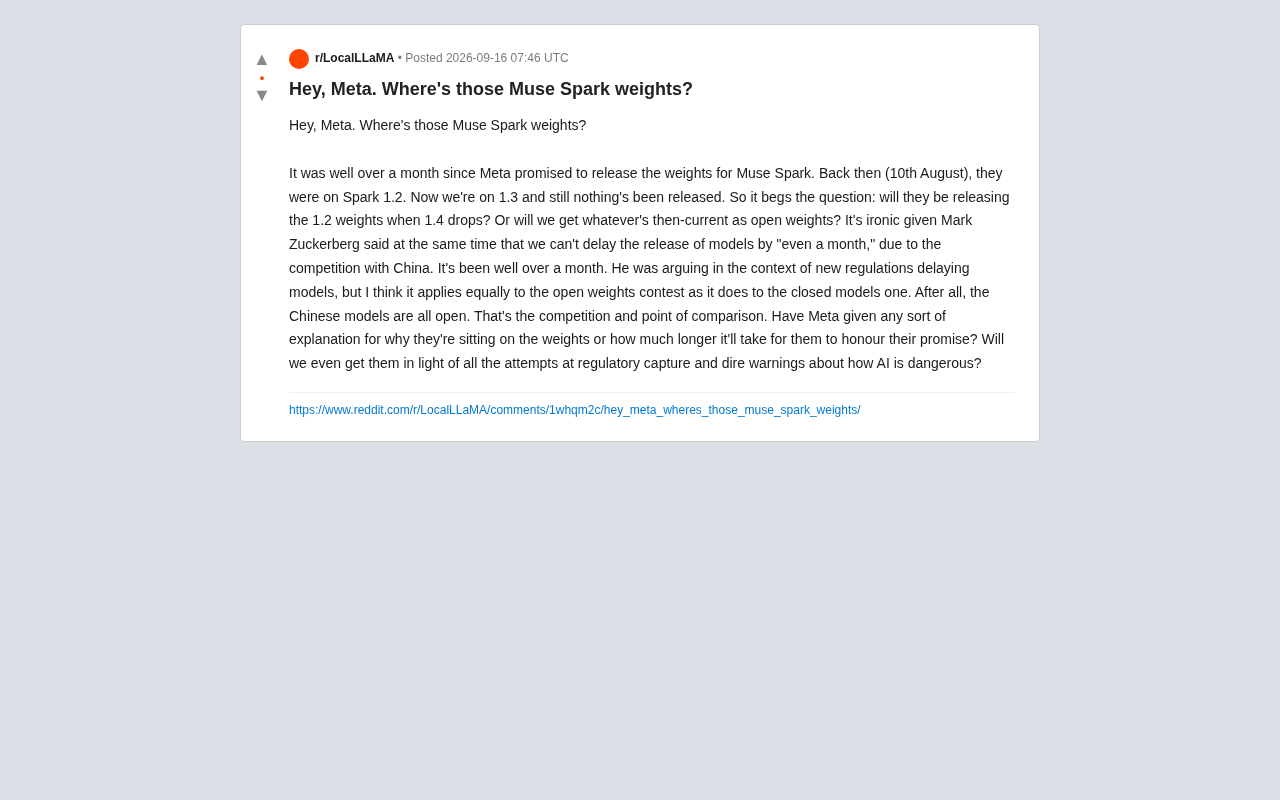
Meta's Broken Promise: Community Demands to Know Where the Muse Spark Weights Are
Meta promised to open-source Muse Spark model weights over a month ago, but still hasn't delivered. The community questions how this squares with Zuckerberg's "can't delay even a month" stance.
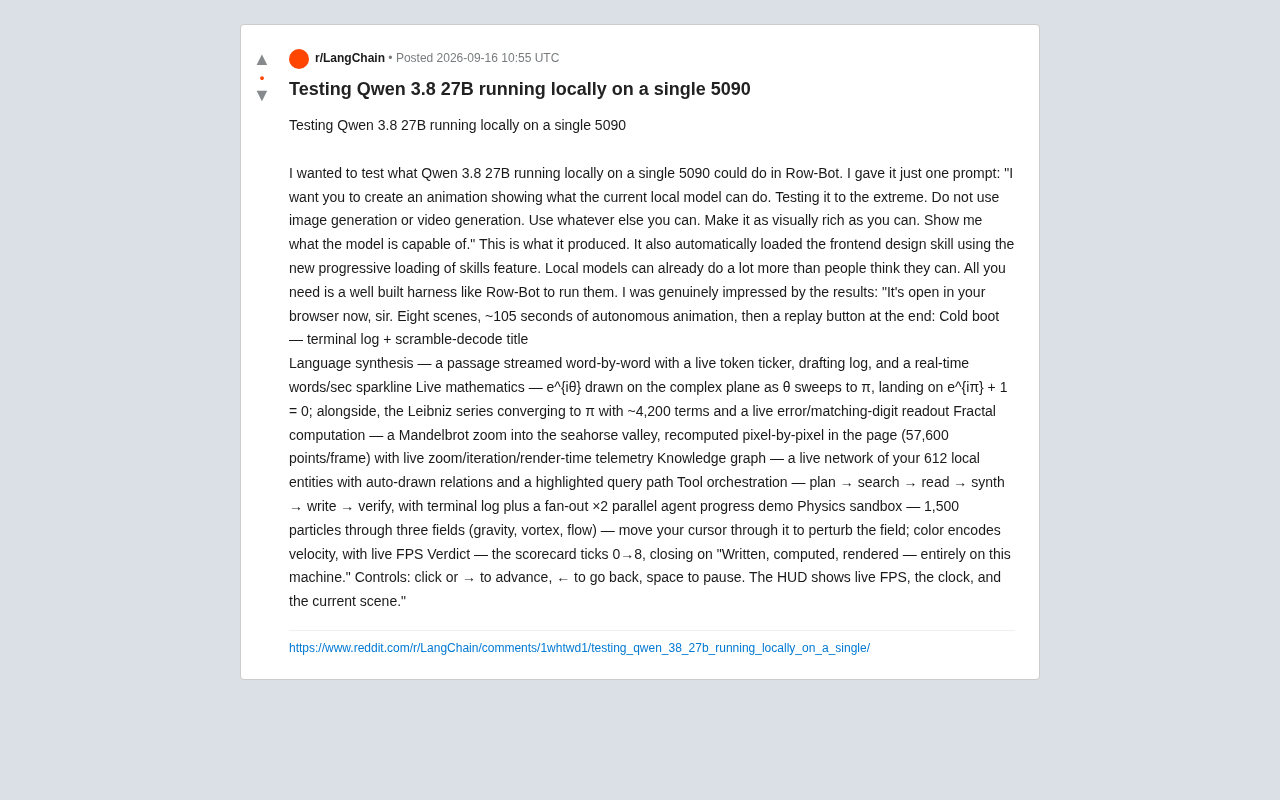
Running Qwen3 27B Locally on a Single RTX 5090: What Can It Actually Do?
A developer runs Qwen3 27B locally on a single RTX 5090 via the Row-Bot Agent framework, generating an 8-scene, 105-second interactive animation from one prompt — including real-time math, fractals, and physics.