Reverse Engineering a 32-Year-Old Jeep with Claude: How AI Reads and Controls a Car's Computer

AI agents Claude Code and Codex used a $3 Arduino Nano to read and control a 1994 Jeep's onboard computer, bypassing hardware limits to write custom programs and pass an emissions test.
A car owner used a $3 Arduino Nano and Claude Code to successfully read and control the onboard computer of a 1994 Jeep Cherokee. Facing a NOX emissions test failure, Claude read real-time data via the SCI protocol and achieved fuel pump control for the first time. Although Claude's diagnosis was skewed by relying on the wrong tool, the owner analyzed the ECU program and found that the California-version computer reducing fuel under test load was the main cause of high NOX. Then OpenAI Codex stepped in, bypassing hardware programming limitations by writing custom programs into EPROM, ultimately allowing the vehicle to pass the test. The entire solution cost about $15, demonstrating the potential of AI agents in physical-world reverse engineering and hardware control.
A car owner used a $3 Arduino Nano chip and Claude Code to successfully read from and control the onboard computer of his 1994 Jeep Cherokee — and even bypass hardware limitations to run custom code. This is more than hardcore auto repair; it showcases the enormous potential of AI agents in the physical world.
From Failed Emissions Test to AI Intervention
The owner's 1994 Jeep Cherokee failed California's emissions test due to high NOX (nitrogen oxides). The conventional approach was to replace the oxygen sensor, but after replacement, the readings for the 10-speed 15-mile test actually jumped from about 80 to 900 — the problem persisted. Each test costs about $100, making repeated part-swapping and trial-and-error too expensive.
The owner realized that the onboard computer generates hundreds of relevant readings per second. If he could read that data directly, he could avoid blind repairs. So he asked Claude Code: "What can we do?"

Claude discovered that the car uses the ancient SCI protocol for communication, with inverted logic levels, requiring a converter. Ultimately, a $3 Arduino Nano on a breadboard was sufficient. The owner followed Claude's instructions to complete the wiring. Although the first attempt failed because a resistor attenuated the signal, at 1:30 AM they finally read their first data — coolant temperature and battery voltage.
SCI protocol (Serial Communication Interface) is a single-wire serial communication protocol used by Chrysler in the 1980s-1990s, typically at 7812.5 bps, for diagnostics and data logging. Its logic levels are inverted compared to standard UART: the idle state is low (0V), and active bits are high (5V or 12V), so an inverter or transistor circuit is needed for level conversion. Understanding this helps explain why directly connecting an Arduino couldn't read the data.
From Reading to Control: AI's First "Hands-On" Action
The initial data reading gave the owner real evidence, but what was even more surprising was what Claude did next. While analyzing fuel trim values, they found the computer showed 22% extra fuel being added, which contradicted the high NOX. The owner connected a fuel pressure gauge and found the pressure was severely insufficient. Claude proposed to start the fuel pump, and the owner agreed with some skepticism. As a result, Claude actually commanded the fuel pump to run for about 10 seconds through the computer.
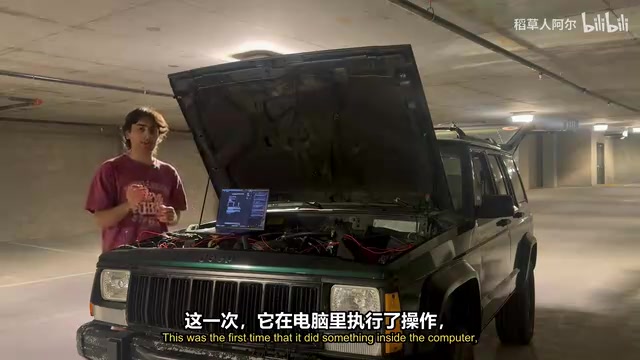
This was the first time Claude transitioned from reading information from the onboard computer to executing actions. The computer responded, and real changes occurred in the car — the AI was no longer just an observer but had become a controller. After that, they conducted more tests: unplugging injector connectors, covering the exhaust pipe with burlap to observe oxygen sensor changes, etc., but failed to find the leak point.
Errors and Breakthroughs: AI Can Also Be Misled by Tools
During driving data logging, Claude discovered that the vehicle speed value sent by the computer was twice the actual speed, so it divided by 2 to correct it. But regarding the 22% fuel trim value, Claude initially judged that the computer was reducing fuel rather than adding it, concluding that the mixer was always normal. However, the owner later discovered that Claude had actually been misled by the existing online Chrysler Scanner tool — which was applicable to other models, leading Claude to an incorrect conclusion.
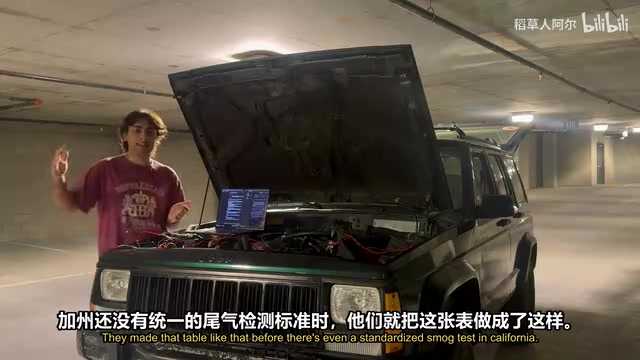
The owner copied the complete program from the onboard computer to his PC for careful study and found that his car was a California-version computer, which significantly reduces fuel supply under emissions test load conditions, while the federal version is much smoother. This was very likely the cause of the NOX exceedance. The most direct solution was to flash the computer to the federal version, but there was a problem: this Jeep, produced in December 1993, had computer hardware lacking the components needed to enter programming mode, and no matter how Claude tried, it couldn't enter programming mode.
Fuel trim is the real-time adjustment of injection pulse width by the ECU based on oxygen sensor feedback in electronically controlled fuel injection systems, usually expressed as a percentage. Short-term fuel trim (STFT) and long-term fuel trim (LTFT) reflect instantaneous and long-term adjustment trends, respectively. Positive values indicate the ECU is increasing fuel injection (lean mixture), while negative values indicate reducing fuel injection (rich mixture). The 22% fuel trim value in the article means the ECU believes the mixture is lean and is enriching it, which seems contradictory to high NOX (usually caused by high temperature and oxygen enrichment), but in reality, insufficient fuel pressure may cause insufficient injection, forcing the ECU to increase trim.
Codex Enters: Writing Custom Programs into EPROM
At this point, OpenAI's coding agent Codex came into play. Codex discovered that by sending a small program along the same three wires to this 1994 computer, the computer would run it directly. The first version of the program only processed one number and sent it to the laptop, but within seconds it was overwritten by the computer's own code — the problem was RAM (short-term memory).
Codex suggested writing the real program into EPROM (Erasable Programmable Read-Only Memory), which retains data even when the battery is disconnected. This way, without touching any programming chip, custom code could run in the onboard computer. This was a huge breakthrough: for the first time, the agent could enter the computer, actively make modifications, and directly observe the effects of the code, without the owner having to stay by the car.
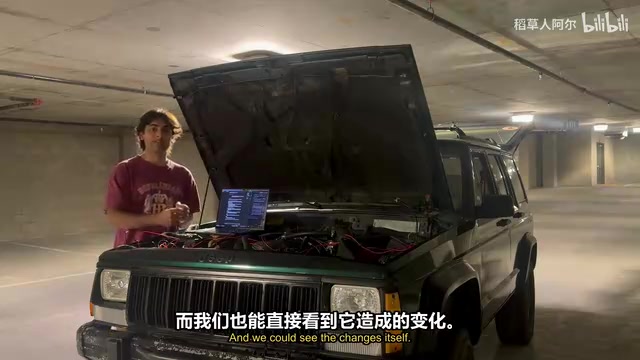
Finally, on the day of the emissions test, after some twists and turns (test station equipment failure, fuel tank needing to be full, etc.), the agent successfully read all the information from the onboard computer and added its own code, and the vehicle passed the test smoothly. Claude completed most of the diagnostic work, Codex handled almost all the memory-related work, and the owner was only responsible for wiring and driving.
EPROM (Erasable Programmable Read-Only Memory) is a read-only memory chip that can be erased by ultraviolet light and reprogrammed, commonly used in automotive ECUs before the 1990s to store firmware. Unlike RAM, EPROM retains data after power loss, but writing requires higher voltage (typically 12-21V) and specific timing. In automotive ECUs, EPROM is usually soldered or socketed, and directly modifying its contents can achieve firmware flashing, but improper operation may damage the chip. Codex's approach was to send the program via the SCI bus to run in RAM, then write key code into EPROM for persistence.
Technical Details and DIY Guide
The entire solution costs very little: an Arduino Nano compatible board, a breadboard, and a few jumper wires, totaling about $15 on Amazon. The diagnostic connector has 6 holes, but only 3 are used: pin 2 is ground, pin 3 is the computer's receive signal, and pin 4 is the computer's send signal. Be especially careful with pin 6 — it carries 12 volts, and miswiring will burn out the circuit board.
The owner suggests asking agents like Claude Code or Codex to check the wiring step by step, or asking online chatbots how to set up these agents. The complete wiring diagram and code are open-sourced on GitHub.
The significance of this experiment goes far beyond car repair itself: it proves that AI agents can cross the boundary between software and hardware, achieving reverse engineering, data reading, real-time control, and even code injection on legacy devices. When agents can connect to any device with a computer, the possibilities are endless.
One-line Summary
AI agents Claude Code and Codex used a $3 Arduino Nano to read and control a 1994 Jeep's onboard computer, bypassing hardware limitations to write custom programs and ultimately pass an emissions test.
Paragraph Summary
A car owner used a $3 Arduino Nano and Claude Code to successfully read and control the onboard computer of a 1994 Jeep Cherokee. Facing a NOX emissions test failure, Claude read real-time data via the SCI protocol and for the first time achieved fuel pump control. Although Claude's diagnosis was skewed by relying on the wrong tool, the owner analyzed the ECU program and found that the California-version computer reducing fuel under test load was the main cause of high NOX. Then OpenAI Codex stepped in, bypassing hardware programming limitations by writing custom programs into EPROM, ultimately allowing the vehicle to pass the test. The entire solution cost about $15, demonstrating the potential of AI agents in physical-world reverse engineering and hardware control.
Related articles

Gemini 4 Neon Review: Benchmark Scores Rival Carbon, API Pricing and Quota Breakdown
Google Gemini 4 Neon is now live, benchmark scores closely tracking Carbon, API pricing 3/15 at twice Hydrogen's rate. This article compiles Bilibili creator testing: Neon can replace 90% of Carbon scenarios, AntiGravity quota consumption is only one-third of Carbon, plus subscription channel restrictions and 2API ban risks.

Gemini 4 Helium Coming Soon? Signals of Google Loosening Subscription Restrictions
Google team member hints releases will continue; community speculates Gemini 4 Helium (Flash Lite) may be next. Subscription ban controversy gets a response as product lead says "Soon," suggesting restrictions may be lifted. This article covers Gemini developments, OpenAI Coding Agent and risk management, Doubao real-time audio-video API, and compute business dynamics.

AI-Assisted React Development in Practice: Optimizing a Video App and Handling Errors
A 14-year veteran developer demonstrates AI-assisted React video app optimization: compressing video from 80MB to 5MB (~94%) via ImageKit, plus reliable error handling and retry mechanisms. Includes planning, code understanding, and verification methods for working with AI.