RFCLLM: Can LLMs Really Understand Network Protocol State Machines?
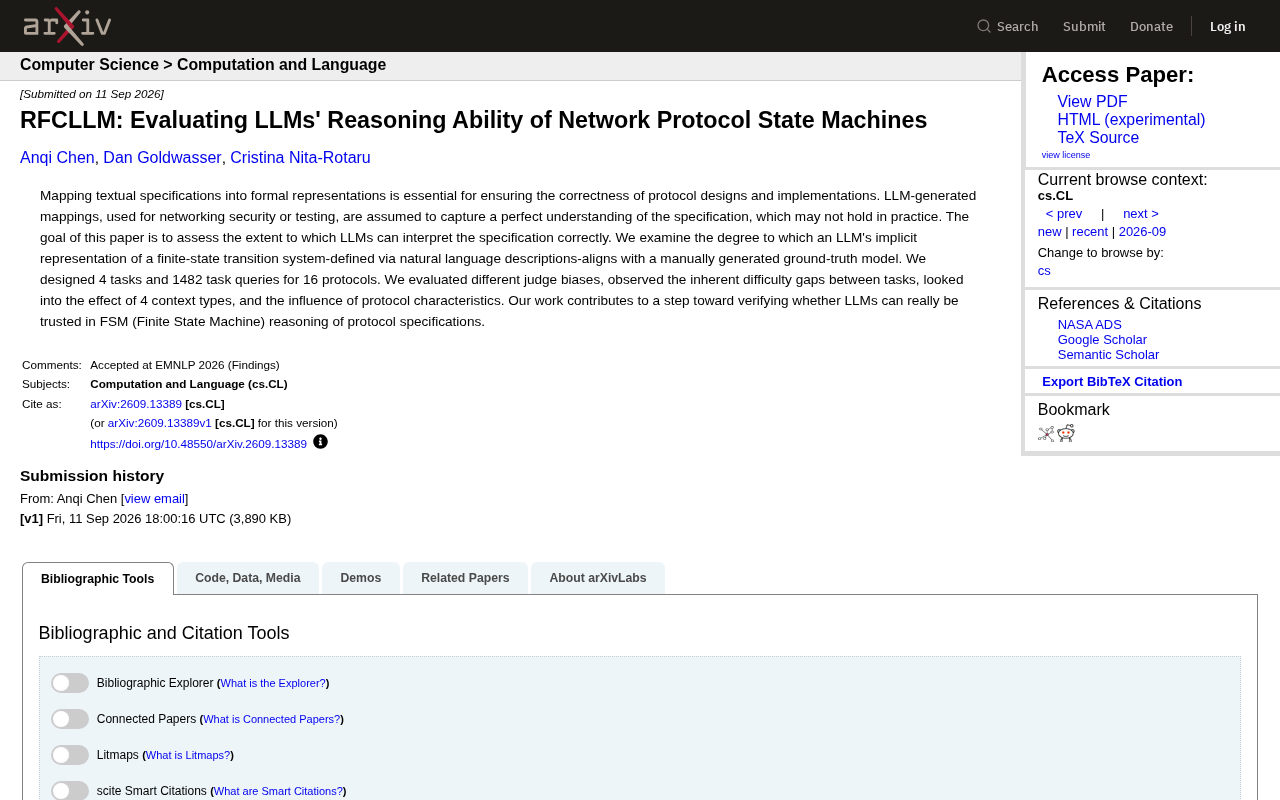
RFCLLM benchmarks LLMs on protocol state machine reasoning across 16 protocols and 1,482 queries.
RFCLLM is an evaluation study specifically targeting LLMs' ability to understand network protocol specifications. It challenges the common assumption that LLM-generated formal protocol mappings faithfully capture specification semantics. The team built a benchmark covering 16 protocols, 4 reasoning task types, and 1,482 queries to assess how well LLMs' implicit understanding of FSM state transition logic aligns with human-annotated ground-truth models. The study also analyzes judge biases, task difficulty gaps, context types, and protocol characteristics — revealing uneven LLM performance across reasoning subtasks and offering a rigorous empirical foundation for practitioners in security-sensitive environments.
When LLMs Meet Protocol Specifications: An Overestimated Assumption
Translating technical specifications written in natural language into formal representations is a critical step in ensuring the correctness of protocol design and implementation. In recent years, a growing number of research efforts and engineering practices have attempted to use large language models (LLMs) to perform this mapping — converting natural language descriptions from protocol documents like RFCs into formal models suitable for network security analysis or protocol testing.
Underlying this trend is a default assumption: that the mappings produced by LLMs accurately capture a "perfect understanding" of the specification. In practice, however, this assumption may not hold. A newly published paper on arXiv, RFCLLM: Evaluating LLMs' Reasoning Ability of Network Protocol State Machines, directly challenges this question — to what extent can LLMs correctly interpret protocol specifications?
The Core Question: Alignment Between Implicit Representations and Ground-Truth Models
Protocol specifications can typically be abstracted as a Finite-State Transition System, or Finite-State Machine (FSM). The transitions between states, their triggering conditions, and the corresponding actions all need to be precisely characterized. If an LLM cannot truly "understand" this state transition logic, then any formal model generated from it — and any security testing or verification built on top of that model — may rest on a faulty foundation.
The paper's research focus is clear: examine how well the "implicit representation" that an LLM forms of a finite-state transition system — defined through natural language descriptions — aligns with a human-constructed ground-truth model. In other words, the researchers want to know not whether an LLM can paraphrase a specification, but whether it has genuinely internalized a state machine understanding consistent with that of domain experts.
This distinction matters. Fluent text generation is not the same as correct reasoning about underlying logical structures. Protocol state machines involve numerous implicit constraints, conditional branches, and edge cases — precisely the parts of natural language descriptions most prone to ambiguity and most demanding of reasoning ability.
Evaluation Design: 16 Protocols, 4 Task Types, 1,482 Queries
To systematically answer these questions, the research team constructed a comprehensive evaluation framework:
- Protocol coverage: 16 network protocols are included, ensuring that findings have general applicability rather than being artifacts of any single protocol.
- Task design: 4 task types probe different aspects of LLM understanding of state machines.
- Query scale: A total of 1,482 task queries, a sample size sufficient to support statistically meaningful analysis.
Building on this foundation, the paper conducts multi-dimensional analysis. The researchers evaluate different judge biases — the systematic biases that the model or criteria serving as evaluator may introduce in automated assessments. This is an increasingly recognized methodological concern in LLM evaluation, and if left unaddressed, it can directly undermine the credibility of conclusions.
Task Difficulty Gaps and the Impact of Context
The study observes inherent difficulty gaps across different tasks. This means LLMs do not uniformly "know" or "not know" how to reason about protocol state machines — they perform noticeably worse on certain types of reasoning tasks. Identifying these weak spots has practical value for guiding future improvements.
The paper also examines the effect of 4 context types on model performance. The form and scope of context provided to the model significantly alters its reasoning behavior — suggesting that carefully designed prompts and context may partially compensate for gaps in model capability.
The Role of Protocol Characteristics
The study also analyzes how a protocol's own characteristics influence LLM reasoning performance. Protocols vary widely in complexity, number of states, and the clarity of their transition logic, and these characteristics correlate with model performance. This finding helps practitioners determine when they should be most skeptical of LLM outputs.
Significance: Empirical Evidence for "Can We Trust LLMs?"
The value of this work lies in turning a broadly assumed but rarely rigorously tested hypothesis into a measurable empirical question. In high-correctness-demand domains like network security and protocol testing, the gap between "looks correct" and "actually correct" can have serious consequences.
The paper positions itself as a step toward "verifying whether LLMs are truly trustworthy for FSM reasoning over protocol specifications." Rather than simply declaring LLMs usable or unusable, it provides an evaluation methodology and analytical perspective that allows practitioners to develop a more grounded understanding of current model limitations.
For engineering teams that are incorporating or planning to incorporate LLMs into protocol analysis and security testing workflows, this kind of research offers a necessary check against overoptimism. It reminds us: before delegating critical decisions to a model, first understand what it actually comprehends — and where it tends to go wrong.
Conclusion
The core contribution of RFCLLM is not to deliver a final verdict on LLM capability, but to establish a reproducible, multi-dimensional evaluation benchmark — transforming "can LLMs understand protocol specifications" from a matter of belief into a scientific question that can be measured and analyzed. As LLMs are increasingly applied in formal and security-sensitive domains, rigorous capability evaluations like this will only become more essential.
Related articles
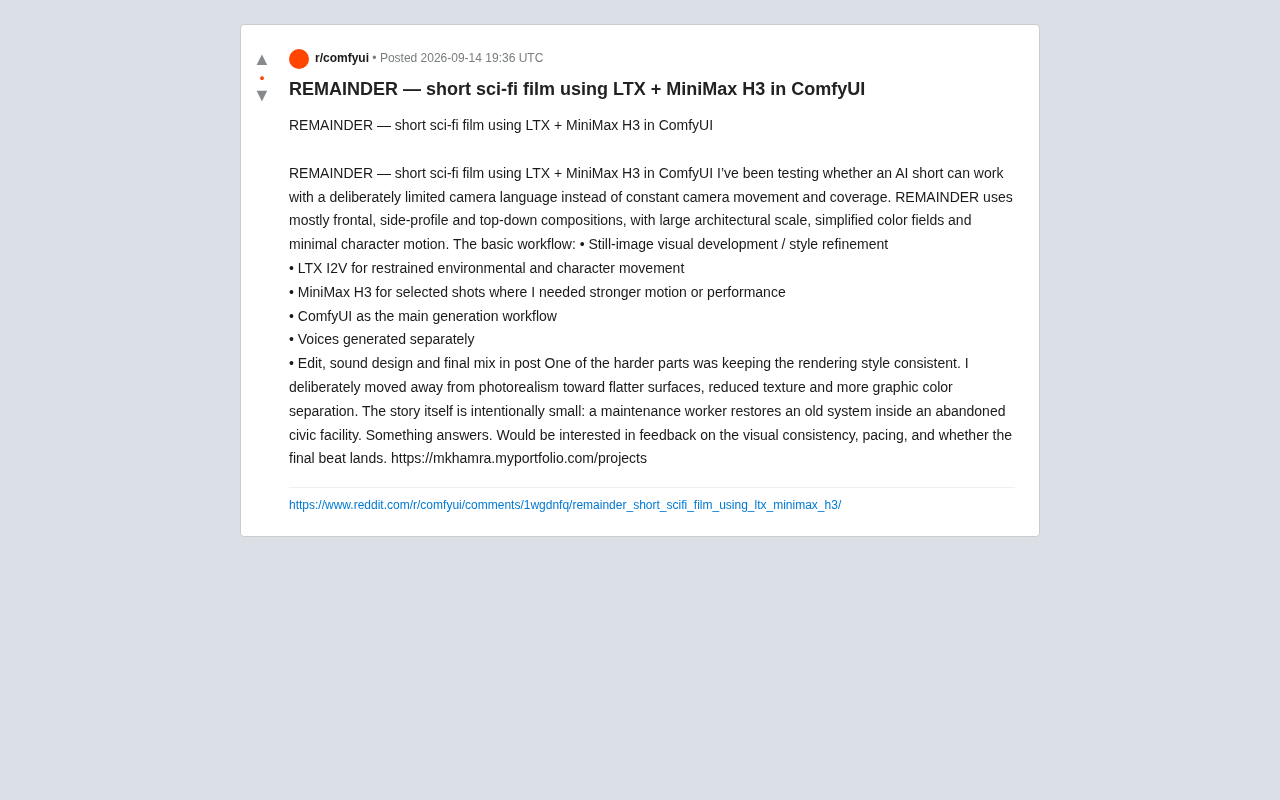
Building an AI Sci-Fi Short with LTX + MiniMax H3: Restrained Cinematography in ComfyUI
Sci-fi short REMAINDER uses LTX, MiniMax H3, and ComfyUI with restrained cinematography and flat aesthetics to solve visual consistency in AI filmmaking.
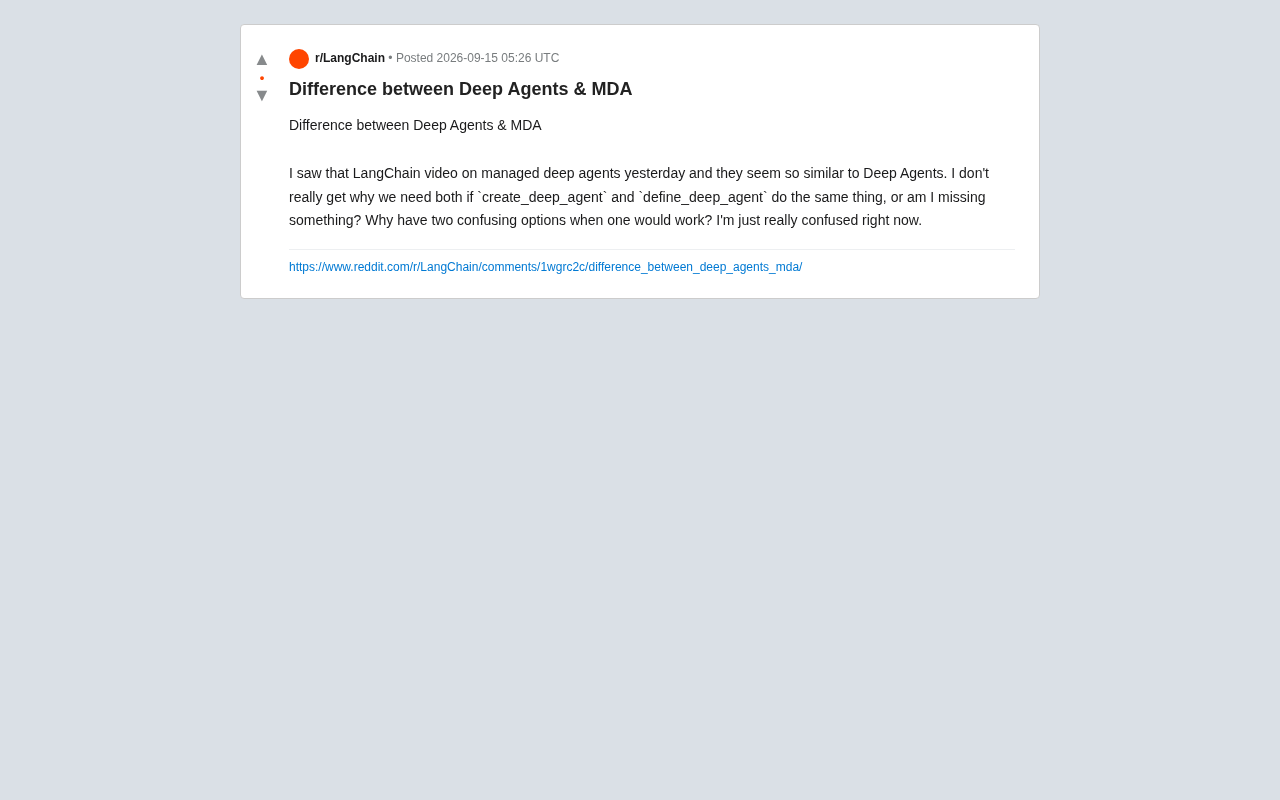
LangChain Deep Agents vs. MDA: Clearing Up the Confusion for Developers
What's the difference between LangChain's Deep Agents and MDA (Managed Deep Agents)? We break down create_deep_agent vs. define_deep_agent and help developers choose.
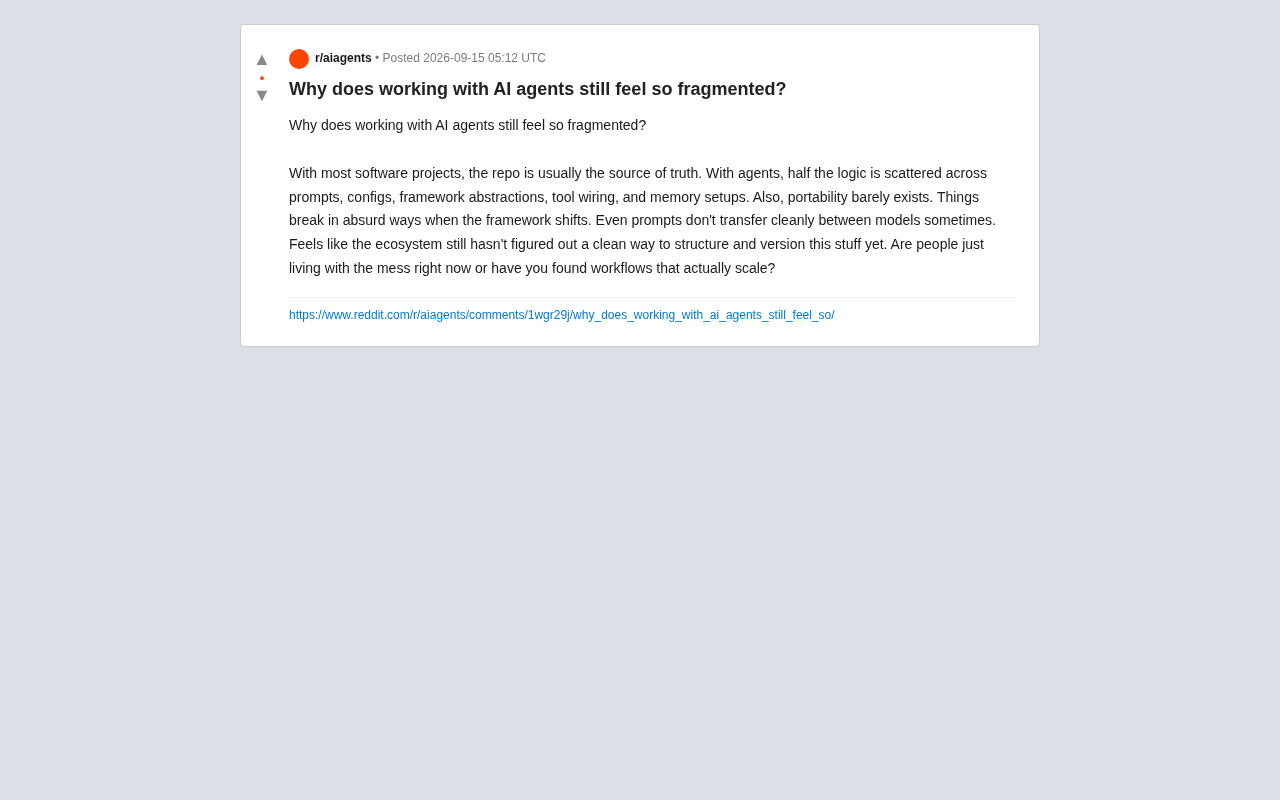
Why Is AI Agent Development So Fragmented? The Real Causes and How to Work Around Them
Why does AI Agent development feel so fragmented? Logic scattered across prompts, configs, and frameworks makes portability nearly impossible. Here's why — and how to cope.