Rivian R2 Hits Climate Goals Four Years Early — and It's Cheaper Too

Rivian R2 beats its climate targets by four years while also undercutting the R1's price.
Rivian's upcoming affordable R2 model isn't just priced lower than the flagship R1 — it has also exceeded its own climate reduction targets four years ahead of schedule. Rivian has shifted manufacturing toward more renewable energy to cut the carbon footprint of high-energy processes like battery production, while incorporating more recyclable and biodegradable materials to advance the industry's circular economy transition. The R2 demonstrates that cost reduction and emissions reduction can be achieved in tandem, reflecting a structural shift in how EV "greenness" is measured: from tailpipe-only zero emissions to full life cycle impact.
Rivian R2's Dual Promise: Lower Cost, Lower Emissions
Rivian has always positioned its R2 model as a pivotal step forward for the company. Compared to the expensive R1 lineup that preceded it, the R2 was designed from the ground up with two core missions: a more accessible price point and a smaller environmental footprint.
According to reports, Rivian's goals for R2 go beyond simply offering consumers a more affordable EV — they extend across the entire production chain. That means manufacturing the R2 will rely more heavily on renewable energy, and the vehicle itself will incorporate more recyclable and biodegradable materials than any Rivian model before it.
What It Means to Hit Climate Goals Four Years Early
The most striking aspect of this announcement is Rivian's claim that the R2 has exceeded its own climate targets by four years. For an EV company still in the midst of scaling up, outpacing its own emissions reduction timeline is a meaningful signal worth paying attention to.
This reflects several broader trends. Competition in the EV industry has long since moved beyond range and sticker price — the carbon footprint of supply chains and the sustainability of materials are becoming new benchmarks for how "green" a vehicle really is. A "zero emissions" driving experience alone is no longer enough to define an environmentally friendly car. Life cycle emissions reduction — spanning raw material extraction, manufacturing, and end-of-life recycling — is fast becoming the industry's new standard.
Life cycle emissions reduction assessments typically follow ISO 14040/14044 standards, accounting for carbon across all stages from raw material acquisition (cradle) to final disposal (grave) — the so-called Cradle-to-Grave methodology. For EVs, this framework breaks emissions down into: upstream raw material extraction and processing, battery and component manufacturing, and final assembly; midstream use-phase emissions (dependent on grid carbon intensity); and downstream end-of-life recycling. When setting climate targets, companies typically reference the GHG Protocol's distinction between Scope 1 (direct emissions), Scope 2 (indirect emissions from purchased energy), and Scope 3 (other indirect emissions across the value chain). Rivian's claim of hitting targets "four years ahead of schedule" implies faster-than-planned progress on one or more of these Scope dimensions — though which specific scope is involved and how the baseline year was defined will require full official disclosure to assess accurately.
Dual Optimization: Production and Materials
Rivian's emissions reduction strategy for the R2 operates on two primary levels.
Renewable Energy in Manufacturing
By increasing its reliance on renewable energy during the manufacturing process, Rivian is working to reduce the vehicle's "factory-gate carbon footprint" at the source. The energy mix in the manufacturing phase is often an underappreciated but significant contributor to an EV's total life cycle emissions — particularly for energy-intensive processes like battery production.
An EV's "factory-gate carbon footprint" (also referred to as production-phase emissions or upstream Scope 3 emissions) is a critical component of Life Cycle Assessment (LCA). Research suggests that greenhouse gas emissions generated during the production phase of an EV can sometimes account for 40% to 60% of its total life cycle emissions, with battery pack manufacturing being the dominant factor — roughly 60 to 100 kg CO₂ equivalent per kWh of battery capacity, a figure that varies significantly by energy mix and manufacturing location. As a result, shifting factory electricity sources from coal to wind, solar, or other renewables often delivers a greater reduction in overall vehicle carbon footprint than improvements in body lightweighting or drivetrain efficiency. This is precisely why where a vehicle is built and what energy is used to build it are increasingly becoming non-negotiable disclosure items in automakers' climate commitments.
Circular Materials
The R2 incorporates significantly more recyclable and biodegradable materials, reducing dependence on virgin resources and lightening the environmental burden at end of life. The use of degradable and recyclable materials is a key marker of the automotive industry's broader shift toward a circular economy.
The circular economy in the automotive industry operates on a core logic of replacing the traditional "extract–manufacture–discard" linear model with a closed-loop "design–use–recover–reuse" cycle. In terms of material selection, recyclable materials refer to substances that can be reprocessed into equivalent or lower-grade raw materials after the vehicle is scrapped — such as aluminum alloy body panels and certain plastic components. Biodegradable materials, by contrast, are organic materials that can be broken down by microorganisms under specific conditions, and are commonly found in interior components (such as bio-based fabrics and natural fiber composite panels). The two serve different purposes in vehicle applications: recyclable materials are primarily used in structural parts to reduce consumption of virgin mineral resources, while biodegradable materials are concentrated in interiors to reduce the volume of end-of-life vehicle waste sent to landfills. On the battery recycling front, efficiently extracting critical minerals like lithium, cobalt, and nickel and reintroducing them into the supply chain is currently one of the technically most challenging — and most valuable — aspects of circular economy practice in the industry.
Implications for the EV Industry
The Rivian R2 case demonstrates that affordability and environmental responsibility don't have to be at odds. By optimizing production processes and rethinking material composition, automakers can potentially achieve cost reduction and emissions reduction simultaneously — two goals that might appear to be in tension.
For consumers considering an EV purchase, this also offers a more complete framework for evaluation: whether a car is truly environmentally friendly shouldn't be judged solely by whether it produces zero tailpipe emissions while driving. It should also account for how it was manufactured, what materials it's made of, and what happens to it at the end of its life. R2's ahead-of-schedule performance may push more automakers to adopt a more ambitious posture on their own climate commitments.
Note: Due to limited information in the source material, specific emissions reduction figures and target values for the R2 cited in this article are pending further official disclosure from Rivian.
Related articles
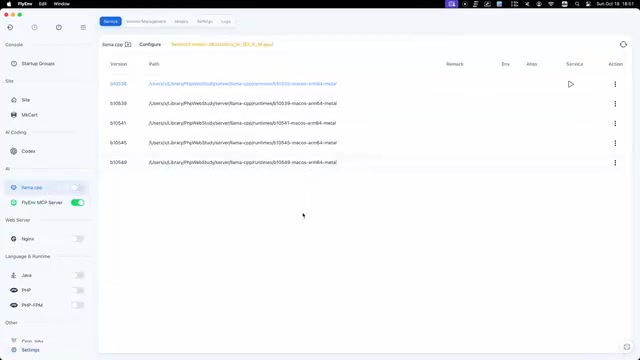
FlyEnv Plugin Review: Visually Running llama.cpp and Managing GGUF Models
FlyEnv launches the official llama.cpp plugin with side-by-side Metal runtime management, public GGUF repository indexing with file type labels, and visual configuration of context, threads, and GPU layers—saving templates and speculative decoding with each model for one-click local LLM inference.
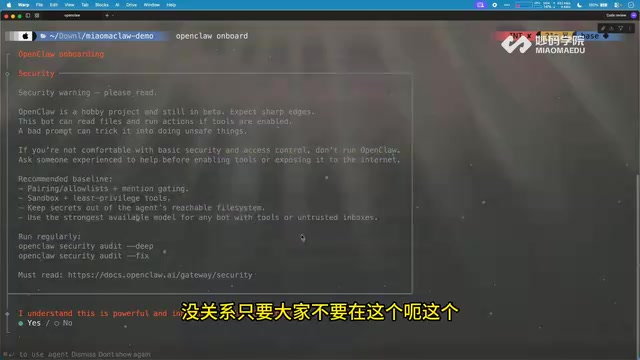
How Can Frontend Developers Advance into AI Agent Development? Deconstructing System-Level Agent Architecture from OpenClaw
Starting from the OpenClaw demo in a Bilibili open class, this article breaks down the three-layer architecture and universal formula of system-level AI agents, and analyzes the path for frontend developers to enter agent development based on TypeScript, including plugin-based design and security/memory layer challenges, with an interview answer framework.

WorkBuddy in Action: How AI Agents Automate Batch File Conversion and Archiving
Bilibili creator Teacher Shanyao tests WorkBuddy vs. Doubao on batch file conversion, showing how AI Agents move from "giving solutions" to "direct execution," with a full workflow and credit cost reference.