Ruby2Shell Vulnerability Alert: Quickly Identify Affected Ruby Versions in Your Repositories

High-severity Ruby2Shell flaw allows unauthenticated attacks on default Rails/Sinatra apps; upgrade Ruby runtime ASAP.
The Ruby runtime disclosed a high-severity vulnerability, Ruby2Shell (CVE-2026-132825), which can be triggered without authentication in default-configured Rails and classic Sinatra applications, posing extremely high risk. The fix is to upgrade Ruby to 3.3.14, 3.4.13, or 4.0.10, and the interpreter itself must be upgraded—updating only the framework is insufficient. The article recommends identifying affected versions across repos and microservices before PoC release by checking .ruby-version, the Gemfile ruby directive, CI configs, Dockerfile image tags, and Gemfile.lock. After upgrading, regression-test startup, dependency compatibility, and authentication flows; if immediate upgrades are not possible, temporarily add network-layer access control, though this cannot replace version upgrades.
Article Content
The Ruby ecosystem recently disclosed a high-severity security vulnerability, tracked as CVE-2026-132825 and named Ruby2Shell. Researchers indicate that Rails applications with default configurations and classic Sinatra applications may be exploitable by attackers without authentication, posing extremely high risk. For teams building web services with Ruby, the priority is to comprehensively identify affected Ruby runtimes across code repositories and upgrade to secure versions before proof-of-concept code is published.
Vulnerability Overview: Why Ruby2Shell Is Dangerous
Ruby2Shell (CVE-2026-132825) is a security vulnerability affecting the Ruby runtime. According to researchers' reports, Rails applications under default configurations and classic Sinatra applications can trigger the vulnerability without any authentication. This means that as long as your service uses an affected Ruby version and is exposed to the network, it may face the risk of direct attack.
The specific technical details of the vulnerability have not been fully disclosed, but the "no authentication required" characteristic greatly elevates its severity. Attackers do not need any valid credentials to attempt to exploit the vulnerability. For teams heavily using Rails and Sinatra to build APIs, backend services, or web applications, this is almost a signal that requires immediate response.
The boundary between the Ruby runtime and frameworks deserves clarification: the Ruby interpreter (CRuby/MRI) is the foundational execution environment for all Ruby web applications, while Rails and Sinatra are merely frameworks built on top of it. A vulnerability affecting the runtime means the attack surface lies at the language interpreter or standard library level, so even if the framework code itself has no flaws, applications are not immune. This is also why the original text emphasizes "you must upgrade the Ruby interpreter version rather than only upgrading the framework"—framework version updates do not replace the underlying interpreter.
Why "no authentication required" amplifies risk: most high-severity web vulnerabilities require attackers to first obtain some kind of entry point (login state, administrative privileges, or specific configuration), whereas no authentication required means the vulnerability can be mass-scanned and automatically exploited on the internet. Historically similar incidents (such as Log4Shell) show that large-scale scanning traffic appears within hours after PoC publication. For Rails/Sinatra services exposed to the public internet, this compresses the remediation window, which also explains why identification and upgrades need to be completed before PoC release.
Affected Versions and Remediation
The exact range of affected versions is not fully disclosed in the source material, but the remediation is clear. The Ruby team has released three security versions: 3.3.14, 3.4.13, and 4.0.10. Using these versions eliminates the risk posed by the Ruby2Shell vulnerability.
The upgrade path is straightforward:
- If your application runs on the Ruby 3.3 series, upgrade to 3.3.14;
- If it runs on the 3.4 series, upgrade to 3.4.13;
- If you use the 4.0 series, upgrade to 4.0.10.
For projects that have not yet upgraded to these patch versions, prioritize the upgrade work. Because the vulnerability affects the Ruby runtime itself, merely upgrading the Rails or Sinatra framework version may not be sufficient—you must ensure the Ruby interpreter version reaches or exceeds the security baseline.
How to Identify Affected Runtimes in Code Repositories
Completing identification and upgrades before proof-of-concept (PoC) code is published is the key window to reduce risk. Here are some practical approaches:
Check version declaration files
Most Ruby projects specify the Ruby version in a .ruby-version file in the root directory. You can quickly locate the Ruby version used by a project by searching for this file. At the same time, the ruby directive in the Gemfile may also declare version requirements.
How .ruby-version works: this file is typically read by version managers such as rbenv, rvm, asdf, or mise to automatically switch Ruby versions when entering a project directory. Its content is usually a single line containing the version number (e.g., 3.4.12), and may also include an engine prefix (e.g., ruby-3.3.13). Note that this file only indicates the developer's local expected version and does not guarantee that CI or production containers actually use the same version, so it must be cross-checked against CI configuration and Dockerfile image tags.
The ruby directive in Gemfile: writing ruby '3.4.13' at the top of the Gemfile causes Bundler to validate the current interpreter version when installing dependencies and fail immediately on mismatch. This is a mandatory declaration that ensures consistency better than .ruby-version, but it likewise only constrains environments where Bundler runs. During identification, check both places and also note the RUBY VERSION section at the end of Gemfile.lock, which records the version used during the last successful bundle and can serve as historical evidence of the actual runtime version.
Scan CI configurations and Dockerfiles
Continuous integration configurations (such as GitHub Actions and GitLab CI) and Dockerfiles typically pin the Ruby base image tag. For example, a tag like ruby:3.3 may point to an affected version. You need to check Ruby version references in these files and confirm whether they have been updated to secure versions.
The mutability trap of image tags: tags like ruby:3.3 and ruby:3.3-slim are floating and change as upstream updates occur, so the same Dockerfile built at different times may yield different patch versions—it may automatically receive the fix, or it may remain on an old version due to caching or pinned digests. A more reliable approach is to use exact tags (e.g., ruby:3.3.14-slim) or image digests (@sha256:...) to pin versions, making upgrades explicit and auditable operations.
Implicit version sources in CI configurations: GitHub Actions' ruby/setup-ruby action often specifies the version via ruby-version: '3.3', and this value likewise resolves to the latest patch version; ruby-version: file reads .ruby-version. GitLab CI may reference the base image via the image: field. During identification, confirm whether these declarations point to fixed patch numbers and check whether multiple jobs use different Ruby versions in a matrix build, to avoid fixing only part of the pipeline.
Review dependency lock files
Although Gemfile.lock primarily records gem versions, it sometimes also includes Ruby version information. Combined with .ruby-version and CI configuration, this can form a complete view of the project's runtime version.
Pay attention to multi-repository and microservice architectures
In microservice architectures, Ruby runtimes may be scattered across multiple repositories. It is recommended to use organization-level code search tools to batch-search Ruby version numbers in .ruby-version, Dockerfile, and CI configuration files to ensure nothing is missed.
Upgrade Considerations and Follow-up Actions
Upgrading the Ruby runtime version usually requires regression testing, especially when crossing minor versions. After upgrading, focus on verifying the following:
- Whether the application starts normally and whether dependent gems are compatible with the new version;
- Whether authentication and authorization flows still work as expected;
- Whether integrations with external services are affected.
Because the Ruby2Shell vulnerability can be triggered without authentication, remediation priority should be higher than routine dependency updates. After the PoC is public, attackers may quickly exploit the vulnerability to scan exposed services on the internet. Therefore, completing the upgrade before the PoC lands is currently the most effective defense.
For systems that cannot be upgraded immediately, adding network-layer access control can be considered as a temporary mitigation, but this cannot replace version upgrades. In the long term, keeping the Ruby runtime on a supported secure version is the foundation for avoiding such risks.
One-line Summary
The high-severity Ruby2Shell vulnerability can attack default Rails/Sinatra applications without authentication; upgrade the Ruby runtime as soon as possible.
Paragraph Summary
The Ruby runtime disclosed a high-severity vulnerability, Ruby2Shell (CVE-2026-132825), which can be triggered without authentication in default-configured Rails applications and classic Sinatra applications, posing extremely high risk. The remediation is to upgrade Ruby to 3.3.14, 3.4.13, or 4.0.10, and the interpreter itself must be upgraded—updating only the framework is insufficient. The article recommends batch-identifying affected versions across multiple repositories and microservices before proof-of-concept code is published by checking .ruby-version, the ruby directive in the Gemfile, image tags in CI configurations and Dockerfiles, and Gemfile.lock. After upgrading, regression-test application startup, dependency compatibility, and authentication flows; if immediate upgrades are not possible, temporarily add network-layer access control, but this cannot replace version upgrades.
Related articles

GLM-5.4 Coding Test 4.6x Slower? Unpacking the Loop Transformer Architecture
GLM-5.4 coding test took 431 minutes vs. competitor's 109, 4.6x more steps. We analyze its Loop Transformer architecture, KingBench4 score of 55.3, Max tier's 1.04M token cost, and tier selection advice.

Zhipu GLM-5.4 Quietly Released: A Debut for Loop Transformer Architecture
Zhipu GLM-5.4 quietly lands in coding plans: first Loop Transformer flagship with 750B params, 1M token context, AIM math up from 19.2 to 30.4, and native vision for coding from screenshots.
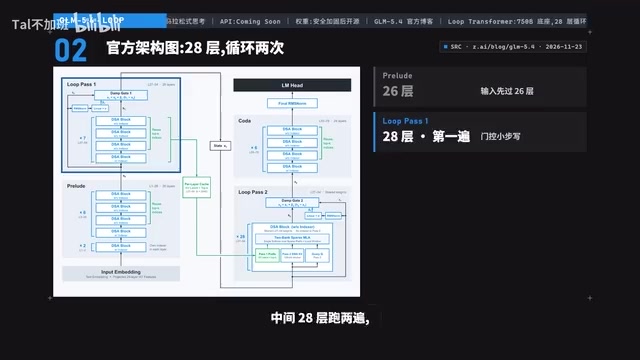
GLM-5.4 Releases 750B Model: Recurrent Transformer Architecture and the 30B Benchmark Controversy
GLM-5.4 releases a 750B model with a recurrent Transformer architecture that runs the same layers twice, claimed to match 2T–3T scale. But the benchmark table tests a 30B small model, not the main model. We break down the architecture changes, benchmark data, four demos, and open-source timeline.