Running LLMs in Encrypted Hosting: A Zero-Data-Leakage Approach to Secure Model Access
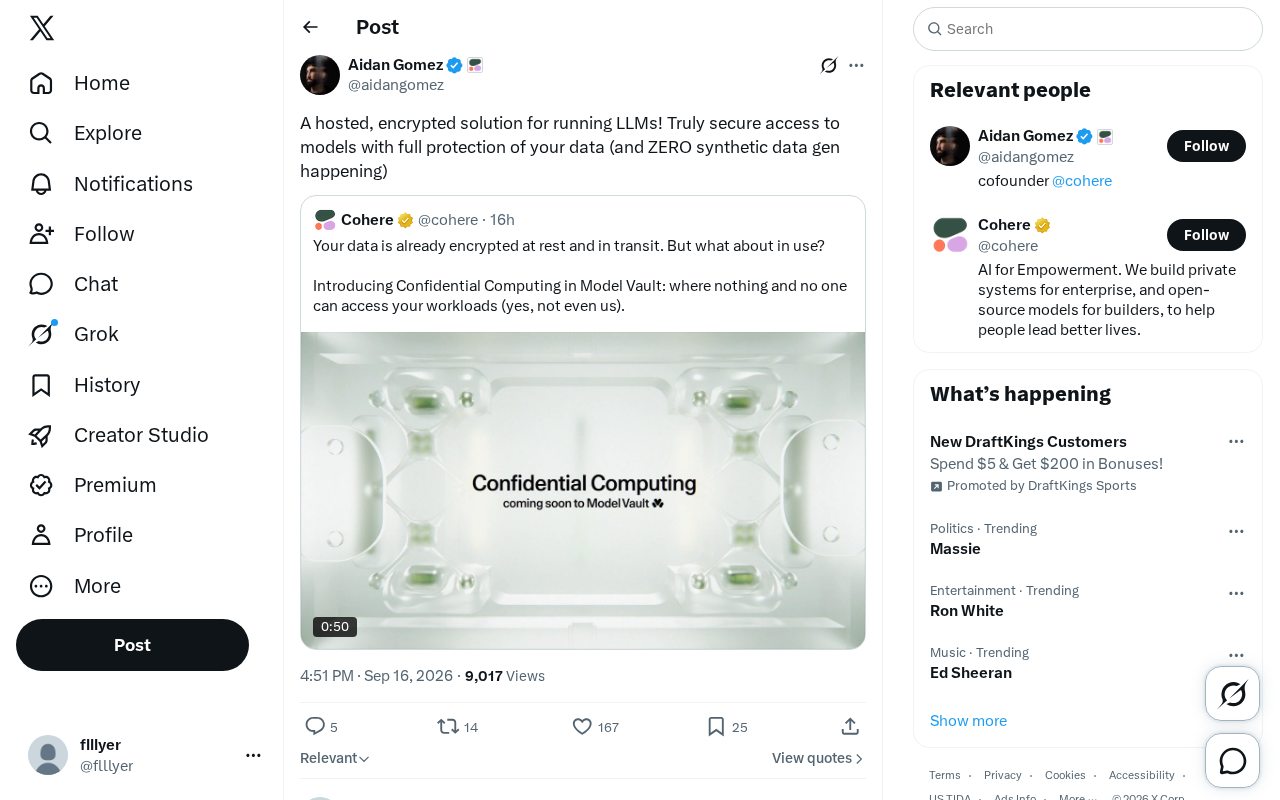
Encrypted LLM hosting turns data privacy from a vendor promise into a technically enforceable architectural constraint.
As LLMs become deeply embedded in enterprise workflows, the demand to enforce data privacy through technical means — rather than policy promises — is growing urgent. This article analyzes a hosted encrypted LLM approach that leverages confidential computing and end-to-end encryption to prevent even the service provider from reading raw user data, while a "zero synthetic data generation" commitment cuts off any path from user input to model training. The piece identifies four key dimensions for evaluating such solutions: the specific form of encryption (TLS, TEE, or homomorphic), verifiability of claims (third-party audits, remote attestation), the performance-security trade-off, and supported model coverage.
The Privacy Dilemma: Where Does Your Data Go When You Use an LLM?
As more businesses and individuals rely on large language models (LLMs) for everyday work, a question that keeps resurfacing — yet remains stubbornly unsolved — is this: is the data you feed into these models actually safe? Whether it's financial reports, customer information, or internal source code, once you submit it to a cloud-based model service, you largely lose control over where that data goes.
A recent share on Twitter pointed to a new approach: a hosted, encrypted solution that claims to protect user data in its entirety while running an LLM — and promises ZERO synthetic data generation. This brief description, seemingly simple on the surface, cuts to the heart of one of the most sensitive trust issues in AI services today.
What Does an Encrypted Hosting Solution Actually Solve?
In the traditional cloud LLM model, user data is transmitted in plaintext to the service provider's servers for inference. Even if the provider claims not to store data, users have no choice but to take that on faith — there's no technical mechanism to enforce it.
The core value of an "encrypted hosting" approach lies in shifting security from a policy promise to a technical constraint. By processing data through encryption, even the operators of the hosting service theoretically cannot read the raw content users submit. Such solutions typically involve transport encryption, storage encryption, and more advanced techniques like confidential computing or encrypted inference — keeping data protected throughout its entire lifecycle.
For industries with stringent compliance requirements — finance, healthcare, law — an architecture where "even the service provider can't see your data" is often a prerequisite for legally deploying AI tools at all.
Confidential Computing is the most technically sophisticated piece of this puzzle and deserves its own explanation. It relies on Trusted Execution Environments (TEEs) provided by CPU vendors such as Intel SGX and AMD SEV: data is decrypted and processed inside a hardware-isolated "enclave," inaccessible to cloud operators, the hypervisor, or even the OS kernel. By contrast, Homomorphic Encryption allows computation to be performed directly on ciphertext without ever decrypting it — theoretically offering stronger security guarantees — but current computational overhead remains orders of magnitude higher than plaintext inference, making it impractical for production-scale LLM workloads. Most real-world "encrypted hosting" deployments today rely primarily on TEEs rather than homomorphic encryption. Understanding this distinction helps you assess whether a vendor's technical approach is mature and viable.
What Does "ZERO Synthetic Data Generation" Actually Mean?
The explicit emphasis on ZERO synthetic data generation in the original post is a promise worth unpacking.
In many AI service business models, user interaction data is used to generate synthetic training data, which in turn feeds back into model improvement. While this helps with model iteration, it also means that your inputs may be indirectly "learned" and retained. For privacy-conscious users, this is a genuine risk — the trade secrets you enter today could, in some derived form, end up in the model's training loop.
A clear commitment to "zero synthetic data generation" means guaranteeing users that their data is used solely for that single inference request — it won't be transformed, retained, or used in any form of model training. In an era where data sovereignty is increasingly valued, this is a meaningful differentiator.
How synthetic data is actually generated in AI training is worth understanding. A common approach involves having a model rewrite, expand, or role-shift real user conversations to produce large volumes of training samples that are "fictitious in form but semantically retain the original information." Because this data is technically decoupled from the original input, providers often consider that user consent is not required. Yet for enterprise users, even rewritten derivative data can still expose competitively sensitive business logic, customer preferences, or internal terminology. Some regulatory frameworks — such as the EU's GDPR — have begun examining whether synthetic data qualifies as a derivative of personal data, and the legal boundaries remain evolving. The promise of "zero synthetic data" therefore carries independent significance at both the legal compliance and technical security levels.
Questions You Need to Verify Behind the Technical Claims
To be transparent: the original tweet contains limited information — it's more of a product philosophy statement than a detailed technical whitepaper. When evaluating solutions like this in practice, users should ask several critical questions:
- What form does the encryption take? Is it only transport-layer encryption (TLS), end-to-end encryption, or homomorphic encryption that can compute directly on ciphertext? The security strength varies dramatically between these approaches.
- Is the claim verifiable? Can the provider's "zero access" promise be verified through third-party audits, open-source code, or a Trusted Execution Environment (TEE) — rather than just verbal assurances?
- What's the performance cost? Encrypted computation typically introduces latency and higher costs. How does the hosted solution balance security against user experience?
- Which models are supported? Does the encrypted hosting cover the major open-source and commercial models you need?
On third-party audits and verifiability, the industry currently has several mainstream paths. SOC 2 Type II certification is the most common compliance report in cloud services — it validates a provider's security control processes, but does not directly prove that data is unreadable. Stronger verification mechanisms include: opening TEE code to independent security researchers, providing Remote Attestation — which lets users cryptographically verify before each session that enclave code has not been tampered with — and running bug bounty programs to invite ongoing external challenges. For high-sensitivity scenarios, a SOC 2 report alone is often insufficient. Users should proactively ask providers whether they support remote attestation; it remains the most technically compelling verification mechanism available in TEE-based solutions today.
Privacy-First AI Services Are Becoming the Norm
That brief post reflects a clear industry direction: as LLMs become deeply embedded in production workflows, data privacy and security are shifting from a "nice to have" to a "must have." Users are no longer satisfied with "we promise not to look at your data" — they want "technically, you can't see it at all."
Whether through encrypted hosting, local deployment, or confidential computing, all of these approaches are ultimately responding to the same demand: letting users harness the power of large models while regaining control over their own data. It's reasonable to expect that services capable of striking a balance between powerful capabilities and verifiable privacy protection will hold a decisive competitive advantage going forward.
For teams currently evaluating AI tools, rather than being drawn in by marketing language, use the technical dimensions outlined in this article as a checklist to verify each provider's actual capabilities. The value of a security promise ultimately depends on whether it can be proven.
Related articles
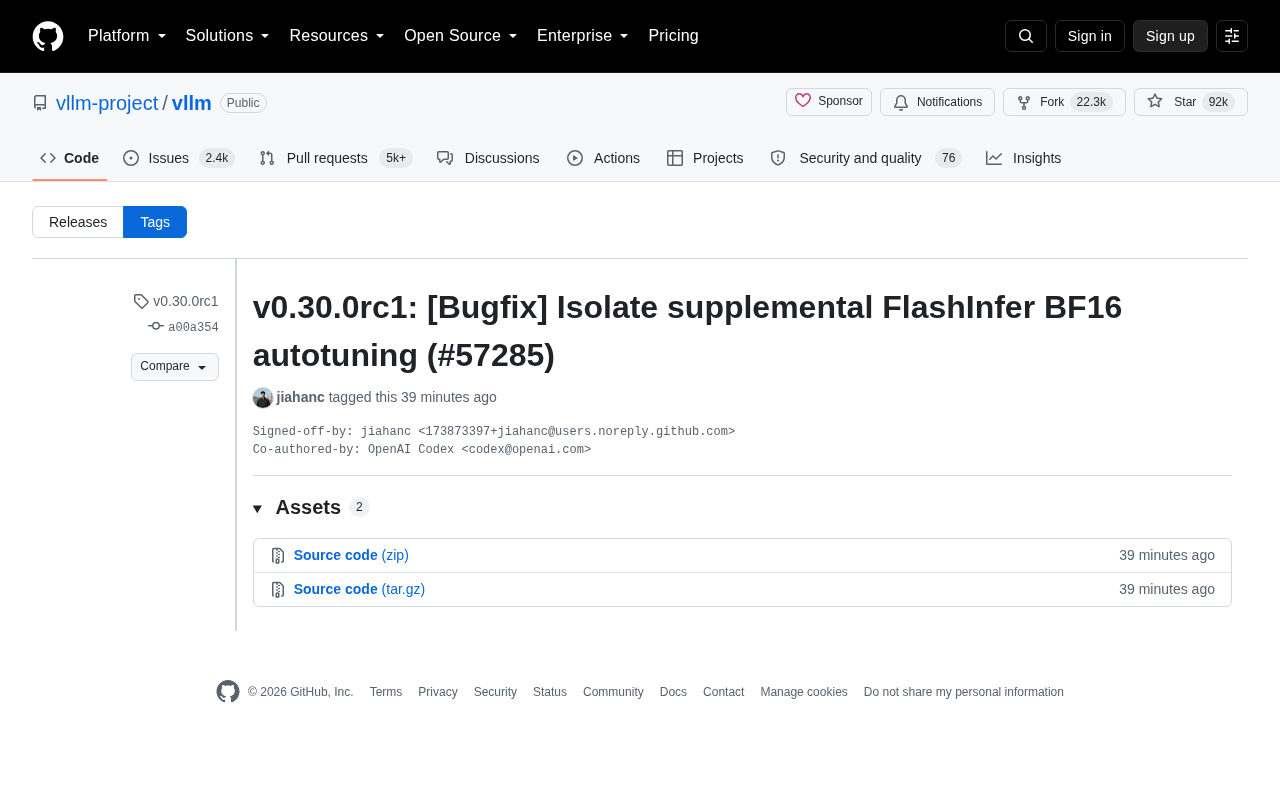
vLLM v0.30.0rc1 Released: Isolates FlashInfer BF16 Autotuning Logic
vLLM v0.30.0rc1 release candidate fixes FlashInfer BF16 autotuning isolation (PR #57285). Learn the technical background and its impact on inference deployment.
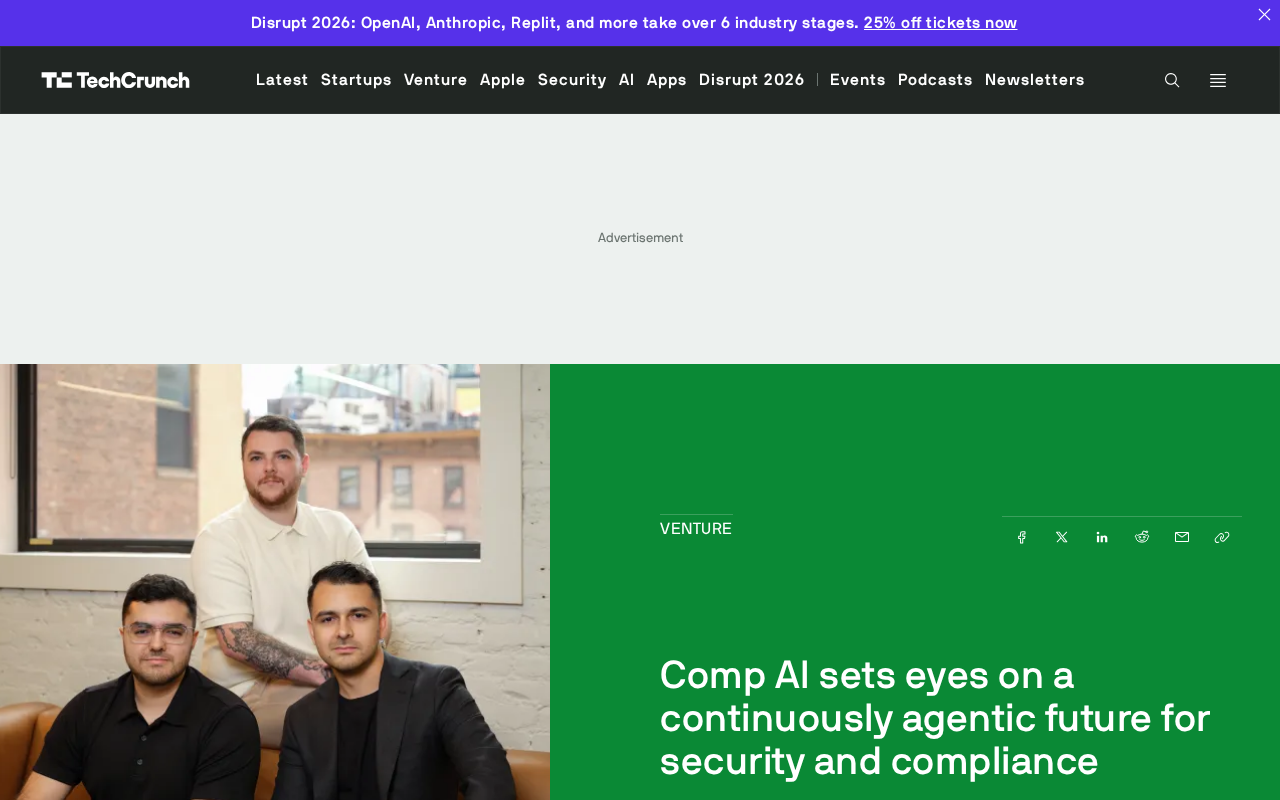
Comp AI Raises $34M Series A, Bets on Agentic Security Compliance
Comp AI raises $34M Series A led by Roo Capital and Grand Ventures, betting on "continuously agentic" AI to transform compliance from periodic audits into real-time monitoring.

MIT Technology Review's 35 Innovators Under 35: A Climate Tech Edition Explained
MIT Technology Review's latest 35 Innovators Under 35 list focuses on climate tech, spotlighting nine young global innovators. Here's what the list means and why it matters.