Salesforce and Nvidia Launch Koa: How Open-Weight Models Are Disrupting Enterprise AI
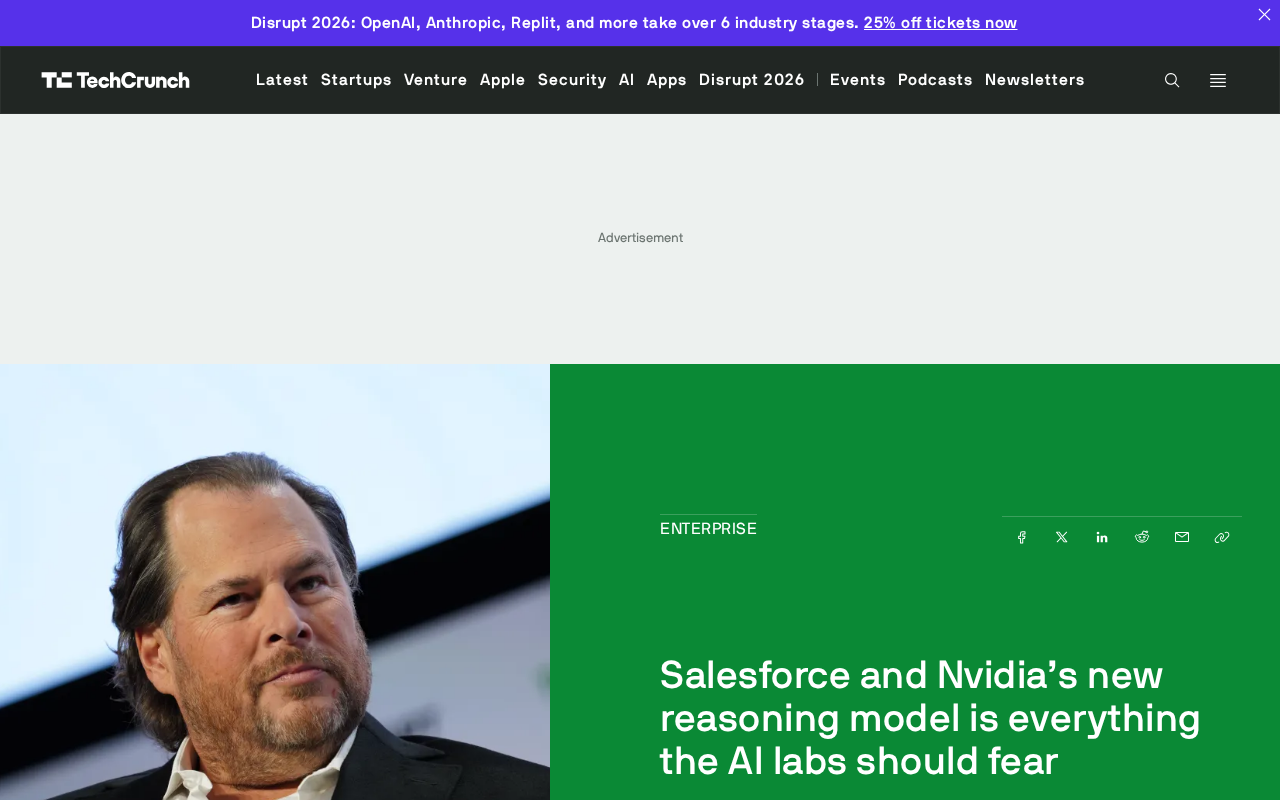
Salesforce and Nvidia's Koa model uses open-weight AI to challenge general-purpose model vendors in the enterprise market.
Salesforce and Nvidia have jointly launched Koa, a reasoning model built on Nvidia's open-weight Nemotron and purpose-built for sales, marketing, and customer support. The core thesis: enterprises pay for reliable execution of specific workflows, not general intelligence. Salesforce's CRM data and distribution combined with Nvidia's open-weight ecosystem create a pincer that could squeeze pure-play AI labs from both ends, signaling a broader shift from smarter general models to more reliable vertical applications.
A Reasoning Model That Should Worry AI Labs
Koa, the reasoning model jointly launched by Salesforce and Nvidia, is quickly becoming a competitive variable that major AI labs can no longer ignore. This is not a general-purpose chatbot — it's a vertical reasoning engine purpose-built for core enterprise use cases: sales, marketing, and customer support.
Koa is built on top of Nvidia's open-weight model Nemotron. That choice alone sends a clear signal: rather than training a proprietary large model from scratch, Salesforce has leveraged an open-weight foundation and focused its resources on fine-tuning and optimization for specific business scenarios. This approach stands in sharp contrast to the closed-source, general-purpose model strategy favored by OpenAI, Anthropic, and their peers.
Why AI Labs Should Be Concerned
For AI labs that rely on API subscriptions and monetizing general model capabilities, Koa represents a fundamentally different value proposition. Instead of trying to excel at everything, it goes deep on the scenarios enterprises are most willing to pay for — sales, marketing, and customer service.
The underlying logic is this: enterprise customers rarely care about a model's ceiling on general intelligence. What they care about is whether it can reliably execute specific business workflows. Salesforce holds the world's largest CRM customer base and a wealth of real-world business data — a moat that general-purpose large models simply cannot replicate. When an application-layer giant controls the use case, the data, and the distribution channel, and pairs that with an open-weight foundation from Nvidia, the pricing power of general model vendors in the enterprise market could be significantly eroded.
The Strategic Value of Open-Weight Models
Nvidia's Nemotron, as an open-weight model, allows partners to customize it deeply without being locked into a closed-source API. This means Salesforce retains full control over model deployment, optimization, and data flow — without handing sensitive business data to a third-party model provider.
For Nvidia, promoting an open-weight ecosystem expands the reach of its hardware and software stack while establishing strategic depth beyond its role as a chip supplier. This move by a hardware vendor into the upstream model layer further compresses the space available to traditional AI labs.
Open-weight models vs. fully open-source models: The distinction is subtle but important. Open-weight models release the model's weight files for download, deployment, and fine-tuning, but don't necessarily open-source training data or the full training pipeline. Fully open-source models typically require disclosure of all components. Nemotron falls into the former category — and in practice, that level of openness is more than sufficient for enterprise users to perform deep customization: fine-tuning on proprietary data, deploying on their own infrastructure, and optimizing inference for specific hardware environments. This is fundamentally different from calling a closed-source API from OpenAI or Anthropic: data never leaves the enterprise firewall, latency and cost can be self-optimized, and model capabilities don't depend on an external vendor's pricing decisions or policy changes. Nvidia's choice to release open weights rather than keep the model fully closed is a deliberate ecosystem strategy — it maximizes Nemotron's adoption rate while naturally converting compute demand (both inference and fine-tuning require GPUs) into sustained hardware sales.
The Business Logic Behind Vertical AI
The arrival of Koa validates an industry trend that's been taking shape: AI's commercial value is shifting from "smarter general models" to "more reliable vertical applications." Sales, marketing, and customer support are among the highest-spending areas in enterprise IT, and they're also where automation most readily produces measurable ROI.
Embedding reasoning capabilities directly into specific workflows is far more aligned with enterprise buying intent than offering an open-ended conversational interface. With its deep roots in enterprise software, Salesforce can integrate Koa seamlessly into its existing CRM product ecosystem — making AI a natural extension of platform value rather than a standalone tool that customers need to learn and integrate separately.
A note on "reasoning models" in this context: The term refers to models specifically optimized to perform multi-step logical inference within a defined domain, as opposed to single-turn generative models. In a sales context, this means the model must synthesize customer history, current conversational intent, and product knowledge to recommend the optimal next action. In customer service, it means tracking issue state across multiple conversation turns and generating compliant resolutions. Embedding reasoning into workflows rather than exposing an open chat interface narrows the use case by design and lowers the implementation barrier for enterprise users. This design philosophy is a natural fit for CRM platforms — Salesforce users already operate within fixed business processes, and AI assistance only needs to surface at the right nodes in the existing interface to deliver value, without requiring users to rebuild their habits from scratch.
Implications for the Industry Landscape
The Koa model reveals how application-layer companies and hardware vendors can team up to route around pure-play model vendors. When a data- and distribution-rich application giant allies with a hardware company that controls compute and open models, the general-purpose AI labs caught in the middle may find themselves squeezed from both ends.
To be clear, general-purpose models still lead on frontier capabilities, multimodality, and reasoning depth — and vertical models won't replace them in every scenario. But Koa's strategic significance lies in demonstrating a viable path to enterprise AI value that doesn't depend on the most powerful general model available.
For the industry as a whole, this approach — building on open weights and going deep on vertical use cases — may well represent the form AI takes when it finally scales for real.
Related articles
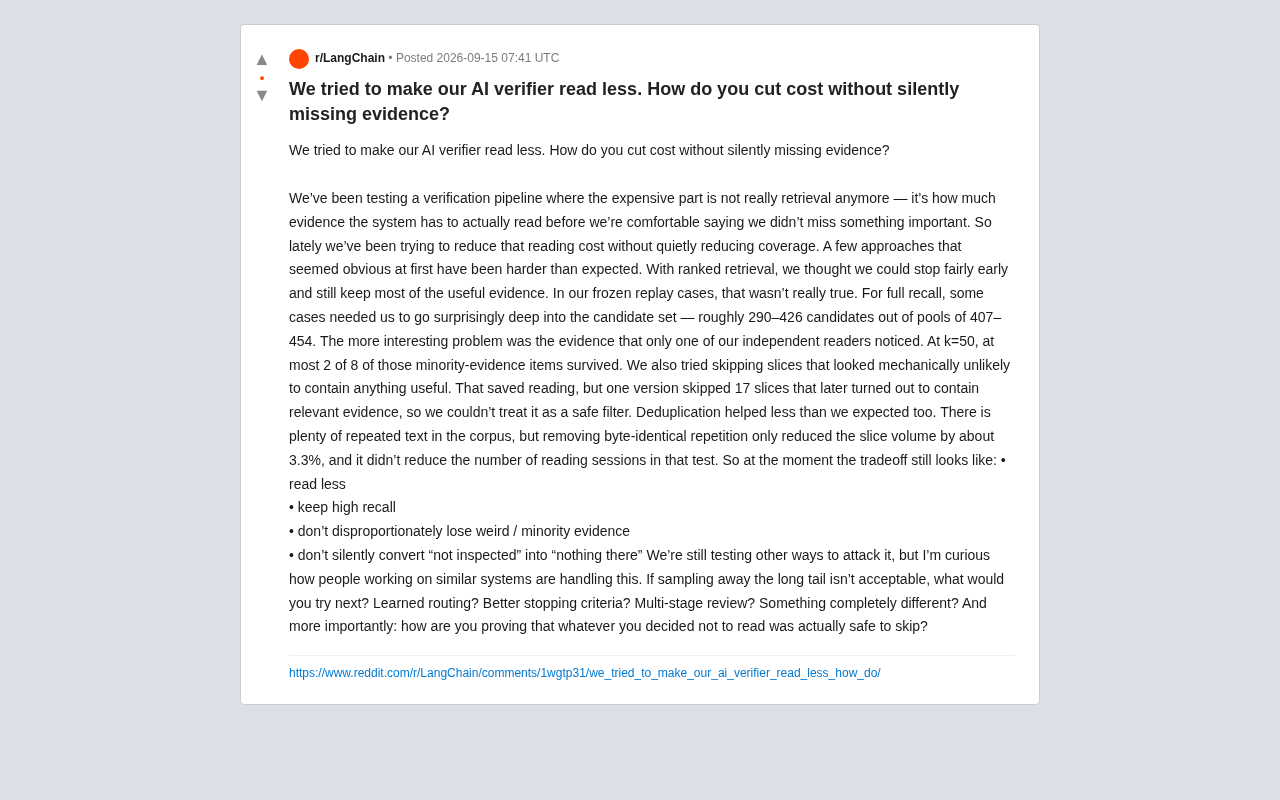
The Cost Reduction Dilemma in AI Verification Systems: How to Read Less Evidence Without Missing What Matters
The real cost in AI verification pipelines isn't retrieval — it's how much evidence must be read. This post examines why early stopping, slice skipping, and deduplication fall short, and the core challenge of preserving minority evidence.

Developer Fine-Tunes AI Model to Remove Video Subtitles and Watermarks
A developer fine-tuned an open-source model to remove subtitles and watermarks from video and images, deploying it on Hugging Face for public use.
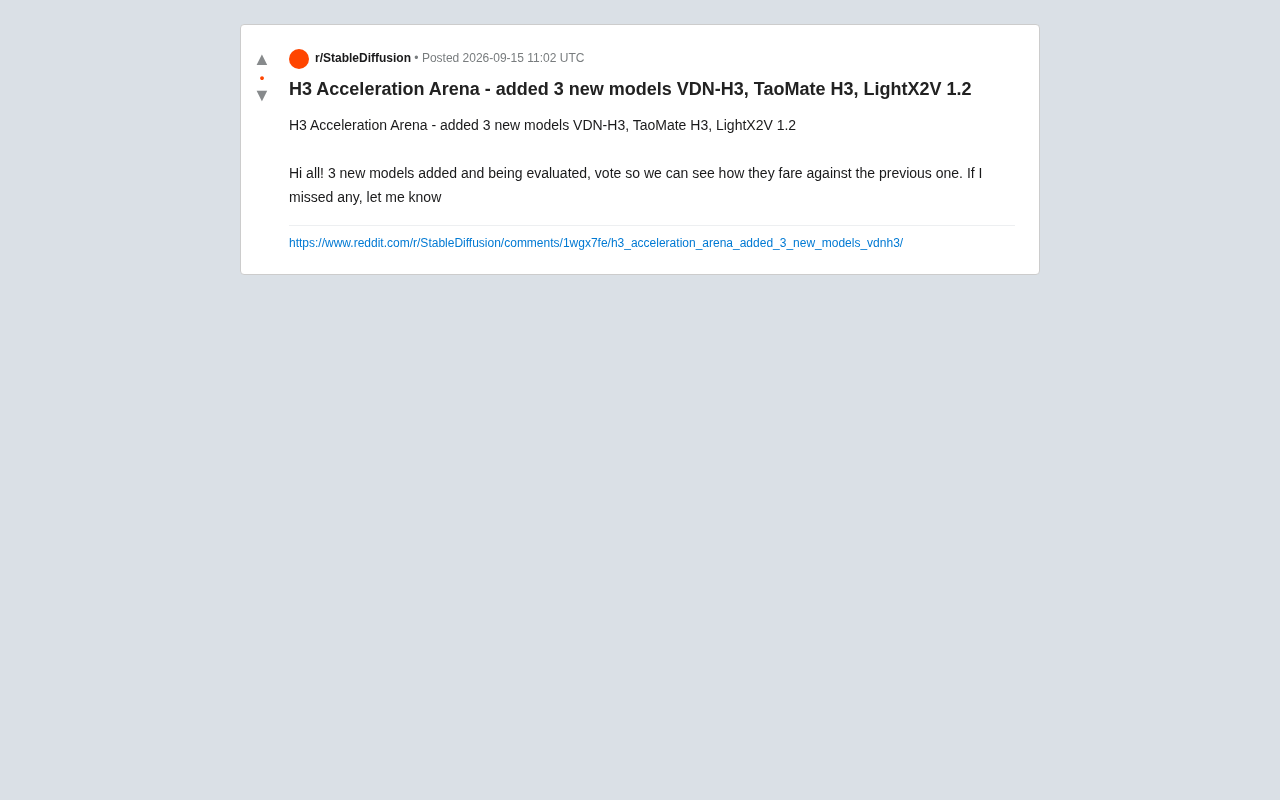
H3 Acceleration Arena Adds Three New Models: Community Crowdsourced AI Performance Testing
H3 Acceleration Arena adds VDN-H3, TaoMate H3, and LightX2V 1.2. Community votes compare new vs. old models on acceleration performance. Here's what to know.