Sam Altman: Accept the 'Bad' of AI to Gain Its Benefits

Altman argues society must accept AI's harms for its gains — but who actually bears the cost?
OpenAI CEO Sam Altman recently argued that society should accept AI's negative consequences in exchange for its enormous benefits, sparking immediate controversy. The core flaw in this "benefits-for-costs" logic is that those who bear the harms and those who reap the rewards are rarely the same people. Altman's position embodies Silicon Valley's deep-rooted technological optimism, but also exposes a troubling power imbalance — a handful of tech leaders unilaterally framing risks as "necessary costs" is itself an exercise of power. The real challenge for AI governance isn't whether to accept harm, but who defines acceptable harm, who pays for it, and what mechanisms exist to deliver on promised benefits.
Altman's Controversial Stance
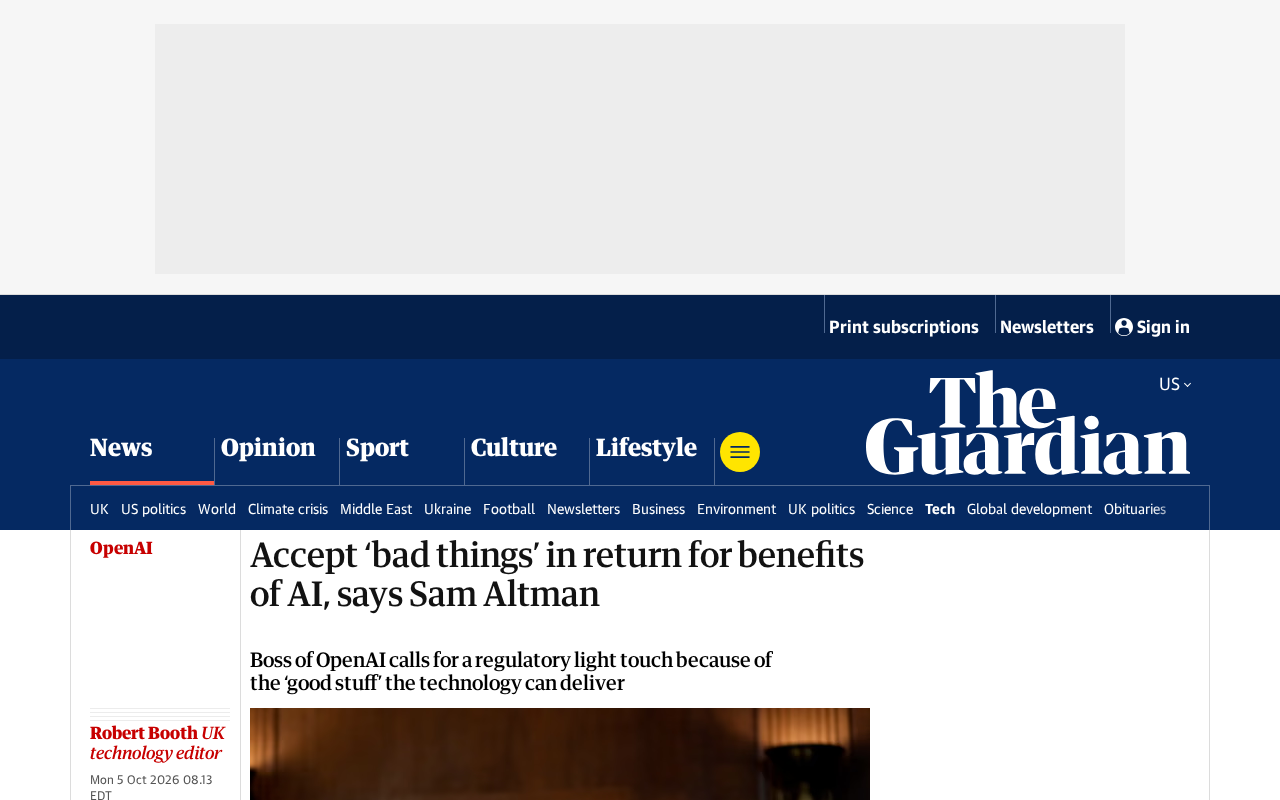
OpenAI CEO Sam Altman recently stirred debate with a characteristically provocative argument: society should accept the "bad things" that come with artificial intelligence in exchange for the enormous benefits the technology can deliver. The statement quickly ignited discussion across the tech community and cut straight to the heart of the most pressing ethical trade-offs in AI development today.
Remarks like this don't emerge in a vacuum. As generative AI has accelerated its penetration across industries over the past few years, the debate over how to balance technological dividends against potential harms has moved from academic circles into the public sphere. As a central figure driving this wave, Altman's views often represent the most aggressive wing of the industry.
The Essence of the "Benefits for Costs" Logic
Altman's core argument can be summarized as a cost-benefit trade-off: any disruptive technology inevitably brings negative consequences alongside transformative change, and society shouldn't abandon the enormous value technology can create just because it fears those downsides.
This logic is hardly new. From the Industrial Revolution to the rise of the internet, every major technological leap has been accompanied by employment shocks, social restructuring, and ethical dilemmas. Proponents argue that AI's potential in healthcare, research, education, and productivity is more than sufficient to offset its risks — the key is management, not avoidance.
Critics, however, are quick to identify the fatal flaw in this framework: when the people bearing the "bad things" and those reaping the benefits are not the same group, a simple trade-off stops making sense. Workers displaced by AI, members of the public battered by misinformation, individuals whose privacy is eroded — did they ever actually consent to this deal?
The Limits of Technological Optimism
Altman's stance reflects a classic form of technological optimism — the belief that technological progress is inherently a force for good, and that short-term pain will be offset by long-term prosperity. This position has deep roots in Silicon Valley, but is facing mounting scrutiny.
The central question is who gets to decide, on behalf of all of society, that the "bad things" are acceptable. When a single company or a handful of tech leaders controls technology capable of reshaping society, framing negative consequences as "necessary costs" inherently reflects an imbalance of power. This is precisely why regulators, policymakers, and ordinary users remain wary of such rhetoric.
In tech communities like Hacker News, this kind of argument typically triggers polarized reactions: one camp embraces pragmatic progressivism and worries that over-regulation will stifle innovation, while another fears that downplaying harms as mere "bad things" is paving the way for corporations to dodge accountability.
Technological Optimism as a systematic worldview is rooted in the Enlightenment's faith in reason and progress, and evolved into something close to a religious creed within Silicon Valley culture during the 20th century. Its core assumption is that technological problems can ultimately be solved by better technology, and that advancing the technological frontier therefore carries its own moral justification. This current of thought gave rise to slogans like "Move fast and break things." Yet following a string of incidents — the Facebook data scandal, algorithmic bias controversies, platform monopolization — both academia and policy circles have grown far more cautious. Scholar Evgeny Morozov termed its most extreme form "Solutionism," criticizing its tendency to reduce complex socio-political problems to engineering challenges amenable to technical fixes, thereby obscuring underlying power dynamics and value choices. In the context of AI, this critique cuts especially deep: when the design of a technical system already embeds specific values, claiming that "technology is neutral" becomes a convenient way to evade responsibility.
Implications for AI Governance
Setting aside the battle of perspectives, Altman's remarks actually highlight a fundamental challenge for AI governance: how to ensure a more equitable distribution of both the benefits and risks of technology without strangling innovation in the process.
The real questions worth asking are not "whether to accept bad things," but rather: "Who gets to define what counts as acceptable harm?" "Who pays for the damage?" And "What mechanisms exist to actually deliver on the promised benefits?" Without transparent accountability frameworks and risk-compensation systems, "accepting bad things in exchange for good ones" risks becoming nothing more than one-sided rhetoric.
As AI capabilities continue to grow, these trade-off debates will only intensify. Altman's remarks may have been unusually blunt, but they force the public to confront an unavoidable reality: AI development will never be cost-free. The question is whether society can build the decision-making and distribution mechanisms needed to make that reality fair.
AI governance currently follows several distinct paths globally. The EU, exemplified by the AI Act, has adopted a mandatory, risk-tiered regulatory framework with explicit compliance requirements for high-risk applications. The US leans toward a combination of industry self-regulation and after-the-fact oversight. China emphasizes algorithm registration and content regulation. Yet all of these frameworks face a common dilemma that Altman's words bring into sharp relief: who defines "acceptable risk," and how can inter-generational and cross-border risk compensation mechanisms be established? In economics, the Kaldor-Hicks efficiency criterion holds that a policy is efficient as long as the gains are theoretically sufficient to compensate for the losses — but this standard has long been criticized for ignoring whether compensation actually occurs. This is structurally identical to the real-world challenge of distributing AI's benefits.
Conclusion
This brief discussion surfacing from Hacker News reflects a profound tension at the heart of the AI era — the tug-of-war between the seeming inevitability of technological progress and its social costs. Altman has chosen to stand on the side of pushing progress forward, but his remarks also remind us that decision-making authority over AI's future should not rest solely in the hands of those driving the technology. How to make this "deal" more fair and transparent is a question that all of society will need to answer together in the years ahead.
Related articles

M&M's Spent Millions Replacing Artificial Blue Dye — Why Is It So Hard?
Mars spent millions trying to replace artificial blue dye in M&M's with spirulina, but thick material clogs pipes and residue risks mold, forcing a full production-line rebuild. Here's the engineering behind the reformulation.
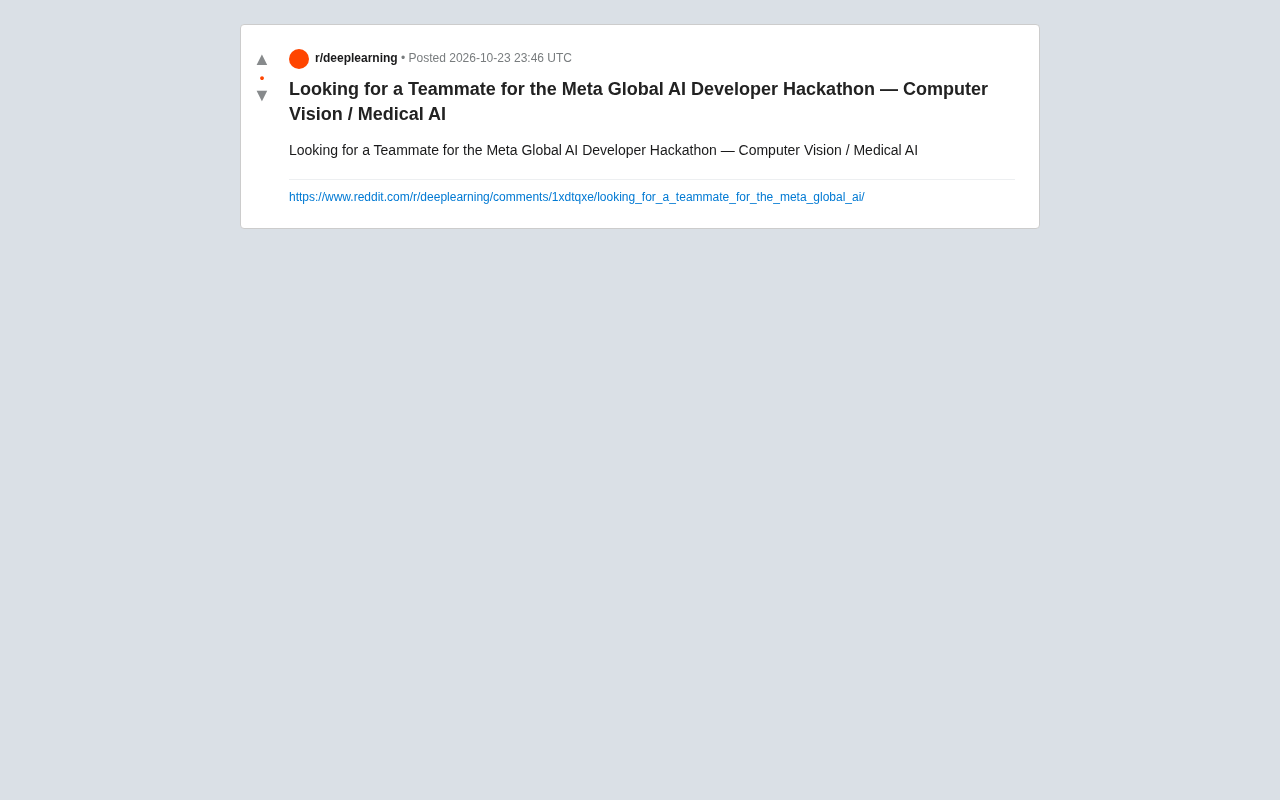
Teammate Wanted for Meta Global AI Developer Hackathon: Computer Vision & Medical AI
A Reddit developer seeks teammates for the Meta Global AI Developer Hackathon, focusing on computer vision and medical AI. This article analyzes the track logic, skills-complementarity needs, and topic selection strategy behind this teaming signal.
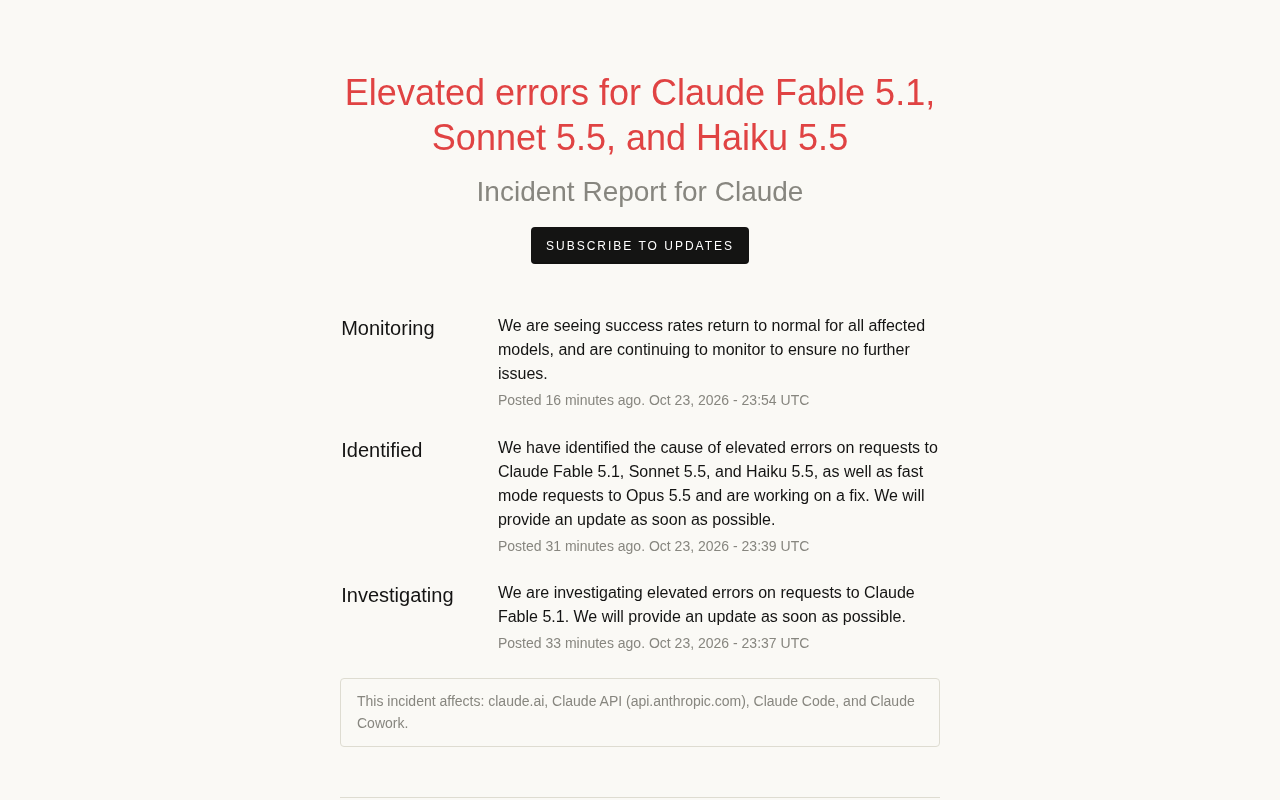
Multiple Claude Models Hit by Errors: A Postmortem of Fable 5.1, Sonnet 5.5, and Haiku 5.5
Claude Fable 5.1, Sonnet 5.5, Haiku 5.5, and Opus 5.5 fast mode saw elevated errors; Anthropic identified and resolved the issue in 17 minutes. This postmortem covers the timeline, the technical reasons for the multi-model cascading failure, and practical lessons for retry and degradation strategies.