SAVE America Act: How a Strict Voting Bill Could Affect 21 Million Americans
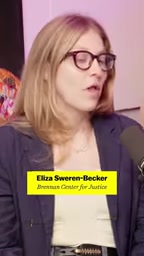
SAVE America Act requires citizenship documents at every voter registration, potentially disenfranchising 21 million Americans.
The SAVE America Act would require U.S. citizens to present citizenship documents such as a passport or birth certificate every time they register to vote. The Brennan Center for Justice calls it "the strictest voting bill in history." Research shows that more than 21 million Americans cannot readily obtain these documents, with affected groups including people with name mismatches, students, rural voters, and people with multiple jobs. The cost and time involved constitute substantial barriers. Critics point out that noncitizen voting is extremely rare and the bill's actual effect is to suppress participation by eligible voters; supporters argue that citizenship is a basic threshold for voting. The bill is not yet law but reflects the polarized trend in the U.S. voting rights debate.
The debate over voting rights in the United States is heating up again. A bill called the "SAVE America Act" has been dubbed by the Brennan Center for Justice as "the strictest voting bill in history." It would require all citizens to present citizenship documents such as a passport or birth certificate every time they register to vote. On the surface, it's about preventing fraud, but research shows that more than 21 million Americans cannot readily produce these documents. Based on YouTube video material, this article breaks down the bill's core provisions, the affected populations, and the points of controversy.
The Core of the Bill: "Show Your Papers" at Every Registration
The core requirement of the SAVE America Act is straightforward: any U.S. citizen must provide a passport, birth certificate, or other document proving citizenship when registering to vote. The key phrase is "every time"—first-time registration, re-registration, and even re-registration after an address change all require repeated submission. The video summarizes this as a "show your papers" policy.
This design differs from the existing voting process in most states. Currently, most states only require identification for first-time voting, and they accept multiple forms, such as a driver's license or a utility bill. The SAVE Act raises the bar to "proof of citizenship" and strictly limits the types of documents accepted. According to the video material, the bill has not yet become law but has already sparked widespread debate.
Who Gets Shut Out of the Polls? The Real Predicament of 21 Million People
Research from the Brennan Center for Justice provides a concrete number: more than 21 million Americans cannot readily obtain a passport or birth certificate. This is not a low-probability event. The video lists several typical groups:
- People with name mismatches: Those whose current legal name differs from the name on their birth certificate due to marriage, adoption, or other reasons, requiring additional legal procedures to correct the documents.
- Students and rural voters: Those far from their birthplace or lacking transportation, making it difficult to visit relevant agencies in person.
- People with multiple jobs: Those working multiple jobs struggle to find time to handle cumbersome document applications.
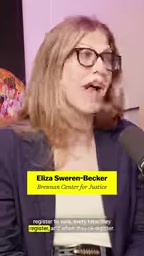
The documents themselves also come at a cost. Passport application fees exceed $100, birth certificate fees vary by state, and waiting periods can last weeks. For low-income families, this expense and time cost constitute a substantial barrier. The video emphasizes that if the SAVE Act becomes law, these groups would lose their voting eligibility because they "cannot readily provide the documents."
Brennan Center for Justice is a nonprofit public policy research institution affiliated with NYU School of Law, focused on democracy, justice, and rights issues. The center publishes extensive empirical research on voting rights, campaign finance reform, and criminal justice reform, and its data is frequently cited in media and legislative debates. In voting rights debates, the Brennan Center is generally seen as leaning toward loosening voting restrictions, so its research conclusions are often questioned by supporters of strict voter ID bills. Understanding this institutional background helps readers assess the source's stance and policy leanings behind the figure "21 million people cannot readily provide documents."
The Logic and Controversy of "Show Your Papers" Policies
Supporters typically argue that requiring proof of citizenship can prevent noncitizen voting and enhance election integrity. But critics in the video material point out that noncitizen voting is extremely rare in U.S. elections, and the bill's actual effect is to suppress participation by eligible voters.
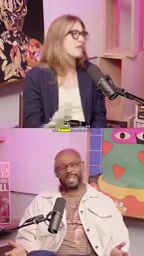
The Brennan Center for Justice calls it the "strictest voting bill" because of its broad scope—it applies not only to first-time registration but to every registration; it requires not just identification but specifically citizenship documents. This design shifts the burden of proof entirely onto voters rather than the government. By contrast, most European countries require identification but typically accept multiple forms of ID and only require them at first-time registration.
Noncitizen voting refers to the act of individuals who are not U.S. citizens registering or voting in federal, state, or local elections. Under U.S. law, noncitizens voting in federal elections is a criminal offense that can result in fines, imprisonment, or even deportation. Multiple academic studies and election official investigations show that noncitizen voting is extremely rare in U.S. elections and is typically classified as isolated cases rather than a systemic phenomenon. However, some policymakers still view it as a potential threat to election integrity and use it as the main argument for pushing strict citizenship documentation bills. This gap between fact and perception forms one of the core backgrounds of the SAVE America Act controversy.
The Bill's Status and Broader Implications
It must be made clear: the SAVE America Act is not currently law. The video repeatedly emphasizes "which to be clear, it is not." But the bill's introduction itself reflects the polarized trend in the U.S. voting rights debate.

If similar provisions pass at the state level, they could have a cascading effect. According to the video data, among the 21 million affected people, racial minorities, young voters, and low-income groups are overrepresented, which could lead to changes in the voter composition. Critics worry that the bill uses the name of "preventing fraud" to achieve "restricting voting." Supporters counter that citizenship is a basic threshold for voting and that requiring proof is not unreasonable.
Currently, discussion of the bill continues. For those interested in the U.S. electoral system, the SAVE America Act offers a window for observation: when "election integrity" conflicts with "voting convenience," how should policy balance them? The core conclusion of the video material is that strict document requirements could stop millions of eligible voters at the polling station door, and most of them are not intentionally violating rules—they simply cannot overcome the document barrier.
One-line Summary
SAVE America Act requires citizenship documents at every voter registration, potentially disenfranchising 21 million Americans.
Paragraph Summary
The SAVE America Act would require U.S. citizens to present citizenship documents such as a passport or birth certificate every time they register to vote. The Brennan Center for Justice calls it "the strictest voting bill in history." Research shows that more than 21 million Americans cannot readily obtain these documents, with affected groups including people with name mismatches, students, rural voters, and people with multiple jobs. The cost and time involved constitute substantial barriers. Critics point out that noncitizen voting is extremely rare and the bill's actual effect is to suppress participation by eligible voters; supporters argue that citizenship is a basic threshold for voting. The bill is not yet law but reflects the polarized trend in the U.S. voting rights debate.
Related articles

LLaMA-Factory in Practice: A Complete No-Code Guide to Fine-Tuning Large Models
An introduction to LLaMA-Factory, the open-source fine-tuning tool: its 60.1K-star background, supported models and algorithms, local vs. cloud deployment, and CUDA setup steps.

Zeng Ming's Deep Retrospective: Why OpenAI May Not Be the Ultimate Winner — and Why the Corporate System Will Disappear
Zeng Ming's deep retrospective on the AI endgame: model companies are just infrastructure, OpenAI and Anthropic won't be the final winners; the next battle is the Agent entry point standard; the corporate system will disappear as AI restructures collaboration, and only mission-driven companies can survive the cycle.

OpenHands v1.28.0: OpenCode and PI Added as Built-in Agents, API Keys Requestable In-Conversation
OpenHands ships 5 releases in 21 days: v1.27.0 adds OpenCode and PI as built-in agents, v1.28.0 enables in-chat key requests. ACP integration, credential reuse, model list changes, and upgrade advice.