screenshot-to-code: The Open-Source AI Tool That Turns Screenshots into Frontend Code Instantly
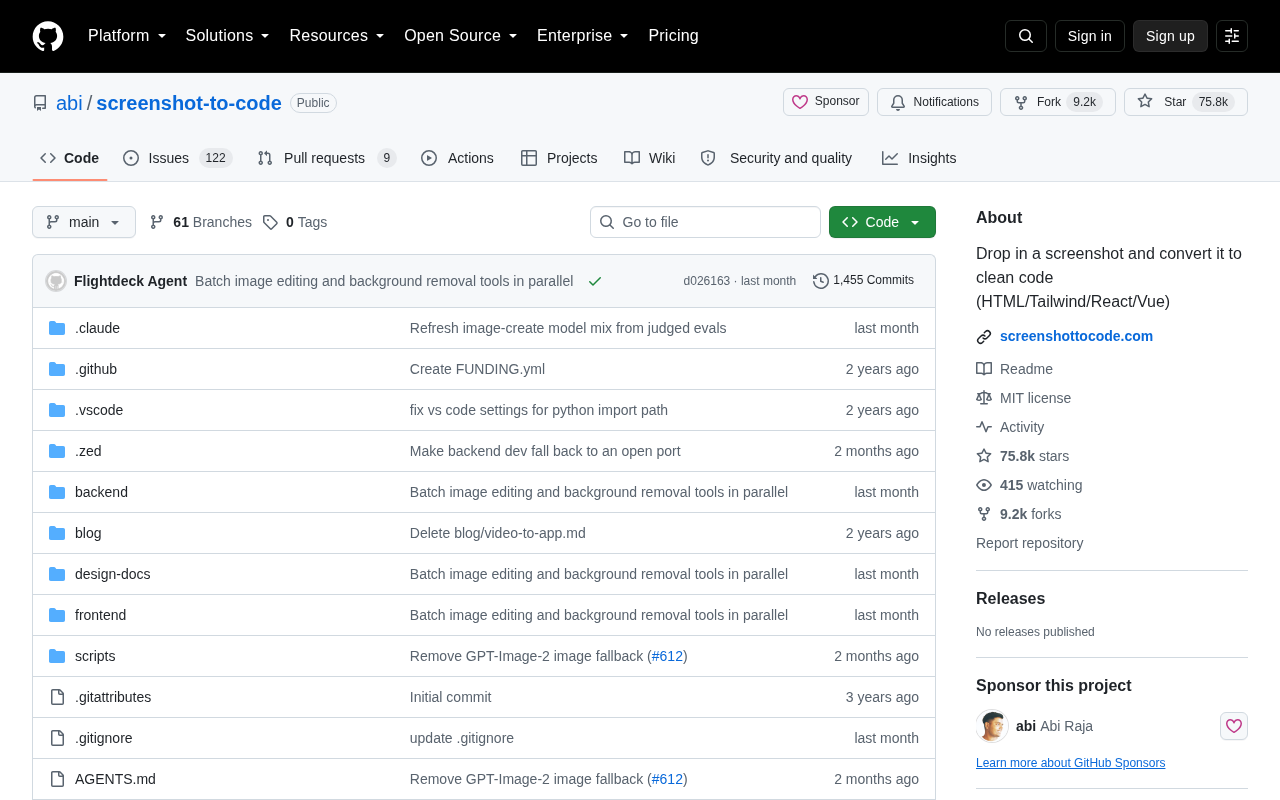
Open-source AI tool that converts webpage screenshots into clean frontend code using multimodal LLMs.
screenshot-to-code is a popular open-source project with over 75K GitHub stars that uses multimodal large language models like GPT-4V and Claude to automatically convert webpage screenshots into clean, usable frontend code. It supports multiple tech stacks including HTML + Tailwind CSS, React, Vue, and plain HTML/CSS, making it a versatile tool for rapid prototyping, competitor page replication, and design restoration.
Turn a Single Screenshot into Frontend Code Instantly
In the day-to-day work of frontend development, translating design mockups or reference pages into code is often the most time-consuming and tedious part. Design-to-Code conversion has long been a classic challenge in frontend engineering — in the traditional workflow, designers complete their work in tools like Figma or Sketch, and then frontend engineers manually measure spacing, extract color values, slice assets, and write CSS. This process typically accounts for 30%-50% of frontend development effort. Tools like Figma Dev Mode and Zeplin have attempted to shorten this workflow through structured parsing of design files, but they depend on standardized design file formats and have limited applicability.
The open-source project screenshot-to-code was built to solve exactly this pain point — simply upload a webpage screenshot, and it automatically generates clean, usable frontend code. What makes it innovative is that it takes screenshots directly as input, meaning any visual content — including competitor pages, hand-drawn sketches, or even archived historical designs — can be quickly converted into code. This makes its use cases far broader than design-file-based solutions.
The project is maintained by developer abi and has already earned over 75,788 stars on GitHub, with 9,231 forks and 326 new stars gained in a single day, showing continuously rising popularity. These numbers clearly demonstrate its popularity within the developer community and validate the enormous market demand for AI-assisted programming.
Core Features at a Glance
The core logic of screenshot-to-code is remarkably straightforward: image in, code out. It leverages the visual understanding capabilities of multimodal large language models to recognize layouts, components, color schemes, and text in screenshots, then translates them into structured frontend code.
Multimodal Large Language Models (Multimodal LLMs) refer to AI models capable of simultaneously processing multiple modalities of input, such as text, images, and audio. Unlike traditional text-only large language models, multimodal models use visual encoders (such as the ViT architecture) to convert images into vector representations the model can understand, then combine this with the language model's text comprehension abilities to achieve cross-modal reasoning and generation. GPT-4V (GPT-4 with Vision), Claude 3.5 Sonnet, and Gemini Pro Vision are all representative multimodal large models today. In the screenshot-to-code scenario, the model must complete a complex mapping from pixel-level visual information to structured code, involving multiple subtasks including layout analysis, component recognition, color extraction, font inference, and spatial relationship understanding.
The entire process requires no manual annotation, dramatically lowering the barrier from design to implementation. For developers who need to rapidly build prototypes, replicate competitor pages, or restore historical design mockups, this screenshot-to-code tool can save enormous amounts of manual coding time.
Support for Multiple Mainstream Frontend Tech Stacks
One of screenshot-to-code's major highlights is its broad support for multiple frontend technology stacks, covering today's most popular development approaches:
- HTML + Tailwind CSS: Ideal for lightweight, rapid-delivery static page scenarios. Tailwind CSS is a CSS framework built on a "Utility-First" design philosophy, created by Adam Wathan in 2017. Unlike traditional component-based frameworks like Bootstrap, Tailwind doesn't provide pre-built button or card components. Instead, it offers a large set of atomic CSS classes (such as
p-4,text-center,bg-blue-500) that let developers compose styles directly in HTML. This approach is a natural fit for AI code generation — the model only needs to map visual elements to corresponding Tailwind class name combinations without generating complex custom CSS files, greatly simplifying the output code's complexity while maintaining high reproduction accuracy. - React: Geared toward component-based development, generating code structures that follow modern frontend paradigms. React is developed and maintained by Meta, uses JSX syntax to merge HTML with JavaScript, emphasizes functional programming and unidirectional data flow, and is currently one of the most widely used frontend frameworks globally.
- Vue: Provides native support for developers in the Vue ecosystem. Vue was created by Evan You and uses Single File Components (.vue files), offering a development experience closer to traditional HTML through template syntax, a reactive data system, and the Composition API. When generating componentized code for React or Vue, screenshot-to-code must intelligently determine which parts of the page structure should be abstracted into independent components, how props should be defined, and how state should be managed — placing considerable demands on the underlying model's code comprehension capabilities.
- Plain HTML/CSS: Meets basic development needs with no framework dependencies.
This multi-stack flexibility means that regardless of which framework your project uses, you can find a matching output format without any secondary conversion.
From "Design Reproduction" to "Usable Code"
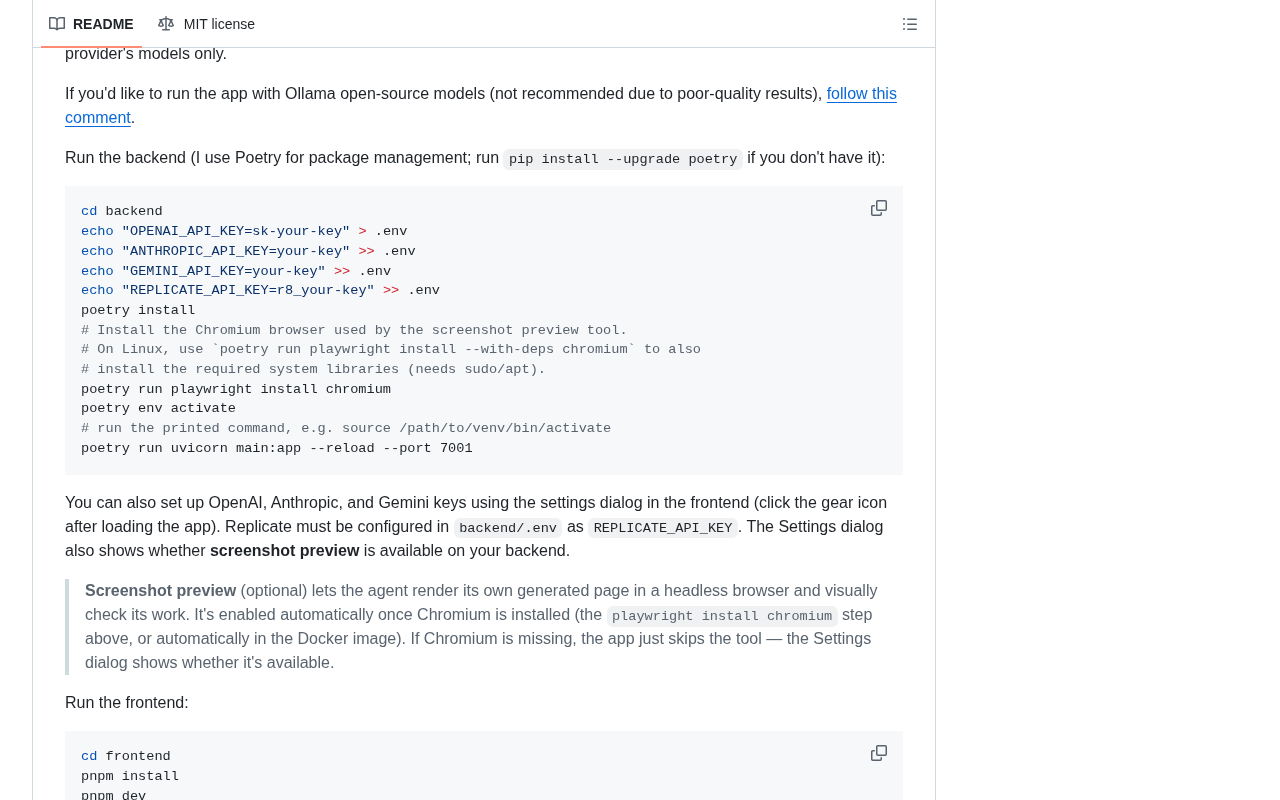
Unlike some tools that can only produce rough drafts, screenshot-to-code emphasizes outputting "clean code." This means the generated results don't just run — they're also optimized for code structure, naming conventions, and maintainability, allowing developers to iterate directly on the output rather than starting from scratch.
Of course, AI-generated code still requires human review. Complex interaction logic, dynamic data binding, and other details often need further refinement by developers. screenshot-to-code is better positioned as an efficient "starting point generator" that helps you skip repetitive reproduction work, rather than a complete replacement for manual coding.
The Multimodal LLM Technology Trend Behind It
The rise of screenshot-to-code reflects the real-world engineering capabilities of multimodal large language models. In the past, image recognition and code generation were two relatively independent fields. Now, with the emergence of visually capable large models like GPT-4V, the once science-fiction scenario of "looking at an image and writing code" has become reality.
The project uses Python as its primary development language and calls visual large model APIs to complete the image-to-code mapping. This technical architecture represents the mainstream paradigm for current AI application development — calling cloud-based large model capabilities via APIs rather than training or deploying models independently. Specifically, this pattern typically consists of three layers: the frontend interaction layer (receiving user-uploaded screenshots), the backend orchestration layer (business logic written in Python, responsible for constructing prompts, calling APIs, and post-processing output), and the model service layer (visual large model APIs provided by OpenAI, Anthropic, and others). The advantage of this architecture is that developers can focus on optimizing the product experience for their vertical scenario without bearing the massive computational costs of model training, while also automatically benefiting from capability improvements as the underlying models evolve.
This also represents a typical pattern in current AI application development: developers no longer train models from scratch, but instead build vertical-scenario toolchains around mature large model capabilities.
What This Means for Developers
For individual developers and small teams, the value of AI coding tools like screenshot-to-code is particularly significant:
- Lowering the frontend development barrier: Even without deep frontend expertise, you can quickly produce usable page code.
- Dramatically improving iteration speed: Hand off repetitive design reproduction work to AI, and focus your energy on business logic and interaction design.
- Aiding frontend learning: Beginners can learn excellent page layout and component patterns by studying AI-generated code.
That said, a balanced perspective is needed — the quality of AI-generated code is highly dependent on the underlying model's capabilities and the clarity of the screenshot itself. Before using it in production environments, human review remains essential.
Conclusion
With its simple and direct product positioning, broad support for tech stacks including HTML/React/Vue, and continuously rising community enthusiasm, screenshot-to-code has become a benchmark project in the AI-assisted frontend development space. It's not just a practical screenshot-to-code tool — it's a vivid example of multimodal large language models landing in real engineering scenarios.
As visual large model capabilities continue to evolve, the "what you see is what you get" automated coding experience will only grow more mature. For developers keeping an eye on AI programming trends, screenshot-to-code is undoubtedly worth exploring in depth.
Related articles

M&M's Spent Millions Replacing Artificial Blue Dye — Why Is It So Hard?
Mars spent millions trying to replace artificial blue dye in M&M's with spirulina, but thick material clogs pipes and residue risks mold, forcing a full production-line rebuild. Here's the engineering behind the reformulation.
Teammate Wanted for Meta Global AI Developer Hackathon: Computer Vision & Medical AI
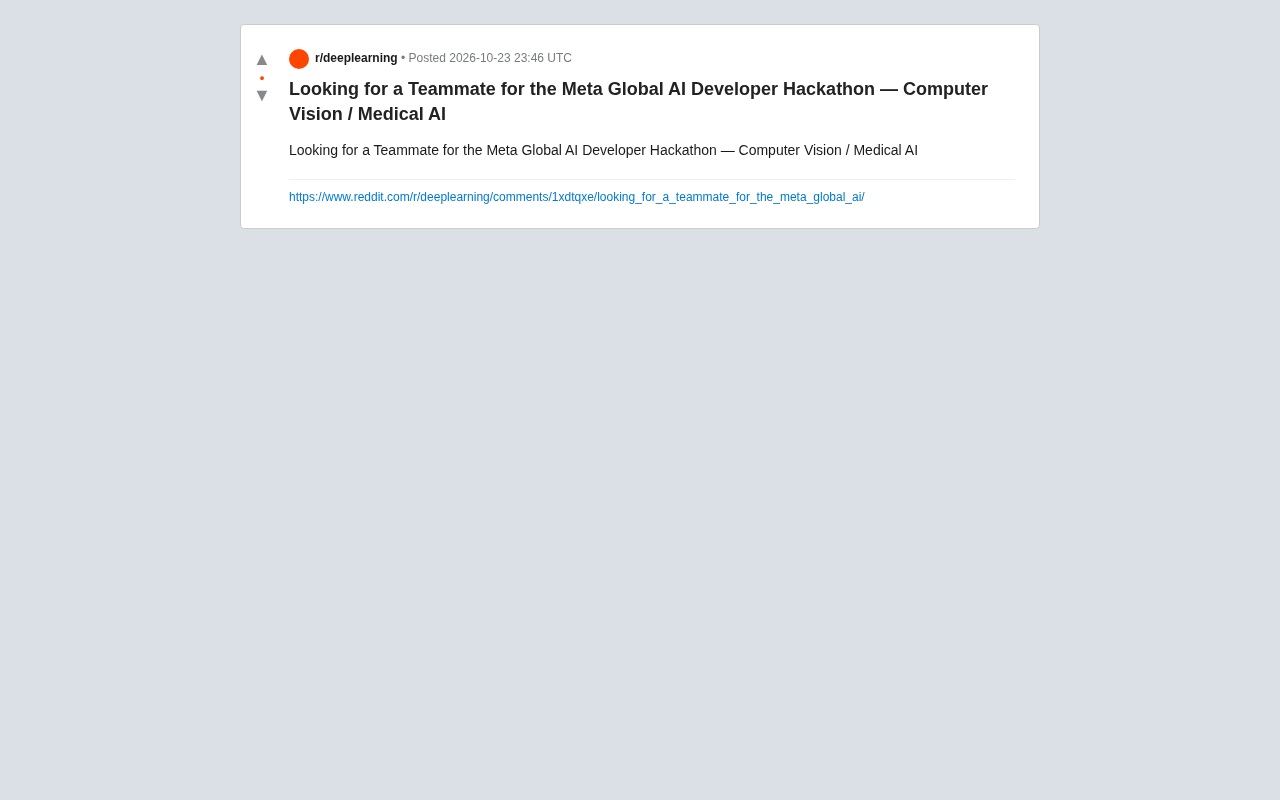
A Reddit developer seeks teammates for the Meta Global AI Developer Hackathon, focusing on computer vision and medical AI. This article analyzes the track logic, skills-complementarity needs, and topic selection strategy behind this teaming signal.
Multiple Claude Models Hit by Errors: A Postmortem of Fable 5.1, Sonnet 5.5, and Haiku 5.5
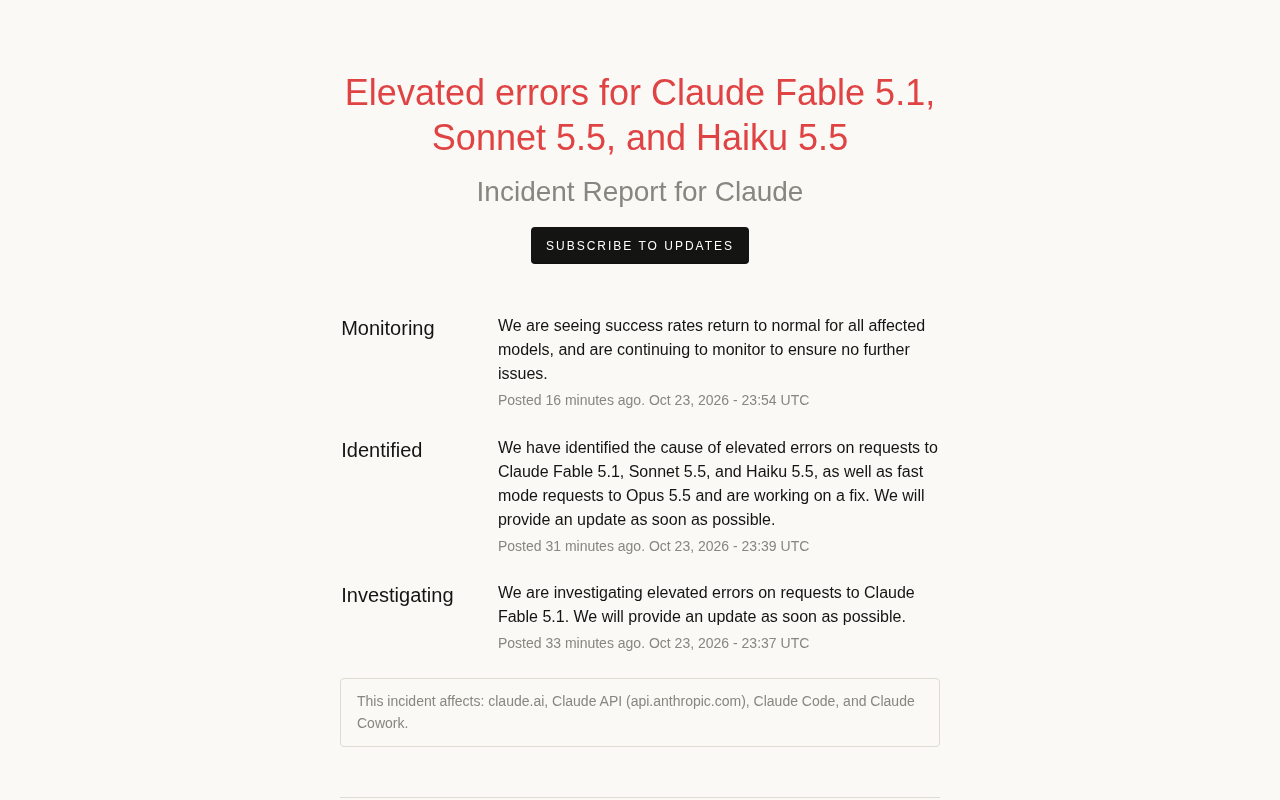
Claude Fable 5.1, Sonnet 5.5, Haiku 5.5, and Opus 5.5 fast mode saw elevated errors; Anthropic identified and resolved the issue in 17 minutes. This postmortem covers the timeline, the technical reasons for the multi-model cascading failure, and practical lessons for retry and degradation strategies.