Security Through Obscurity Is Dead: AI Delivered the Final Blow

AI lowers the reverse engineering barrier, stripping security through obscurity of its last line of defense.
This article examines the claim that security through obscurity is dead. Obscurity-based security hides system internals to deter attackers, fundamentally violating Kerckhoffs's principle and repeatedly proven unreliable throughout history. The rise of AI delivered the final blow: LLMs and automation tools have dramatically lowered the barriers to reverse engineering, large-scale probing, and acquiring niche knowledge, gutting the information-asymmetry strategies obscurity depends on. The article calls for a return to security fundamentals — designing under the assumption that attackers have full internal knowledge, and adopting defense-in-depth, least privilege, and strong authentication. It also maintains measured restraint, noting that AI largely reinforces existing security community consensus rather than introducing an entirely new conclusion.
The End of an Old Security Philosophy
"Security through obscurity" refers to the practice of hiding a system's implementation details, code logic, or architectural design to prevent attackers from discovering vulnerabilities. This philosophy has long been controversial in the security community — it was never genuine protection, but more like hiding a key under a doormat: effective only as long as nobody thinks to look there.
A recent article that sparked discussion on Hacker News makes a pointed argument: security through obscurity has completely failed, and artificial intelligence delivered the final blow. This claim deserves serious consideration from every security practitioner.
Note: This article is based on a Hacker News discussion thread. The post currently has limited traction (approximately 10 points, 5 comments), and the original argument is still in early exploratory stages.
Why Obscurity Was Never Real Security
There is a widely accepted principle in security — Kerckhoffs's principle: the security of a cryptographic system should depend only on the secrecy of the key, not on the secrecy of the algorithm itself. In other words, even if an attacker fully understands how a system works, the system should still be secure.
Security through obscurity directly violates this principle. It places its hopes on the assumption that "attackers don't know the internal details." The problem is that this "not knowing" is a fragile premise:
- Code can be decompiled or leaked
- Insiders may leave and take their knowledge with them
- Attackers can reverse-engineer hidden logic through extensive probing
Historically, countless systems that relied on obscurity collapsed quickly once subjected to public scrutiny. Truly robust security should withstand the assumption that an attacker has complete knowledge of the system.
How AI Accelerated the Collapse of Obscurity
The article's core argument is that AI has dramatically reduced the cost of "lifting the veil" of obscurity. In the past, reverse engineering obfuscated code, analyzing undisclosed protocols, or reconstructing logic from binaries required specialized skills and significant time. This skill barrier itself served as the last moat protecting security through obscurity.
Today, large language models and AI-assisted tools are rapidly leveling that barrier:
The Democratization of Reverse Engineering
AI can assist in reading, interpreting, and reconstructing unfamiliar code — even obfuscated code. Analysis that once required a senior reverse engineer several days can now yield structured insights in a fraction of the time, dramatically lowering the barrier to attack.
Large-Scale Automated Probing
Obscurity relies on "no one wanting to put in the effort to dig." But AI makes automated, large-scale probing possible. Attackers can use AI to systematically enumerate hidden endpoints, guess undocumented APIs, and infer internal naming conventions — turning what was once scattered manual trial-and-error into a production pipeline.
The Erosion of Knowledge Barriers
Many obscurity techniques depend on "niche knowledge" — specific file formats, proprietary protocols, non-standard implementations. By synthesizing vast amounts of publicly available information, AI can quickly fill these knowledge gaps, rendering "winning through obscurity" strategies meaningless.
Practical Implications for Security Practice
If obscurity is no longer reliable, security efforts must return to fundamentals:
Assume everything will be exposed. When designing systems, assume attackers have access to complete source code, architecture documentation, and internal logic. Only systems that remain secure under this assumption are truly secure.
Rely on defense in depth, not single-point hiding. Strong authentication, least-privilege principles, encryption, audit logs, and timely patching — mechanisms that can withstand public scrutiny are the only sustainable lines of defense.
Beware of the false sense of security that obscurity provides. Obscurity isn't entirely without value; it can serve as an additional layer within a defense-in-depth strategy, increasing the cost for attackers. The danger lies in treating it as the primary line of defense, thereby neglecting real hardening work.
A Note of Measured Perspective
It's worth noting that this article remains at the stage of opinion and discussion, with limited community response and no large-scale empirical data to back its claims. AI has indeed lowered the cost of reverse engineering and probing, but "security through obscurity is dead" reads more as a cautionary declaration than a rigorous technical conclusion.
A more balanced interpretation might be: AI has further validated what the security community has long agreed upon — obscurity was never meant to be treated as real security in the first place. AI simply makes this truth impossible to ignore any longer. For defenders, this is both a source of pressure and an opportunity to return to the fundamentals of security.
Related articles
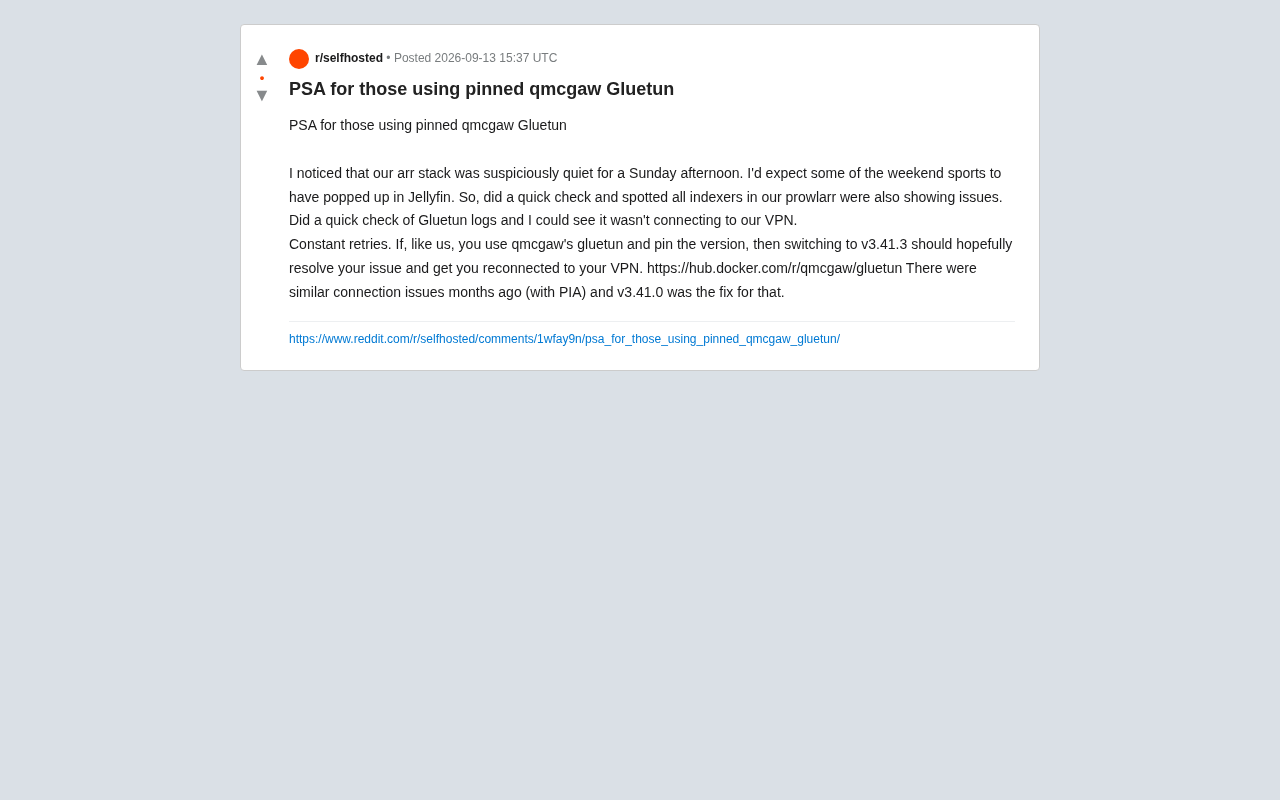
Gluetun VPN Disconnection Troubleshooting: Version-Pinned Users Should Upgrade to v3.41.3
Gluetun version-pinned users may face silent VPN disconnections breaking their arr stack. Learn how upgrading to v3.41.3 fixes the issue and tips to avoid it.

Trump Downplays AI Extinction Risk: 'Whoever Wins AI Wins' Sparks Controversy
Trump downplays AI extinction risks with 'Whoever wins AI wins,' sparking fierce debate over whether AI safety is an urgent reality or a future hypothetical.

David Sacks on AI Regulation: Frontier Models Don't Need Mandatory Legislative Constraints
David Sacks argues OpenAI and Anthropic can self-regulate frontier model development without external legislation. A look at the logic, controversy, and governance dilemmas involved.