Sequoia Leads Blacksmith's $66M Series C, AI Code Testing Platform Valued at $1B

Blacksmith raised a $66M Series C led by Sequoia at a $1B valuation.
Blacksmith announced a $66 million Series C led by Sequoia Capital, reaching a $1 billion valuation and becoming a new unicorn in AI code testing. Its platform helps enterprises build and test workflows around AI-generated code, consolidating scattered verification work into one platform. The article notes that as AI coding assistants spread, code generation speed has surged, making "how to verify what's generated" a new bottleneck. Sequoia's lead reflects rising capital interest in AI coding infrastructure, though Blacksmith faces intense competition and the risk of embedded testing from mainstream platforms.
The AI code testing space has a new unicorn. Blacksmith announced it has raised a $66 million Series C round led by Sequoia Capital, bringing the company's valuation to $1 billion.
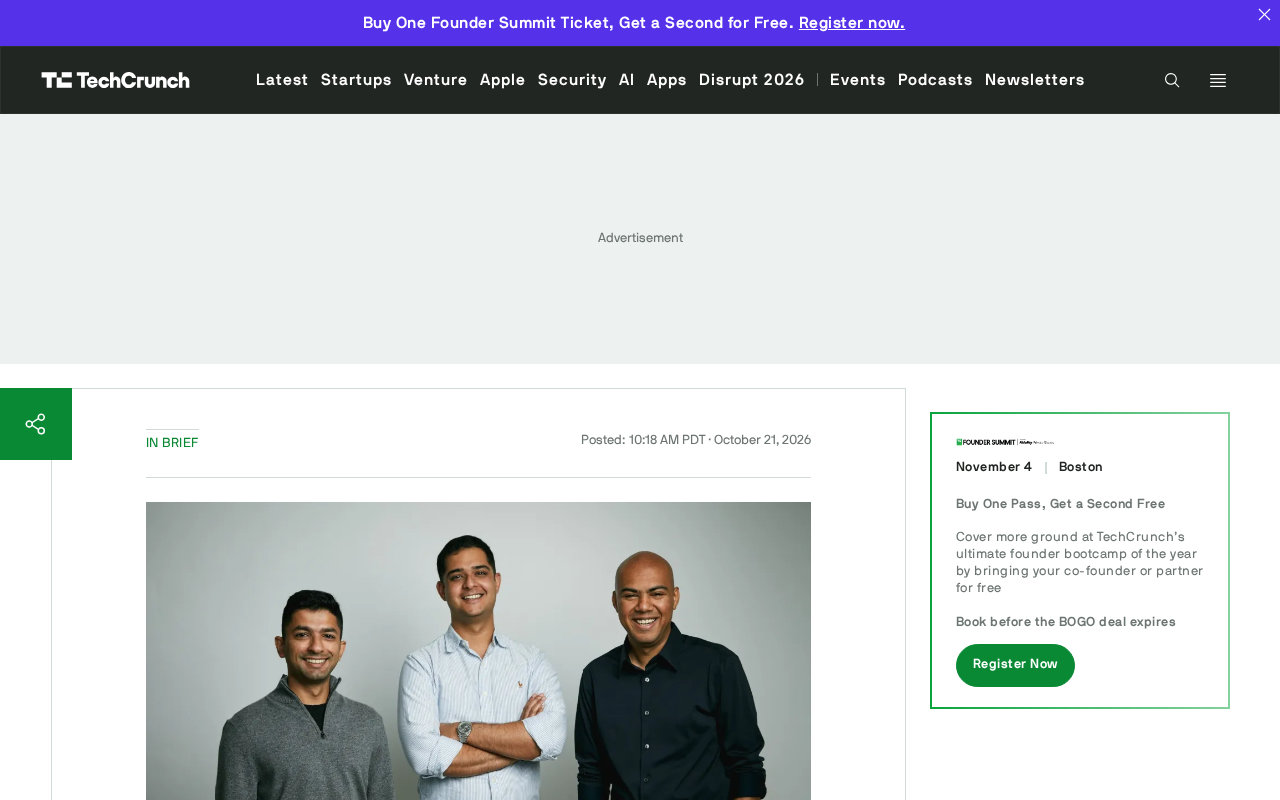
What Blacksmith does
Blacksmith positions itself as helping enterprises build and test AI code more efficiently. As AI coding assistants rapidly spread through enterprise development workflows, code generation speed has increased dramatically—but "how to verify what's been generated" has become the new bottleneck. Whether AI-written code runs reliably, conforms to engineering standards, and avoids introducing hidden defects all require supporting test infrastructure to backstop it.
Blacksmith targets exactly this link in the chain. Its platform helps teams build testing workflows around AI-generated code, consolidating verification work that was previously scattered across various toolchains into a single platform. The commercial logic here is easy to grasp: the more widespread AI coding becomes, the more rigid the demand for code testing and quality assurance.
CI/CD (continuous integration/continuous delivery) is a foundational concept for understanding the testing tools space. Continuous integration means developers frequently merge code into the main branch, with automated pipelines handling builds and tests; continuous delivery then automatically advances verified builds to a releasable state. Traditional CI/CD platforms (such as Jenkins, GitLab CI, and GitHub Actions) solve the problem of "how to get human-written code shipped quickly and safely." Once AI-generated code enters the pipeline, commit frequency and code volume may both rise significantly, amplifying the number of pipeline triggers, the coverage pressure on test cases, and the complexity of failure localization. The value of platforms like Blacksmith lies precisely in enhancing and consolidating the testing stage of this pipeline, ensuring AI code undergoes systematic verification before reaching production rather than relying on scattered manual checks.
Why Sequoia, why now
Sequoia Capital led this round, pushing Blacksmith's valuation past the $1 billion mark. According to the original report, the round totaled $66 million and is a Series C.
From an industry perspective, capital's attention to "AI coding-adjacent infrastructure" is on the rise. Model capability is no longer the sole competitive focus; the tooling layer around code generation, testing, deployment, and observability is forming an independent investment theme. Blacksmith's unicorn valuation is, to some extent, the market pricing this sub-segment of "AI code quality infrastructure."
A unicorn refers to a private startup valued at $1 billion or more, a term coined by investor Aileen Lee in 2013 to describe the extremely rare high-valuation private companies of that time. The unicorn label typically appears in later funding rounds (Series C and beyond), signaling that a company has moved past product validation into a phase of scaled expansion. It's important to distinguish that valuation comes from primary-market funding pricing and reflects investors' expectations for future growth, not the company's current revenue or profitability. So "valuation past $1 billion" is more a signal of market consensus; whether it materializes depends on subsequent revenue growth, customer retention, and shifts in the competitive landscape—which is why the article emphasizes "milestone" rather than "endpoint."
The challenges behind the unicorn label
A $1 billion valuation is only a milestone, and the tests Blacksmith faces are equally clear. The testing tools space is intensely competitive, with incumbents in traditional CI/CD and testing platforms as well as a wave of new startups emerging around AI coding. How to build sufficiently deep technical moats and customer stickiness in this new AI code scenario is key to whether its valuation can be sustained.
Another variable is the evolution direction of AI coding tools themselves. If mainstream development platforms deeply embed testing capabilities, the room for third-party testing platforms could be squeezed; conversely, if enterprises prefer open, composable toolchains, the value of independent platforms like Blacksmith will grow. This round buys it more time to see which path becomes mainstream.
Technical moats and customer stickiness are the two core dimensions for evaluating infrastructure companies like this. Technical moats typically come from engineering accumulation that's hard to replicate—for example, test adaptation across multiple languages and frameworks, targeted detection of AI-generated code characteristics (such as hallucinated API calls, redundant logic, and missing boundary conditions), and pipeline performance under large-scale concurrency. Customer stickiness is more about the depth of workflow embedding: once a testing platform is connected to code repositories, merge request gates, and release processes, switching costs rise with usage time and accumulated historical data. For Blacksmith, the real moat isn't usually a single-point detection algorithm but "the more you use it, the deeper it gets" process binding and a data feedback loop—which determines whether it has bargaining room when facing embedded capabilities from large platforms.
Editorial view
Blacksmith's funding sends a clear signal: competition in AI coding is shifting from "writing code" to "ensuring code reliability." For enterprise technical teams, this means AI code quality governance will move from optional to mandatory; for founders, the window in the infrastructure layer still exists, but the time left for independent players won't be long.
One-line Summary
Blacksmith raised a $66M Series C led by Sequoia at a $1B valuation.
Paragraph Summary
Blacksmith announced a $66 million Series C led by Sequoia Capital, reaching a $1 billion valuation and becoming a new unicorn in the AI code testing space. Its platform helps enterprises build and test workflows around AI-generated code, consolidating verification work scattered across toolchains into a unified platform. The article notes that as AI coding assistants spread, code generation speed has surged, making "how to verify what's generated" a new bottleneck and turning testing and QA demand rigid. Sequoia's lead reflects rising capital attention to the infrastructure layer around AI coding. However, Blacksmith also faces intense competition in testing and the risk that mainstream development platforms embed testing capabilities; whether its valuation materializes depends on its technical moat and customer stickiness.
Related articles

Huberman's Rational Supplement Guide: A Five-Layer Health Framework and Scientific Decision-Making
Stanford neurobiology professor Huberman proposes a rational supplement framework: behavior and nutrition are the foundation, basic combination supplements serve as insurance, and sleep/hormonal/cognitive directions should stick to single-ingredient experiments. Omega-3 is the top single-ingredient choice, and melatonin is not recommended.

The Unsung Painter Behind Gilded Age Manhattan Interior Design
HN discussion highlights the painter behind Gilded Age Manhattan interiors: he created murals and decorative paintings but was long overlooked as his work was seen as architectural appendage.

Can AI Agents Be Socially Engineered? Understanding Prompt Injection and Tool Permission Risks
Through Invariant Lab's GitHub Issue injection and Brave's AI browser attack, this article analyzes how Prompt Injection induces AI Agents to perform unauthorized actions, and offers protection advice across three layers: least privilege, tool validation, and operation auditing.