Show HN: A New Tool for Tracking the Evolution of AI Leaders' Views
Show HN: A New Tool for Tracking the E…
A developer built a tool tracking AI leaders' shifting views, sparking debate on transparency and accountability.
The article introduces a new tool showcased on Hacker News, blumify.io/people, which systematically tracks public statements by prominent AI figures and presents their evolving stances on AI safety, regulation, and open source via timelines. Unlike static quote aggregators, the tool tries to answer whether someone's position has changed, offering longitudinal reference for researchers, journalists, and investors. Community response was positive but raised concerns about citation completeness and contextual accuracy, noting that the motivations behind shifting views are complex—possibly reasonable corrections or strategic adjustments. The article argues such tools reflect the AI industry's higher expectations for transparency and accountability, with their value depending on how users interpret the information and the rigor of data collection.
Tracking AI Leaders' Views: Why Do We Need a Dedicated Tool?
The AI field is evolving at breakneck speed, with new technological breakthroughs, ethical controversies, and regulatory debates emerging almost daily. Against this backdrop, the public statements of AI leaders often serve as industry bellwethers. Yet their views are far from static—as technology advances and societal discussions deepen, many have quietly shifted their positions.
Recently on Hacker News, a developer showcased a tool they built (blumify.io/people) designed to systematically track AI leaders' statements and present the trajectory of their shifting views. The project quickly drew community attention because it addresses a real pain point: in an age of fragmented information, it's difficult to get a complete picture of how an AI leader's stance on key issues has evolved.
The Tool's Core Feature: From Static Quotes to Dynamic Evolution
According to the project page, the tool focuses on public statements by prominent figures in AI, displaying how their views on specific topics—such as AI safety, regulatory policy, open source vs. closed source—have changed over time. Users can see what a leader said at different points and compare their consistency before and after.
This design approach differs from traditional news aggregators or quote websites. It doesn't settle for "what someone said" but goes further to answer "has what they said changed?" For researchers, journalists, or investors, this longitudinal perspective offers unique reference value.
AI Safety is one of the key issues mentioned in the article. It refers to a range of research and policy directions aimed at ensuring AI systems don't cause unintended harm to humanity, covering subfields such as the alignment problem (making AI goals consistent with human values), interpretability, robustness, and preventing misuse. In discussions around AI safety, a common divide is whether to prioritize accelerating capability development or investing in safety research first. The public clashes between the "effective accelerationism" (e/acc) and "safety-first" camps are precisely the direct drivers behind many AI leaders' shifting positions.
The open source vs. closed source debate also deserves elaboration. Open source models (like the Llama series) allow anyone to download, modify, and deploy them. Supporters argue this promotes innovation democratization and safety auditing; opponents worry that once weights are made public, they cannot be recalled and could be used by malicious actors to create bioweapons or launch cyberattacks. The closed source camp (such as OpenAI and Anthropic) advocates managing risks through controlled access. This issue has become a focal point for tracking leaders' views because many have adjusted their positions under competitive pressure or shifting regulatory signals—for example, shifting from early support for open source to calling for restrictions.
Community Response: Real Demand, but Challenges Remain
In the Hacker News discussion, many users welcomed the tool. Some argued that AI leaders' shifting views often get buried in the daily news stream, and a centralized tracking tool could help people view industry discussions more rationally. Others raised concerns: how do you ensure the completeness and contextual accuracy of citations? If you only excerpt fragments, it could actually exacerbate misunderstandings.
Moreover, the reasons behind evolving views are often complex—they could be reasonable corrections based on new evidence, or strategic adjustments driven by commercial interests. The tool can present the fact of "change," but interpreting the motivations behind those changes still requires human judgment.
Significance for the AI Industry: Advancing Transparency and Accountability
From a broader perspective, the emergence of such tools reflects the AI industry's gradual maturation. As technology begins to profoundly impact society, the public has higher expectations for consistency between key figures' words and actions. A platform that can trace how views have changed objectively increases transparency and provides a basis for accountability.
Of course, the tool itself is neutral. It could be used to highlight someone's "contradictions," or it could help us discover that a leader maintained their principles amid controversy. The key lies in how users interpret this information and whether the tool is rigorous enough in data collection and presentation.
Accountability in the context of AI governance specifically refers to mechanisms that hold developers and decision-makers responsible for the impact of their systems. This includes ex-ante transparency requirements (such as disclosing training data, model capabilities, and known limitations) and ex-post accountability pathways (such as regulatory penalties, civil litigation, or reputational damage). When AI leaders' public statements are systematically recorded and compared, accountability gains a factual basis: the public can ask, "You promised in a certain year not to do something—why are you doing it now?" This kind of longitudinal tracking reduces reliance on individual memory and media narratives, making discussions more focused on verifiable records of words and actions.
Show HN is a specific section of the Hacker News community under Y Combinator that allows developers to showcase projects they're working on and get feedback. It's not merely a distribution channel but an important venue for early exposure and stress-testing in the tech community. The comments a project receives on Show HN often determine whether it can attract early users, contributors, or even investment. The blumify.io mentioned in the article entered public view through this channel, and the community's questions about its data collection methods and citation completeness reflect typical Show HN discussion characteristics: both constructive feedback and scrutiny of methodological rigor.
Conclusion
Although this Show HN project is still in its early stages, it points to a direction worth watching: in an era of rapid AI evolution, recording and examining the intellectual trajectories of key figures is itself a valuable form of public knowledge building. If you're interested in AI governance and industry trends, it's worth keeping an eye on how such tools develop.
Related articles
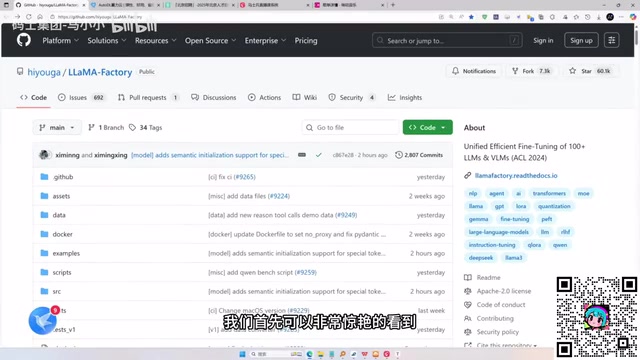
LLaMA-Factory in Practice: A Complete No-Code Guide to Fine-Tuning Large Models
An introduction to LLaMA-Factory, the open-source fine-tuning tool: its 60.1K-star background, supported models and algorithms, local vs. cloud deployment, and CUDA setup steps.

Zeng Ming's Deep Retrospective: Why OpenAI May Not Be the Ultimate Winner — and Why the Corporate System Will Disappear
Zeng Ming's deep retrospective on the AI endgame: model companies are just infrastructure, OpenAI and Anthropic won't be the final winners; the next battle is the Agent entry point standard; the corporate system will disappear as AI restructures collaboration, and only mission-driven companies can survive the cycle.

OpenHands v1.28.0: OpenCode and PI Added as Built-in Agents, API Keys Requestable In-Conversation
OpenHands ships 5 releases in 21 days: v1.27.0 adds OpenCode and PI as built-in agents, v1.28.0 enables in-chat key requests. ACP integration, credential reuse, model list changes, and upgrade advice.