Siri Got Smarter — But There's a Catch for Google App Users

New AI Siri is a real improvement — but only if you live inside Apple's ecosystem.
The AI-powered Siri on the latest iPhone is a genuine step forward in quality, though it still lags on response speed. The bigger issue is a hidden limitation: Siri's intelligence is essentially ecosystem-bound — Gmail can't be searched via Spotlight, and apps like WhatsApp don't integrate automatically, leaving non-Apple-native users with a noticeably weaker experience. Google's Gemini, backed by cross-service data, holds a natural edge in personalization. For users who span multiple platforms, running the Gemini app alongside iPhone hardware is the most practical middle ground.
Siri Has Finally Grown Up
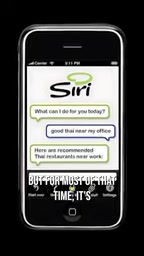
For years, Siri has been seen as the laggard among smart assistants — slower, less capable, and more limited than Google Assistant or Alexa. The new Siri, running on the latest iPhone Pro Max with the newest version of iOS, has finally been injected with genuine AI capabilities, delivering a noticeably improved experience.
That said, better doesn't mean perfect. According to one YouTube reviewer, the AI-powered Siri is still on the slower side when it comes to response time — but overall, it represents "a significant step forward." What really determines how useful it is, though, isn't the technology itself — it's how deeply you're embedded in Apple's ecosystem.
What the AI-Powered Experience Actually Feels Like
The reviewer offered a vivid metaphor: the "fuel" powering AI Siri is something like "ground-up RAM sticks mixed with human tears." Jokes aside, the core point is clear — Siri's AI capabilities have genuinely improved, but response latency remains a weak spot.
This suggests Apple has caught up on the generative AI assistant front, but hasn't pulled ahead yet. For users accustomed to the near-instant feedback of Google Assistant or third-party AI tools, that "half-a-beat-behind" gap is still there.

The Real Catch: Your Data Has to Stay Inside Apple's Ecosystem
The most valuable insight from this review is a limitation that's easy to overlook: Siri's intelligence depends on how much of your data lives inside Apple's first-party apps.
Email is the clearest example. Gmail doesn't expose individual emails to Spotlight Search, which means Siri simply can't retrieve that content. If you want Siri to read and understand your emails, you need to connect your Gmail account to Apple's native Mail app. In other words, Siri's intelligence is ecosystem intelligence — if your data doesn't sit inside Apple's fence, the features fall short.
Messaging Apps and Regional Limitations
A similar issue applies to instant messaging. If you're in the US using iMessage, everything works smoothly. But apps like WhatsApp, Facebook Messenger, and Line don't automatically integrate with Siri. In countries and regions where these apps are the dominant form of communication, Siri's capabilities are effectively neutered from the start.
This creates a very real regional disparity: the same new Siri delivers a completely different experience for an iMessage user in the US versus a WhatsApp user in Southeast Asia or Europe.

The technical root of this limitation lies in Apple's Sandbox architecture and the authorization boundaries of Spotlight indexing. iOS requires all third-party apps to keep their internal data hidden from system-level search by default — unless developers explicitly call Apple's Core Spotlight API and request the appropriate permissions. Google's apps, including Gmail, have chosen not to open that interface, driven by competitive considerations and privacy policies. Apple's own first-party apps — Mail, Notes, Calendar — are natively and deeply integrated with Spotlight, making their data directly searchable and understandable by Siri. This means the "fence" isn't purely a technical constraint; it's also a product of platform competition and business strategy — a battle between two tech giants over user data that ordinary users end up paying for in lost functionality.
Go All-In on Apple, or Have It Both Ways?
The reviewer's conclusion is refreshingly pragmatic. He openly admits that Google holds more of his data, which means Gemini understands his work and lifestyle better and has stronger personal context. But that didn't make him abandon Apple devices — because there's a "perfectly capable" Gemini app on iOS that lets him enjoy Apple's hardware alongside Google's AI.
This gets at the essence of today's smart assistant competition: how smart an assistant is depends largely on how much of your data it can access. Apple's new Siri follows a "closed ecosystem + privacy-first" approach — you get the best experience only when your data stays within Apple's walls. Google, meanwhile, leverages data accumulated across its services to give Gemini a natural advantage in personalized understanding.
Gemini is Google's large language model series, launched in late 2023 (previously known as Bard), positioned as a multimodal AI system competing directly with GPT-4. Its core strength lies in deep integration with the full suite of Google services — Gmail, Google Drive, Calendar, Search — enabling cross-service retrieval of user history for personalized reasoning. The iOS Gemini app launched in 2024, allowing iPhone users to access Google's AI capabilities without switching devices, and can even be set as the default voice assistant in settings. This "Apple hardware, Google AI" hybrid approach reflects a real shift in today's AI assistant market: the tight coupling between hardware ecosystems and AI capabilities is loosening, and users now have more room to mix and match.
Practical Advice for Users
If you're considering upgrading or evaluating the new Siri, here are a few questions to help you decide whether it's the right fit:
- How deep is your Apple ecosystem commitment? The more you rely on Apple's first-party apps — Mail, Messages, Calendar — the better the new Siri will work for you.
- What's your primary messaging tool? If your daily driver is WhatsApp or Line rather than iMessage, Siri will have significantly less to offer.
- Are you willing to migrate your data? Connecting Gmail to Apple Mail can unlock more Siri features, but it means handing more of your data to Apple.
- The fallback option: Even if you stay on iPhone, installing the Gemini app can fill the personalized AI gap — it doesn't have to be one or the other.
The new Siri has genuinely gotten smarter — it's a meaningful response from Apple in the AI race. But its intelligence comes with a prerequisite: you need to be a deeply committed resident of the Apple ecosystem. For users who span multiple platforms and rely heavily on Google services, that prerequisite is precisely the biggest obstacle.
Related articles

Free Unlimited Claude Code Solution: Agnes AI + CC Switch Setup Guide
No paid subscription needed — pair the free AI platform Agnes AI with the open-source tool CC Switch to provide a backend for Claude Code, enabling unlimited free calls to text, image, and video models. This guide covers the full setup, test results, and usage boundaries.

A Complete Zero-Cost Guide to Getting Started with Claude Code for Beginners in China
A beginner's guide to Claude Code for users in China: two installation methods (command line and IDE plugin), full configuration steps for replacing the official API with the free domestic LongCat model, and a hands-on demo of building a small tool with natural language, plus tips.

When the NSA Gets Involved: The AI Supply Chain Crisis Behind Open-Source CVEs and API Key Hijacking
Multiple open-source projects disclosed severe CVEs in one day, PHP flaws alarmed the FBI, and Railway and OpenCode were breached with API keys stolen. This article breaks down the vulnerability window, AI-accelerated exploitation, and the AI supply chain crisis behind the API key black market, with a developer defense checklist.