Siri Learns Your Music Preferences: Spotify Users No Longer Need to Say 'Play on Spotify'

iOS 27 lets Siri remember your preferred music app, so Spotify users no longer need to say 'on Spotify.'
Apple has adjusted how Siri handles music commands in iOS 27: Siri learns which music app users actually use, and when it detects that a user primarily listens through Spotify, it treats it as the default music service for voice requests. This means Spotify users can simply say "Play Jay Chou's songs" or "Play my running playlist" without adding "on Spotify" to every command. The mechanism covers songs, podcasts, and playlists. This change is seen as a concession by Apple on default services for its voice assistant, and a response to long-standing complaints from competitors like Spotify over Siri's default bias toward Apple Music. However, the specific settings, transparency, and cross-device synchronization of the preference learning remain unclear, and the actual experience is still to be observed.
Apple has made a seemingly small adjustment to Siri in iOS 27 that carries significant implications for third-party music services: Siri can now remember the user's preferred music app. For Spotify users, this means they can simply say "Play Jay Chou's songs" or "Play my running playlist" without having to append "on Spotify" to every command.
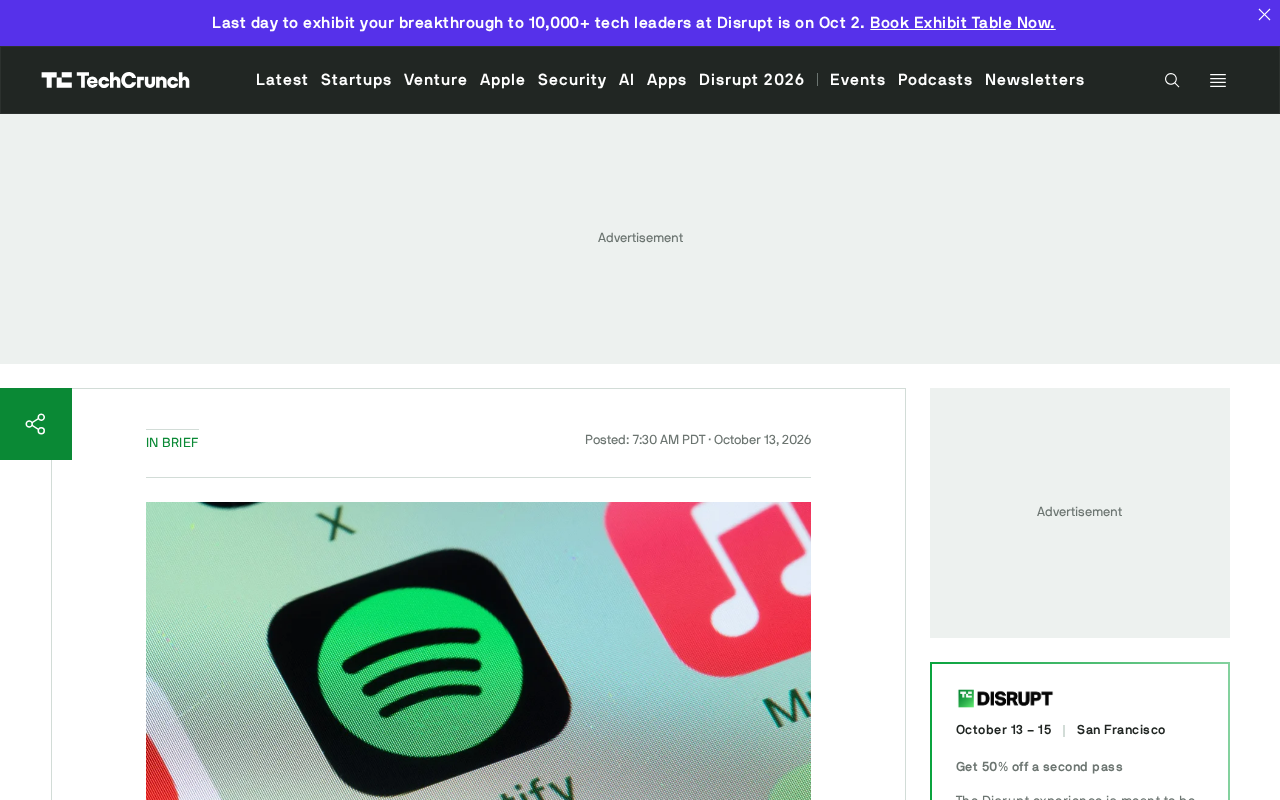
From 'Must Specify the App' to 'Siri Automatically Recognizes'
For a long time, Siri defaulted to Apple Music when handling music playback requests. If users wanted to play content through Spotify, they had to explicitly state the app name; otherwise, Siri would open Apple Music and prompt for a subscription. This experience was both cumbersome for Spotify users and carried an obvious 'first-party priority' bias.
The change in iOS 27 is that Siri begins to learn users' actual usage habits. When the system detects that a user primarily listens to music, podcasts, and playlists through Spotify, it will treat Spotify as the default music service for handling related voice commands. Users can still manually specify an app, but they are no longer forced to say it every time.
According to the original report, this mechanism covers three content types: songs, podcasts, and playlists. Spotify listeners can request songs, podcasts, and playlists without specifying which app to use—this covers virtually all everyday music consumption scenarios.
Why This Change Matters
On the surface, this just saves a few words. But from a platform ecosystem perspective, it touches on a long-standing competitive issue: how voice assistants, as system-level gateways, treat third-party services.
Siri's default bias toward Apple Music has long been a focal point of complaints from competitors like Spotify. Regulatory frameworks such as the EU's Digital Markets Act have also imposed constraints on platform 'self-preferencing' behavior. Allowing Siri to learn user preferences in iOS 27 can be understood as Apple making a concession at the experience level—users' actual choices are beginning to override system defaults.
For Spotify, this lowers the barrier for iOS users to use voice control. Voice interaction was originally a natural advantage for Apple Music, and now that advantage has been partially leveled.
The EU's Digital Markets Act (DMA) is a digital regulatory law passed by the EU in 2022 and phased into effect starting in 2024, aimed at constraining the market dominance of large tech platforms. The DMA designates companies with over 45 million monthly active users and a market capitalization exceeding €75 billion as 'gatekeepers,' with Apple's iOS, App Store, and Safari all included. The DMA explicitly prohibits gatekeepers from 'self-preferencing'—that is, they must not give their own products or services preferential treatment over third parties in areas such as rankings and default settings. Siri's long-standing default to Apple Music rather than Spotify is a typical scenario targeted by this provision. Apple has previously been required to open up iOS sideloading, default browser selection pop-ups, and more. The adjustment to Siri's default music service can be seen as a further compliance action by Apple at the system-level gateway under DMA pressure.
What the User Experience Will Actually Be Like
According to the description, Siri will 'learn users' preferred music app.' This means the preference is not a one-time setting but is gradually established through usage behavior. If you typically use Spotify for music and Apple Podcasts for podcasts, Siri can theoretically remember the preferred app for different content types separately.
However, the transparency, adjustability, and cross-device synchronization of this learning mechanism are not detailed in the original information. Whether users can manually specify a default music app in settings, or whether it relies entirely on Siri's automatic judgment, remains unclear. This may affect the choices of some users who are sensitive about privacy and controllability.
Siri's 'preference learning' mechanism typically relies on on-device behavioral data inference—for example, using signals like invocation frequency and usage duration to determine the music app a user uses most. This type of inference occurs locally or at the iCloud account level and theoretically does not require manual configuration by the user. However, Apple has generally provided manual toggles in similar features (such as Siri Suggestions and App Recommendations), allowing users to turn off personalized learning or reset inference results in settings. If iOS 27 follows this convention, users will likely be able to view or override the default music app in the 'Siri & Search' settings. Regarding cross-device synchronization, devices sharing the same Apple ID can typically share preferences, but the specific implementation should be based on Apple's official documentation.
Impact on the Music Streaming Landscape
The direct effect of this change is to give Spotify more equal treatment at the iOS voice gateway. But it's too early to say it will change the competitive dynamics between Apple Music and Spotify.
Apple Music's advantage lies in system-level integration—offline downloads, spatial audio, and deep ties to the Apple ecosystem. Spotify's advantage lies in its recommendation algorithms, cross-platform consistency, and richer podcast content. Siri preference learning merely removes one friction point; it does not change the core product strengths of either side.
What's truly worth watching is whether Apple will extend this 'preference learning' to more third-party service categories, such as navigation, notes, or email. If Siri begins to broadly respect users' third-party app choices, that would be a substantive advancement for the openness of the entire iOS ecosystem.
One-line Summary
iOS 27 lets Siri remember your preferred music app, so Spotify users no longer need to say 'on Spotify.'
Paragraph Summary
Apple has adjusted how Siri handles music commands in iOS 27: Siri will learn the music app users actually use, and when it detects that a user primarily listens to content through Spotify, it will treat it as the default music service for voice requests. This means Spotify users can simply say "Play Jay Chou's songs" or "Play my running playlist" without adding "on Spotify" to every command. The mechanism covers three content types: songs, podcasts, and playlists. This change is seen as a concession by Apple on default services for its voice assistant, and a response to long-standing complaints from competitors like Spotify over Siri's default bias toward Apple Music. However, the specific settings, transparency, and cross-device synchronization of the preference learning remain unclear, and the actual experience is still to be observed.
Related articles

Frontend to AI Agent Development: A Frontline Architect Explains Career Paths and Opportunities
A frontline AI architect explains the industry changes and practical paths for frontend developers transitioning to AI Agent development: why pure frontend jobs are disappearing, why Agent + full-stack has become mainstream in hiring, and three transformation routes—Agent development engineer, FDE, and remote contracting—along with corresponding learning strategies.

How to Choose an AI Agent Development Course: Five Pitfall-Avoidance Guidelines
A mechanical-engineering career changer's two-year pitfall-tested checklist for screening AI Agent development courses: complete delivery pipeline, resume-worthy projects, real development perspective, update frequency, and coaching feedback—with concrete judgment methods and pitfall-avoidance tips.

Coze AI Agent Building for Beginners: A Zero-Code AI Agent Development Guide
Coze, ByteDance's one-stop AI application development platform, supports zero-code drag-and-drop AI agent building. This article outlines Coze's core concepts, three advantages, differences between the domestic and international versions, and the distinction between agents and apps, helping beginners quickly get started with AI Agent development.